
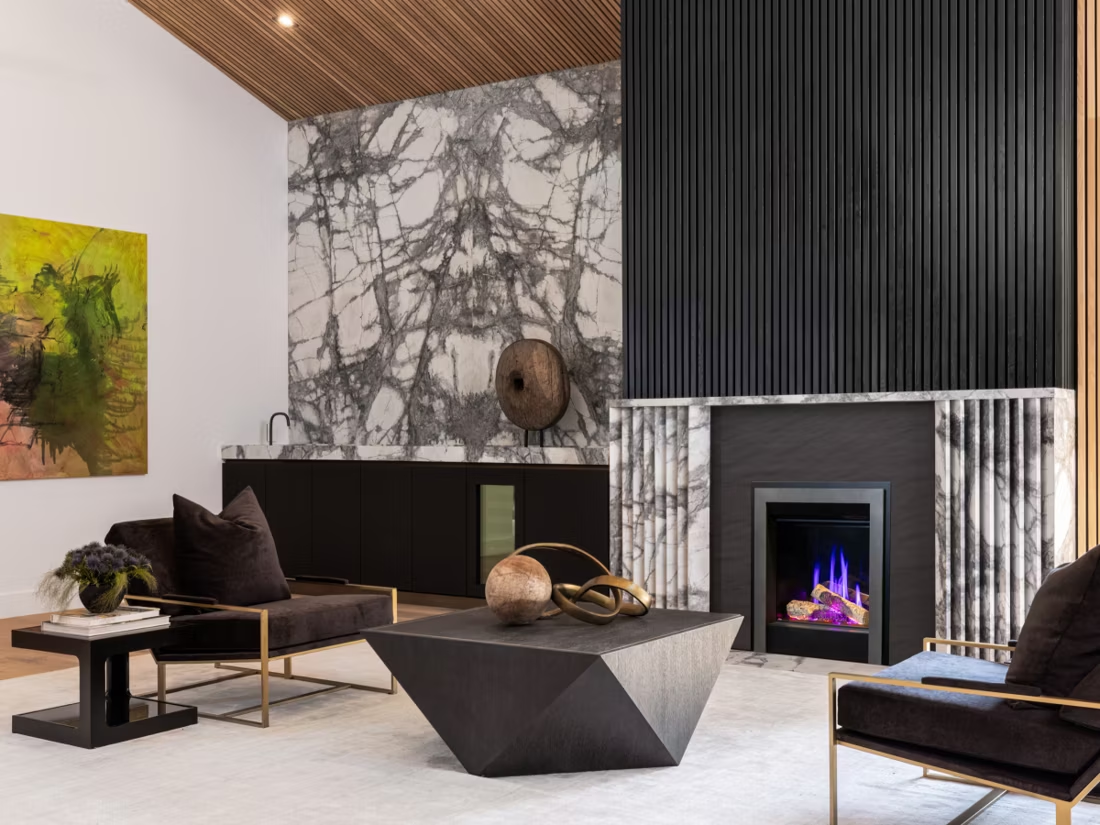
Add ambiance and supplemental warmth without a chimney.
No gas line, no venting, no masonry work—just real warmth and a real flame look for Williams County homes from Bryan to Montpelier. Find the right unit and connect with a trusted local dealer.
Every Project Starts From One of These Five Situations
Reliable warmth for the coldest months, no venting required.
Williams County sits in Ohio's far northwest corner, bordering both Michigan and Indiana, with Bryan as the county seat and farm towns—Montpelier, West Unity, Edgerton, Pioneer, Stryker—spread across flat glacial plains. Winters here run long: Climate Zone 5A, average lows near 17°F, and roughly 6,300 heating degree days a year, putting the county in the same general heating-load range as Madison, Wisconsin. Wood, gas, and electric all see regular, standard use across the county, and electric has carved out a real niche of its own: renters and condo owners who can't add venting, finished basements and bonus rooms in older Bryan-area farmhouses where a wood or gas install isn't practical, and homeowners who simply want a real flame look in a room already served by the furnace.
Most electric fireplaces plug into a standard 120-volt outlet—no gas line, no chimney, no combustion byproducts to vent—which makes them the fastest, least invasive fireplace project available anywhere in the county. Homes in the Bryan area served by North Western Electric Cooperative generally see no special rate concerns from adding one; a typical unit on high draws roughly what a space heater does. The honest tradeoff: with 6,300 heating degree days a year and average lows in the high teens, an electric fireplace is realistically a zone-heat and ambiance solution, not a stand-alone answer to a Williams County winter. Most local homeowners pair one with a well-insulated room and use it to take the edge off in shoulder seasons or warm a specific space without running the furnace harder.
Three steps. No salesperson until you're ready.
Tell us about your project
Your zip code, your situation, and the fuel you're leaning toward—or let the answers point you to one.
See what's actually available
The brands dealers within 100 miles genuinely carry—real options, never a catalog mirage.
Get your dealer & Project Guide
A trusted local dealer, plus the free Project Guide & Parts List that names every component of the job.
Frequently Asked Questions
How much does an electric fireplace installation cost in Williams County?
A basic plug-in electric insert or mantel package that uses an existing 120-volt outlet typically runs $300 to $1,500 installed, with much of that being the unit itself. Built-in linear models or wall-mounted units that need a dedicated 240-volt circuit run higher—expect to add $150 to $400 for a licensed electrician to run new wiring, and $2,000 to $4,000 total once you include a custom surround or mantel finish carpentry, common in older Bryan and Montpelier farmhouses converting a dated masonry fireplace. Costs stay on the low end anywhere the existing outlet and framing already support the unit.
Electric insert vs. wall-mounted vs. mantel package—what's the difference?
An electric insert is built to slide into an existing masonry firebox, which is common in the older housing stock around Bryan and West Unity—it reuses the opening you already have and typically needs no new framing. A wall-mounted (linear) unit hangs like a large flat-panel and works well in newer construction or a finished basement without an existing fireplace. A mantel package pairs a smaller electric firebox with a surround and shelf, giving a traditional look in a room that never had a fireplace at all. Local dealers can tell you which fits your opening and framing after a quick look at photos or an in-home visit.
Do I need a permit or an electrician to install an electric fireplace in Williams County?
If you're plugging a unit into an existing 120-volt outlet, most jurisdictions in Williams County don't require a permit—it's treated like any other plug-in appliance. If the unit needs a new dedicated circuit (typical for larger built-in or 240-volt models), that electrical work should go through a licensed electrician, and depending on whether you're inside Bryan city limits or in unincorporated county/township land, the permit is pulled through the applicable local building department. A reputable local dealer can tell you upfront whether your chosen model needs new wiring before you commit.
Will an electric fireplace actually heat my room?
Most electric fireplace heaters put out around 4,600 to 5,000 BTU—roughly what a good space heater delivers—and can noticeably warm a well-insulated room in the 300 to 600 square foot range. In a Williams County winter with average lows around 17°F, that's supplemental heat, not a furnace replacement; it's the right tool for taking the chill off a specific room or adding ambiance without touching your HVAC system, not for heating a whole farmhouse on a January night. If you're looking for a fuel source that can carry real heating load through a cold snap, wood or gas is the better fit—plenty of homeowners run electric in one room and wood or gas elsewhere.
What's the best electric fireplace for a Williams County home?
For most local homes, a linear insert or wall-mount from a mainstream brand with a built-in thermostat and multi-speed fan gives you the most usable heat for the space, plus flame-effect settings you can run without any heat at all in shoulder seasons. If you're converting an existing masonry fireplace in an older Bryan or Montpelier home, measure your firebox opening carefully before shopping—insert sizing is the single most common mismatch local dealers see. For a bonus room or basement with no existing fireplace, a larger wall-mounted linear unit generally gives better real-world warmth than a small mantel package.
Electric vs. wood—which is right for my Williams County home?
Wood is the real heating workhorse in this part of Ohio—oak, hickory, maple, and cherry are all common locally, burn hot and long, and keep working through a power outage, which matters given the county's rural roads and occasional winter ice storms. Electric offers none of that backup capability since it needs grid power to run, but it wins on convenience: no wood handling, no ash, no chimney maintenance, and a flip-of-a-switch flame in rooms where a wood stove or insert isn't practical. Many Williams County households run both—wood or a wood insert for real heat and outage backup, electric in a den, bedroom, or basement for ambiance and easy supplemental warmth.
What's the difference between an electric fireplace and an electric stove?
An electric fireplace is typically built into a wall, mantel, or existing firebox opening and is designed to look like a traditional fireplace. An electric stove mimics the freestanding cast-iron look of a wood or pellet stove, sitting on the floor with a stovepipe-style top, and is popular for rooms that want that farmhouse aesthetic without a real chimney. Both use the same basic heating element and fan technology inside—the choice comes down to which look fits your room, not a difference in heat output or installation complexity.
How much does it cost to run an electric fireplace, and does my utility matter?
Most electric fireplace heaters draw around 1,500 watts on the heat setting, which costs roughly 15 to 25 cents per hour to run depending on your electric rate—a few dollars for a typical evening of use. Homes in the Bryan area served by North Western Electric Cooperative, and those on AEP Ohio elsewhere in the county, won't see any special rate tier or surcharge from adding one; it draws about what a hair dryer or space heater does. Running the flame effect alone, without heat, uses only a small fraction of that.
Electric vs. gas—which makes more sense in Williams County?
Gas fireplaces and inserts put out real, sustained heat—enough to serve as genuine zone heat through a Williams County winter—but require either natural gas service or a propane tank, plus venting and gas line work. Electric skips all of that: no fuel delivery, no venting, and a much simpler install, but with meaningfully less heat output and total dependence on grid power. For a primary living space where you want a fireplace to actually contribute to comfort during a 17°F January stretch, gas is usually the stronger choice. For a bedroom, den, rental unit, or a spot where running new gas or venting isn't realistic, electric is the practical answer.
Can I put a TV above my fireplace?
Yes—with an asterisk. Fireplaces are hot and TVs don't like heat. Either put a mantel between them to deflect rising warmth, or choose a fireplace with heat-management technology that creates a cool zone on the wall above—the wall stays around 125 degrees, barely warm, while the room still gets full heat. If you like clean lines and don't want a mantel, heat management is the answer.
Does an electric fireplace need a vent or chimney?
No—that's its superpower. An electric fireplace needs a wall and an outlet, period. No vent pipe, no gas line, no clearances to design around, which is why it works in bedrooms, offices, apartments, and walls where venting a gas or wood unit would be impractical or impossible. Installation is typically the simplest and least expensive of any fireplace type.
Can a fireplace actually lower my heating bill?
Yes—by creating a comfort zone. A furnace heats every square foot of the house just to warm the one room you're in; a gas fireplace on low burns roughly a sixth of the gas a typical furnace does. Set the furnace around 55–60 degrees as a baseline, then heat the rooms your family actually uses. Families who heat this way commonly save $20–$60 a month.
Does a fireplace add value to my home?
On average, a fireplace adds back to the home about the same amount you spent installing it. Add the monthly savings from heating the rooms you actually use instead of the whole house—often hundreds of dollars a year—and the value case is strong before you even count what a fire does for how your family uses the room.
Find your electric fireplace in Williams County.
Tell us a bit about your home and we'll match you with a trusted local dealer and put together a free Project Guide & Parts List—the right electric fireplace or insert for your space, the wiring it needs, and who locally can install it.
Find Your Fireplace →