
Thermostat-Simple Heat for Westerville, Ohio Winters.
Load the hopper, set the dial, and let it run. Find the right pellet stove or insert for your Franklin County home and connect with a trusted local dealer.
Every Project Starts From One of These Five Situations
A low-effort way to take the edge off Central Ohio winters.
Westerville sits at about 880 feet in Franklin County, just north of Columbus, with a solid Midwest heating season and average winter lows around 22°F. That's a real Midwest heating season—colder than most of the South, but nowhere near the sustained deep-freeze of Madison, Wisconsin or International Falls, Minnesota. It's exactly the kind of climate where a pellet stove earns its keep as a zone heater in a family room or finished basement, cutting the furnace's workload during the coldest stretches without asking anyone to split, stack, or haul cordwood.
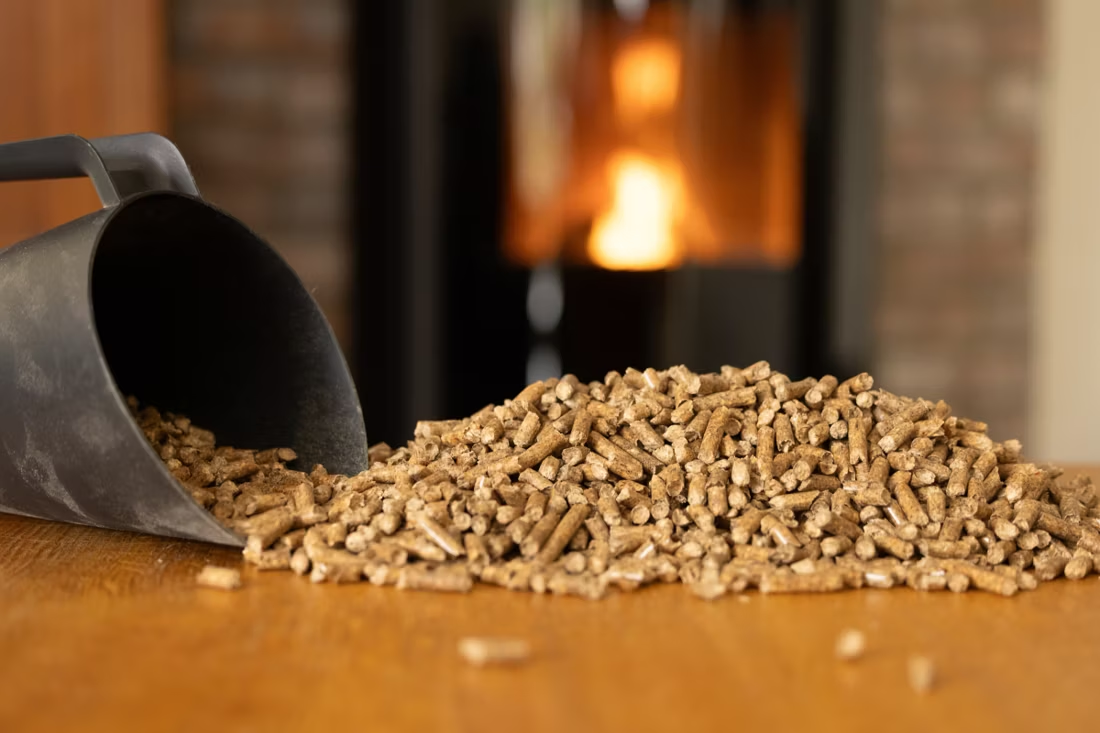
Westerville has no local wood-burning air quality restrictions or curtailment periods to work around, so a pellet appliance here is purely a matter of preference and convenience rather than compliance. Bagged hardwood pellets from regional producers like Indeck Energy Services, Lignetics, and Somerset Pellet Fuel are readily available through hearth retailers and farm-supply stores across Central Ohio, which keeps fuel sourcing simple compared to areas where pellets have to be trucked in from farther away.
Three steps. No salesperson until you're ready.
Tell us about your project
Your zip code, your situation, and the fuel you're leaning toward—or let the answers point you to one.
See what's actually available
The brands dealers within 100 miles genuinely carry—real options, never a catalog mirage.
Get your dealer & Project Guide
A trusted local dealer, plus the free Project Guide & Parts List that names every component of the job.
Frequently Asked Questions
How much does a pellet stove installation cost in Westerville?
Most pellet stove installations in the Westerville area run $3,000 to $6,500, and pellet inserts into an existing masonry fireplace typically land a bit higher, around $4,000 to $7,500, once a stainless liner and hopper-side venting are factored in. The variables that move the number: whether you need a new dedicated 15-amp electrical circuit for the auger and blower, how far the vent has to run through an exterior wall, and whether a hearth pad or floor protection needs to be added for clearance. A local dealer will give you a firm number after seeing the room in person.
Is a pellet stove a good fit for a Westerville home, or should I go with wood?
Both work well here—Franklin County has plenty of oak, hickory, maple, and cherry firewood available if you want a traditional wood stove, and there are no local air quality curtailment periods that would sideline a wood-burning unit on bad-air days. Pellet stoves trade that hands-on firewood ritual for automation: you load a 40-lb bag into the hopper, set a thermostat, and the auger feeds pellets as needed for 24+ hours of unattended burn time. If you like the idea of heat you don't have to tend, or you don't have space to season and store cordwood, pellet is the easier daily-use choice. If you want a fire that works with zero electricity during an outage, wood still wins there.
Do I need a permit to install a pellet stove in Westerville?
Most likely yes. New pellet stove and insert installations typically require a building permit through the City of Westerville building department (or the applicable Franklin County jurisdiction if you're just outside city limits), since the appliance involves through-wall venting and, often, new electrical work for the auger circuit. Reputable local installers handle the permit application and inspection scheduling as part of the job, so it's rarely something homeowners have to manage themselves.
What happens to my pellet stove if the power goes out?
Pellet stoves need electricity to run the auger, igniter, and combustion blower, so a standard unit stops working the moment the power cuts out—something to plan for given that Ohio Power Co (AEP Ohio) service in this area, along with the municipal utilities in Westerville and Columbus, can see outages during Central Ohio ice storms. Many pellet stove owners in this area pair their unit with a small battery backup or a portable generator sized for the stove's low wattage draw, which is usually enough to keep the auger and fan running through a multi-hour outage. If uninterrupted heat during outages is a priority, a wood stove or a battery backup setup is worth discussing with your installer.
What size pellet stove do I need for my home?
For most Westerville homes, a pellet stove rated for 1,500 to 2,200 square feet is enough to heat a main living area or open-concept floor plan as supplemental heat, while smaller units (40,000–50,000 BTU) suit a single large room or finished basement. Given the area's solid Midwest heating season, undersizing is the more common mistake—a stove that's too small will run at full output constantly and burn through pellets fast without keeping up on the coldest nights. A local dealer can size the unit correctly based on your room layout, ceiling height, and insulation.
Where can I buy pellets in the Westerville area?
Hearth retailers and many hardware and farm-supply stores throughout Central Ohio stock bagged hardwood pellets, including regional brands like Indeck Energy Services, Lignetics, and Somerset Pellet Fuel. Buying by the ton (roughly fifty 40-lb bags) in late summer or early fall typically gets the best pricing before winter demand pushes prices up, and it's worth checking a bag's ash content rating—premium low-ash pellets mean less frequent cleaning of the burn pot.
What's the difference between a pellet stove and a pellet insert?
A pellet stove is a freestanding unit that sits on a hearth pad and can go almost anywhere in the house with access to an exterior wall for venting. A pellet insert is built to slide into an existing masonry fireplace opening, using a vent kit routed up through the existing chimney rather than straight out the back wall. For a Westerville home with an older fireplace that rarely gets used, an insert is usually the more efficient upgrade since it reuses the chimney you already have. Homes without an existing fireplace are better suited to a freestanding stove.
How much maintenance does a pellet stove need?
Pellet stoves need more routine attention than a gas unit but far less than a wood stove. Plan on emptying the ash pan every few days during regular use, vacuuming the burn pot weekly to keep the holes clear for good combustion, and cleaning the glass as needed. Most manufacturers also recommend a full professional cleaning and inspection once a season—including the exhaust venting and hopper mechanism—which local hearth service providers typically handle for $150 to $250.
Pellet vs. wood stove—which should I choose for supplemental heat?
Wood stoves offer higher raw heat output, work with zero electricity, and let you take advantage of the oak, hickory, maple, and cherry firewood common throughout Franklin County—but they require cutting, seasoning, and stacking wood, plus daily tending. Pellet stoves trade that labor for convenience: automated feed, long unattended burn times, and a cleaner-burning appliance with less visible smoke, at the cost of needing electricity to run. For a Westerville household that wants set-and-forget heat for a family room or finished basement, pellet is usually the easier fit. For anyone prioritizing outage-proof heat or already has a reliable firewood source, wood is worth a closer look.
Why is my open fireplace making my house colder?
Open fireplaces suck—literally. As the fire burns, it consumes air your furnace already paid to heat and pulls it out through the chimney, so the house is actually colder after the fire goes out than before you lit it. An insert fixes this: it seals the chimney, puts fixed glass across the front, and turns that hole in your house into a real heat source.
Can a pellet stove heat a whole house?
It genuinely can. I burned a pellet stove as my only heat source for years after a furnace died, and it kept the entire house warm. Pellets feed automatically from a hopper, so you get wood-heat economics with thermostat-style control. Two honest caveats: it needs weekly cleaning during the season, and most models need electricity to run—ask about battery backup if outages are a concern.
Can I install a fireplace myself?
If you're putting a fire in your house on purpose, it's best to work with an expert. Unless you're genuinely experienced in framing, gas line, vent pipe, and the national code on clearances to combustibles, have a professional do it—and ideally the same company that sells you the fireplace, so warranty, service, and liability all live under one roof.
Does a fireplace add value to my home?
On average, a fireplace adds back to the home about the same amount you spent installing it. Add the monthly savings from heating the rooms you actually use instead of the whole house—often hundreds of dollars a year—and the value case is strong before you even count what a fire does for how your family uses the room.
Nearby Dealers
Hearth shops serving Westerville and the surrounding area.
Pellet Brands Stocked Around Westerville
Manufacturers will point you to the nearest stocking dealer.
Find your pellet stove in Westerville.
Tell us a bit about your home and we'll put together a free Project Guide & Parts List for your Westerville pellet project—the right unit, the vent kit, and a match with a trusted local dealer who can install it.
Find Your Fireplace →