
Steady pellet heat for Wayne County's long, cold winters.
With roughly 6,045 heating degree days and average winter lows around 18°F, Wayne County homes need more than a few weeks of backup heat. A pellet stove gives you thermostat-like control without splitting cordwood—find the right unit and connect with a trusted local dealer.
Every Project Starts From One of These Five Situations
Consistent heat without the woodpile.
Wayne County sits in climate zone 5A, with a heating season that stretches from October well into April and average winter lows around 18°F. This is hardwood country—oak, hickory, maple, and cherry grow throughout the county's farmland and woodlots, and plenty of homes around Wooster, Orrville, Rittman, and the smaller townships still burn cordwood. But not every household wants to cut, split, stack, and haul wood every season, especially on working farms where time during the cold months is already stretched thin. That's where pellet heat fits in.
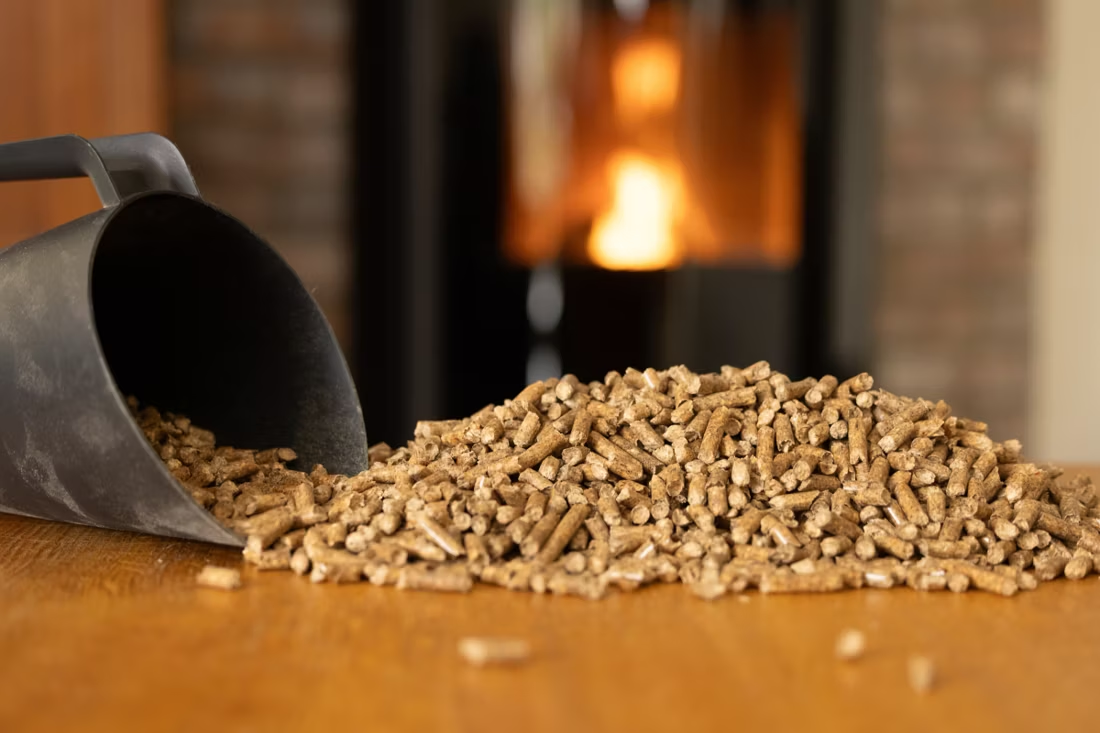
Wayne County has no air-quality nonattainment designation and no winter burn restrictions, so unlike some western counties, pellet stoves here aren't chosen to dodge a curtailment rule—they're chosen for the convenience: load a hopper, set a thermostat, and let the auger do the rest. Regional pellet fuel is easy to come by, with brands like Indeck Energy Services, Lignetics, and Somerset Pellet Fuel supplying the area, which means less guesswork on where next winter's fuel is coming from. A trusted local dealer can size the unit correctly for your square footage, run the venting properly, and walk you through the permit and electrical requirements—no big-box guesswork.
Three steps. No salesperson until you're ready.
Tell us about your project
Your zip code, your situation, and the fuel you're leaning toward—or let the answers point you to one.
See what's actually available
The brands dealers within 100 miles genuinely carry—real options, never a catalog mirage.
Get your dealer & Project Guide
A trusted local dealer, plus the free Project Guide & Parts List that names every component of the job.
Frequently Asked Questions
How much does a pellet stove installation cost in Wayne County?
Costs vary based on the stove itself, whether you're installing into an existing fireplace opening as an insert or as a freestanding unit, and what the venting path looks like. Pellet stoves typically vent through an exterior wall with PL-rated pipe rather than requiring a full masonry chimney, which usually keeps installation simpler and less expensive than a comparable wood stove project. You'll also want to budget for a dedicated electrical outlet near the unit, since pellet stoves rely on an auger and blower motor to run. A local dealer will give you a firm number after seeing your home, the wall you're venting through, and your electrical setup.
Where can I buy pellets in Wayne County?
Regional pellet fuel brands like Indeck Energy Services, Lignetics, and Somerset Pellet Fuel are commonly stocked by farm supply stores and hearth dealers serving the county. Pricing shifts with demand, so buying your season's supply early—before the first hard cold snap hits and everyone else is stocking up—tends to save money and avoid the scramble. Store bags off the ground and away from moisture; a damp bag of pellets swells and jams easily, which is one of the more common service calls local dealers see each winter.
Pellet stove vs. wood stove—which makes more sense in Wayne County?
Wayne County has plenty of homegrown oak, hickory, maple, and cherry, so wood heat has a real place here, especially on properties with their own woodlots. But pellet stoves offer cleaner burning, easier daily operation, and consistent heat output without the labor of splitting and stacking cordwood. The tradeoff is that pellet stoves need electricity to run the auger and blower, so they aren't a stand-alone option during an ice storm outage—a real consideration in a county where rural power lines can go down for a day or more in a bad winter storm. Some households run wood as backup heat and pellet as their everyday convenience unit.
What size pellet stove do I need for my home?
With Wayne County's roughly 6,045 heating degree days and winter lows regularly dipping into the high teens, most standard homes in the 1,500 to 2,500 square foot range do well with a mid-size pellet stove rated in the 40,000 to 60,000 BTU range, though insulation quality and ceiling height matter as much as square footage. Older farmhouses with less insulation or larger open floor plans typically need to size up. Hopper capacity is worth asking about too—a larger hopper means fewer refills during a multi-day cold stretch. A local dealer can size this correctly during an in-home visit rather than guessing off square footage alone.
Do I need a permit to install a pellet stove in Wayne County?
Most pellet stove installations require a building permit, and if new wiring is needed for the dedicated outlet, an electrical permit as well. Requirements and the exact process can vary by township within Wayne County, so check with your local township or county building department before work begins. Most established local dealers handle this paperwork as part of the installation, which is one more reason to work with a certified installer rather than a DIY setup.
What should I look for in a pellet stove for this climate?
For Wayne County's cold, multi-month heating season, prioritize hopper size and burn-time ratings—a larger hopper means the stove can run longer overnight without a refill, which matters when temperatures sit in the high teens for stretches at a time. Automatic ignition and a built-in thermostat are worth having so the stove can cycle down on milder days and ramp up during a cold snap without you tending it constantly. Ask a local dealer about self-cleaning burn pots too; less frequent manual cleaning is a real quality-of-life difference over a long Ohio winter.
How much maintenance does a pellet stove need?
Plan on emptying the ash pan every few days during regular use and a deeper cleaning of the burn pot and glass roughly weekly, depending on how many hours a day the stove runs. Beyond that, an annual professional cleaning of the exhaust venting and internal components is recommended before each heating season starts—pellet stoves generate less creosote than wood stoves, but the auger, blower, and venting still need a yearly check to run efficiently and safely. Local dealers who sell pellet stoves typically offer this service directly.
Will my pellet stove work if the power goes out?
No—pellet stoves rely on electricity to run the auger that feeds fuel and the blower that circulates heat, so a power outage shuts the unit down. This matters in Wayne County, where ice storms and downed rural power lines can knock out electricity for a day or more during the coldest months. Homeowners who want backup heat during outages typically pair a pellet stove with a small generator sized to run the unit, or keep a wood-burning appliance as a fuel-independent backup. Ask your local dealer what wattage your specific model draws before sizing a generator.
Pellet stove vs. gas fireplace—which is right for my home?
Gas fireplaces offer instant on-off operation and, with the right ignition system, can run during a power outage—an advantage over pellet units in a county where winter outages happen. Pellet stoves burn a renewable, often locally sourced fuel, typically cost less to run than propane in areas without natural gas service, and give off a more traditional flame appearance than most gas units. For Wayne County homes without natural gas access, propane gas fireplaces and pellet stoves are often compared head to head—the right choice usually comes down to whether backup power independence or fuel cost and renewability matters more to your household. A local dealer carrying both fuel types can walk through the tradeoffs for your specific home.
How often does a pellet stove need cleaning?
A clean pellet stove is a happy pellet stove. Plan on cleaning the burn pot about once a week when you're burning regularly—ash and clinkers gum up the air holes just like a pellet barbecue. Most pellet stove problems trace back to skipped cleaning that nobody explained up front. Some designs make it easy with a trapdoor burn pot: pull a lever and the gunk drops into the ash pan.
What's the difference between an insert and a zero-clearance fireplace?
An insert is a fireplace that slides into a pre-existing wood-burning fireplace—if you don't have one, there's nothing to insert it into. A zero-clearance fireplace is built into a framed wall, which makes it the answer for remodels and new construction. Simple test: existing masonry fireplace means insert; blank or framed wall means zero-clearance.
How much should I budget for a fireplace?
For an average home—covering the fireplace, the vent pipe, and basic installation—a budget between $3,900 and $5,500 gives you a lot of options across wood, gas, and pellet. By the time you add finish work, gas line, and electrical, the average complete installation lands between $5,000 and $12,000 all-in. In a remodel or new build, a good rule is to put about 2.5% of the total project cost toward the fireplace.
Does a fireplace add value to my home?
On average, a fireplace adds back to the home about the same amount you spent installing it. Add the monthly savings from heating the rooms you actually use instead of the whole house—often hundreds of dollars a year—and the value case is strong before you even count what a fire does for how your family uses the room.
Stove and Fireplace Dealers in Wayne County
Pellet Brands Stocked Around Wayne County
Manufacturers will point you to the nearest stocking dealer.
Find your pellet stove in Wayne County.
Tell us a bit about your home and heating goals, and we'll match you with a trusted local dealer and put together a free Project Guide & Parts List—the exact parts, vent kit, and recommended installer for your pellet project in Wayne County.
Find Your Fireplace →