
Instant ambiance for Wayne County homes, no chimney needed.
From Wooster to Orrville to the farmhouses scattered through Wayne County's Amish country, electric fireplaces give you real-looking flame and instant warmth without venting, permits, or firewood. Find the right unit and connect with a trusted local dealer.
Every Project Starts From One of These Five Situations
Electric fills the gap wood and gas can't.
Wayne County sits in north-central Ohio's climate zone 5A, with an average winter low around 18°F and a heating load in the same range as Madison, Wisconsin. The county's rural character runs deep: oak, hickory, maple, and cherry are the common firewood species split by homeowners across the townships surrounding Wooster, and plenty of farmhouses in and around the county's Amish country still burn wood as a primary or supplemental source. Electric fireplaces occupy a different niche entirely.
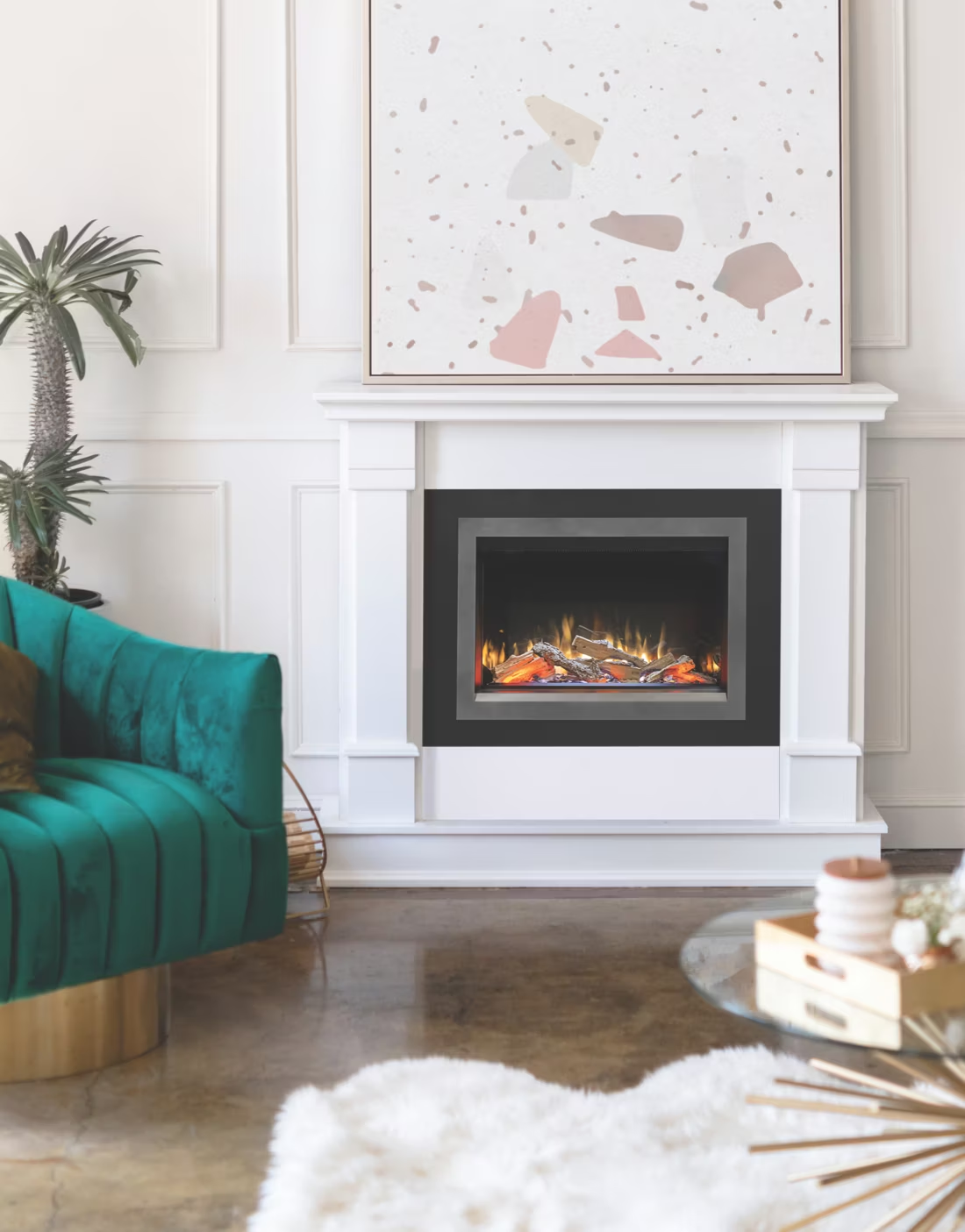
An electric fireplace or insert doesn't compete with a furnace on a night when it's 18°F outside—it's zone heat and ambiance, not whole-home heating. What it does well: it drops into a wall, mantel, or existing masonry firebox in a Wooster bungalow or a newer build near Orrville without any venting, chimney work, or gas line. For older farmhouses across the county with a masonry fireplace nobody wants to maintain anymore, an electric insert is often the easiest single upgrade in the house—no sweep, no creosote, no cold draft down an unused flue.
Three steps. No salesperson until you're ready.
Tell us about your project
Your zip code, your situation, and the fuel you're leaning toward—or let the answers point you to one.
See what's actually available
The brands dealers within 100 miles genuinely carry—real options, never a catalog mirage.
Get your dealer & Project Guide
A trusted local dealer, plus the free Project Guide & Parts List that names every component of the job.
Frequently Asked Questions
How much does an electric fireplace installation cost in Wayne County?
Most electric fireplace projects in Wayne County run considerably less than a wood or gas installation, since there's no chimney, venting, or gas line involved. A basic plug-in insert or wall-mount unit can run as little as a few hundred dollars installed, while a larger built-in unit that requires a dedicated 240-volt circuit run by a licensed electrician—common for units over about 1,500 watts intended to heat a full room—pushes costs up into the low thousands once wiring, framing, and mantel or surround work are included. A local dealer can give you a firm number once they know the unit size and whether new wiring is needed.
Can an electric fireplace actually heat my Wayne County home?
Not on its own, and it's worth being honest about that. With a heating load in the same range as Madison, Wisconsin and winter lows regularly near 18°F, Wayne County homes need a real furnace or heat pump as primary heat. Most electric fireplaces are rated to supplement a single room—typically 400 to 1,000 square feet depending on insulation and ceiling height—by adding zone heat on top of whatever your central system is already doing. Homeowners in Wooster and Orrville who want a cozy living room upgrade get exactly that; homeowners hoping to shut off the furnace and rely on an electric insert during a February cold snap will be disappointed.
Do I need a permit to install an electric fireplace in Wayne County?
A simple plug-in electric fireplace that runs off a standard 120-volt outlet generally doesn't require a permit—it's treated like any other appliance. A hardwired built-in unit, especially one that needs a new 240-volt circuit, typically does require an electrical permit through your local jurisdiction, whether that's Wayne County or the City of Wooster depending on where you're located. Any licensed electrician handling the wiring should be able to confirm what's required and pull the permit as part of the job.
Will my electric fireplace work if the power goes out?
No—and this matters in Wayne County, where winter ice storms and downed lines can knock out power for hours at a time in the more rural townships. An electric fireplace, unlike a wood stove, offers zero heat during an outage since it depends entirely on grid power to run. If backup heat during outages is a priority for your household, that's a strong argument for pairing an electric fireplace (for everyday ambiance and zone heat) with a wood stove or a battery-backed gas unit elsewhere in the house rather than relying on electric alone.
Can I convert my old masonry fireplace to electric?
Yes, and it's one of the more common projects for older housing stock in and around Wooster and the surrounding farm townships. An electric log insert or fully electric firebox insert slides into the existing opening, usually with minor trim work to fit the surround, and requires no chimney liner, no venting, and no gas line. For a masonry fireplace that's been sitting unused because the chimney needs expensive repair or relining, an electric insert sidesteps the problem entirely—you keep the look of the original fireplace without paying for chimney work you'd otherwise need for wood or gas.
What will an electric fireplace add to my electric bill?
Most electric fireplaces run on a 1,500-watt heating element (the standard maximum for a 120-volt unit) and cost roughly 15 to 25 cents per hour to run on high heat, depending on your rate. Wayne County is served primarily by AEP Ohio in the surrounding townships, with the City of Wooster operating its own municipal electric utility for customers inside city limits—rates differ slightly between the two, so check your actual per-kWh rate for a precise number. Used a few hours a night for ambiance and supplemental warmth rather than as a primary heat source, the added cost is usually modest compared to running a furnace longer.
What's the difference between an electric fireplace, insert, and mantel package?
An electric insert is built to drop into an existing fireplace opening or a framed wall cavity—it's the unit itself, with a heater and flame effect, no surround included. A mantel package pairs that insert with a decorative wood or composite surround and mantel shelf, sold as a complete piece of furniture that just needs to be plugged in. A wall-mount or linear electric fireplace skips the traditional mantel look entirely and mounts flush or recessed for a modern aesthetic. For Wayne County homes with an existing masonry opening, an insert alone is usually the right call; for a room without a fireplace at all, a mantel package or wall-mount gives you a finished look without construction.
How does an electric fireplace compare to a wood stove for my Wayne County home?
Wood stoves, burning local oak, hickory, maple, or cherry, put out real BTUs, can genuinely heat a home through Wayne County's coldest stretches, and keep working when the power's out—but they require chimney maintenance, ash cleanup, and a supply of split, seasoned wood. Electric fireplaces install almost anywhere, need zero maintenance beyond dusting, and turn on and off with a remote—but they contribute little real heat and go dark the moment the grid does. For most households the two aren't really competing for the same job: wood covers serious cold-weather heating and outage backup, while electric covers ambiance and zone comfort in a room that doesn't need (or can't fit) a chimney.
Is an electric fireplace a good fit for a Wayne County apartment or rental?
Often, yes. Renters and apartment dwellers in Wooster or Orrville can't install a wood stove or gas line, but a freestanding or wall-mounted plug-in electric fireplace requires no permanent modification and no landlord sign-off for a standard 120-volt unit. It's also one of the few hearth options that's fully portable—pack it up and take it with you when you move. For a permanent electric insert into an existing fireplace opening in a rental, check with the property owner first, since even a no-vent installation involves altering the firebox.
Can I put a TV above my fireplace?
Yes—with an asterisk. Fireplaces are hot and TVs don't like heat. Either put a mantel between them to deflect rising warmth, or choose a fireplace with heat-management technology that creates a cool zone on the wall above—the wall stays around 125 degrees, barely warm, while the room still gets full heat. If you like clean lines and don't want a mantel, heat management is the answer.
Do electric fireplaces actually produce heat?
Yes—most put out around 4,800–5,000 BTUs from a standard outlet, which comfortably warms a bedroom, office, or den as a comfort-zone heater. What they won't do is carry a whole house the way wood, gas, or pellet can. Think of electric as ambiance-first with honest supplemental heat: flames on with no heat in July, flames plus warmth in January.
Does a fireplace add value to my home?
On average, a fireplace adds back to the home about the same amount you spent installing it. Add the monthly savings from heating the rooms you actually use instead of the whole house—often hundreds of dollars a year—and the value case is strong before you even count what a fire does for how your family uses the room.
Can a fireplace actually lower my heating bill?
Yes—by creating a comfort zone. A furnace heats every square foot of the house just to warm the one room you're in; a gas fireplace on low burns roughly a sixth of the gas a typical furnace does. Set the furnace around 55–60 degrees as a baseline, then heat the rooms your family actually uses. Families who heat this way commonly save $20–$60 a month.
Stove and Fireplace Dealers in Wayne County
Find your electric fireplace in Wayne County.
Tell us a bit about your home and we'll match you with the right electric fireplace or insert, and hand you a free Project Guide & Parts List with the exact parts and a recommended local Wayne County dealer.
Find Your Fireplace →