
Pellet heat that fits Washington County's mild winters.
Thermostat-controlled, low-maintenance heat for the Ohio River valley—from Marietta to Belpre, Lowell, and Beverly. Find the right pellet stove or insert, and connect with a trusted local dealer.
Every Project Starts From One of These Five Situations
Steady, efficient heat for the Mid-Ohio Valley.
Washington County sits in climate zone 4A along the Ohio River, with Marietta as the county seat and roughly 29,846 residents spread across river towns, farmland, and wooded hills. Winters here average a low around 24°F, with about 4,888 heating degree days a year—meaningfully milder than a place like Duluth, MN, but still enough sustained cold from December through February to make supplemental heat worth the investment. Unlike counties dealing with winter inversion or wood-smoke non-attainment issues, Washington County has no air quality restrictions on solid-fuel appliances, so pellet stoves here are chosen for convenience and efficiency rather than as a workaround for burn bans.
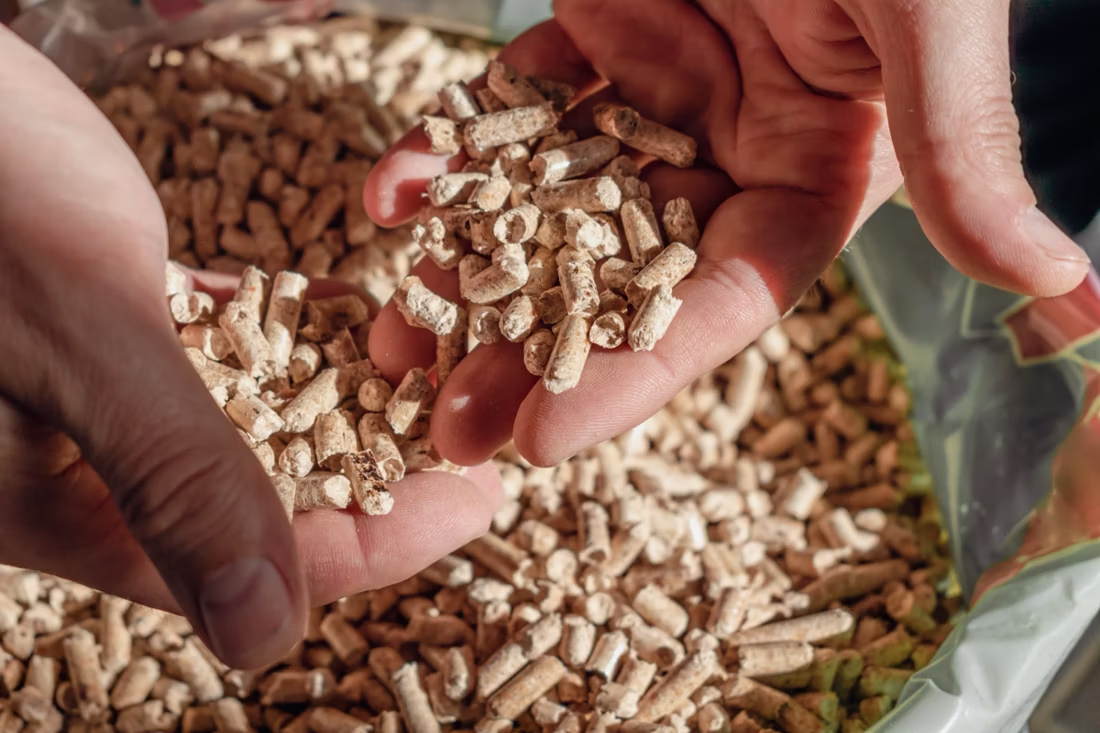
The region's hardwood forests—oak, hickory, maple, and cherry—feed a regional pellet supply chain that includes Indeck Energy Services, Lignetics, and Somerset Pellet Fuel, all of which operate in the broader Appalachian Ohio corridor. That proximity tends to mean more consistent pellet quality and fewer supply gaps during peak winter demand than counties that rely on pellets shipped in from out of state. For homes in Marietta's older neighborhoods without a usable masonry chimney, or newer construction in Belpre and the surrounding townships, a pellet stove offers thermostat-style heat control, low ash output, and a straightforward through-wall vent—without the creosote and chimney-fire risk that comes with cordwood.
Three steps. No salesperson until you're ready.
Tell us about your project
Your zip code, your situation, and the fuel you're leaning toward—or let the answers point you to one.
See what's actually available
The brands dealers within 100 miles genuinely carry—real options, never a catalog mirage.
Get your dealer & Project Guide
A trusted local dealer, plus the free Project Guide & Parts List that names every component of the job.
Frequently Asked Questions
How much does a pellet stove installation cost in Washington County?
A freestanding pellet stove installation in Washington County typically runs $3,000 to $6,500, depending on the unit, the venting path, and whether an existing outlet is close enough for the stove's auger and blower motors. A pellet insert into an existing masonry fireplace usually costs a bit less than a full freestanding install with new venting, since the chimney chase can sometimes be reused with a liner adapted for pellet exhaust. Homes in Marietta's older housing stock with existing fireplaces tend to land on the lower end; new installations in homes without any existing hearth or nearby electrical service run higher once wiring and PL-venting through an exterior wall are factored in.
What size pellet stove do I need for my home?
Sizing depends on square footage, ceiling height, and how well-insulated the space is. As a rough guide for Washington County's zone 4A winters: smaller pellet stoves work well for a single room or an open floor plan under about 1,200 square feet, while larger units can handle 2,000+ square feet in a well-sealed home. Older farmhouses along the river and in outlying areas near Beverly and Lowell often lose more heat through uninsulated walls than newer construction near Marietta and Belpre, so those homes may need to size up even at similar square footage. A local dealer will walk your space and size the stove based on your actual insulation and layout rather than square footage alone.
Where does pellet fuel come from in Washington County, and what does it cost?
Washington County sits within reach of several regional pellet producers, including Indeck Energy Services, Lignetics, and Somerset Pellet Fuel, all of which draw on the Appalachian Ohio hardwood supply—the same oak, hickory, maple, and cherry that shows up in local firewood. Bagged hardwood pellets typically run in the neighborhood of $5 to $6.50 per 40-pound bag, or roughly $250 to $300 per ton when bought by the pallet, though pricing shifts seasonally and tends to be lowest if you stock up in late summer before demand spikes. Local hearth dealers and farm supply stores are the most reliable sources; big-box pricing can look competitive but stock often runs out during the first hard cold spell of the season.
Will my pellet stove work during a power outage?
Not without a backup power source. Pellet stoves depend on electricity to run the auger that feeds fuel, the igniter, and the combustion blower—unlike a wood stove, they can't operate off-grid. This matters in Washington County because river-adjacent areas and rural townships do see occasional outages from winter storms and Ohio River flooding events. Some homeowners pair a pellet stove with a small battery backup or generator specifically for this reason. If uninterrupted heat during outages is a priority for your household, ask your local dealer about battery backup options, or consider whether a wood-burning appliance makes more sense as a secondary heat source.
Do I need a permit to install a pellet stove in Washington County?
Most jurisdictions in Washington County require a building permit for a new pellet stove installation, particularly when it involves new venting through an exterior wall or roof, or new electrical work for the unit's blower and auger motor. Requirements can differ slightly between Marietta and the surrounding unincorporated townships, so it's worth confirming with your local building department before work starts. In practice, most established hearth dealers handle the permit application and inspection scheduling as part of the installation, which is one of the reasons to work with a dealer rather than a DIY install.
What venting does a pellet stove need compared to a wood stove?
Pellet stoves vent through a smaller-diameter PL (pellet-listed) pipe, usually 3 or 4 inches, and can typically run horizontally through an exterior wall rather than requiring a full vertical chimney chase. This makes pellet installs considerably more flexible for Washington County homes that don't have an existing masonry chimney—a common situation in newer construction around Belpre and the outskirts of Marietta. Wood stoves, by comparison, generally need a full Class A chimney system with more clearance requirements. That flexibility is one of the main reasons pellet stoves get chosen for additions, garages, or rooms where running a traditional chimney isn't practical.
How much maintenance does a pellet stove need?
Pellet stoves need more frequent light maintenance than a wood stove needs deep cleaning. Plan on emptying the ash pan every few days during regular use, cleaning the burn pot to keep airflow clear (usually weekly), and vacuuming out the ash trap monthly. Most manufacturers also recommend an annual professional service that includes cleaning the exhaust fan, checking the auger motor, and inspecting gaskets and venting—typically $150 to $250 through a local dealer. Skipping the annual service is the most common reason pellet stoves start running inefficiently or throwing error codes mid-winter.
What pellet stove brands are available through local dealers in Washington County?
Appliance brands like Harman, Englander, and Quadra-Fire are commonly stocked by hearth dealers serving the Mid-Ohio Valley, and your dealer can advise on which model fits your home and venting situation. That's separate from pellet fuel brands—Indeck Energy Services, Lignetics, and Somerset Pellet Fuel are regional pellet fuel producers, not stove manufacturers, and it's worth knowing your stove's manufacturer-recommended pellet quality (ash content, BTU rating) since not every hardwood pellet performs the same in every stove. A good local dealer will point you toward pellet brands that run cleanly in the specific unit you buy.
Pellet stove vs. gas fireplace—which is right for my home?
Pellet stoves offer a real flame, lower fuel costs when pellets are bought in bulk during off-season, and heat output that many homeowners find more substantial for whole-room heating. Gas fireplaces offer instant on-off convenience, no fuel storage or ash cleanup, and the ability to run without loading a hopper—though they depend on either natural gas service or a propane tank. For Washington County homes without natural gas access in more rural parts of the county, propane and pellet often end up as the two realistic options, and pellet tends to win on lower ongoing fuel cost. For homes closer to Marietta with natural gas already run to the house, gas is often the more convenient day-to-day choice. Many households end up choosing based on which fuel logistics fit their routine—hauling bagged pellets a few times a season versus scheduling propane deliveries.
Why is my open fireplace making my house colder?
Open fireplaces suck—literally. As the fire burns, it consumes air your furnace already paid to heat and pulls it out through the chimney, so the house is actually colder after the fire goes out than before you lit it. An insert fixes this: it seals the chimney, puts fixed glass across the front, and turns that hole in your house into a real heat source.
What's the difference between an insert and a zero-clearance fireplace?
An insert is a fireplace that slides into a pre-existing wood-burning fireplace—if you don't have one, there's nothing to insert it into. A zero-clearance fireplace is built into a framed wall, which makes it the answer for remodels and new construction. Simple test: existing masonry fireplace means insert; blank or framed wall means zero-clearance.
Does a fireplace add value to my home?
On average, a fireplace adds back to the home about the same amount you spent installing it. Add the monthly savings from heating the rooms you actually use instead of the whole house—often hundreds of dollars a year—and the value case is strong before you even count what a fire does for how your family uses the room.
Can a fireplace actually lower my heating bill?
Yes—by creating a comfort zone. A furnace heats every square foot of the house just to warm the one room you're in; a gas fireplace on low burns roughly a sixth of the gas a typical furnace does. Set the furnace around 55–60 degrees as a baseline, then heat the rooms your family actually uses. Families who heat this way commonly save $20–$60 a month.
Stove and Fireplace Dealers in Washington County
Pellet Brands Stocked Around Washington County
Manufacturers will point you to the nearest stocking dealer.
Find your pellet stove in Washington County.
Tell us a bit about your home and we'll match you with the right pellet stove or insert, plus a free Project Guide & Parts List with your recommended local dealer.
Find Your Fireplace →