
Zone heat that fits Washington County's older homes.
No chimney, no gas line, no venting—just plug-in or hardwired warmth for the brick homes of Marietta and the smaller towns along the Ohio River. Find the right unit and connect with a trusted local dealer.
Every Project Starts From One of These Five Situations
Electric heat that fits without a chimney.
Washington County sits in climate zone 4A along the Ohio River, with roughly 4,888 heating degree days a year and winter lows that average around 24°F—a real but moderate cold, nowhere near what a place like Duluth MN or Burlington VT deals with each winter. That means most homes here are heated primarily by a furnace or heat pump, with wood, gas, or electric fireplaces layered in for supplemental warmth in specific rooms rather than as a whole-house solution.
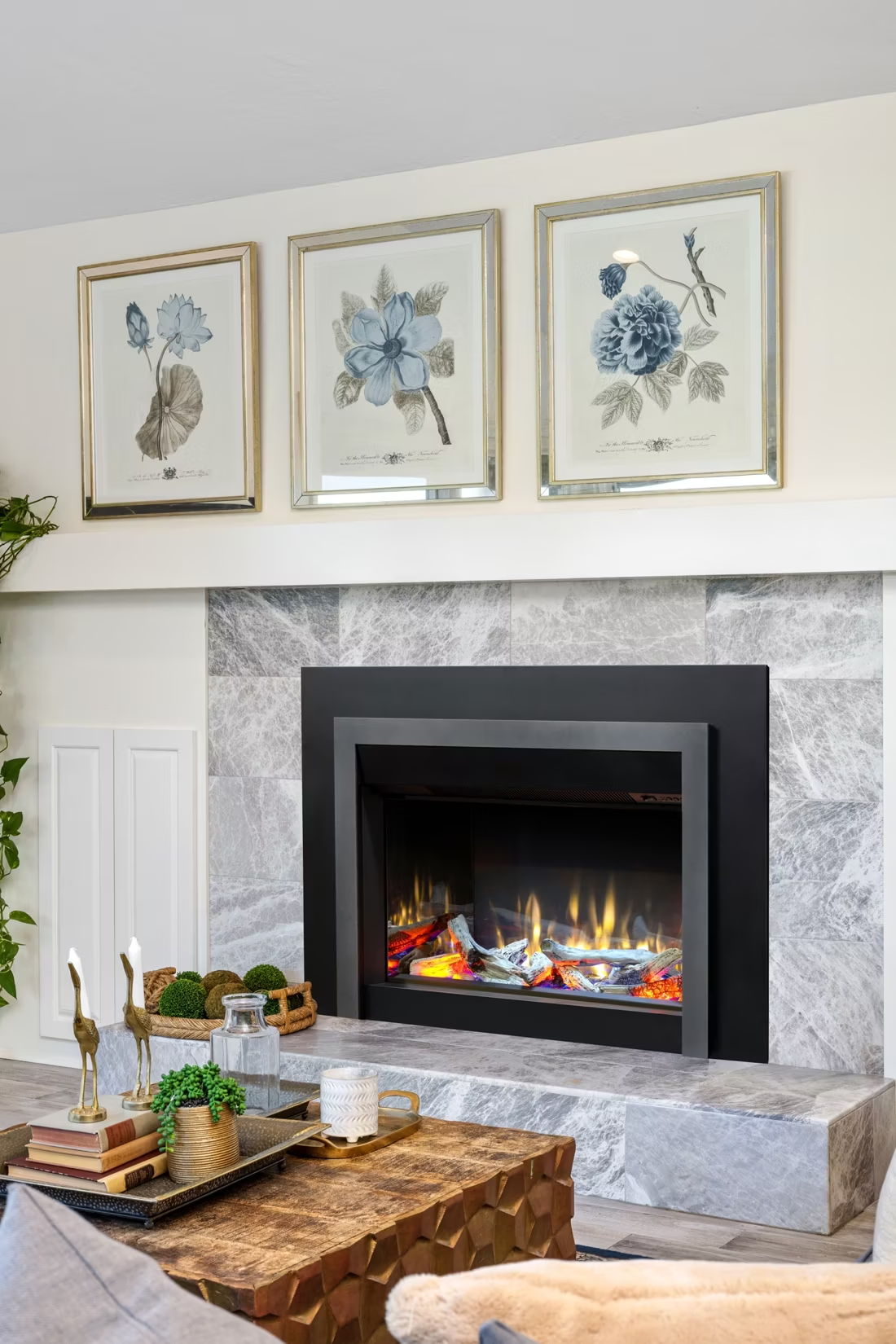
Marietta's historic district is full of 1800s and early 1900s brick homes with plaster walls and masonry fireplaces that were never built to handle a modern gas line or a new chimney liner. That's exactly where electric fireplaces do their best work—a properly sized electric insert drops into an existing firebox opening with no venting, no gas permit, and no structural changes, while a wall-mount or built-in unit gives newer construction in Belpre, Beverly, or Lowell instant zone heat with a simple 120V or 240V circuit. AEP Ohio serves electric accounts throughout the county, so running one is as straightforward as flipping a switch.
Three steps. No salesperson until you're ready.
Tell us about your project
Your zip code, your situation, and the fuel you're leaning toward—or let the answers point you to one.
See what's actually available
The brands dealers within 100 miles genuinely carry—real options, never a catalog mirage.
Get your dealer & Project Guide
A trusted local dealer, plus the free Project Guide & Parts List that names every component of the job.
Frequently Asked Questions
How much does an electric fireplace installation cost in Washington County?
Plug-in electric inserts and freestanding stoves typically run $300 to $900 installed, since they drop into an existing fireplace opening or sit against a wall with no wiring changes needed. Hardwired wall-mount or built-in units that require a dedicated 240V circuit usually run $800 to $2,500, depending on whether an electrician needs to run new wire from the panel—a common scenario in Marietta's older homes, where existing circuits weren't built for a heater-rated appliance. Because there's no chimney work, no gas line, and no venting to size, electric installs are consistently the fastest and least expensive of the fireplace fuel types.
Will an electric fireplace actually heat a room in Washington County's winters?
Most electric fireplaces put out around 4,000 to 5,000 BTU (roughly 1,500 watts), which is enough to noticeably warm a single room in the 300 to 400 square foot range, especially in a well-insulated space. With average winter lows around 24°F and about 4,888 heating degree days a year, Washington County's climate doesn't demand the same all-night heat output that a place like Bismarck ND or Minneapolis MN would need—so an electric unit works well as the primary heat source for a den, sunroom, or finished basement, paired with your existing furnace for the rest of the house. It's not designed to replace whole-home heating on the coldest nights, but it covers a lot of ground for targeted, everyday warmth.
What's the difference between an electric insert and a wall-mount electric fireplace?
An electric insert is built to slide into an existing masonry or zero-clearance firebox—the most common upgrade in Marietta's older homes where a wood-burning fireplace already exists but isn't used. A wall-mount or built-in unit is designed for new construction or a room with no existing fireplace, and it's typically framed into a wall or set into custom cabinetry. Both plug into standard outlets on lower-wattage models, though larger built-ins often need a dedicated circuit. For homes throughout Belpre, Beverly, and Lowell without an existing firebox, a wall-mount unit is usually the simpler path.
Do I need a permit to install an electric fireplace in Washington County?
In most cases, no—because there's no venting, gas line, or chimney modification involved, plug-in electric fireplaces generally fall outside standard building permit requirements. If you're having an electrician add a new dedicated circuit for a hardwired unit, that electrical work itself may require a permit depending on your specific municipality within the county, and a licensed electrician handling the job will typically pull it if needed. This is one of the real advantages of electric over wood or gas here—far less red tape and a much faster path from decision to installed unit.
What's the best electric fireplace for a historic Marietta home?
For homes with an existing masonry firebox—common throughout Marietta's historic district—a fully recessed electric insert with adjustable flame and heat settings gives you the look of the original fireplace opening with none of the venting or creosote concerns of the wood-burning fireplace it may have started as. Look for models with realistic LED flame technology and a heater that can be run independently of the flame effect, so you can enjoy the visual in warmer months without running the heat. A local dealer can measure your specific firebox opening, since older Marietta homes often have nonstandard dimensions compared to newer construction.
Can I convert my existing wood-burning fireplace to electric?
Yes, and it's a common project for Washington County homes with an old masonry fireplace that's rarely used—particularly where oak, hickory, or cherry firewood is available locally but the household doesn't want the ash, creosote, or chimney maintenance that comes with burning it. An electric insert sized to your firebox opening handles the conversion in an afternoon, with no need to touch the existing chimney at all beyond an optional damper seal to stop drafts. It's a lower-cost, lower-hassle alternative to converting the same fireplace to gas, which would require a new gas line and venting work.
What does it cost to run an electric fireplace day-to-day?
A typical 1,500-watt electric fireplace running on high costs roughly 15 to 20 cents per hour at standard AEP Ohio residential electric rates, and most units let you run the flame effect alone—using only a few watts—without the heater engaged. For a room used a few hours a night through the winter, that translates to a modest addition to your monthly electric bill, especially compared to running a whole-house furnace longer than necessary just to keep one room comfortable. Most units also include a thermostat and timer so you're not paying to heat an empty room.
Electric vs. pellet stove—which makes more sense for my home?
Pellet stoves burn compressed wood pellets from brands like Indeck Energy Services, Lignetics, or Somerset Pellet Fuel, deliver more heat output for whole-room or supplemental whole-house heating, and require venting plus periodic hopper loading and ash cleanup. Electric fireplaces skip the venting, the fuel bags, and the maintenance entirely, but produce less raw heat and depend on the power grid—no backup heat during an outage. For a Washington County homeowner who wants meaningful supplemental heat and doesn't mind loading a hopper, pellet is worth a look. For anyone who wants simple, low-maintenance ambiance and zone heat without touching fuel or venting, electric is the more practical everyday choice.
Where can I get an electric fireplace installed near me in Washington County?
Find My Fireplace isn't a retailer—we don't sell or ship units. We match you with a trusted local dealer who serves Washington County, including Marietta, Belpre, Beverly, and Lowell, and who can walk through your firebox dimensions, circuit needs, and room size in person before recommending a specific model. That local step matters even for electric: an insert that's a half-inch off on depth won't sit flush in an older Marietta firebox, and a dealer who's measured hundreds of them locally will catch that before you buy.
Does an electric fireplace need a vent or chimney?
No—that's its superpower. An electric fireplace needs a wall and an outlet, period. No vent pipe, no gas line, no clearances to design around, which is why it works in bedrooms, offices, apartments, and walls where venting a gas or wood unit would be impractical or impossible. Installation is typically the simplest and least expensive of any fireplace type.
Can I put a TV above my fireplace?
Yes—with an asterisk. Fireplaces are hot and TVs don't like heat. Either put a mantel between them to deflect rising warmth, or choose a fireplace with heat-management technology that creates a cool zone on the wall above—the wall stays around 125 degrees, barely warm, while the room still gets full heat. If you like clean lines and don't want a mantel, heat management is the answer.
What is an in-home preview and do I need one?
It's a visit where a hearth professional measures your space, confirms the model you picked actually works in your home, and walks the specs—framing, gas line, venting, finish work—before anything is ordered. Some details you just can't know until you see the house. Never make a down payment without one; it's the single most-skipped step that burns buyers.
Can a fireplace actually lower my heating bill?
Yes—by creating a comfort zone. A furnace heats every square foot of the house just to warm the one room you're in; a gas fireplace on low burns roughly a sixth of the gas a typical furnace does. Set the furnace around 55–60 degrees as a baseline, then heat the rooms your family actually uses. Families who heat this way commonly save $20–$60 a month.
Stove and Fireplace Dealers in Washington County
Find your electric fireplace in Washington County.
Tell us a bit about your home and we'll match you with the right electric fireplace or insert, plus a free Project Guide & Parts List with your recommended local Washington County dealer.
Find Your Fireplace →