
Pellet Heat Isn't Common in Stow—Here's Where It Still Fits.
Natural gas heats most Stow homes, but a small number of homeowners add a pellet stove for backup warmth, zone heating, or ambiance. We'll help you find out if it makes sense for your house—and match you with a trusted local dealer.
Every Project Starts From One of These Five Situations
Gas runs this town. Pellet is the exception.
Stow sits in the Akron metro at 1,143 feet in USDA climate zone 5A, with winters that average an 18-degree overnight low and add up to a season length similar to Buffalo, NY. That's cold enough to justify a serious heating appliance, but Stow is also a mature, fully gas-piped suburb of Summit County, and the overwhelming majority of homes already heat with natural gas furnaces. Pellet stoves never gained the foothold here that they have in more rural, wood-lot-heavy parts of Ohio, and there's no dedicated pellet retail or installer network built around the fuel locally.
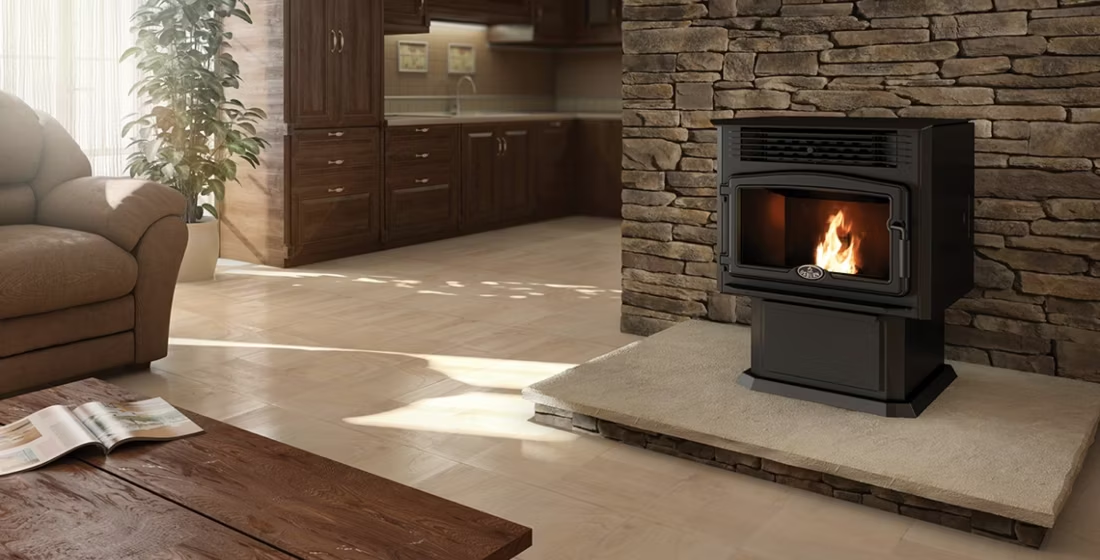
That doesn't mean pellet heat is off the table. Homeowners in Stow who want supplemental zone heat for a finished basement, a three-season room, or backup warmth during an Ohio Edison outage do install pellet stoves and inserts, sourcing bagged pellets from regional producers like Indeck Energy Services, Lignetics, and Somerset Pellet Fuel through farm-supply and home-improvement stores around Akron-Canton. If that's your situation, a local hearth dealer can tell you honestly whether a pellet unit fits your home or whether a gas insert is the simpler path.
Three steps. No salesperson until you're ready.
Tell us about your project
Your zip code, your situation, and the fuel you're leaning toward—or let the answers point you to one.
See what's actually available
The brands dealers within 100 miles genuinely carry—real options, never a catalog mirage.
Get your dealer & Project Guide
A trusted local dealer, plus the free Project Guide & Parts List that names every component of the job.
Frequently Asked Questions
How much does a pellet stove installation cost in Stow?
Because pellet isn't a mainstream heating choice in this part of Summit County, pricing here isn't as standardized as it is for the gas inserts most Stow homeowners install. Across Northeast Ohio, a freestanding pellet stove with hearth pad and through-wall pellet venting typically runs $3,500 to $6,500 installed, and a pellet insert into an existing masonry fireplace can run higher once a chimney liner is involved. Get quotes from at least two dealers—since there's no dense pellet-focused retail presence in Stow the way there is for gas and electric, prices vary more from one installer to the next.
Is a pellet stove a good fit for a Stow home?
For most Stow houses, not as a primary heat source. The city is fully built out with natural gas infrastructure, and gas furnaces and gas fireplace inserts are simply the default here, the way pellet stoves are the default in more rural, off-the-gas-grid parts of Ohio. Where a pellet stove does make sense in Stow is as supplemental zone heat—a finished basement that runs cold, a converted garage, or a three-season room the furnace doesn't reach well. In that scenario a pellet stove can genuinely outperform running the whole-house furnace harder just to heat one room.
Where do I buy pellet fuel near Stow?
There's no dedicated pellet retailer inside Stow city limits, but bagged pellets from regional producers—Indeck Energy Services, Lignetics, and Somerset Pellet Fuel among them—are stocked seasonally at farm-supply and home-improvement stores throughout the Akron-Canton area. Buy early in the fall; because pellet demand is low locally, some stores bring in a limited run and can sell out by January in a colder-than-average winter.
Pellet stove vs. gas fireplace insert—which makes more sense in Stow?
For nearly every Stow homeowner, a gas insert is the more practical choice. Natural gas service reaches the overwhelming majority of homes here, gas inserts run at the flip of a switch with no fuel storage or ash cleanup, and the local dealer network for gas hearth products is well established. Pellet stoves need a hopper refill every day or two during heating season, produce ash that requires regular emptying, and depend on an electric auger and blower—meaning they won't run during a power outage without a battery backup. Pellet pulls ahead mainly if you want a real-flame look and radiant feel gas can't fully replicate, or you're heating a space with no gas line run to it.
Will a pellet stove work if the power goes out?
Not without help. Pellet stoves rely on an electric auger to feed fuel and a blower to distribute heat, so a standard unit goes cold the moment Ohio Edison service drops. Some homeowners pair a pellet stove with a small battery backup or a portable generator sized for the stove's low wattage draw—typically under 200 watts—specifically to keep it running through Ohio's occasional ice-storm outages. If uninterrupted backup heat during outages is the priority, a battery-backed gas insert or a properly vented gas log set is generally the more reliable choice in Stow.
Do I need a permit to install a pellet stove in Stow?
Yes. Pellet stove installations typically require a building permit through the City of Stow Building Department, covering hearth pad clearance, the wall penetration for pellet venting, and inspection of the finished install. Because pellet stoves are installed far less often here than gas or electric appliances, it's worth confirming up front that your installer is pulling the permit—some installers who mostly work out-of-town pellet jobs may not be familiar with Stow's specific inspection process.
What size pellet stove do I need?
Sizing depends on the specific space you're heating, which in Stow is almost always a supplemental-heat scenario rather than whole-house heat. A small pellet stove rated for 1,000-1,500 square feet is usually plenty for a finished basement or bonus room; anything larger is overkill if your gas furnace already handles the rest of the house. A local dealer will look at your room's insulation and ceiling height and recommend a specific BTU output rather than going by square footage alone.
How much maintenance does a pellet stove need?
More day-to-day attention than a gas insert, less than a wood stove. Expect to empty the ash pan every few days during regular use, clean the burn pot weekly to keep the flame consistent, and have the exhaust vent and auger mechanism professionally inspected once a year, typically in late summer before heating season starts. Because there are few pellet-specialty service techs based in Stow itself, ask your installer whether they offer ongoing service or plan to work with a technician based in greater Akron.
Neither wood nor pellet stoves seem common in Stow—does that mean I shouldn't get one?
You're right that neither is mainstream here, and it comes down to the same reason: Stow is a mature, fully gas-piped suburb where furnaces and gas hearth products dominate, without the wood-lot access or rural infrastructure that makes wood and pellet heat the default in less developed parts of Summit County. That said, uncommon doesn't mean wrong for you. Homeowners who want the ambiance of a real flame, need heat in a space the furnace doesn't reach well, or want a fuel source that doesn't depend on a gas line still install pellet stoves in Stow every year—you'll just want a dealer who's honest about whether it fits your specific house rather than a one-size-fits-all sales pitch.
Why is my open fireplace making my house colder?
Open fireplaces suck—literally. As the fire burns, it consumes air your furnace already paid to heat and pulls it out through the chimney, so the house is actually colder after the fire goes out than before you lit it. An insert fixes this: it seals the chimney, puts fixed glass across the front, and turns that hole in your house into a real heat source.
What's the difference between an insert and a zero-clearance fireplace?
An insert is a fireplace that slides into a pre-existing wood-burning fireplace—if you don't have one, there's nothing to insert it into. A zero-clearance fireplace is built into a framed wall, which makes it the answer for remodels and new construction. Simple test: existing masonry fireplace means insert; blank or framed wall means zero-clearance.
What is an in-home preview and do I need one?
It's a visit where a hearth professional measures your space, confirms the model you picked actually works in your home, and walks the specs—framing, gas line, venting, finish work—before anything is ordered. Some details you just can't know until you see the house. Never make a down payment without one; it's the single most-skipped step that burns buyers.
How much should I budget for a fireplace?
For an average home—covering the fireplace, the vent pipe, and basic installation—a budget between $3,900 and $5,500 gives you a lot of options across wood, gas, and pellet. By the time you add finish work, gas line, and electrical, the average complete installation lands between $5,000 and $12,000 all-in. In a remodel or new build, a good rule is to put about 2.5% of the total project cost toward the fireplace.
Nearby Dealers
Hearth shops serving Stow and the surrounding area.
Pellet Brands Stocked Around Stow
Manufacturers will point you to the nearest stocking dealer.
See if a pellet stove makes sense in Stow.
Tell us about your home and heating goals, and we'll give you a straight answer—plus a free Project Guide & Parts List with the exact parts and a trusted local dealer if a pellet stove is the right fit for you.
Find Your Fireplace →