
Fireplace Resources for Summit County, Ohio.
Natural fireplace resources for every city and township in Summit County—from Akron and Cuyahoga Falls to Hudson, Twinsburg, and Green. Find a trusted local hearth retailer who knows what actually works in this market.
Every Project Starts From One of These Five Situations
Urban heating realities across Summit County, Ohio.
Summit County is one of Ohio's most densely populated counties—more than 830,000 people packed into roughly 420 square miles anchored by Akron, with Cuyahoga Falls, Stow, Twinsburg, Hudson, Barberton, Green, and a dozen other cities and townships filling out the rest. Winters are real but moderate for the region—average lows around 21°F and roughly 5,538 heating degree days, colder than the Ohio Valley but nowhere near the snowbelt extremes of Buffalo, NY just up Lake Erie. The county's hardwood forests, especially the oak, hickory, maple, and cherry stands preserved in Cuyahoga Valley National Park, are real and abundant—but very few homes here actually heat with wood. Dense subdivisions, HOA covenants, and long-established natural gas service through Dominion Energy Ohio have made wood-burning appliances a rarity rather than a norm, even in older Akron and Cuyahoga Falls neighborhoods that still have working masonry chimneys.
What you'll find on this hub: hearth retailers, service technicians, and fuel suppliers serving communities across the county—from downtown Akron out to Richfield, Bath, and Sagamore Hills in the north, Norton and New Franklin in the southwest, and Twinsburg and Macedonia along the eastern edge. Gas and electric fireplaces are the practical mainstream here; wood and pellet units exist but are genuinely uncommon, and this hub is honest about that rather than pretending otherwise. Pick your fuel below for local dealers, installation costs, and recommended units for your specific project.
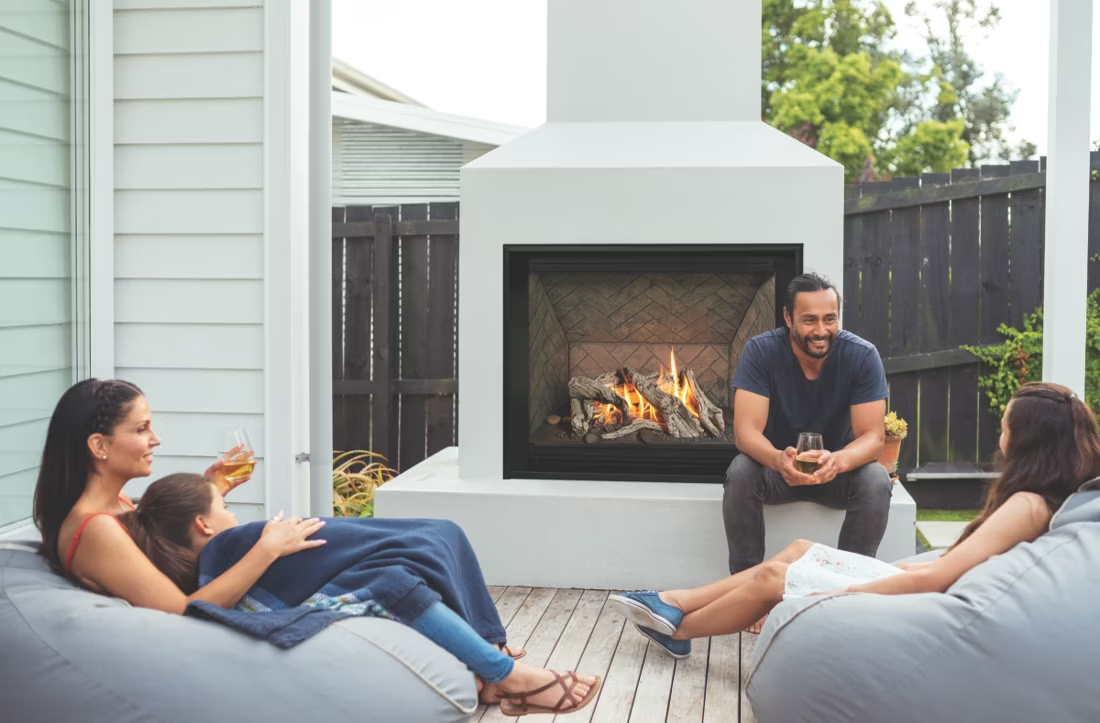
Four fuels. One honest answer for Summit County.
Three steps. No salesperson until you're ready.
Tell us about your project
Your zip code, your situation, and the fuel you're leaning toward—or let the answers point you to one.
See what's actually available
The brands dealers within 100 miles genuinely carry—real options, never a catalog mirage.
Get your dealer & Project Guide
A trusted local dealer, plus the free Project Guide & Parts List that names every component of the job.
Frequently Asked Questions
Which fuel works best in Summit County?
For most Summit County homes, it's gas or electric—not wood or pellet, despite what you might expect from an Ohio county with this much surrounding hardwood forest. Dominion Energy Ohio's natural gas network reaches most of the county, so gas fireplace inserts and direct-vent units are the practical, low-maintenance choice for the majority of homeowners in Akron, Cuyahoga Falls, and Stow. Electric fireplaces fill in where gas isn't an option or where zero-clearance installation matters—condos, apartments, and older Hudson and Fairlawn homes where a full masonry retrofit isn't feasible. Wood stoves exist mostly as legacy appliances in pre-1970s farmhouses near Richfield or Bath that still have working chimneys, not as new installs. Pellet stoves are essentially absent residentially—the pellet suppliers serving this region, like Indeck Energy Services and Somerset Pellet Fuel, sell primarily into industrial and agricultural markets, not home hearth retail.
Do I need a permit to install a fireplace in Summit County?
Yes, in almost every case. Gas fireplace, insert, and stove installations require a building permit plus a separate gas line permit handled by a licensed gas fitter—this is standard across Summit County's cities and townships. Electric fireplace installs typically don't need a permit unless they involve new wiring or a dedicated circuit for a built-in unit. Where you apply depends on where you live: incorporated cities like Akron, Cuyahoga Falls, and Stow each run their own building departments, while unincorporated townships fall under the Summit County Building Standards Department. Most local hearth retailers pull the permit as part of the installation, so this rarely falls on the homeowner directly.
Are there air quality restrictions on wood burning in Summit County?
No—Summit County doesn't have the winter inversion or non-attainment issues that trigger burn advisories in basin-shaped regions out West. There's no formal restriction on wood burning here. That said, wood heat is still uncommon in practice, and the reasons are more practical than regulatory: dense subdivisions in Green and Twinsburg, HOA covenants that prohibit new chimneys, and decades of reliable Dominion Energy Ohio gas service have simply made gas and electric the default. If you have an existing masonry chimney in an older Akron or Barberton home and want to keep using it, there's no air-quality barrier stopping you—you're just in the minority.
Can one local hearth retailer handle all four fuel types?
Realistically, no—and that's fine, because almost nobody needs all four here. Most Summit County hearth retailers specialize in gas and electric, which covers the overwhelming majority of local installs. A smaller number of dealers, often the ones with roots in older Akron neighborhoods, also service or restore existing wood-burning masonry fireplaces, but you won't find much dedicated wood-stove retail. Pellet stove retail is close to nonexistent county-wide, since the regional pellet suppliers focus on industrial rather than residential customers. If you're set on wood or pellet heat, expect a narrower dealer search than for gas or electric.
How does service work across different parts of Summit County?
Summit County is compact—about 420 square miles—so most gas and electric service technicians based in Akron or Cuyahoga Falls can reach Twinsburg, Hudson, Norton, or Richfield within the same day without a significant travel fee. That's different from sprawling rural counties where a service call means hours of driving. The tighter geography also means appointment availability is usually better; pre-season gas fireplace inspections (typically scheduled September through November) fill up fastest, so booking early is worth it if you want service before the first cold snap.
What's the typical cost range for fireplace installation across fuel types in Summit County?
Gas fireplace, insert, or stove installation typically runs $4,000–$9,500 in Summit County, with the lower end covering straightforward inserts into existing fireplaces already piped for gas, and the higher end covering new direct-vent installations requiring line extension. Electric fireplaces run $200–$2,800 for the unit itself, plus $300–$1,000 in labor for anything beyond a simple plug-and-play placement—most wall-mount and insert installs fall in that range. Wood stove installation, where it happens, tends to run higher than national averages, often $5,500–$10,000, simply because qualified installers and available units are scarcer here. Pellet stove installation is rare enough that most retailers don't quote it as a standard line item.
Can I install a fireplace myself?
If you're putting a fire in your house on purpose, it's best to work with an expert. Unless you're genuinely experienced in framing, gas line, vent pipe, and the national code on clearances to combustibles, have a professional do it—and ideally the same company that sells you the fireplace, so warranty, service, and liability all live under one roof.
How much should I budget for a fireplace?
For an average home—covering the fireplace, the vent pipe, and basic installation—a budget between $3,900 and $5,500 gives you a lot of options across wood, gas, and pellet. By the time you add finish work, gas line, and electrical, the average complete installation lands between $5,000 and $12,000 all-in. In a remodel or new build, a good rule is to put about 2.5% of the total project cost toward the fireplace.
I know I want a fireplace—where do I actually start?
Do two things today: snap a photo of the wall or fireplace you want to transform, and take a tape measure to the space—width, height, depth. Those two artifacts answer most of a hearth professional's first questions. Then settle fuel (wood, gas, pellet, or electric) and set a realistic budget: $3,900–$5,500 covers fireplace, vent, and basic install for most homes.
What is an in-home preview and do I need one?
It's a visit where a hearth professional measures your space, confirms the model you picked actually works in your home, and walks the specs—framing, gas line, venting, finish work—before anything is ordered. Some details you just can't know until you see the house. Never make a down payment without one; it's the single most-skipped step that burns buyers.
Stove and Fireplace Dealers in Summit County
Listings include WhyFire partner dealers, dealers we have verified as authorized for the brands we recommend, and established local businesses that carry hearth products. Every listing shows which one it is. The ones marked Preferred run on WhyFire's software, so they can show you real pricing and book your appointment right here. No manufacturer pays for placement. How we verify dealers →
StarFire Distributors
The Place
Mason Steel & Supply
All Construction Services
Forte Builders, Inc.
Custom Fireplace Shop
Find your fireplace in Summit County.
Get matched with a trusted local Summit County dealer and receive a free Project Guide & Parts List—the exact plan, parts, and vent kit for your project, plus our recommended local installer.
Find Your Fireplace →