
Find the right pellet stove for Shelby County's long heating season.
With a heating season as long and cold as Madison, WI's, and winter lows averaging 18°F, Shelby County homes burn a lot of fuel between October and April. A pellet stove gives you thermostat-set, hands-off heat without the wood splitting. Find the right unit and get matched with a vetted local dealer.
Every Project Starts From One of These Five Situations
Automated heat for a Zone 5A winter.
Shelby County sits in climate zone 5A, with a long, cold heating season comparable to Madison, WI, and one that runs long past what most people expect from western Ohio. Winter lows average 18°F, and stretches of single-digit nights aren't unusual from Sidney down through Anna and Botkins. There's no regional air quality non-attainment issue here, so burning isn't a seasonal question mark the way it is in some western states—it's simply a matter of picking the right appliance for the house.
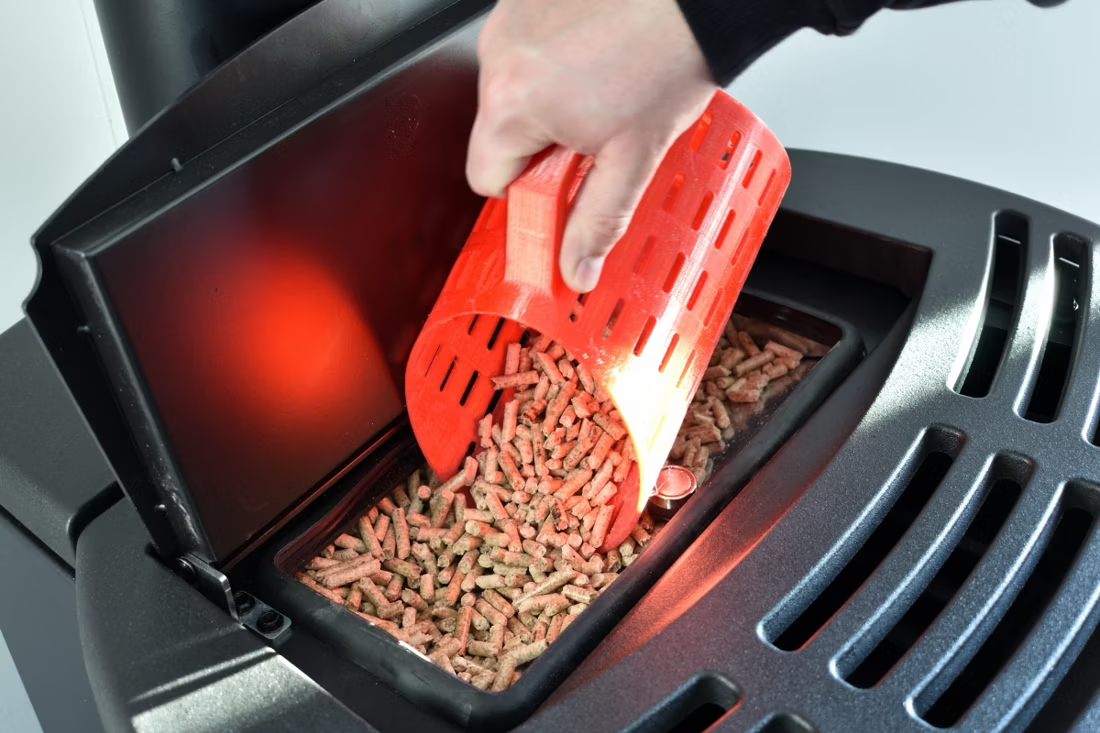
Pellet fuel supply in the region runs through producers like Indeck Energy Services, Lignetics, and Somerset Pellet Fuel, giving Shelby County homeowners reasonably local sourcing rather than long freight hauls. For homes with abundant hardwood on the property—oak, hickory, maple, and cherry are all common locally—wood heat has its appeal, but pellet stoves solve the practical problems of storage, splitting, and daily tending. Load the hopper, set the thermostat, and the auger handles the rest—a real advantage for households where nobody wants to be out in a January wind chill feeding a woodpile every few hours.
Three steps. No salesperson until you're ready.
Tell us about your project
Your zip code, your situation, and the fuel you're leaning toward—or let the answers point you to one.
See what's actually available
The brands dealers within 100 miles genuinely carry—real options, never a catalog mirage.
Get your dealer & Project Guide
A trusted local dealer, plus the free Project Guide & Parts List that names every component of the job.
Frequently Asked Questions
How much does a pellet stove installation cost in Shelby County?
Pellet stove and insert installations in Shelby County typically run in line with regional Midwest pricing—expect somewhere in the $3,000 to $6,500 range depending on the unit, whether it's a freestanding stove or an insert into an existing fireplace, and the venting path required. Inserts going into an existing masonry fireplace with a usable chimney tend to land on the lower end since the vent route is already there. New construction or homes without an existing fireplace need a fresh through-wall vent kit, which adds to the cost. A local dealer can give you a firm number after seeing the install site.
How much do pellets cost and where do I buy them in Shelby County?
Bagged pellets are typically sold by the ton (fifty 40-lb bags), and Shelby County homeowners generally source from regional producers and distributors carrying brands like Lignetics, Somerset Pellet Fuel, and Indeck Energy Services. Pricing fluctuates with hardwood pellet supply and demand each fall, so it's worth buying early in the season—September or October—before cold weather drives a rush. A typical Shelby County home burning a pellet stove as a primary or heavy supplemental heat source through a winter as long and cold as Madison, WI's will go through 2 to 3 tons in a season, so plan storage space accordingly.
Do I need a permit to install a pellet stove in Shelby County?
Most jurisdictions in Shelby County require a building permit for a new pellet stove or insert installation, particularly when it involves cutting a new vent penetration through an exterior wall or roof. Local dealers who handle installation typically pull the permit as part of the job, so you're not left navigating it yourself. Because pellet stoves vent through a small-diameter PL vent pipe rather than a full masonry chimney, the permitting and inspection process is usually more straightforward than a wood stove install—but it's still a step you don't want to skip, since it affects your homeowner's insurance and any future home sale.
What size pellet stove do I need for my Shelby County home?
Sizing depends on square footage, insulation quality, and whether the stove is your primary heat source or a supplement to central heat. As a general guide for a 5A climate with an 18°F average winter low: a small stove (under 1,000 sq ft) suits a single zone or a well-insulated smaller home; a medium stove (1,000–2,000 sq ft) covers most Shelby County ranch and two-story homes; larger stoves handle bigger or older, leakier farmhouses common around Fort Loramie and Russia. Oversizing leads to a stove that short-cycles and wastes pellets; undersizing leaves you cold on the coldest nights of the season. A local dealer will size the unit correctly during an in-home visit—that's a service worth using rather than guessing from a box store chart.
Will my pellet stove work during a power outage?
No—this is the one real tradeoff against wood stoves. Pellet stoves rely on an electric auger to feed fuel and a blower to distribute heat, so they shut down without power. In a county that sees its share of ice and windstorm outages during the heart of winter, that's worth planning around. Some homeowners pair a pellet stove with a small battery backup or generator specifically to keep it running through a multi-hour outage; others keep a wood-burning appliance elsewhere in the house as backup. Ask your local dealer about battery backup compatibility for the specific model you're considering.
What's the difference between a pellet stove and a pellet insert?
A pellet stove is a freestanding unit that sits on the floor and vents through a wall or existing chimney chase—it can go almost anywhere with the right clearances. A pellet insert is built to slide into an existing masonry fireplace opening, converting an old wood-burning fireplace into an automated, thermostat-controlled heat source while reusing the existing chimney as a chase for the smaller vent pipe. For Shelby County homes with an existing fireplace that's currently just decorative, an insert is usually the more efficient upgrade path. Homes without an existing fireplace opening are better suited to a freestanding stove.
How often does a pellet stove need to be cleaned and serviced?
Pellet stoves need more frequent attention than a lot of homeowners expect—the ash pan should be emptied every few days to weekly depending on burn rate, and the burn pot cleaned out regularly to keep the fire feeding properly. A full annual service—checking the auger motor, exhaust blower, gaskets, and venting—is recommended before each heating season, ideally in late summer or early fall ahead of Shelby County's long winter run. Skipping the annual service is the most common reason a pellet stove starts underperforming or throwing error codes mid-winter.
Pellet stove vs. wood stove—which is right for my Shelby County home?
Wood stoves work without electricity, offer lower ongoing fuel cost if you have access to your own hardwood—oak, hickory, maple, and cherry are all common on Shelby County properties—and deliver the traditional fire experience. Pellet stoves trade that self-sufficiency for convenience: load the hopper, set the thermostat, and walk away, with cleaner burning and easier ash handling, but they need continuous power to run the auger and blower. For a household that wants low-maintenance, consistent heat and doesn't mind a wired appliance, pellet wins. For a rural property with wood access and a priority on storm-proof backup heat, wood is often the better call. Some Shelby County homes install both—pellet for daily convenience, wood as the outage backup.
What pellet brands are available near Shelby County?
Regional supply includes Indeck Energy Services, Lignetics, and Somerset Pellet Fuel, all of which distribute hardwood and softwood pellet fuel through Midwest dealer networks that reach Shelby County. Quality varies by brand and even by batch—look for low-ash, low-fines premium-grade bags (under 1% ash content) for the cleanest burn and least maintenance. A local dealer can tell you which brands they carry consistently and which have performed best in customer stoves through past winters.
How often does a pellet stove need cleaning?
A clean pellet stove is a happy pellet stove. Plan on cleaning the burn pot about once a week when you're burning regularly—ash and clinkers gum up the air holes just like a pellet barbecue. Most pellet stove problems trace back to skipped cleaning that nobody explained up front. Some designs make it easy with a trapdoor burn pot: pull a lever and the gunk drops into the ash pan.
Why is a fireplace insert so efficient?
An insert does two things: it seals the chimney completely, so you stop losing air you already paid to heat, and it radiates warmth into the room through the firebox and glass. Most add a heat-exchange fan that pulls cool room air underneath, wraps it around the hot firebox, and pushes it back out warm. Your home is more efficient before you've even lit the first fire.
What is an in-home preview and do I need one?
It's a visit where a hearth professional measures your space, confirms the model you picked actually works in your home, and walks the specs—framing, gas line, venting, finish work—before anything is ordered. Some details you just can't know until you see the house. Never make a down payment without one; it's the single most-skipped step that burns buyers.
Should the dealer who sells my fireplace also install it?
Ideally, yes. A fireplace project involves vent pipe, gas line, electrical, and often tile or stone. Hire three or four separate trades and you own the liability and the game of telephone between them. One company selling and installing means one accountable party, start to finish—ask about factory training, on-time completion records, and what happens if an inspection fails.
Pellet Brands Stocked Around Shelby County
Manufacturers will point you to the nearest stocking dealer.
Find your pellet stove in Shelby County.
Tell us a bit about your home and we'll put together a free Project Guide & Parts List—the right pellet stove or insert, the vent kit you'll need, and a match with a trusted local Shelby County dealer to install it.
Find Your Fireplace →