
Add fireplace warmth anywhere in Shelby County—no chimney needed.
From a Sidney living room to a Jackson Center ranch home, electric heat plugs into an existing outlet or a single new circuit—no chimney, no gas line, no permit hassle. Find the right unit and connect with a trusted local dealer.
Every Project Starts From One of These Five Situations
Zone heat that fits into any wall, any budget, any building.
Shelby County sits in west-central Ohio's climate zone 5A, with roughly 5,911 heating degree days a year and average winter lows near 18°F—a steady, unglamorous cold that runs from November into March, not unlike a Madison, Wisconsin winter. That's enough heating demand that most Shelby County homes, from older farmhouses around Fort Loramie and Russia to newer builds near Anna and Botkins, run a furnace as primary heat and look for supplemental warmth in the rooms they actually live in. County seat Sidney and the Airstream-manufacturing town of Jackson Center both have a mix of century-old housing stock without existing chimneys and newer construction where cutting a hole for direct-vent gas or running a masonry flue simply isn't practical.
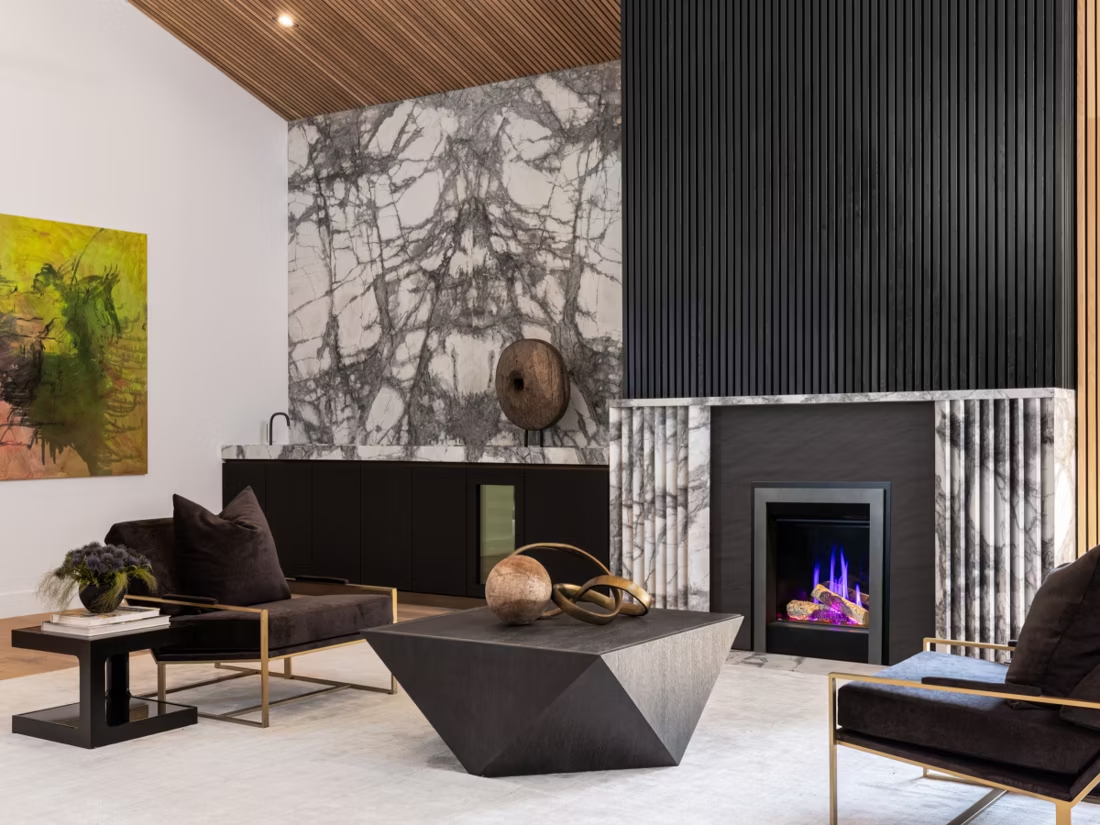
That's exactly the gap electric fireplaces fill. A plug-in insert or built-in wall unit installs in an afternoon, needs no venting and no combustion air, and produces real supplemental heat for a bedroom, sunroom, or finished basement without touching your furnace setup. Sidney residents draw power through the city's own municipally owned electric utility, while much of rural Shelby County—Botkins, Anna, the townships around Fort Loramie—is served by Pioneer Electric Cooperative, both of which keep residential rates competitive enough that running a 1,500-watt unit through the coldest stretch of winter is a modest add to the bill. A trusted local dealer can tell you whether a simple plug-in insert covers your room or whether a built-in unit needs a dedicated 240-volt circuit run by a licensed electrician.
Three steps. No salesperson until you're ready.
Tell us about your project
Your zip code, your situation, and the fuel you're leaning toward—or let the answers point you to one.
See what's actually available
The brands dealers within 100 miles genuinely carry—real options, never a catalog mirage.
Get your dealer & Project Guide
A trusted local dealer, plus the free Project Guide & Parts List that names every component of the job.
Frequently Asked Questions
How much does an electric fireplace installation cost in Shelby County?
Most electric fireplace projects in Shelby County run between $500 and $2,000. A freestanding electric insert or stove that plugs into an existing 120-volt outlet sits at the low end—often just the cost of the unit plus a couple hours of carpentry to build or trim a surround. A built-in wall unit or linear electric fireplace that requires a dedicated 240-volt circuit, drywall work, and a mantel or media wall surround runs higher, especially if an electrician has to open a wall or run new wire from the panel. Homes in older Sidney neighborhoods with older electrical panels sometimes need a panel upgrade first, which adds to the total.
Do I need a permit to install an electric fireplace in Shelby County?
A simple plug-in electric insert or stove generally doesn't require a permit—it's treated like any other appliance you plug into the wall. If you're having a built-in unit installed that requires a new dedicated circuit, the electrical work itself needs to be pulled through the Shelby County Building Regulations Department for unincorporated areas, or the City of Sidney's permitting office if you're inside city limits. Most local dealers coordinate with a licensed electrician who handles that paperwork as part of the install, so homeowners rarely have to deal with it directly.
Will my electric fireplace work during a power outage?
No—and this is worth being direct about. Electric fireplaces run entirely on grid power, so if Sidney's municipal electric service or Pioneer Electric Cooperative's rural lines go down in an ice storm, the unit goes dark along with everything else on that circuit. If backup heat during outages matters to your household, a wood stove or a battery-backed gas unit is a better fit for that specific need. Electric is best understood as everyday supplemental heat and ambiance, not storm insurance.
What's the difference between an electric fireplace, insert, and wall unit?
An electric insert is sized to slide into an existing fireplace opening—a common upgrade for Shelby County homes that have an old, unused masonry fireplace they want to make functional again without chimney work. A freestanding electric stove sits on the floor and can go almost anywhere with an outlet nearby. A built-in wall unit or linear electric fireplace is framed into new construction or a remodel, often the centerpiece of a media wall, and typically needs that dedicated circuit mentioned above. For a home with an existing but unused fireplace opening, an insert is usually the simplest and least invasive option.
Electric vs. gas vs. wood—which fits Shelby County homes best?
Wood offers the highest heat output and works without power, drawing on the oak, hickory, maple, and cherry that's plentiful in this part of Ohio—but it means chimney work, cutting or buying firewood, and ash cleanup. Gas delivers strong, instant heat and can run during outages with the right ignition system, but it requires either natural gas service or a propane tank plus venting. Electric skips all of that: no fuel storage, no venting, no combustion byproducts, and the lowest installation cost of the three—the tradeoff is that it's supplemental heat, not a whole-home solution, and it goes out with the power. Many Shelby County homeowners end up with a furnace for primary heat and an electric unit in the room they actually spend evenings in.
How much space can an electric fireplace actually heat?
Most residential electric fireplaces are rated around 4,600–5,000 BTU (roughly 1,500 watts), which comfortably heats a single room of 400–500 square feet in a typical insulated Shelby County home—a den, bedroom, or finished basement room. They're not designed or sized to heat an entire house, even a small one, especially once outdoor temperatures drop into the teens like a typical January night here. Think of it as zone heating you can turn on for the room you're in rather than a furnace replacement.
Can I install an electric fireplace in a rental or condo in Shelby County?
Yes—this is one of the strongest use cases for electric. A plug-in insert or stove requires no chimney, no gas line, and no structural changes, which makes it one of the few fireplace options that's fully reversible for renters and condo owners in Sidney or Jackson Center who can't modify a shared wall or exterior venting. Landlords generally have no objection since there's no combustion, no smoke, and no permanent alteration if you choose a freestanding model over a built-in.
Are electric fireplaces expensive to run in Shelby County?
Running cost depends on your local rate and how many hours you run the unit on its heat setting rather than just flame effect. Sidney's municipally owned electric utility and Pioneer Electric Cooperative's rural rates both fall in a reasonably competitive range for this part of Ohio, and a 1,500-watt unit run for a few hours each evening through a cold stretch typically adds somewhere in the range of $10–$25 a month to a household's bill. Running it on flame-only mode without heat costs only pennies, which is a popular option in shoulder-season months when the furnace is already handling the heavy lifting.
What should I look for in a local electric fireplace dealer near Shelby County?
Look for a dealer who does an in-home consultation before recommending a unit—one who asks about your electrical panel capacity, the room's square footage, and whether you want a plug-in insert or a hardwired built-in, rather than pointing you to whatever's in stock. A good local installer will also be upfront about whether your project needs a licensed electrician for a new circuit, and will handle that coordination rather than leaving you to find one separately. Avoid big-box guesswork on sizing and surround fit—a properly matched local dealer gets both right the first time.
Can I put a TV above my fireplace?
Yes—with an asterisk. Fireplaces are hot and TVs don't like heat. Either put a mantel between them to deflect rising warmth, or choose a fireplace with heat-management technology that creates a cool zone on the wall above—the wall stays around 125 degrees, barely warm, while the room still gets full heat. If you like clean lines and don't want a mantel, heat management is the answer.
Does an electric fireplace need a vent or chimney?
No—that's its superpower. An electric fireplace needs a wall and an outlet, period. No vent pipe, no gas line, no clearances to design around, which is why it works in bedrooms, offices, apartments, and walls where venting a gas or wood unit would be impractical or impossible. Installation is typically the simplest and least expensive of any fireplace type.
What is an in-home preview and do I need one?
It's a visit where a hearth professional measures your space, confirms the model you picked actually works in your home, and walks the specs—framing, gas line, venting, finish work—before anything is ordered. Some details you just can't know until you see the house. Never make a down payment without one; it's the single most-skipped step that burns buyers.
Does a fireplace add value to my home?
On average, a fireplace adds back to the home about the same amount you spent installing it. Add the monthly savings from heating the rooms you actually use instead of the whole house—often hundreds of dollars a year—and the value case is strong before you even count what a fire does for how your family uses the room.
Find your electric fireplace in Shelby County.
Tell us a bit about your home and we'll match you with a trusted local dealer and send over a free Project Guide & Parts List—a plan for your electric fireplace project in Shelby County with the exact parts and your recommended local installer.
Find Your Fireplace →