
Steady pellet heat for Ross County winters.
From Chillicothe to the farm country around Kingston and Bainbridge, Ross County sees winter lows averaging 21°F and over 5,100 heating degree days a year. Pellet heat gives you thermostat-set warmth without cutting or stacking cordwood—find the right stove and connect with a trusted local dealer.
Every Project Starts From One of These Five Situations
The convenience play for a Scioto Valley winter.
Ross County sits in the Scioto Valley at the edge of Ohio's Appalachian foothills, anchored by Chillicothe with roughly 27,000 residents spread across the county's mix of town neighborhoods and working farmland stretching toward Kingston, Bainbridge, and Frankfort. Climate zone 5A and just over 5,100 heating degree days a year mean a real, sustained heating season—not a mild one, but not the brutal single-digit stretches you'd find farther north or at elevation. Ross County also has no listed air quality non-attainment issues, which means homeowners here aren't dealing with winter burn curtailment days the way some western and mountain counties are.
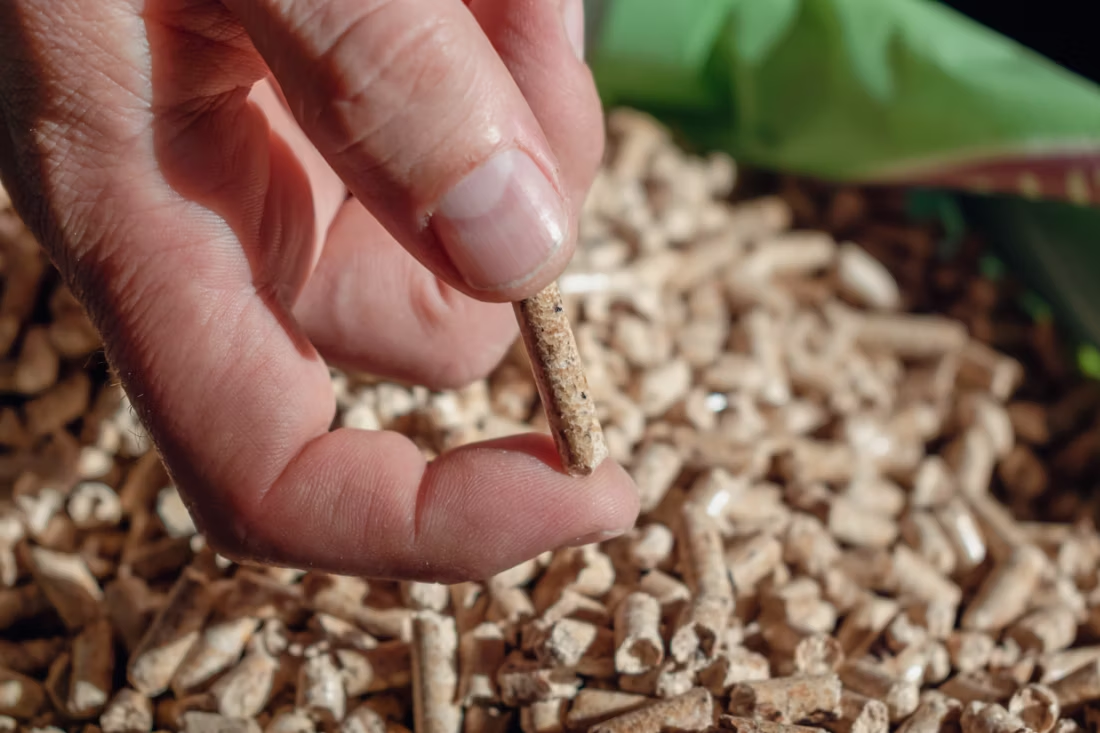
That's part of why pellet appliances have found a solid niche here. Regional suppliers like Indeck Energy Services, Lignetics, and Somerset Pellet Fuel produce pellets largely from hardwood residuals—a natural fit given how much oak, hickory, maple, and cherry grows across Ross County's woodlots and the nearby Tar Hollow and Scioto Trail state forest land. For a household that wants consistent, thermostatically-controlled heat without the labor of splitting and stacking cords, a pellet stove or insert delivers a lot of the ambiance of a wood fire with a fraction of the physical work.
Three steps. No salesperson until you're ready.
Tell us about your project
Your zip code, your situation, and the fuel you're leaning toward—or let the answers point you to one.
See what's actually available
The brands dealers within 100 miles genuinely carry—real options, never a catalog mirage.
Get your dealer & Project Guide
A trusted local dealer, plus the free Project Guide & Parts List that names every component of the job.
Frequently Asked Questions
How much does a pellet stove installation cost in Ross County?
Cost depends mainly on the unit size, whether you're venting through an exterior wall or reusing an existing chimney for an insert, and whether a new hearth pad is required for clearance. A straightforward pellet insert into an existing masonry fireplace opening in a Chillicothe home is typically less involved than a freestanding stove installed in a new location that needs fresh wall penetration and venting run. A local Ross County dealer will size the job and give you a firm number after seeing your home—that installed cost breakdown, including the exact venting kit, is part of the free Project Guide & Parts List we put together for you.
What size pellet stove do I need for my Ross County home?
Sizing depends on square footage, insulation, and whether the stove is your primary heat source or supplemental. As a rough guide for Ross County's 5A climate and roughly 5,100 heating degree days: smaller units suit a single room or a cabin-style structure, mid-size units handle a typical Chillicothe ranch or two-story main living area, and larger units are needed for whole-home heating in bigger or older, draftier farmhouses common in the rural stretches around Kingston and Bainbridge. Older uninsulated farmhouses often need to size up compared to a newer, tighter-built home of the same square footage—a local dealer will walk through this with you during an in-home visit.
Where can I buy pellet fuel in Ross County?
Pellets are typically sold in 40-pound bags or by the ton, often through farm supply stores, hardware stores, and hearth dealers serving the Chillicothe area. Regional producers including Indeck Energy Services, Lignetics, and Somerset Pellet Fuel supply much of the pellet fuel sold in south-central Ohio, and many of those pellets are milled from hardwood residuals—the same oak, hickory, and maple that make up a lot of Ross County's own woodlots. Buying by the ton ahead of the season is the most common way to lock in a price and avoid running short mid-winter.
Do I need a permit to install a pellet stove in Ross County?
In most cases, yes—a mechanical or building permit is required, issued either through the city of Chillicothe or the Ross County building department depending on where the home is located. Most local dealers handle the permitting as part of the installation, so you typically don't have to coordinate it yourself. One advantage in Ross County: since there's no listed air quality non-attainment designation here, pellet stove owners don't face the kind of winter burn curtailment restrictions that exist in some other parts of the country.
What's the difference between a pellet stove and a pellet insert?
A pellet stove is a freestanding unit installed on a hearth pad, with venting run through an exterior wall or existing chimney chase—it can go in almost any room with the right clearances. A pellet insert is built to slide into an existing masonry fireplace opening, which is a common upgrade for older homes around Chillicothe that already have a traditional fireplace but want real heat output instead of an open, inefficient hearth. For a home without an existing fireplace, a freestanding stove is usually the simpler path.
Do pellet stoves work during a power outage?
No—pellet stoves rely on electricity to run the auger that feeds fuel, the igniter, and the combustion blower, so a power outage shuts them down unless you have a battery backup or generator set up. That's worth thinking through in Ross County, where ice storms and downed lines can knock out rural power for stretches at a time. If reliable heat during outages is a priority, some homeowners here pair a pellet unit for everyday convenience with a battery backup, or choose a wood stove for the household's emergency heat instead.
How often does a pellet stove need cleaning and maintenance?
Ash removal is a weekly task during regular winter use—most units have an ash pan that needs emptying every few days to a week depending on how much you're running it. Beyond that, plan on an annual professional inspection and cleaning of the venting, auger, and burn pot before the season starts, similar to how a chimney sweep services a wood-burning appliance. Skipping this is the most common reason pellet stoves lose efficiency or start smoking into the room.
Pellet vs. wood—which is right for my Ross County home?
Wood is the traditional choice in this part of Ohio, and it's easy to see why—oak, hickory, maple, and cherry are all common locally, and plenty of Ross County households have access to their own woodlots or nearby state forest land. Wood stoves also keep working without electricity, which matters during winter outages. Pellet stoves trade that self-sufficiency for convenience: load the hopper, set the thermostat, and get consistent heat without splitting or stacking cords. For a household that values low-maintenance daily operation over the ritual of tending a fire, pellet is usually the better fit; for households prioritizing backup heat independent of the power grid, wood tends to win.
Pellet vs. gas—which is right for my Ross County home?
Gas fireplaces and inserts give you instant, switch-operated heat with no fuel handling at all, provided you have a natural gas line or a propane tank set up—common in rural parts of the county without natural gas service. Pellet stoves require periodic refueling from bagged or bulk pellet fuel, but generally cost less to run per BTU and give more of that visible, radiant fire experience gas can't fully replicate. If your home already has gas service and you want zero-maintenance convenience, gas is often simpler; if you like the presence of a real flame and don't mind loading a hopper every day or two, pellet is worth a serious look. A local dealer can walk through both options for your specific home.
Why is a fireplace insert so efficient?
An insert does two things: it seals the chimney completely, so you stop losing air you already paid to heat, and it radiates warmth into the room through the firebox and glass. Most add a heat-exchange fan that pulls cool room air underneath, wraps it around the hot firebox, and pushes it back out warm. Your home is more efficient before you've even lit the first fire.
Why is my open fireplace making my house colder?
Open fireplaces suck—literally. As the fire burns, it consumes air your furnace already paid to heat and pulls it out through the chimney, so the house is actually colder after the fire goes out than before you lit it. An insert fixes this: it seals the chimney, puts fixed glass across the front, and turns that hole in your house into a real heat source.
Does a fireplace add value to my home?
On average, a fireplace adds back to the home about the same amount you spent installing it. Add the monthly savings from heating the rooms you actually use instead of the whole house—often hundreds of dollars a year—and the value case is strong before you even count what a fire does for how your family uses the room.
Can I install a fireplace myself?
If you're putting a fire in your house on purpose, it's best to work with an expert. Unless you're genuinely experienced in framing, gas line, vent pipe, and the national code on clearances to combustibles, have a professional do it—and ideally the same company that sells you the fireplace, so warranty, service, and liability all live under one roof.
Stove and Fireplace Dealers in Ross County
Pellet Brands Stocked Around Ross County
Manufacturers will point you to the nearest stocking dealer.
Find your pellet stove in Ross County.
Tell us a bit about your home and we'll match you with the right pellet stove or insert, plus a free Project Guide & Parts List—your exact venting kit and parts list, and a trusted local Ross County dealer to install it.
Find Your Fireplace →