
Instant ambiance for Ross County homes—no chimney required.
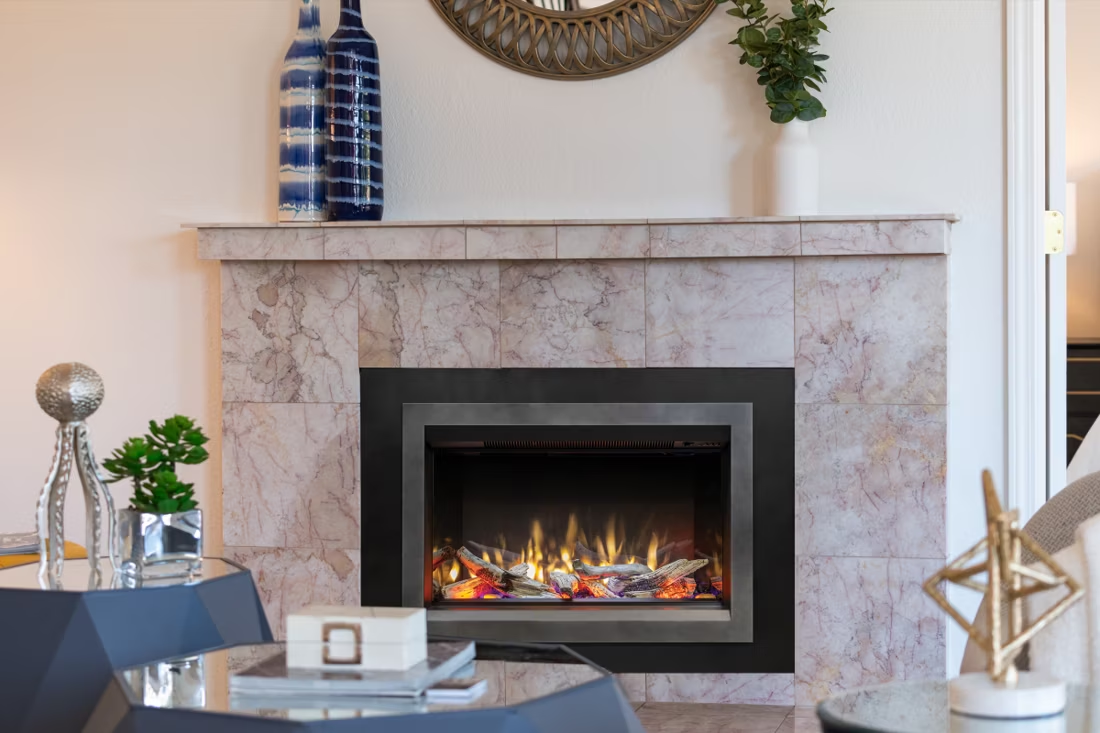
From downtown Chillicothe apartments to farmhouses out toward Bainbridge and Frankfort, electric fireplaces bring real-looking flame and zone heat to rooms that don't have—or don't need—a flue. Get matched with a local dealer who can size the right unit for your space.
Every Project Starts From One of These Five Situations
Warmth and ambiance, without the venting hassle.
Ross County sits in Ohio's Climate Zone 5A, with a solid winter heating season and winter lows averaging 21°F—real cold, though noticeably milder than places like Buffalo, NY, where the same season runs noticeably longer and colder. Chillicothe anchors the county's roughly 27,000 residents along the Scioto River valley, with smaller communities like Bainbridge, Frankfort, Kingston, South Salem, and Adelphi spread across the surrounding hills and farmland. The county's hardwood forests—oak, hickory, maple, and cherry are the species you'll hear about most from local firewood sellers—have historically made wood and, more recently, gas the default heat sources here. Electric fireplaces occupy a different niche: they're rarely anyone's whole-house heating plan, but they've become a common addition in finished basements, primary bedrooms, condos and rental units in Chillicothe, and older farmhouses where running a new chimney or gas line isn't practical.
The appeal is straightforward. An electric fireplace needs no venting, no gas line, and produces no combustion byproducts—which means it can go almost anywhere there's an outlet or a 120V/240V circuit, including interior walls and upper floors where a wood or gas unit couldn't be installed. Chillicothe city limits are served by AEP Ohio, while much of rural Ross County falls under South Central Power Company, a member-owned co-op—either way, running costs are modest for supplemental zone heat. The one honest tradeoff: because electric units depend entirely on grid power, they're not a backup heat source during an outage, which matters in the parts of the county where ice storms occasionally knock out power for a day or more. A trusted local dealer can help you figure out where an electric unit makes sense in your home and where it doesn't.
Three steps. No salesperson until you're ready.
Tell us about your project
Your zip code, your situation, and the fuel you're leaning toward—or let the answers point you to one.
See what's actually available
The brands dealers within 100 miles genuinely carry—real options, never a catalog mirage.
Get your dealer & Project Guide
A trusted local dealer, plus the free Project Guide & Parts List that names every component of the job.
Frequently Asked Questions
How much does an electric fireplace installation cost in Ross County?
Plug-in electric fireplace inserts and freestanding stoves typically run $300 to $900 installed, since most just need a standard outlet and a mantel or surround. Built-in electric fireplaces or wall-mounted linear units that require a dedicated 120V or 240V circuit, framing, and finish work run higher—usually $1,200 to $2,500 depending on the unit and whether an electrician needs to run new wiring. Retrofitting an existing masonry fireplace with an electric insert falls in the middle of that range. A local dealer can give you a firm number after seeing the space.
Do I need a permit for an electric fireplace in Ross County?
A simple plug-in electric fireplace or insert generally doesn't require a permit since there's no venting or gas work involved. If you're having a unit hardwired on a dedicated circuit—common with larger built-in or linear models—that electrical work typically needs to go through the Ross County Building Department (or the City of Chillicothe if you're inside city limits), and most licensed electricians pull that permit as part of the job. It's worth confirming with your installer before work starts, especially for new construction or major remodels.
Will an electric fireplace actually heat my room, or is it just for looks?
Most electric fireplaces put out somewhere between 4,000 and 9,000 BTUs on their heat setting, which is enough to noticeably warm a single room—a bedroom, den, or finished basement—but not enough to serve as primary heat for a Ross County home during a stretch of 21°F nights. Think of it as effective zone heating: you can turn down the furnace and heat the room you're actually using, which saves on the heating bill, but you'll still want your furnace or a wood/gas appliance for whole-house heat through the winter. The flame effect runs independently of the heater, so you can also run it purely for ambiance with the heat off.
What's the difference between an electric fireplace, an electric insert, and an electric log set?
An electric insert is built to slide into an existing masonry fireplace opening, instantly converting a drafty wood-burning firebox into a clean, no-venting heat source—a popular option for older Chillicothe homes with a fireplace that's rarely used. A built-in electric fireplace is a standalone unit designed to be framed into a wall, often with a linear, modern look. An electric log set is the simplest option—decorative logs with a flame effect that sit in an existing firebox, usually with modest or no heat output, mainly for ambiance. Which one fits depends on whether you're starting with an existing fireplace opening or building new.
Will my electric fireplace still work during a power outage?
No—electric fireplaces are fully dependent on grid power, so they won't run during an outage. That's an important consideration for rural Ross County households served by South Central Power Company, where ice storms can occasionally cause multi-day outages. If backup heat during a power outage matters to you, a wood stove or a battery-backed gas insert is a better fit for that specific need, and plenty of local homes pair one of those with an electric unit elsewhere in the house for everyday convenience and ambiance.
Where can I install an electric fireplace in my home?
Almost anywhere with access to a standard outlet or, for larger units, a dedicated circuit—no chimney, flue, or gas line needed. That flexibility is a big part of why electric units show up in finished basements, primary bedrooms, home offices, and Chillicothe rental units and condos where landlords won't allow venting modifications. Interior walls and upper-floor rooms that couldn't support a wood or gas appliance are often ideal candidates for electric.
How much does it cost to run an electric fireplace in Ross County?
Running costs depend on your electric rate and how often you use the heat setting versus just the flame effect. At typical AEP Ohio and South Central Power Company residential rates, running a 1,500-watt heater on high for several hours an evening usually adds somewhere in the range of $15 to $40 a month during winter, noticeably less if you mostly run the flame effect without heat. Compare that to running a whole-house furnace longer to compensate for a cold room—for many Ross County homeowners, zone heating one or two rooms with an electric fireplace ends up net-neutral or a modest savings.
Electric vs. wood or gas—which is right for my Ross County home?
Wood, burned from the oak, hickory, maple, and cherry that's common firewood locally, delivers real heat output and keeps working when the power's out—a genuine advantage in rural parts of the county. Gas offers instant, consistent heat and can be set up for backup operation with the right ignition system. Electric wins on installation simplicity (no venting, no gas line, works almost anywhere) and upfront cost, but it's supplemental heat only and goes dark in an outage. Many Ross County households end up with a mix: gas or wood in the main living space for real heating capacity, electric in a bedroom, basement, or rental unit for easy ambiance and zone warmth.
What features should I look for in an electric fireplace?
Look for adjustable heat settings (so you can run the flame effect without the heater in shoulder-season months), a thermostat rather than a simple high/low switch for more even room temperature, and realistic flame technology—the better units use layered LED or mirror-based effects that look convincing rather than a flickering screen. Brands like Dimplex, Napoleon, and Amantii are common choices carried by hearth retailers in the region. A local dealer can walk you through which flame technology and heat output fits the specific room you're outfitting.
Can I put a TV above my fireplace?
Yes—with an asterisk. Fireplaces are hot and TVs don't like heat. Either put a mantel between them to deflect rising warmth, or choose a fireplace with heat-management technology that creates a cool zone on the wall above—the wall stays around 125 degrees, barely warm, while the room still gets full heat. If you like clean lines and don't want a mantel, heat management is the answer.
Do electric fireplaces actually produce heat?
Yes—most put out around 4,800–5,000 BTUs from a standard outlet, which comfortably warms a bedroom, office, or den as a comfort-zone heater. What they won't do is carry a whole house the way wood, gas, or pellet can. Think of electric as ambiance-first with honest supplemental heat: flames on with no heat in July, flames plus warmth in January.
How much should I budget for a fireplace?
For an average home—covering the fireplace, the vent pipe, and basic installation—a budget between $3,900 and $5,500 gives you a lot of options across wood, gas, and pellet. By the time you add finish work, gas line, and electrical, the average complete installation lands between $5,000 and $12,000 all-in. In a remodel or new build, a good rule is to put about 2.5% of the total project cost toward the fireplace.
Does a fireplace add value to my home?
On average, a fireplace adds back to the home about the same amount you spent installing it. Add the monthly savings from heating the rooms you actually use instead of the whole house—often hundreds of dollars a year—and the value case is strong before you even count what a fire does for how your family uses the room.
Stove and Fireplace Dealers in Ross County
Find your electric fireplace in Ross County.
Tell us a bit about your room and how you plan to use it, and we'll match you with a trusted local dealer and send over a free Project Guide & Parts List—sized right for your space in Ross County.
Find Your Fireplace →