
Pellet Heat: An Uncommon Choice in Reynoldsburg.
Most Reynoldsburg homes are already piped for gas furnace heat, so pellet stoves are a niche request here—not a mainstream one. For the households that still want one, we'll match you with a dealer who can do it right.
Every Project Starts From One of These Five Situations
A suburb built for gas furnaces, not pellet hoppers.
Reynoldsburg sits just east of Columbus in Franklin County, at a modest 893 feet elevation with a climate zone 5A profile—winters average a low of 22°F and the area has a fairly solid, moderately long heating season each year. That's real cold, but nowhere near the extremes of places like Duluth or Fargo, and most of the housing stock here reflects it: postwar and later subdivisions built with central forced-air furnaces already tied into the gas grid. That's a big part of why gas is the standard hearth fuel locally and pellet appliances remain the exception.
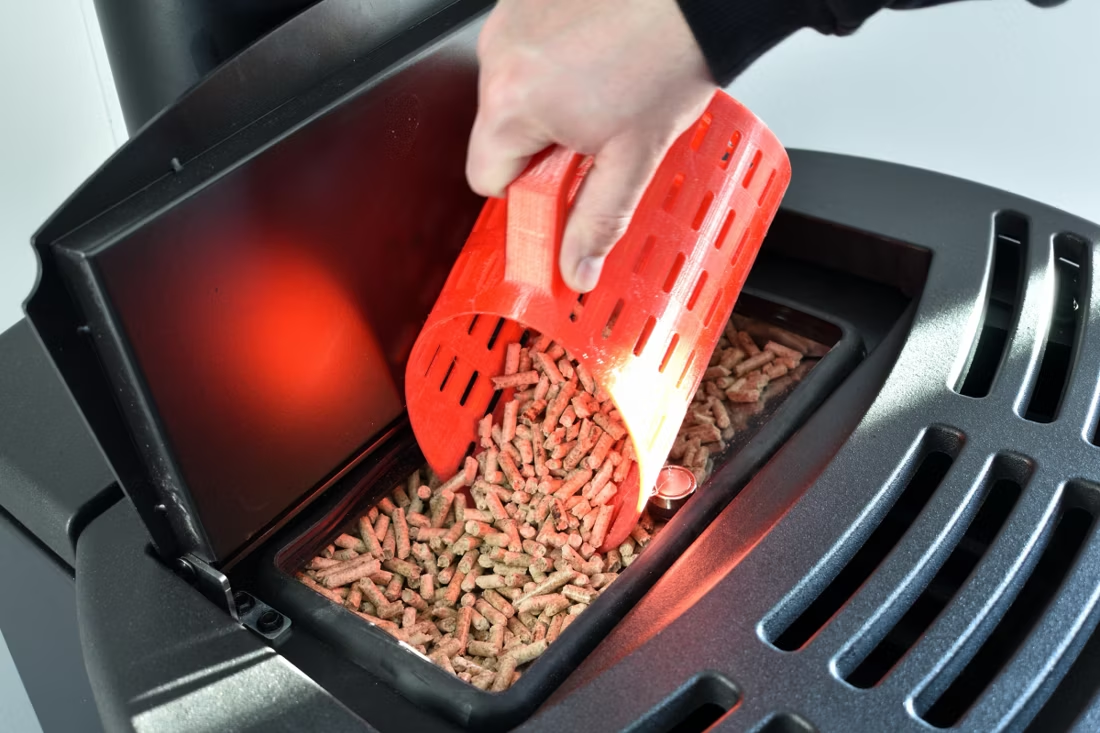
Pellet stoves need a 40-pound bag storage area, a hopper to refill every day or two, and an electrical outlet for the auger and blower motor—none of which pair naturally with the smaller lots, attached garages, and HOA-governed exteriors common across Reynoldsburg's newer neighborhoods. Regional pellet mills like Indeck Energy Services, Lignetics, and Somerset Pellet Fuel process plenty of Ohio hardwood—oak, hickory, maple, and cherry sawdust from mills around the state—into fuel, but that supply chain mostly serves rural central Ohio, not suburban Franklin County. Even so, a handful of Reynoldsburg homeowners with finished basements, detached garages, or a strong preference for solid-fuel ambiance over an open flame still install a pellet unit, and a trusted local dealer can absolutely make that work.
Three steps. No salesperson until you're ready.
Tell us about your project
Your zip code, your situation, and the fuel you're leaning toward—or let the answers point you to one.
See what's actually available
The brands dealers within 100 miles genuinely carry—real options, never a catalog mirage.
Get your dealer & Project Guide
A trusted local dealer, plus the free Project Guide & Parts List that names every component of the job.
Frequently Asked Questions
Why don't more homes in Reynoldsburg have pellet stoves?
It comes down to what's already in the walls. Reynoldsburg's housing stock—largely built from the postwar era through the 2000s—was constructed around central gas furnaces, and most subdivisions are on natural gas service already. Pellet stoves require dedicated hopper storage, a nearby electrical outlet, and a place to keep bagged fuel dry, which is a harder fit on the smaller lots and attached-garage layouts common here than it would be on a rural acreage. That's why pellet shows up as a genuinely uncommon request locally, even though the fuel itself is manufactured not far away.
Can I still get a pellet stove installed in Reynoldsburg if I want one?
Yes. It's less common, but not impossible—homes with a finished basement, a detached garage, or a mudroom with exterior wall access are typically the best candidates. Because pellet isn't the default request in this market, not every hearth retailer stocks units on the showroom floor the way they would gas inserts. We match you with a dealer serving the Franklin County area who can special-order the right pellet stove or insert and handle the venting and permit work correctly, rather than leaving you to find one on your own.
How much does a pellet stove installation cost in Reynoldsburg?
Because so few installs happen locally, pricing here isn't as standardized as it is for gas, but a freestanding pellet stove with proper venting typically runs $3,000 to $6,000 nationally, and that range holds reasonably well for central Ohio. Cost depends mostly on the venting path—through-wall PL venting is cheaper than a Class A chimney chase—plus whether a dedicated electrical circuit needs to be run for the auger and blower motor. A local dealer will confirm firm pricing after seeing your space.
Do I need a permit to install a pellet stove in Reynoldsburg?
Yes—any vented solid-fuel appliance, pellet included, needs a building permit through the City of Reynoldsburg's building department for the wall or roof penetration and clearance-to-combustibles review. The good news is that Franklin County carries no wildfire-smoke or winter-inversion air quality restrictions like some western states do, so there's no seasonal burn curtailment to plan around—the permit is strictly about safe installation, not emissions.
Where does pellet fuel for a Reynoldsburg home come from?
Central Ohio is actually home to real pellet manufacturing—Indeck Energy Services, Lignetics, and Somerset Pellet Fuel all produce bagged pellets from Ohio hardwood mill residue, much of it oak, hickory, and maple sawdust. That said, because demand inside Reynoldsburg itself is low, you'll more often find bags at farm and rural supply retailers on the outskirts of Franklin County than at stores inside city limits. Most pellet stove owners here either buy a season's supply in bulk each fall or arrange delivery through their installer.
Will a pellet stove keep my Reynoldsburg home warm during a power outage?
No—pellet stoves rely on electricity to run the auger that feeds fuel and the blower that pushes heat into the room, so a power outage shuts them down just like a furnace does. Franklin County, served here by Ohio Power Co and the City of Columbus's municipal electric system, doesn't see outages as often or as long as more storm-prone regions, but if backup heat during an outage is a priority for you, a gas fireplace with battery-backed ignition is generally the better match for a Reynoldsburg home than pellet.
Pellet stove vs. gas insert—which makes more sense in Reynoldsburg?
For most homes here, gas wins on practicality: the house is already piped for it, there's no fuel storage or hopper refilling, and it starts instantly with a switch or remote. Pellet asks more of the homeowner—bag storage, weekly hopper loading, ash removal, and dependence on grid power—in exchange for a real flame and lower per-BTU fuel cost. If you don't have a gas line and don't want to run one, or you specifically want the look and feel of a solid-fuel fire without a chimney, pellet is worth considering. For everyone else, gas is the more natural fit for this market.
Where can I see pellet stoves in person near Reynoldsburg?
Because pellet inventory sits lower on most central Ohio showroom floors than gas units do, it's worth calling ahead before visiting a hearth retailer to confirm they have pellet models set up to view. We match you with a dealer who either stocks pellet stoves or can bring in demo units and samples for you to see, rather than sending you to a store that only carries gas and leaving you to figure out the rest.
What size pellet stove do I need for a Reynoldsburg home?
With Reynoldsburg's moderate 5A climate—winter lows averaging 22°F and a fairly solid, moderately long heating season each year—most homes here use a pellet stove as supplemental or zone heat rather than a whole-house primary source, since the gas furnace already covers the base load. A small unit (rated for 1,000 to 1,300 square feet) is plenty for a finished basement or family room, while a medium unit (1,300 to 2,200 square feet) can handle an open main floor. A local dealer will size it against your specific layout and insulation rather than square footage alone.
Why is my open fireplace making my house colder?
Open fireplaces suck—literally. As the fire burns, it consumes air your furnace already paid to heat and pulls it out through the chimney, so the house is actually colder after the fire goes out than before you lit it. An insert fixes this: it seals the chimney, puts fixed glass across the front, and turns that hole in your house into a real heat source.
Why is a fireplace insert so efficient?
An insert does two things: it seals the chimney completely, so you stop losing air you already paid to heat, and it radiates warmth into the room through the firebox and glass. Most add a heat-exchange fan that pulls cool room air underneath, wraps it around the hot firebox, and pushes it back out warm. Your home is more efficient before you've even lit the first fire.
What is an in-home preview and do I need one?
It's a visit where a hearth professional measures your space, confirms the model you picked actually works in your home, and walks the specs—framing, gas line, venting, finish work—before anything is ordered. Some details you just can't know until you see the house. Never make a down payment without one; it's the single most-skipped step that burns buyers.
Can a fireplace actually lower my heating bill?
Yes—by creating a comfort zone. A furnace heats every square foot of the house just to warm the one room you're in; a gas fireplace on low burns roughly a sixth of the gas a typical furnace does. Set the furnace around 55–60 degrees as a baseline, then heat the rooms your family actually uses. Families who heat this way commonly save $20–$60 a month.
Nearby Dealers
Hearth shops serving Reynoldsburg and the surrounding area.
Pellet Brands Stocked Around Reynoldsburg
Manufacturers will point you to the nearest stocking dealer.
Find your pellet stove option in Reynoldsburg.
Tell us about your home and goals, and we'll match you with a trusted local dealer who can source and install a pellet stove even though it's a less common request in this market—plus a free Project Guide & Parts List with the exact parts, including the vent kit, for your project.
Find Your Fireplace →