
Pellet Heat Is Rare in Parma—But It's Not Impossible.
Most Parma homes run on natural gas furnaces. For the smaller number of homeowners who want a pellet stove for a basement, a sunroom, or backup warmth, we'll match you with a local dealer who actually installs them.
Every Project Starts From One of These Five Situations
Natural gas heats most of Cuyahoga County. Pellet fills a smaller niche.
Parma sits in climate zone 5A with a heating season similar to other Cleveland-area winters and average winter lows near 22°F—a real Cleveland-area winter, but not the kind of extreme cold that pushes homeowners toward standalone solid-fuel heat. Natural gas service is widespread and affordable across Cuyahoga County, so gas furnaces and gas fireplaces are the default, and pellet stoves show up far less often than they do in colder, more rural parts of the Midwest like Duluth, MN or Fargo, ND, where gas isn't always an option.
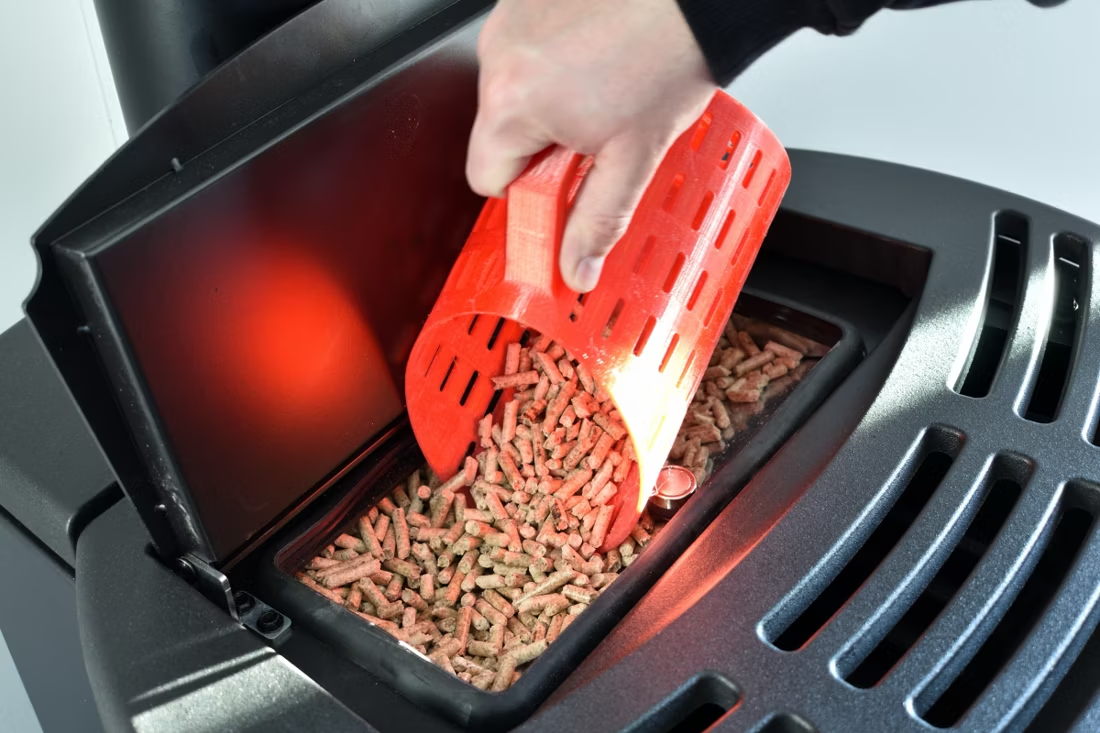
That doesn't mean pellet heat has no place here. A handful of Parma homeowners install pellet inserts into old masonry fireplaces that never had wood delivered or cut for them, add a freestanding pellet stove to heat a finished basement or a converted garage without extending ductwork, or want the visual warmth of a real flame with the thermostat-like convenience gas can't quite match. Pellet fuel itself is easy to source regionally through brands like Indeck Energy Services, Lignetics, and Somerset Pellet Fuel, so the fuel supply isn't the obstacle—it's finding a dealer who stocks and services the appliance in a market where gas dominates.
Three steps. No salesperson until you're ready.
Tell us about your project
Your zip code, your situation, and the fuel you're leaning toward—or let the answers point you to one.
See what's actually available
The brands dealers within 100 miles genuinely carry—real options, never a catalog mirage.
Get your dealer & Project Guide
A trusted local dealer, plus the free Project Guide & Parts List that names every component of the job.
Frequently Asked Questions
How much does a pellet stove installation cost in Parma?
Because pellet stoves are a smaller share of the Parma market, pricing tends to track national averages rather than a deep local price war between competing installers. Expect roughly $3,500 to $6,500 for a freestanding pellet stove including a basic vent kit, and somewhat more—often $4,000 to $7,500—for a pellet insert into an existing masonry fireplace, where a liner and surround adapt the insert to your firebox opening. Homes without an existing chimney or vent path will run higher once wall-through venting and electrical work for the auger and blower are added. A local dealer can give you a firm number once they see your fireplace opening or install location.
Do I need a permit to install a pellet stove in Parma?
Yes—the City of Parma Building Department requires a permit for new solid-fuel appliance installations, and Cuyahoga County code enforcement applies to unincorporated pockets nearby. Most established hearth dealers pull the permit as part of the installation and schedule the inspection for you, so this isn't something you typically have to manage yourself. Unlike wood stoves in wildfire-prone Western states, Parma has no air quality non-attainment concerns tied to solid-fuel burning, so the permitting is mostly about venting clearances and electrical safety for the unit's blower and auger motor.
Why do so few Parma homes use pellet stoves compared to gas?
Natural gas infrastructure runs through nearly every established Parma neighborhood, and gas furnaces or gas fireplaces heat a home with a thermostat and no fuel deliveries, ash removal, or hopper refilling. Pellet stoves require you to buy and store 40-pound bags of fuel and refill the hopper every day or two during heavy use—a real chore compared to flipping a switch. Pellet heat tends to appeal to a specific homeowner: someone who wants supplemental zone heat in a space gas ductwork doesn't reach, or who likes the ambiance of a visible flame with more consistent, hands-off output than a wood stove offers.
Why isn't wood-burning common in Parma either?
Parma is a dense, built-out Cleveland suburb with small residential lots and no nearby national forest land or cutting-permit program, so self-sourcing firewood isn't practical the way it is in more rural parts of Ohio or the Pacific Northwest. Buying seasoned cordwood locally is possible, but storing and stacking a cord or more of oak, hickory, maple, or cherry on a typical Parma lot is a bigger commitment than most homeowners want. Pellets solve the storage and sourcing problem—bags stack neatly in a garage—which is part of why the small number of solid-fuel households here lean pellet rather than wood.
Will a pellet stove work if my power goes out?
Not on its own. Pellet stoves rely on an electric auger to feed fuel and a blower to circulate heat, so they shut down in a standard outage unlike a wood stove, which burns without power. If backup heat during Cleveland-area ice storms matters to you, ask your local dealer about a battery backup unit or plan to run the stove off a small generator—both are common workarounds. Cleveland Electric Illuminating Co and the City of Cleveland's municipal utility serve most of the Parma area, and outages here are typically short, but it's worth planning for if a pellet stove is meant to double as emergency heat.
Where can I buy wood pellets in the Parma area?
Regional pellet brands including Indeck Energy Services, Lignetics, and Somerset Pellet Fuel distribute into the greater Cleveland market and are commonly stocked at hardware stores, farm supply retailers, and hearth shops throughout Cuyahoga County. Premium hardwood pellets typically run in the $250 to $300 per ton range in the Midwest, and a ton generally lasts an average household several weeks to a couple of months when used for supplemental heat rather than as a primary furnace replacement. Buying pellets in bulk before winter, and storing them somewhere dry, avoids mid-season price spikes and availability crunches.
What size pellet stove do I need for my Parma home?
Sizing depends on the square footage you're actually trying to heat and whether the stove is meant to be primary or supplemental heat. Since most Parma homes already have a gas furnace covering the whole house, pellet stoves here are usually sized for a single space—a finished basement, a family room, or a converted garage—rather than the entire home. Small units (under 1,200 sq ft) suit a single room or open basement; larger units can supplement a whole floor in an older, less-insulated Parma bungalow. A local dealer will size the stove to your specific room during an in-home visit rather than by square footage alone.
How much maintenance does a pellet stove need?
Pellet stoves need more routine attention than a gas fireplace but less than a wood stove's annual chimney sweep. Plan on emptying the ash pan every few days during regular use, cleaning the burn pot and glass weekly, and having the venting and hopper mechanism professionally inspected once a year—typically in late summer before the heating season starts. Because pellet stoves have moving mechanical parts (the auger motor and combustion blower), an annual service visit also catches wear issues before they cause a mid-winter breakdown, which matters more in Parma since backup gas heat may not be sized to cover the same room.
Pellet stove vs. electric fireplace—which makes more sense in Parma?
An electric fireplace or space heater plugs into any outlet, needs no venting or permit, and runs on the same Cleveland Electric Illuminating Co or City of Cleveland municipal power already serving your home—residential rates in the area run roughly 9 to 15 cents per kWh depending on your provider. It's the simpler, lower-commitment option for supplemental warmth or ambiance in a room. A pellet stove costs more upfront and requires fuel storage and venting, but it produces real, radiant heat that can meaningfully warm a space electric resistance heat struggles with, and it burns a renewable fuel rather than drawing straight off the grid. If you just want the look of a fire with zero maintenance, electric wins; if you want actual heat output for a basement or addition, pellet is worth the extra install cost.
Why is my open fireplace making my house colder?
Open fireplaces suck—literally. As the fire burns, it consumes air your furnace already paid to heat and pulls it out through the chimney, so the house is actually colder after the fire goes out than before you lit it. An insert fixes this: it seals the chimney, puts fixed glass across the front, and turns that hole in your house into a real heat source.
How often does a pellet stove need cleaning?
A clean pellet stove is a happy pellet stove. Plan on cleaning the burn pot about once a week when you're burning regularly—ash and clinkers gum up the air holes just like a pellet barbecue. Most pellet stove problems trace back to skipped cleaning that nobody explained up front. Some designs make it easy with a trapdoor burn pot: pull a lever and the gunk drops into the ash pan.
Can a fireplace actually lower my heating bill?
Yes—by creating a comfort zone. A furnace heats every square foot of the house just to warm the one room you're in; a gas fireplace on low burns roughly a sixth of the gas a typical furnace does. Set the furnace around 55–60 degrees as a baseline, then heat the rooms your family actually uses. Families who heat this way commonly save $20–$60 a month.
Does a fireplace add value to my home?
On average, a fireplace adds back to the home about the same amount you spent installing it. Add the monthly savings from heating the rooms you actually use instead of the whole house—often hundreds of dollars a year—and the value case is strong before you even count what a fire does for how your family uses the room.
Nearby Dealers
Hearth shops serving Parma and the surrounding area.
Pellet Brands Stocked Around Parma
Manufacturers will point you to the nearest stocking dealer.
Find your pellet stove fit in Parma, OH.
Tell us about the space you're trying to heat and we'll match you with a local Parma-area dealer who actually stocks and installs pellet stoves—plus a free Project Guide & Parts List with the exact vent kit and parts for your project.
Find Your Fireplace →