
Reliable Gas Heat for Parma Winters—No Woodpile Required.
Direct-vent gas fireplaces and inserts deliver instant, clean heat through Parma's snowy Lake Erie winters. Find the right unit and get matched with a trusted local dealer.
Every Project Starts From One of These Five Situations
Instant heat for an inner-ring Cleveland suburb built on natural gas.
Parma sits just southwest of Cleveland at under 1,000 feet elevation, with average winter lows around 22°F and a long, cold winter heating season most of the year—cold, but nowhere near the lake-effect extremes of Buffalo, NY, a few hours east along the same shoreline. Most of the city's housing stock dates to the 1950s and 1960s: ranch and cape cod homes, many built without a fireplace at all, or with a basic masonry firebox that rarely got used even when it was new. Gas has become the practical way to add real heat and ambiance to those homes.
Natural gas service reaches nearly every home in Parma through the regional utility (formerly Dominion East Ohio, now operating as Enbridge Gas Ohio), which means most houses already have a gas line running to the furnace and water heater—a direct-vent fireplace or insert is usually a straightforward tie-in rather than a new utility hookup. Electric fireplaces show up too, especially in finished basements without easy gas access; residential electric rates in the area run roughly 9.4¢ to 14.9¢ per kWh depending on whether you're served by the Illuminating Company (part of FirstEnergy) or Cleveland Public Power. Wood-burning fireplaces, by contrast, are essentially not a factor here—Parma's tight residential lots and city ordinances leave no real cutting-permit infrastructure or wood-heat culture the way you'd find in rural Ohio, even though local hardwoods like oak, hickory, maple, and cherry are common firewood species just outside the city.
Three steps. No salesperson until you're ready.
Tell us about your project
Your zip code, your situation, and the fuel you're leaning toward—or let the answers point you to one.
See what's actually available
The brands dealers within 100 miles genuinely carry—real options, never a catalog mirage.
Get your dealer & Project Guide
A trusted local dealer, plus the free Project Guide & Parts List that names every component of the job.
Frequently Asked Questions
How much does a gas fireplace installation cost in Parma?
Most gas fireplace installations in Parma run between $4,000 and $10,500. A direct-vent insert going into an existing masonry fireplace, tied into a gas line already run to a nearby furnace or water heater, lands on the lower end. A new built-in gas fireplace in a remodeled family room or finished basement—with framing, wall venting, and a fresh gas line—runs toward the middle to upper end, especially in the many Parma ranch homes that were never built with a chimney. A local installer will give you a firm number after seeing your specific layout.
Can I convert my existing wood fireplace to gas?
Yes, and it's a common project in Parma's older cape cods and ranches that came with a masonry fireplace nobody ever really used. A gas insert typically drops into that existing firebox, running a stainless liner up the current chimney, for somewhere around $4,000 to $8,500 depending on the insert and whether new gas line work is needed. Homes that already have gas appliances nearby tend to land on the lower end since the line run is short.
Do I need natural gas, or can I use propane in Parma?
The large majority of Parma is on the natural gas grid, so if your home already has gas heat, a water heater, or a gas range, adding a fireplace is a simple extension of that existing service. Propane is uncommon inside the city but occasionally used in the rare pocket without gas infrastructure, or for a portable/freestanding unit—that requires a tank from a regional propane supplier. Most gas fireplace models can be set up for either fuel; your installer configures the orifice and regulator accordingly.
Will my gas fireplace still work if the power goes out?
Most modern gas fireplaces will, with the right ignition system. Units with IPI (intermittent pilot ignition) run on a small battery backup that kicks in automatically when the grid drops—useful during the ice storms and heavy lake-effect snow squalls that occasionally knock out power along the Illuminating Company's Cuyahoga County lines. Valor fireplaces take a different approach: their pilot generates its own electricity through a thermocouple, so there's no battery to remember at all. Ask your local dealer which ignition system is on any model you're considering.
What's the difference between a gas fireplace, gas insert, and gas stove?
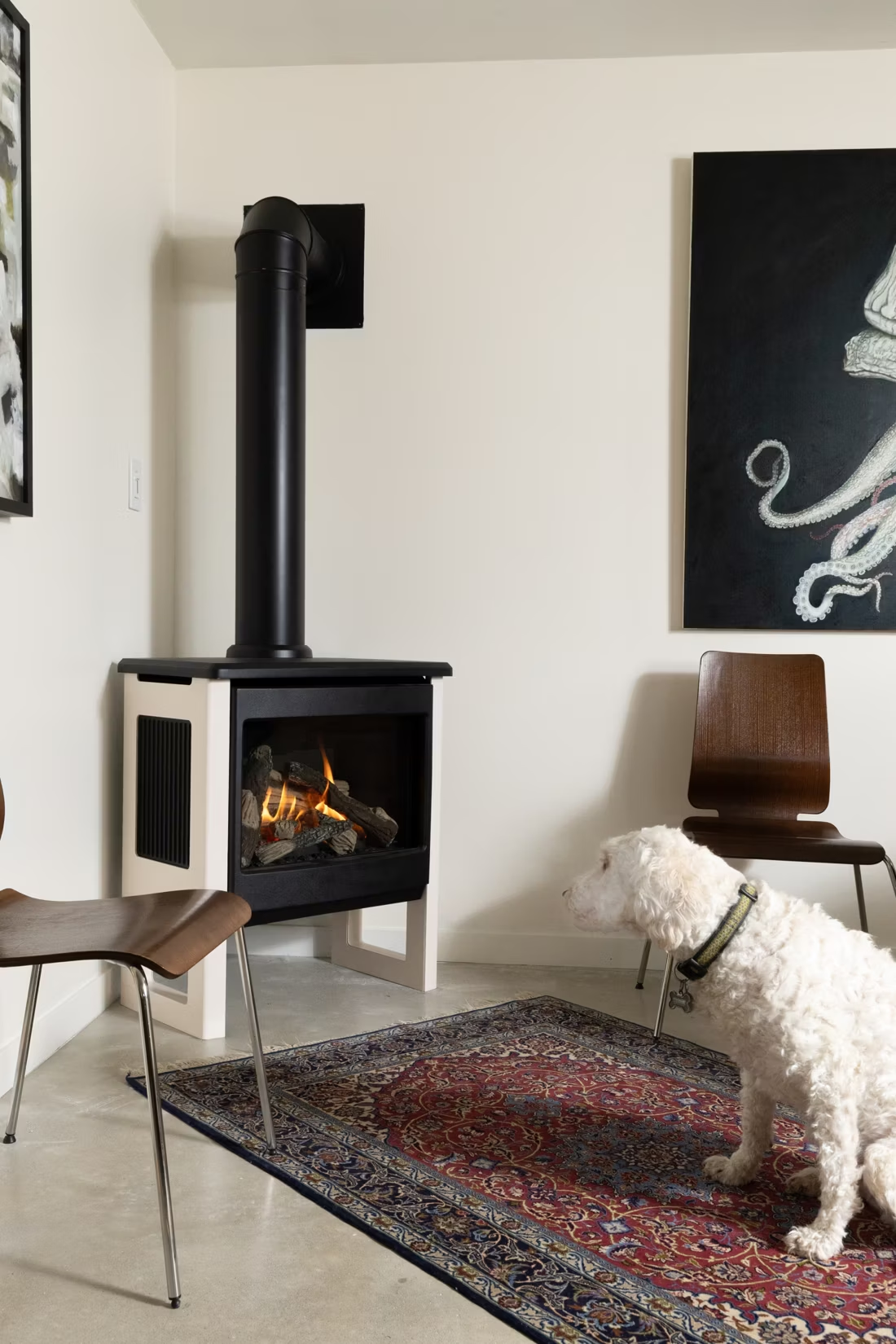
A gas fireplace is a fully built-in unit framed into a wall—the right call for a Parma home doing a basement finish or remodel without an existing chimney. A gas insert is sized to slide into an existing masonry firebox, which fits a good number of the older Parma homes that already have one sitting unused. A gas stove is a freestanding cabinet unit that vents through a wall or existing chimney without needing a full framed opening—a good option for a ranch home with no fireplace and limited room to build one out.
Do I need a permit to install a gas fireplace in Parma?
Yes. The City of Parma Building Department requires a building permit for the fireplace installation itself, and any new gas line work needs a separate gas permit pulled by a licensed gas fitter. Most established hearth dealers handle both as part of the project, coordinating the gas line, venting, and inspection so you're not managing multiple trades and two sets of paperwork yourself.
What's the difference between vented and vent-free gas fireplaces?
Vented (direct-vent) gas fireplaces pull combustion air from outside and exhaust it back outside through a sealed pipe—cleaner, safer, and accepted everywhere including Ohio. Vent-free units burn directly into the room air, which is legal in Ohio under specific room-size and ventilation rules but releases some combustion byproducts indoors. For Parma's finished basements and smaller ranch-home living rooms, direct-vent units are what most local dealers recommend by default—they deliver real heat output without any indoor air quality trade-offs, and there's no need to worry about room-volume restrictions.
How often should my gas fireplace be serviced?
Plan on an annual inspection, ideally in early fall before the heating season starts. A technician checks the burner, pilot assembly, venting, and gas connections, and cleans the glass and interior. It's a much smaller job than sweeping a wood chimney, but skipping it lets soot and dust build up on the pilot and ignition components. Local gas appliance service providers in the Cleveland area typically charge $125 to $225 for a standard annual visit.
Gas vs. electric fireplace—which makes more sense for my Parma home?
Gas delivers real, sustained heat output and can offset your furnace's workload on cold days—worthwhile given Parma's long, demanding heating season. It does require an existing or new gas line and proper venting. Electric fireplaces need neither: they plug into a standard outlet, install for roughly $500 to $2,000, and work well in finished basements or bedrooms where running gas line or venting isn't practical. The trade-off is that electric units are primarily ambiance with modest supplemental heat, and running one adds to your electric bill at local rates of roughly 9.4¢ to 14.9¢ per kWh depending on whether you're served by the Illuminating Company or Cleveland Public Power. Homes wanting genuine heating power in a main living space usually choose gas; homes wanting a low-hassle accent in a secondary room often choose electric.
Are new gas fireplaces really better than old ones?
Two ways, and they're both big. Looks: modern gas fireplaces are realistic enough that it's hard to believe they aren't burning wood. Cost: old units burn a standing pilot year-round (roughly $200 a year), while new ones use pilot-on-demand ignition and modern burners. Add remote controls and thermostat operation, and the day-to-day experience isn't close.
Can I put a TV above my fireplace?
Yes—with an asterisk. Fireplaces are hot and TVs don't like heat. Either put a mantel between them to deflect rising warmth, or choose a fireplace with heat-management technology that creates a cool zone on the wall above—the wall stays around 125 degrees, barely warm, while the room still gets full heat. If you like clean lines and don't want a mantel, heat management is the answer.
What is an in-home preview and do I need one?
It's a visit where a hearth professional measures your space, confirms the model you picked actually works in your home, and walks the specs—framing, gas line, venting, finish work—before anything is ordered. Some details you just can't know until you see the house. Never make a down payment without one; it's the single most-skipped step that burns buyers.
Can I install a fireplace myself?
If you're putting a fire in your house on purpose, it's best to work with an expert. Unless you're genuinely experienced in framing, gas line, vent pipe, and the national code on clearances to combustibles, have a professional do it—and ideally the same company that sells you the fireplace, so warranty, service, and liability all live under one roof.
Nearby Dealers
Hearth shops serving Parma and the surrounding area.
Find your gas fireplace in Parma.
Tell us about your home and heating goals, and we'll match you with a trusted local Parma-area dealer and send you a free Project Guide & Parts List—the exact parts, vent kit, and recommended installer for your gas fireplace project.
Find Your Fireplace →