
Steady, thermostat-set heat for Ohio River Valley winters.
With 5,078 heating degree days and winter lows averaging around 22°F, Lawrence County sees a real multi-month heating season without the deep-freeze extremes of the northern Plains. I match homeowners from Ironton to Chesapeake and Proctorville with a trusted local dealer who can size a pellet stove correctly and get it vented and permitted the right way.
Every Project Starts From One of These Five Situations
Appalachian hardwood country meets set-it-and-forget-it heat.
Lawrence County sits at Ohio's southernmost tip, bounded by the Ohio River and the hills of the Appalachian foothills, with Ironton as the county seat and smaller river towns like Chesapeake, Coal Grove, and Proctorville filling out the rest. The hardwood forests covering those hills—oak, hickory, maple, and cherry—have long supported local timber and biomass industries, which is part of why regional pellet producers like Indeck Energy Services, Lignetics, and Somerset Pellet Fuel supply the tri-state Ohio-Kentucky-West Virginia market. With a Climate Zone 4A designation, 5,078 heating degree days, and winter lows averaging around 22°F, the county has a genuine heating season, but not the kind of extreme cold that pushes homeowners toward oversized, industrial-grade equipment.
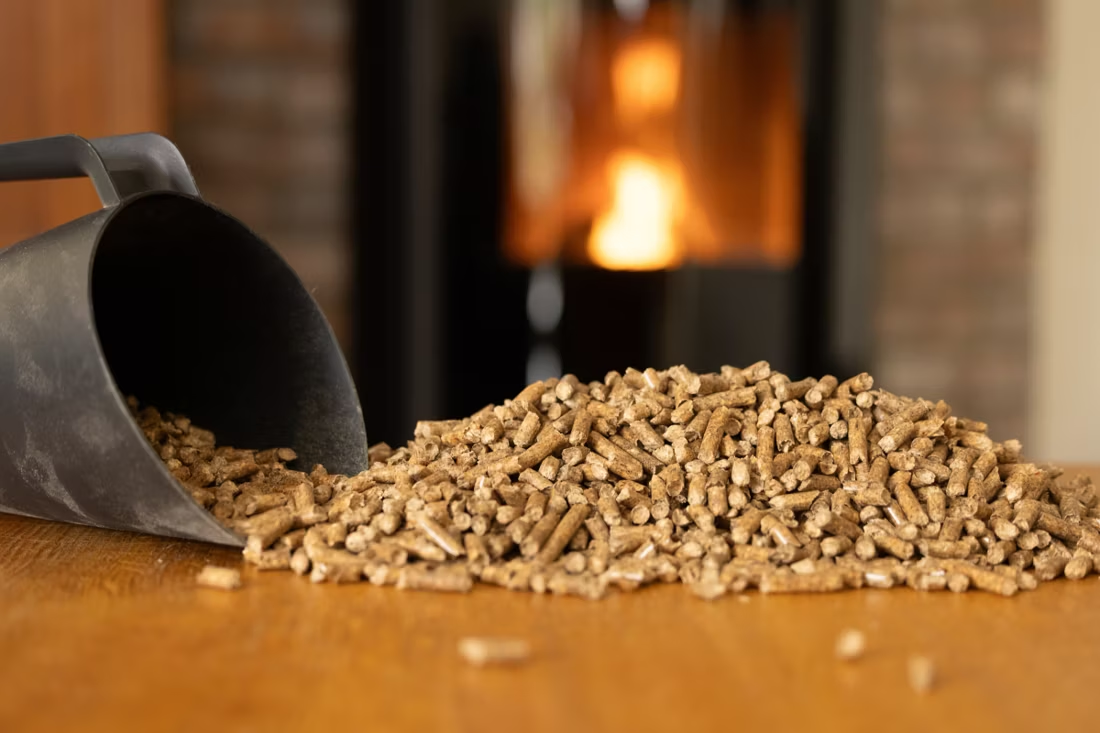
That's exactly the environment where a pellet stove earns its keep. Unlike a wood stove, which needs someone to split, stack, and feed logs by hand, a pellet unit runs off an auger-fed hopper and a thermostat, holding a steady temperature overnight without attention. Lawrence County has no air quality non-attainment designation and no burn curtailment periods to navigate, so the appeal of pellet heat here isn't about clean-air compliance—it's about convenience and control for homeowners who want consistent heat in a hilly, sometimes hard-to-reach rural county without babysitting a firebox.
Three steps. No salesperson until you're ready.
Tell us about your project
Your zip code, your situation, and the fuel you're leaning toward—or let the answers point you to one.
See what's actually available
The brands dealers within 100 miles genuinely carry—real options, never a catalog mirage.
Get your dealer & Project Guide
A trusted local dealer, plus the free Project Guide & Parts List that names every component of the job.
Frequently Asked Questions
How much does a pellet stove installation cost in Lawrence County?
Most pellet stove installations in Lawrence County run in the $3,000 to $6,000 range, depending on the unit, whether you're venting through an exterior wall or need a new roof penetration, and whether the stove is a freestanding model or an insert going into an existing masonry fireplace. Older river-town homes in Ironton or Chesapeake with a functioning masonry chimney often come in on the lower end, since the insert can use existing masonry with a liner rather than requiring an entirely new vent path. Homes on the hillier, more remote parts of the county—up toward the Wayne National Forest boundary—may see a modest travel charge from installers based in Ironton or nearby Huntington, WV.
What size pellet stove do I need for my home?
Sizing depends on square footage and how well-insulated the home is, but most Lawrence County houses do well with a stove rated for 1,000 to 2,000 square feet, since winter lows here average around 22°F rather than the single digits you'd see farther north. Older farmhouses and river-valley homes with less insulation may need the higher end of that range to hold heat through a January cold snap, while a well-sealed newer build in Coal Grove or South Point might only need a smaller unit for a main living space. A local dealer will walk the room, check ceiling height and layout, and size the stove instead of guessing off a chart.
Do I need a permit to install a pellet stove in Lawrence County?
In most cases, yes—a building permit through the Lawrence County Building Department covers new hearth appliance installations in unincorporated areas, and if you're inside Ironton or another incorporated town, the local building office handles it instead. The review typically checks clearance to combustibles, hearth pad requirements, and that the vent termination meets code for a wall or roof penetration. Most established local dealers pull the permit as part of the installation quote, so it's worth asking upfront whether that's included.
Where can I buy pellets locally, and what do they cost?
Regional producers including Indeck Energy Services, Lignetics, and Somerset Pellet Fuel supply bagged hardwood pellets throughout the Ohio-Kentucky-West Virginia tri-state area, and you'll typically find them at farm supply stores, hardware stores, and hearth dealers around Ironton and along Route 52. Pricing generally runs in the $220 to $280 per ton range in Southern Ohio, though it can shift with fuel costs and demand during a cold stretch. Buying a season's supply—usually 2 to 3 tons for a primary heating setup—before the first cold snap in October or November tends to lock in better pricing and availability than shopping mid-winter.
Pellet stove vs. wood stove—which makes more sense in Lawrence County?
Lawrence County's Appalachian hillsides are thick with oak, hickory, maple, and cherry, and plenty of households here still burn wood, especially where a woodlot or standing timber is already on the property. A wood stove costs less to run if you have free or cheap access to that timber, and it works with no electricity at all. A pellet stove trades that fuel-cost advantage for consistency and convenience—no splitting, no stacking, and a thermostat that holds a set temperature through the night—which is why it's a common upgrade for homeowners who grew up heating with wood but don't want to keep processing it every fall.
Will my pellet stove still work during a power outage?
Not without a backup power source. A pellet stove depends on electricity to run the auger that feeds fuel, the igniter, and the combustion blower, so a power outage shuts it down even with a full hopper. That matters in Lawrence County's hillier, more rural stretches—outages along the Ohio River corridor and up in the ridge country near Wayne National Forest can run longer than in town. Homeowners who want heat that survives an outage often pair a pellet stove with a small battery backup or generator, or keep a wood-burning option as a fallback.
What maintenance does a pellet stove need?
Expect to empty the ash pan and clean the burn pot every few days to weekly during heavy use, since ash buildup restricts airflow and can cause poor combustion or shutdowns. Most manufacturers recommend a deeper cleaning of the exhaust venting and hopper monthly through the season, and a full professional service—checking the auger motor, gaskets, and blower—once a year, ideally in late summer or early fall before the first cold snap hits Lawrence County. Skipping annual service is one of the more common reasons pellet stoves underperform by their second or third winter.
Should I get a pellet insert or a freestanding pellet stove?
If you're in one of Ironton's or Chesapeake's older river-town homes with an existing masonry fireplace, a pellet insert is usually the simpler path—it slides into the existing firebox and vents through a liner run up your current chimney, keeping the original look of the fireplace. A freestanding pellet stove makes more sense in a home without an existing chimney, a manufactured home, or a room where you want to relocate the heat source entirely, since it vents directly through a wall with a dedicated pellet vent kit. A local dealer can tell you which setup actually fits your fireplace opening and floor plan.
Are there rebates or tax credits available for pellet stoves?
Yes—the federal biomass stove tax credit (Section 25C) covers 30% of the purchase and installation cost, up to $2,000 per year, for pellet stoves rated at 75% efficiency or higher, and most current EPA-certified pellet stoves qualify. Ohio doesn't currently run a separate state rebate program for pellet appliances, so the federal credit is the main incentive available to Lawrence County homeowners. Save your itemized invoice showing unit and installation costs separately, since that's what you'll need when you file.
Why is my open fireplace making my house colder?
Open fireplaces suck—literally. As the fire burns, it consumes air your furnace already paid to heat and pulls it out through the chimney, so the house is actually colder after the fire goes out than before you lit it. An insert fixes this: it seals the chimney, puts fixed glass across the front, and turns that hole in your house into a real heat source.
What does it take to replace an existing fireplace?
Fireplaces are like icebergs—bigger behind the wall than in front of it. Replacement means removing the surrounding tile or stone (the finish material laps onto the fireplace face), pulling the old unit, setting the new one in the same enclosure, and re-finishing the wall. A hearth professional can determine what's behind your wall without demolition during an in-home preview.
What is an in-home preview and do I need one?
It's a visit where a hearth professional measures your space, confirms the model you picked actually works in your home, and walks the specs—framing, gas line, venting, finish work—before anything is ordered. Some details you just can't know until you see the house. Never make a down payment without one; it's the single most-skipped step that burns buyers.
Can I install a fireplace myself?
If you're putting a fire in your house on purpose, it's best to work with an expert. Unless you're genuinely experienced in framing, gas line, vent pipe, and the national code on clearances to combustibles, have a professional do it—and ideally the same company that sells you the fireplace, so warranty, service, and liability all live under one roof.
Pellet Brands Stocked Around Lawrence County
Manufacturers will point you to the nearest stocking dealer.
Get your Lawrence County pellet stove Project Guide & Parts List.
Tell us about your home and how you plan to use the stove, and we'll match you with a trusted local Lawrence County dealer and send a free Project Guide & Parts List—the exact parts, including the vent kit, for your pellet heat project.
Find Your Fireplace →