
Plug-in warmth for every home in Lawrence County.
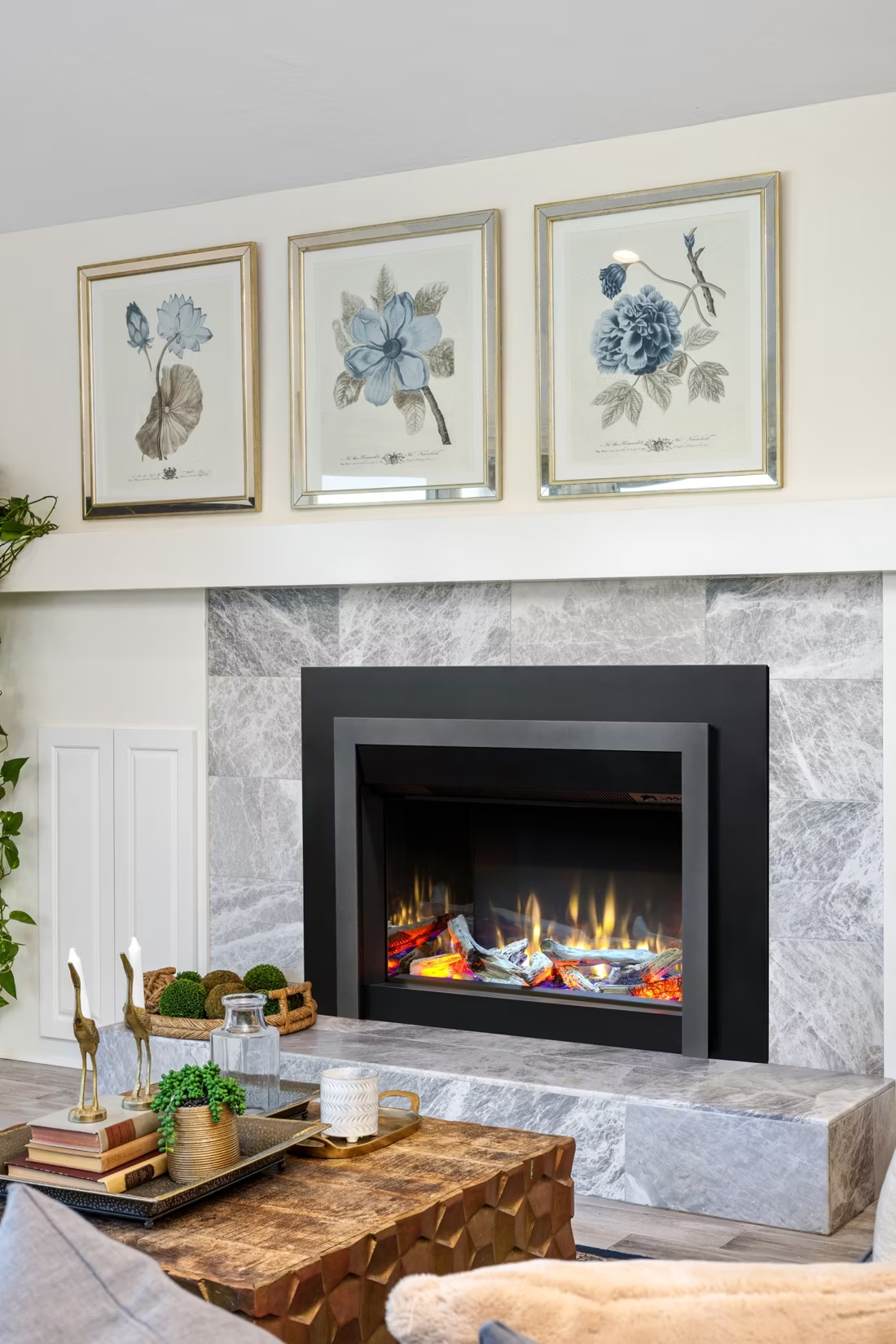
No chimney, no gas line, no permit hassle—just heat you can add to almost any room from Ironton to South Point. Find the right electric fireplace or insert and connect with a trusted local dealer.
Every Project Starts From One of These Five Situations
Real warmth without the venting.
Lawrence County sits at the southern tip of Ohio, along the Ohio River across from Ashland, Kentucky and Huntington, West Virginia—a Climate Zone 4A region where winter lows average around 22°F and the county sees a solid, moderate-length heating season each year. That's a real heating season, but not the kind of sustained sub-zero cold that demands a whole-home wood or gas system. It's exactly the range where electric fireplaces earn their keep: enough chill in the air to want supplemental heat in a den, bedroom, or finished basement, without needing a chimney or gas line to get there.
Housing stock in Lawrence County runs from century-old brick homes in Ironton with fireplaces that were never built with today's clearances or liners in mind, to the manufactured and modular housing common throughout the rural hollows and river towns like Chesapeake, Coal Grove, and Proctorville. Electric inserts and stoves fit both situations well: they can slide into an existing masonry opening with no venting work at all, or plug into a standard outlet in a home that never had a hearth to begin with. AEP Ohio serves electric customers across most of the county, and running an electric fireplace as supplemental zone heat is inexpensive next to heating an entire home with baseboard or a furnace.
Three steps. No salesperson until you're ready.
Tell us about your project
Your zip code, your situation, and the fuel you're leaning toward—or let the answers point you to one.
See what's actually available
The brands dealers within 100 miles genuinely carry—real options, never a catalog mirage.
Get your dealer & Project Guide
A trusted local dealer, plus the free Project Guide & Parts List that names every component of the job.
Frequently Asked Questions
How much does an electric fireplace installation cost in Lawrence County?
Most electric fireplace projects in Lawrence County run far less than a wood or gas installation because there's no chimney, venting, or gas line involved. A basic plug-in electric insert or freestanding unit typically costs $200 to $1,200 for the unit itself, with little to no labor if it's going into an existing outlet. Built-in wall units or larger units that need a dedicated 120V or 240V circuit run higher—often $1,500 to $3,000 once an electrician adds a circuit, especially in older Ironton homes with older panels that may need upgrading first. Local dealers can size the project after seeing your electrical panel and the room.
Will an electric fireplace actually heat my house through a Lawrence County winter?
For most rooms, yes—but they're built for zone heating, not whole-home heating. A typical unit puts out around 4,000 to 5,000 BTUs, enough to comfortably warm a bedroom, den, or finished basement during Lawrence County's winter lows, which average around 22°F with colder stretches off the Ohio River. With a solid, moderate-length heating season each year, the county has a real heating season, but it's milder than the Appalachian highlands or the Great Lakes snowbelt—so electric heat as a supplement to your furnace, or as the sole heat source in a small addition or converted garage, works well here. It's not a substitute for a furnace in the main living space of a larger home.
Do I need a permit to install an electric fireplace in Lawrence County?
Usually not for the fireplace itself—since there's no venting or gas work, most electric fireplace and insert installs don't trigger the same building permit review a wood stove or gas unit would. The exception is electrical work: if your unit needs a new dedicated circuit or a panel upgrade, that work should be done by a licensed electrician, and larger panel changes may require an electrical permit through the county. Ask your local dealer whether your chosen unit needs a dedicated circuit before you buy—it changes both the installation cost and the timeline.
Can I put an electric insert into my existing wood-burning fireplace?
In most of the older homes around Ironton and along the river towns, yes. An electric insert slides into an existing masonry firebox with no venting, no gas line, and no need to open up the chimney—it's one of the simplest ways to bring an unused or unsafe old fireplace back into service without the cost of relining a chimney. Many of these older Lawrence County fireboxes were built for open wood fires and haven't been swept or inspected in years; an electric insert sidesteps that issue entirely since there's no combustion involved. Measure your firebox opening carefully, since inserts are sized to specific width and height ranges.
What happens to my electric fireplace during a power outage?
It simply won't run—no flame, no heat, no battery backup on most units. That's worth planning around in Lawrence County, where ice storms and downed lines along the Ohio River bottoms occasionally knock out AEP Ohio service for a day or more, especially in rural parts of the county. If backup heat during outages matters to you, an electric fireplace shouldn't be your only heat source; many households here pair one with a wood stove or a propane heater as a true storm-outage backup, using the electric unit for everyday convenience and ambiance.
How much does it cost to run an electric fireplace in Lawrence County?
Running cost depends on your AEP Ohio rate and how many hours a day you use the unit, but electric fireplaces are inexpensive to operate compared to heating a whole house. A typical 1,500-watt unit run for a few hours an evening adds roughly $10 to $25 a month to your bill during winter, depending on rates and usage—far less than the cost of heating an entire home with electric resistance heat. Most owners run them for a few hours in one room rather than all day, which keeps costs down further.
Electric vs. gas fireplace—which is right for my Lawrence County home?
Gas fireplaces put out real, sustained heat—enough to serve as a supplemental or even primary heat source in a living room—but they need a gas line or propane tank and typically a vented or vent-free installation. Electric fireplaces install almost anywhere with just an outlet, cost far less upfront, and are simpler for renters or homes without gas service nearby. For a home already piped for natural gas or propane in Lawrence County, gas often makes more sense as a real heat source. For an apartment, a rental in South Point or Coal Grove, a bedroom, or a room where installation simplicity matters more than raw heat output, electric is usually the better fit.
Electric vs. wood-burning fireplace—which should I choose?
Wood heat has deep roots in Lawrence County, where oak, hickory, maple, and cherry are all abundant locally and parts of the county sit within reach of Wayne National Forest land. A wood stove or insert delivers serious heat and keeps working when the power is out—a real advantage in a county where storms occasionally take down lines along the river bottoms. An electric fireplace can't match that heat output or storm resilience, but it wins on convenience: no wood to split and stack, no chimney to sweep, no ash to clean, and it installs in rooms a wood stove never could, like a bedroom or a rental unit. Many local homeowners end up with both: wood for serious winter heat and backup power, electric for easy ambiance in a second room.
Are electric fireplaces a good option for mobile homes or rentals in Lawrence County?
Yes—this is one of the strongest use cases for electric units in the county. Manufactured and modular housing is common throughout rural Lawrence County and river towns like Proctorville and Chesapeake, and most manufactured homes aren't set up for masonry fireplaces or Class A chimney venting. A freestanding or wall-mounted electric fireplace sidesteps that entirely, with no structural changes and no venting penetration through a manufactured home's roof or wall assembly. The same goes for renters in Ironton or South Point who want supplemental heat and ambiance without asking a landlord to approve venting work; a freestanding electric unit is furniture, not a fixture, and moves with you.
Can I put a TV above my fireplace?
Yes—with an asterisk. Fireplaces are hot and TVs don't like heat. Either put a mantel between them to deflect rising warmth, or choose a fireplace with heat-management technology that creates a cool zone on the wall above—the wall stays around 125 degrees, barely warm, while the room still gets full heat. If you like clean lines and don't want a mantel, heat management is the answer.
Do electric fireplaces actually produce heat?
Yes—most put out around 4,800–5,000 BTUs from a standard outlet, which comfortably warms a bedroom, office, or den as a comfort-zone heater. What they won't do is carry a whole house the way wood, gas, or pellet can. Think of electric as ambiance-first with honest supplemental heat: flames on with no heat in July, flames plus warmth in January.
How much should I budget for a fireplace?
For an average home—covering the fireplace, the vent pipe, and basic installation—a budget between $3,900 and $5,500 gives you a lot of options across wood, gas, and pellet. By the time you add finish work, gas line, and electrical, the average complete installation lands between $5,000 and $12,000 all-in. In a remodel or new build, a good rule is to put about 2.5% of the total project cost toward the fireplace.
Does a fireplace add value to my home?
On average, a fireplace adds back to the home about the same amount you spent installing it. Add the monthly savings from heating the rooms you actually use instead of the whole house—often hundreds of dollars a year—and the value case is strong before you even count what a fire does for how your family uses the room.
Find your electric fireplace in Lawrence County.
Tell us a bit about your home and we'll match you with the right electric fireplace or insert—plus a free Project Guide & Parts List and a trusted local dealer to install it.
Find Your Fireplace →