
Pellet Stoves: A Niche Fit in Gas-Piped Hudson, Ohio.
Hudson winters average 18°F lows across roughly 6,300 heating degree days, but most homes here already run on natural gas. For the right situation—a detached workshop, a backup-heat plan, or a preference for a visible flame—pellet stoves still make sense. We'll connect you with a local dealer who can tell you honestly whether one fits your home.
Every Project Starts From One of These Five Situations
Why pellet stoves are the exception, not the rule, here.
Hudson sits in Summit County at just over 1,000 feet elevation, with a climate zone 5A profile similar to Buffalo, NY—winter lows averaging 18°F and roughly 6,312 heating degree days per year. That's real heating demand, the kind that would normally support a strong hearth-appliance market. But Hudson is also one of the more thoroughly gas-served communities in this part of Northeast Ohio, and most of its historic New England–style homes near First & Main, along with its newer subdivisions, were built or retrofitted with natural gas already piped in. Electric service comes through Ohio Edison, the City of Hudson's own municipal utility, and even City of Cleveland Public Power in parts of the area—giving residents unusually varied electric rates, from about 9.5 to nearly 15 cents per kWh depending on provider.
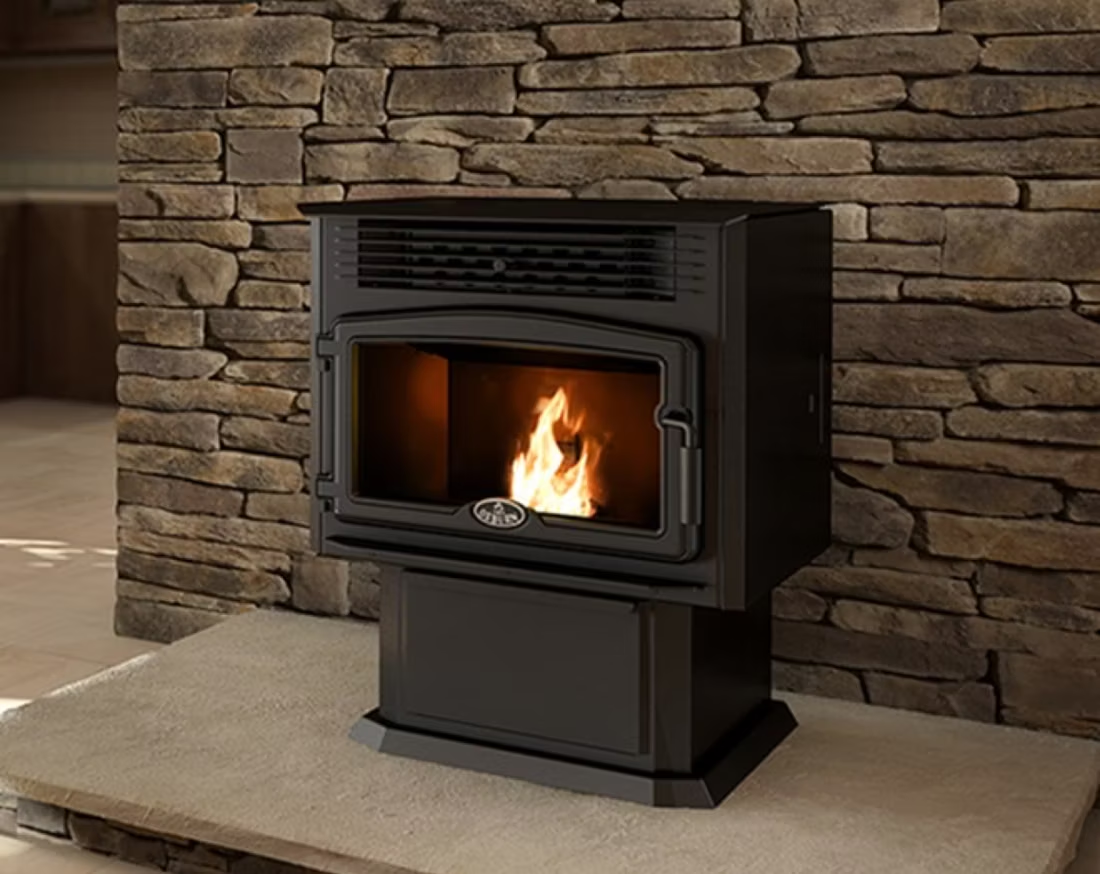
That infrastructure is why pellet stoves—like wood stoves—show up as a niche rather than a mainstream choice in Hudson, even though the region's oak, hickory, maple, and cherry hardwoods would make excellent pellet fuel stock. Regional pellet producers like Lignetics, Indeck Energy Services, and Somerset Pellet Fuel do serve the broader Ohio market, so fuel supply isn't the obstacle—it's simply that gas is the path of least resistance for most Hudson households. Where pellet stoves do show up locally: converted garages and workshops without a gas line, additions built after the main gas run was set, and households that want a backup heat option that doesn't require chimney access or wood storage.
Three steps. No salesperson until you're ready.
Tell us about your project
Your zip code, your situation, and the fuel you're leaning toward—or let the answers point you to one.
See what's actually available
The brands dealers within 100 miles genuinely carry—real options, never a catalog mirage.
Get your dealer & Project Guide
A trusted local dealer, plus the free Project Guide & Parts List that names every component of the job.
Frequently Asked Questions
Are pellet stoves a common heating choice in Hudson, Ohio?
Not especially. Hudson's fuel mix leans heavily toward natural gas—most homes in the village, from the historic homes near First & Main to newer subdivisions, were built or retrofitted with a gas line already in place. Pellet stoves are more of an occasional choice here: a handful of homeowners install one for a detached workshop, a room addition without existing gas service, or as a hedge against winter power and gas-supply interruptions. If you're set on pellet heat, it's absolutely installable—it's just not the default path most of your neighbors took.
What does a pellet stove installation cost in the Hudson area?
Because installs are less frequent here than in more pellet-heavy parts of the Midwest, there isn't a large local pricing dataset. Across Northeast Ohio generally, a pellet stove or insert installation typically runs $3,000 to $6,000, depending on the unit, whether you're venting through an existing masonry chimney with an insert, or running new through-wall venting for a freestanding stove in a space like a garage or addition. A local dealer matched through Find My Fireplace will give you an exact number as part of your free Project Guide & Parts List.
If pellet stoves aren't common here, why would I install one?
The reasons that come up most in Hudson: heating a detached garage, workshop, or accessory space that was never plumbed for gas; wanting a real, visible flame without the wood storage and chimney maintenance of a wood stove; and having a backup heat source that doesn't depend on the gas utility staying up during a bad ice storm. Pellet stoves still need electricity to run the auger and blower, so pair one with a small generator or battery backup if outage resilience is the main goal.
Where can I buy pellet fuel near Hudson?
Pellet fuel isn't hard to find even though pellet stoves are uncommon locally—regional producers including Lignetics, Somerset Pellet Fuel, and Indeck Energy Services supply the broader Ohio market, and most hardware and farm-supply retailers in Summit County stock bagged hardwood pellets by the ton during heating season. Buying early in fall, before cold snaps drive up demand, is the usual local strategy.
What's the difference between a pellet stove and a pellet insert?
A pellet stove is a freestanding, self-contained unit vented through an exterior wall or existing chimney—the more common setup for a garage, workshop, or room without a fireplace. A pellet insert slides into an existing masonry fireplace opening and uses the existing chimney, with a proper liner, for venting. Since wood-burning fireplaces are relatively rare in Hudson's housing stock to begin with, most local pellet installs end up being freestanding stoves rather than insert conversions.
Will a pellet stove work if the power goes out?
Not without a backup power source. Pellet stoves rely on an electric auger to feed fuel and a blower to distribute heat, so they shut down in an outage unless you're running a generator or a battery backup sized for the stove's draw. That's worth planning for in Hudson, where electric service comes from a mix of Ohio Edison, the City of Hudson's municipal utility, and City of Cleveland Public Power—reliability varies somewhat by which provider serves your street. If uninterrupted backup heat during outages is your top priority, a properly vented gas unit with a standing pilot is generally a more dependable choice.
What size pellet stove do I need for my Hudson home?
Sizing depends more on the specific space you're heating than on the whole house, since most Hudson pellet installs are supplemental rather than primary heat. A small stove, under about 1,000 sq ft, suits a garage, workshop, or single addition; a medium stove handles an open living area of roughly 1,000 to 1,800 sq ft. Given the area's roughly 6,300 heating degree days and 18°F average winter lows, don't undersize—a local dealer can measure the space and factor in insulation and ceiling height for an accurate recommendation.
How does pellet stove maintenance compare to a wood stove?
Less involved. Pellet stoves need a weekly ash-pan cleaning during regular use, an annual cleaning of the burn pot, exhaust vent, and hopper, and periodic replacement of the igniter over the unit's lifespan. There's no chimney creosote buildup to worry about the way there is with a wood-burning appliance, since pellet stoves vent through a simpler, cooler exhaust system. That lower-maintenance profile is one reason the occasional Hudson homeowner picks pellet over wood when they do want a solid-fuel option.
Pellet vs. gas—which makes more sense for a Hudson home?
For most Hudson homes, gas wins simply because the infrastructure is already there—a direct-vent gas fireplace or insert taps into a gas line most homes already have, with instant on-off operation and no fuel storage. Pellet makes more sense in the specific situations where gas isn't an option: a detached structure without a gas line, a preference to avoid another gas appliance, or wanting a stove that runs on a stored, non-utility fuel. If your home already has gas service, that's usually the simpler and more cost-effective path; pellet remains a solid niche choice for the exceptions.
How often does a pellet stove need cleaning?
A clean pellet stove is a happy pellet stove. Plan on cleaning the burn pot about once a week when you're burning regularly—ash and clinkers gum up the air holes just like a pellet barbecue. Most pellet stove problems trace back to skipped cleaning that nobody explained up front. Some designs make it easy with a trapdoor burn pot: pull a lever and the gunk drops into the ash pan.
Why is my open fireplace making my house colder?
Open fireplaces suck—literally. As the fire burns, it consumes air your furnace already paid to heat and pulls it out through the chimney, so the house is actually colder after the fire goes out than before you lit it. An insert fixes this: it seals the chimney, puts fixed glass across the front, and turns that hole in your house into a real heat source.
Does a fireplace add value to my home?
On average, a fireplace adds back to the home about the same amount you spent installing it. Add the monthly savings from heating the rooms you actually use instead of the whole house—often hundreds of dollars a year—and the value case is strong before you even count what a fire does for how your family uses the room.
Can I install a fireplace myself?
If you're putting a fire in your house on purpose, it's best to work with an expert. Unless you're genuinely experienced in framing, gas line, vent pipe, and the national code on clearances to combustibles, have a professional do it—and ideally the same company that sells you the fireplace, so warranty, service, and liability all live under one roof.
Nearby Dealers
Hearth shops serving Hudson and the surrounding area.
Pellet Brands Stocked Around Hudson
Manufacturers will point you to the nearest stocking dealer.
Find your pellet stove fit in Hudson.
Tell us about your space—whether it's a workshop, addition, or backup-heat plan—and we'll match you with a local Hudson-area dealer and send your free Project Guide & Parts List with the exact parts, including the vent kit, for your pellet project.
Find Your Fireplace →