
Find dependable pellet heat for Hocking County homes and cabins.
From Logan to the ridges and hollows around Hocking Hills State Park, pellet stoves deliver steady, thermostat-controlled heat without splitting a single log. Find the right stove and connect with a trusted local dealer.
Every Project Starts From One of These Five Situations
Steady heat for a county built on cabins and hollows.
Hocking County sits in the Appalachian foothills of southeastern Ohio, a landscape of sandstone gorges, waterfalls, and dense oak-hickory forest that draws visitors to Hocking Hills State Park year-round. With about 10,300 year-round residents and a heavy seasonal population of cabin and vacation-rental owners, the county's housing stock is a mix of full-time homes in and around Logan and second homes scattered through the ridges. Winters here sit in climate zone 5A, with average lows around 19°F and roughly 5,616 heating degree days—cold enough that supplemental heat matters, but not so extreme that homeowners need to over-build their system.
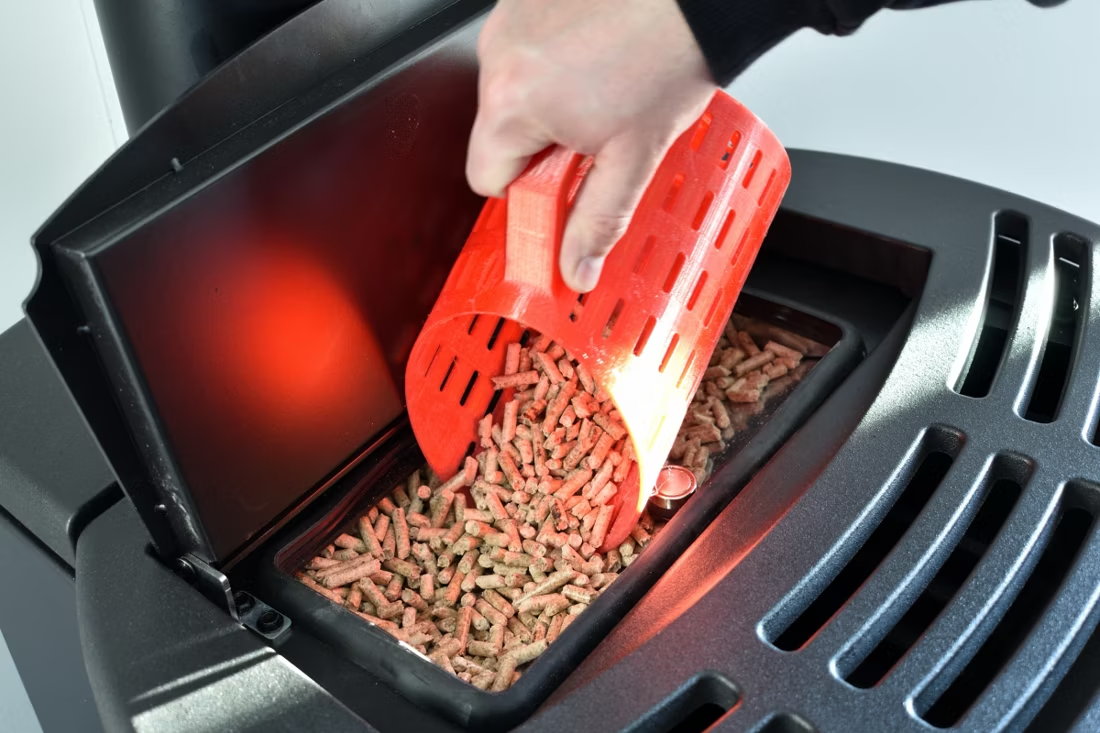
Pellet stoves have found a real niche in Hocking County precisely because of that cabin culture. A hopper that holds a day or two of fuel and a thermostat that maintains a set temperature matter a lot when the owner only visits on weekends—nobody wants to arrive Friday night to a cold cabin and a cold stove that needs re-lighting and tending. Regional pellet brands including Indeck Energy Services, Lignetics, and Somerset Pellet Fuel supply the hardwood pellets sold through hearth dealers in the area, and with no air-quality non-attainment designation in the county, there are no wintertime burn curtailment periods to plan around. That combination—automated, low-maintenance heat with no burn-ban restrictions—is a big part of why pellet appliances show up as often as they do in both full-time Hocking County homes and the cabins that make the county famous.
Three steps. No salesperson until you're ready.
Tell us about your project
Your zip code, your situation, and the fuel you're leaning toward—or let the answers point you to one.
See what's actually available
The brands dealers within 100 miles genuinely carry—real options, never a catalog mirage.
Get your dealer & Project Guide
A trusted local dealer, plus the free Project Guide & Parts List that names every component of the job.
Frequently Asked Questions
How much does a pellet stove installation cost in Hocking County?
Most pellet stove installations in Hocking County run in the $3,500 to $6,500 range, depending on the stove, hopper size, and venting path. Pellet stoves vent through a smaller-diameter pipe than wood stoves and can often exit through an exterior wall rather than requiring a full chimney, which keeps costs down for cabins and additions that don't have existing masonry. Converting an existing wood-burning fireplace to a pellet insert typically lands on the lower end of that range since the chimney chase is already in place. Remote cabin sites off the main roads around the state park can see a modest travel charge added by installers.
What size pellet stove do I need for a Hocking Hills cabin versus a full-time home?
It depends heavily on how the space is used. A weekend cabin that's unheated between visits often benefits from a stove with a larger hopper capacity so it can run unattended for 24-plus hours and bring the space back up to temperature before guests arrive—sizing here favors burn duration as much as raw BTU output. A full-time Hocking County home, by contrast, is usually sized more conventionally: small stoves for a single room or add-on, medium units for most main living areas, and larger stoves for open-concept or less-insulated older farmhouses common throughout the county. A local dealer can walk through your specific layout and visit pattern before recommending a model.
Where can I find certified pellet stove installers near me?
Look for installers with NFI (National Fireplace Institute) pellet-specific certification, which covers the electrical, venting, and combustion-air requirements unique to pellet appliances. Hearth dealers serving the Logan area typically handle installations throughout the county, including the more remote cabin communities near Old Man's Cave, Conkle's Hollow, and Rockbridge. Because pellet stoves require both a fuel exhaust vent and often a dedicated electrical circuit, it's worth confirming your installer handles both scopes rather than farming out the electrical work separately.
What's the difference between a pellet stove and a pellet insert?
A pellet stove is a freestanding unit that sits on its own hearth pad and vents through a wall or existing chimney chase—it can go almost anywhere with the right clearances, which makes it a common choice for cabins without an existing fireplace. A pellet insert is built to slide into an existing masonry fireplace opening, converting an old wood-burning hearth into an automated, thermostat-controlled heat source while reusing the existing chimney with a liner. For Hocking County's older farmhouses and cabins that already have a masonry fireplace, an insert is often the more cost-effective route; new construction or additions usually call for a freestanding stove instead.
Do I need a permit to install a pellet stove in Hocking County?
Yes—a building permit is generally required for a new pellet stove installation, covering the venting penetration and any new electrical circuit run to the unit. Most local hearth dealers handle the permit application as part of the installation, so homeowners typically don't have to navigate it directly. Because Hocking County has no air-quality non-attainment designation, there are no seasonal burn curtailment periods to worry about once the stove is installed and permitted—unlike some Ohio counties with winter inversion concerns, pellet and wood appliances here can be operated freely through the heating season.
What's the best pellet stove for Hocking County's climate?
With winter lows averaging around 19°F and roughly 5,616 heating degree days, Hocking County doesn't demand the extreme-cold, high-BTU units built for northern climates like Duluth or International Falls, but a mid-sized pellet stove rated for whole-room or whole-floor heating handles the season comfortably. For cabin owners who are away for stretches at a time, look for a model with a larger hopper (60+ pound capacity) and an ash pan large enough to go multiple burns between cleanings—that combination reduces the number of trips needed just to keep the stove fed and maintained. A local dealer can match hopper size and BTU output to your specific structure and occupancy pattern.
How much maintenance does a pellet stove need?
Pellet stoves need more routine attention than a gas unit but far less than a wood stove. Plan on emptying the ash pan every few days of regular use, wiping the glass weekly, and vacuuming the burn pot and auger area every few weeks depending on pellet quality. An annual professional service—checking the exhaust fan, gaskets, and auger motor—is recommended before the start of each heating season, ideally in late summer or early fall before Hocking County's cold sets in. For cabins that sit idle for weeks between visits, a pre-season service call is especially worthwhile since dust and unburned pellets can sit in the hopper longer than they would in a daily-use home.
Where can I buy pellets in or near Hocking County?
Regional pellet brands including Indeck Energy Services, Lignetics, and Somerset Pellet Fuel are commonly stocked through hearth dealers and farm supply stores serving the Logan area, with typical pricing in the $230 to $300 per ton range depending on brand and quantity purchased. Buying a season's supply—usually 2 to 3 tons for a primary heat source, less for supplemental cabin use—before the fall rush tends to get better pricing and guarantees availability once cold weather hits. Storage matters too: pellets need to stay dry, so a covered, elevated storage spot in a cabin outbuilding or garage works better than an exposed porch.
Pellet stove or wood stove—which makes more sense for a Hocking Hills cabin?
Wood stoves work without electricity, which matters for cabins in the more remote parts of the county where power can be less reliable, and the oak, hickory, and cherry that grow throughout the region make for excellent, widely available firewood. Pellet stoves need electricity to run the auger and combustion blower, so they're not a fallback during an outage—but they offer set-it-and-forget-it convenience that suits owners who only visit occasionally and don't want to split, stack, and tend a fire during a short weekend stay. Many cabin owners in Hocking County end up choosing based on how often they're on-site: frequent, hands-on visitors often lean wood, while owners who want the cabin warm and ready with minimal fuss tend to prefer pellet.
What's the difference between an insert and a zero-clearance fireplace?
An insert is a fireplace that slides into a pre-existing wood-burning fireplace—if you don't have one, there's nothing to insert it into. A zero-clearance fireplace is built into a framed wall, which makes it the answer for remodels and new construction. Simple test: existing masonry fireplace means insert; blank or framed wall means zero-clearance.
Why is a fireplace insert so efficient?
An insert does two things: it seals the chimney completely, so you stop losing air you already paid to heat, and it radiates warmth into the room through the firebox and glass. Most add a heat-exchange fan that pulls cool room air underneath, wraps it around the hot firebox, and pushes it back out warm. Your home is more efficient before you've even lit the first fire.
Does a fireplace add value to my home?
On average, a fireplace adds back to the home about the same amount you spent installing it. Add the monthly savings from heating the rooms you actually use instead of the whole house—often hundreds of dollars a year—and the value case is strong before you even count what a fire does for how your family uses the room.
Can a fireplace actually lower my heating bill?
Yes—by creating a comfort zone. A furnace heats every square foot of the house just to warm the one room you're in; a gas fireplace on low burns roughly a sixth of the gas a typical furnace does. Set the furnace around 55–60 degrees as a baseline, then heat the rooms your family actually uses. Families who heat this way commonly save $20–$60 a month.
Stove and Fireplace Dealers in Hocking County
Pellet Brands Stocked Around Hocking County
Manufacturers will point you to the nearest stocking dealer.
Find your pellet stove in Hocking County.
Tell us a bit about your home or cabin and we'll match you with the right pellet stove or insert—and connect you with a trusted local dealer who provides a free Project Guide & Parts List, including the vent kit, for your Hocking County project.
Find Your Fireplace →