
Find the right fireplace for your Hocking County home.
Wood, gas, pellet, and electric fireplace resources for every town, farmhouse, and Hocking Hills cabin in the county—from Logan to Laurelville. Find the right unit and connect with a trusted local hearth retailer.
Every Project Starts From One of These Five Situations
Hardwood country in the hills of southeastern Ohio.
Hocking County's sandstone gorges and hardwood ridges—the same terrain that draws visitors to Hocking Hills State Park—are covered in oak, hickory, maple, and cherry, which is why wood heat has real staying power here. Winters are moderate compared to the upper Midwest—nowhere near the sustained deep cold of somewhere like Duluth, MN—but with around 5,616 heating degree days and average winter lows near 19°F, homes and cabins still need a heater that can carry a full Ohio Valley heating season, not just take the chill off.
With just over 10,000 residents spread across a rural county with a booming cabin-rental economy, the hearth market here serves two overlapping groups: year-round homeowners in Logan, Nelsonville, and Laurelville, and the owners and managers of vacation cabins scattered through the hollows near the state park. Pick your fuel below to see local dealers, typical installation costs, and the specifics that apply to your project—whether it's a farmhouse woodstove or a gas fireplace insert in a rental cabin.
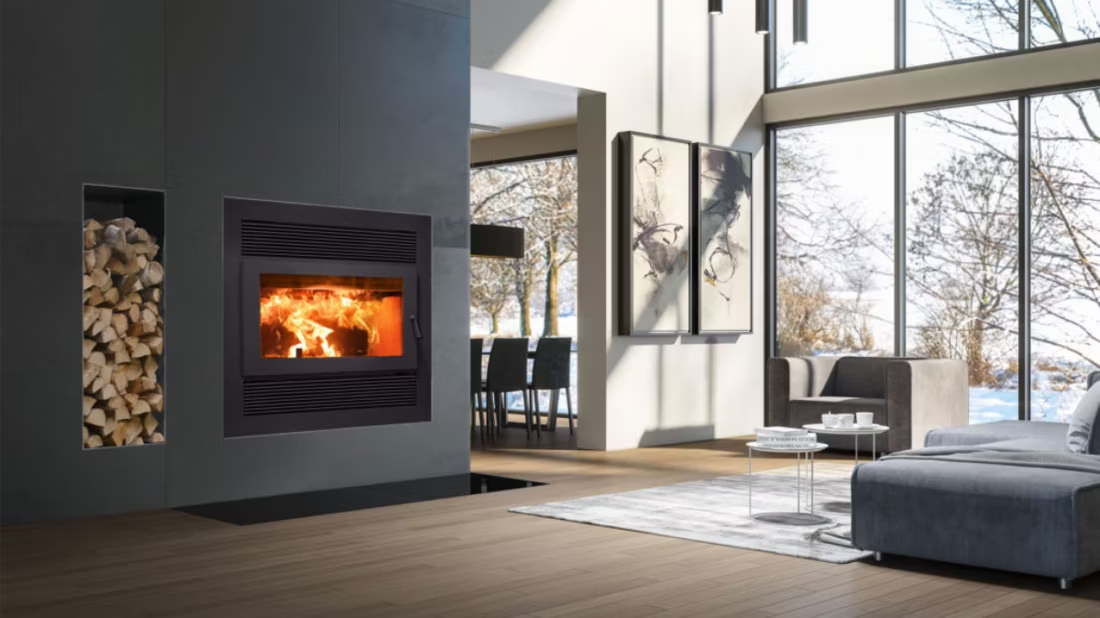
Four fuels. One honest answer for Hocking County.
Three steps. No salesperson until you're ready.
Tell us about your project
Your zip code, your situation, and the fuel you're leaning toward—or let the answers point you to one.
See what's actually available
The brands dealers within 100 miles genuinely carry—real options, never a catalog mirage.
Get your dealer & Project Guide
A trusted local dealer, plus the free Project Guide & Parts List that names every component of the job.
Frequently Asked Questions
Which fuel works best in Hocking County?
It depends on whether you're heating a full-time home or a Hocking Hills rental cabin. Wood is a natural fit given the abundance of local oak, hickory, and cherry—dense, long-burning firewood is easy to source, and a mid-size cathedral-model stove or insert covers most single-family homes through the county's roughly 5,600-degree-day heating season. Gas is the low-maintenance choice, especially popular for cabin owners who want reliable heat without asking renters to manage a woodpile—most rural properties here run on propane rather than piped natural gas. Pellet stoves split the difference: real wood-style flame with automated feed, and the county has decent regional pellet supply through brands like Lignetics and Somerset Pellet Fuel. Electric fireplaces show up most often as supplemental heat or ambiance in guest cabins and bedrooms rather than as a primary heat source, since winter lows near 19°F call for more sustained output than most electric units provide alone.
Do I need a permit to install a fireplace in Hocking County?
In most cases, yes. New wood stoves, wood inserts, gas fireplaces, gas inserts, and pellet stoves generally require a building permit through the Hocking County building department, consistent with the Ohio Residential Code's requirements for solid-fuel appliances, chimney liners, and gas-appliance venting. Propane installations also require the gas line and tank setup to be handled by a licensed gas fitter or propane supplier. Electric fireplaces usually skip the permit process unless you're doing a hardwired built-in that involves new circuit work, in which case an electrical permit applies. If you're installing in a rental cabin, check with your township as well—some cabin developments near the state park have their own review process on top of the county's. Most local hearth retailers handle the permit paperwork as part of the installation.
Are there air quality restrictions on wood burning in Hocking County?
No—Hocking County doesn't have the kind of winter inversion or non-attainment issues you'll find in more urban Ohio counties or in western basin communities where geography traps wood smoke near the ground. There are no county-level burn bans or voluntary curtailment advisories tied to wood heat here. That said, new wood stove installations still need to meet current EPA emissions standards, and a well-seasoned load of local oak or hickory (properly split and dried at least six months) burns cleaner and more efficiently than green or unseasoned wood regardless of local air quality rules.
Can one local hearth retailer handle all four fuel types?
In a county this size, most hearth retailers concentrate on two or three fuels rather than carrying all four with equal depth. Dealers based around Logan typically lead with wood and gas—the two most common choices for both year-round homes and cabin conversions—and carry pellet stoves as a secondary line. Electric fireplaces are often available but treated as a smaller add-on category rather than a dedicated showroom section. If you're not sure which fuel fits your situation, a multi-fuel dealer can walk you through working displays and talk through the trade-offs for your specific home or rental property.
How does service work in rural areas of Hocking County?
Technicians serving Hocking County typically travel out from Logan into the surrounding townships and the cabin clusters near the state park, where narrow hollow roads and seasonal driveways can add time to a service call. Expect a modest travel fee for the more remote properties. Scheduling matters more here than in denser markets—cabin owners often try to book chimney sweeps and gas inspections in the shoulder seasons (spring or early fall) before the summer and fall tourist rush makes it hard to get a unit offline for service. Homeowners heating full-time should aim for the same window, ahead of the first cold snap.
What's the typical cost range for fireplace installation across all fuel types in Hocking County?
Wood stove or insert installation: roughly $4,000–$8,500 for a typical setup, with new-construction chimney work running higher. Gas fireplace, insert, or stove: about $4,000–$9,500, depending mostly on propane line work and venting distance—conversions where propane service already exists tend to land on the lower end. Pellet stove or insert: generally $4,000–$7,000 for a standard install. Electric fireplace: $200–$2,500 for the unit itself, plus $300–$1,000 in labor for anything beyond a simple plug-and-play placement. Cabin and rental installs sometimes run slightly higher due to access and scheduling around guest turnover. See the county + fuel pages above for cost detail tied to specific local retailers.
I know I want a fireplace—where do I actually start?
Do two things today: snap a photo of the wall or fireplace you want to transform, and take a tape measure to the space—width, height, depth. Those two artifacts answer most of a hearth professional's first questions. Then settle fuel (wood, gas, pellet, or electric) and set a realistic budget: $3,900–$5,500 covers fireplace, vent, and basic install for most homes.
How much should I budget for a fireplace?
For an average home—covering the fireplace, the vent pipe, and basic installation—a budget between $3,900 and $5,500 gives you a lot of options across wood, gas, and pellet. By the time you add finish work, gas line, and electrical, the average complete installation lands between $5,000 and $12,000 all-in. In a remodel or new build, a good rule is to put about 2.5% of the total project cost toward the fireplace.
Can a fireplace actually lower my heating bill?
Yes—by creating a comfort zone. A furnace heats every square foot of the house just to warm the one room you're in; a gas fireplace on low burns roughly a sixth of the gas a typical furnace does. Set the furnace around 55–60 degrees as a baseline, then heat the rooms your family actually uses. Families who heat this way commonly save $20–$60 a month.
Does a fireplace add value to my home?
On average, a fireplace adds back to the home about the same amount you spent installing it. Add the monthly savings from heating the rooms you actually use instead of the whole house—often hundreds of dollars a year—and the value case is strong before you even count what a fire does for how your family uses the room.
Stove and Fireplace Dealers in Hocking County
Listings include WhyFire partner dealers, dealers we have verified as authorized for the brands we recommend, and established local businesses that carry hearth products. Every listing shows which one it is. The ones marked Preferred run on WhyFire's software, so they can show you real pricing and book your appointment right here. No manufacturer pays for placement. How we verify dealers →
Get your Hocking County Project Guide & Parts List.
Tell us about your home or cabin and your fuel of choice, and we'll match you with a trusted local Hocking County dealer and send a free Project Guide & Parts List—the exact parts, including the vent kit, for your project.
Find Your Fireplace →