
Steady, hopper-fed heat for Harrison County's coldest hardwood-country nights.
With winter lows averaging 20°F and nearly 5,880 heating degree days a year, Harrison County homes need heat they can set and forget. A pellet stove or insert delivers thermostatic warmth without the woodpile—find the right unit and connect with a local dealer who can install it right.
Every Project Starts From One of These Five Situations
Convenient, automated heat for Ohio's Appalachian foothills.
Harrison County sits in the rolling hill country of eastern Ohio, a few thousand residents spread across Cadiz, Scio, Hopedale, Deersville, and the farms and hollows in between. At just under 6,900 people countywide, this isn't a place with a hearth store on every corner—most homeowners drive to a dealer in a neighboring county, or wait for one to come do the install. Winters here run cold and long: a 20°F average overnight low and nearly 5,880 heating degree days a year put Harrison County in the same general heating-load territory as much of the lower Great Lakes region, colder than the Ohio River valley towns to the south but well short of the brutal stretches you'd see in a place like Duluth, MN.
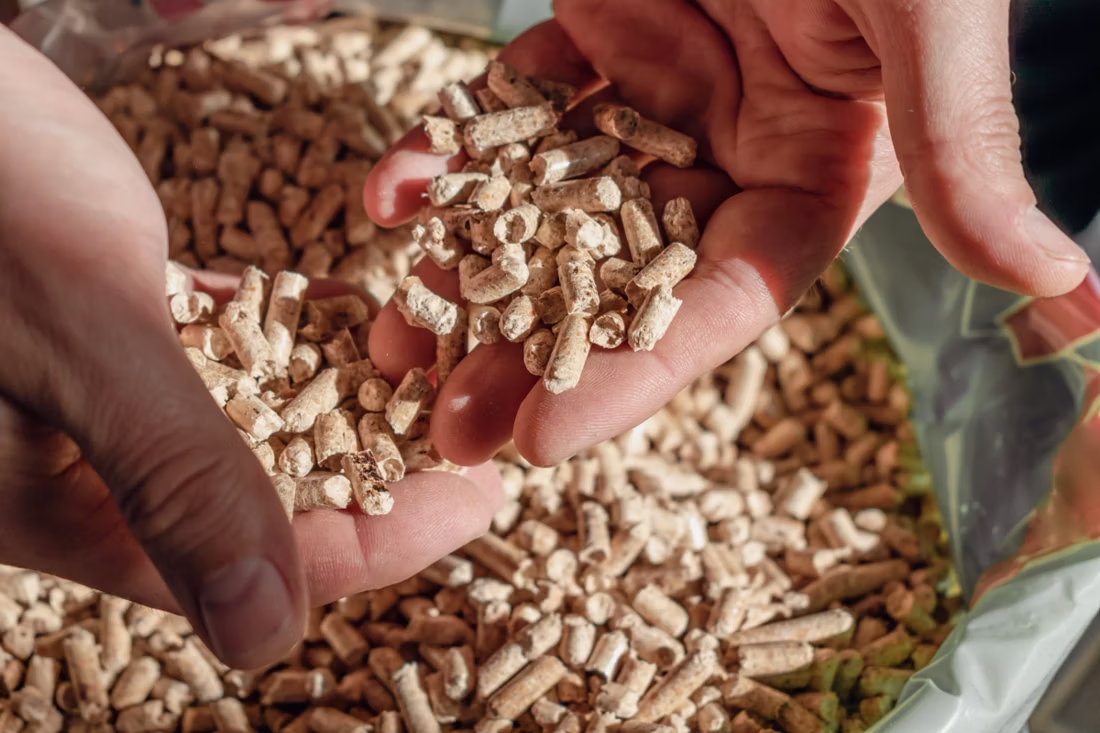
The county's oak, hickory, maple, and cherry forests have made wood heat a longstanding tradition here, but pellet stoves have carved out real ground for homeowners who want that same radiant warmth without splitting, stacking, or feeding a firebox by hand. A hopper-fed pellet stove burns cleaner, holds a steady temperature automatically, and works well as either a primary heat source in a smaller farmhouse or a supplemental unit in a larger home already running propane or electric heat. With no air quality restrictions on burning in Harrison County, pellet appliances are an easy fit, and regional suppliers like Indeck Energy Services, Lignetics, and Somerset Pellet Fuel keep fuel reasonably accessible even in a rural county like this one.
Three steps. No salesperson until you're ready.
Tell us about your project
Your zip code, your situation, and the fuel you're leaning toward—or let the answers point you to one.
See what's actually available
The brands dealers within 100 miles genuinely carry—real options, never a catalog mirage.
Get your dealer & Project Guide
A trusted local dealer, plus the free Project Guide & Parts List that names every component of the job.
Frequently Asked Questions
How much does a pellet stove installation cost in Harrison County?
A freestanding pellet stove installation in Harrison County typically runs $3,000 to $6,500, depending on the stove's output, whether you need new venting run through an exterior wall, and any hearth pad work required for clearance. A pellet insert going into an existing masonry fireplace usually lands in the $4,000 to $7,000 range once the flex liner and venting adapter are factored in. Because Harrison County has relatively few hearth dealers within the county itself, expect your installer to quote a small travel charge if they're coming from Cadiz, New Philadelphia, or Steubenville—get a firm number during the in-home visit before committing.
What size pellet stove do I need for my home?
Most pellet stoves are rated by BTU output and square footage coverage, but the older farmhouses common throughout Harrison County—many built well before modern insulation standards—often need more capacity than the sq-ft rating suggests. A stove rated for 1,500 square feet in a tight, newer build might only comfortably handle 1,100 to 1,200 square feet in a drafty older farmhouse near Deersville or Freeport. If you're using the stove as your primary heat source through a full Ohio winter with lows around 20°F, size up rather than down. A local dealer will walk your home, check insulation and ceiling height, and size the unit for free before you buy anything.
Where can I buy pellets in Harrison County?
Pellet fuel isn't sold on every corner in a county this size, but regional brands including Indeck Energy Services, Lignetics, and Somerset Pellet Fuel supply farm stores, hardware retailers, and hearth dealers throughout eastern Ohio, and most will special-order or direct-ship pallets if a local retailer doesn't stock enough on hand. Expect to pay in the neighborhood of $230 to $280 per 40-lb-bag ton, with some seasonal price movement—buying a full season's supply (a ton or more) in late summer before demand picks up is the common local strategy. Premium hardwood pellets burn cleaner and leave less ash than economy softwood blends, which matters if you're running the stove daily through a long Harrison County winter.
What's the difference between a pellet stove and a pellet insert?
A pellet stove is a freestanding unit that sits on its own hearth pad and vents out through a wall or existing chimney—it can go almost anywhere in a room with the right clearances. A pellet insert is built to slide into an existing masonry fireplace opening, turning an old wood-burning fireplace into an automated, thermostatically controlled heat source using a flexible liner run up the existing chimney. For the older brick-fireplace homes common in Cadiz and the surrounding townships, an insert is usually the more cost-effective route since it reuses the chimney you already have. Homes without an existing fireplace, or newer construction, are better suited to a freestanding stove vented straight through an exterior wall.
Do I need a permit to install a pellet stove in Harrison County?
Yes—a building permit is typically required for a new pellet stove or insert installation, issued through the Harrison County Building Department for anything outside village limits, or through the applicable village office if you're inside Cadiz, Scio, or another incorporated town. The permit process mainly confirms proper clearances and venting termination, since pellet appliances vent through smaller PL-vent pipe rather than a full masonry chimney. Most hearth dealers who install regularly in the county will pull the permit as part of the job, so you typically don't have to navigate it yourself—confirm that's included when you get a quote.
What's the best pellet stove for Harrison County's climate?
With winter lows averaging 20°F and a heating season that runs long by Ohio standards, look for a pellet stove with a firebox big enough to run at a moderate burn rate for extended stretches rather than maxing out constantly—that's both more efficient and easier on the auger and igniter over a full season of daily use. Mid-size units in the 40,000 to 55,000 BTU range cover most Harrison County homes without oversizing. If the stove will serve as your primary heat rather than a supplement to propane or electric baseboard, ask your local dealer about hopper capacity too—a larger hopper means fewer refills during the coldest stretches of January and February.
How much maintenance does a pellet stove need?
Pellet stoves need more routine attention than a gas fireplace but far less than a wood stove chimney sweep. Plan on emptying the ash pan every few days during heavy use, cleaning the burn pot and glass weekly, and vacuuming the hopper and auger area periodically to prevent pellet dust buildup. A full professional service—checking the igniter, gaskets, exhaust fan, and venting—is recommended once a year, ideally before the heating season starts in early fall. Because dealer density is thin in a county this size, book that annual service early; fall slots fill up fast once the weather turns.
Will my pellet stove work during a power outage?
Not without backup power—this is worth understanding before you buy. Pellet stoves rely on an electric auger to feed fuel and a fan to distribute heat and exhaust combustion gases, so a power outage stops the stove even with a full hopper. In a rural county like Harrison, where outages can run longer than in more urban areas, some homeowners pair a pellet stove with a small battery backup or generator sized to run the stove's low electrical draw, or they keep a wood-burning option as true off-grid backup given how much oak and hickory is locally available. If uninterrupted heat during storms is a priority for your household, ask your local dealer about generator compatibility before you finalize a model.
Pellet vs. wood—which is right for my Harrison County home?
Harrison County's oak, hickory, maple, and cherry forests make wood heat genuinely practical here—many households already have access to cut or split firewood, and a wood stove keeps working through a power outage with zero electrical dependence. Pellet stoves trade that off-grid resilience for convenience: load the hopper, set the thermostat, and the stove maintains a steady temperature automatically with far less ash and no splitting or stacking. If you want the lowest-effort daily heat and have reliable power, pellet is usually the better fit. If backup heat during outages or self-sufficiency matters more than convenience, wood—especially given how available local hardwood is—often wins. A number of Harrison County homes end up running both: pellet for daily comfort, wood as the storm-day fallback.
Why is my open fireplace making my house colder?
Open fireplaces suck—literally. As the fire burns, it consumes air your furnace already paid to heat and pulls it out through the chimney, so the house is actually colder after the fire goes out than before you lit it. An insert fixes this: it seals the chimney, puts fixed glass across the front, and turns that hole in your house into a real heat source.
How often does a pellet stove need cleaning?
A clean pellet stove is a happy pellet stove. Plan on cleaning the burn pot about once a week when you're burning regularly—ash and clinkers gum up the air holes just like a pellet barbecue. Most pellet stove problems trace back to skipped cleaning that nobody explained up front. Some designs make it easy with a trapdoor burn pot: pull a lever and the gunk drops into the ash pan.
Does a fireplace add value to my home?
On average, a fireplace adds back to the home about the same amount you spent installing it. Add the monthly savings from heating the rooms you actually use instead of the whole house—often hundreds of dollars a year—and the value case is strong before you even count what a fire does for how your family uses the room.
How much should I budget for a fireplace?
For an average home—covering the fireplace, the vent pipe, and basic installation—a budget between $3,900 and $5,500 gives you a lot of options across wood, gas, and pellet. By the time you add finish work, gas line, and electrical, the average complete installation lands between $5,000 and $12,000 all-in. In a remodel or new build, a good rule is to put about 2.5% of the total project cost toward the fireplace.
Pellet Brands Stocked Around Harrison County
Manufacturers will point you to the nearest stocking dealer.
Find your pellet stove in Harrison County.
Tell us about your home and heating goals, and we'll match you with a trusted local dealer serving Harrison County—plus a free Project Guide & Parts List with the exact parts, vent kit, and recommended dealer for your pellet stove or insert project.
Find Your Fireplace →