
Instant heat, zero mess, right here in Harrison County.
No chimney, no gas line, no combustion—just plug in or wire up and get warmth in a farmhouse room, a manufactured home, or a Cadiz rental that isn't set up for wood or gas. Find the right unit and connect with a trusted local dealer.
Every Project Starts From One of These Five Situations
No chimney, no gas line, no problem.
Harrison County sits in the Appalachian foothills of eastern Ohio, with Cadiz as the county seat and a spread-out population of just under 6,725 across Scio, Bowerston, Hopedale, Jewett, and Deersville. Winter lows average around 20°F and the county has a long, cold heating season—cold enough that most homes here run a furnace or heat pump as primary heat, but plenty of houses have a drafty room, a converted porch, or a bedroom addition that never quite keeps up. A lot of the county's housing stock is older farmhouses and manufactured or doublewide homes, many without an existing masonry chimney or a gas line run to the room that actually needs heat.
That's where electric fireplaces do their best work. AEP Ohio (Ohio Power Company) provides electric service across most of Harrison County, and a standard plug-in unit runs on any 120V outlet—no venting, no permit for combustion, no creosote to manage. For homes where a wood stove retrofit or a new gas line isn't practical or affordable, an electric fireplace or insert gives you real supplemental warmth in the room where you actually spend your evenings, with a flip of a switch instead of a match. It won't replace a furnace on a January night at 20 below, but for zone heating a living room, a converted garage, or a rental unit, it's often the simplest, safest option on the table.
Three steps. No salesperson until you're ready.
Tell us about your project
Your zip code, your situation, and the fuel you're leaning toward—or let the answers point you to one.
See what's actually available
The brands dealers within 100 miles genuinely carry—real options, never a catalog mirage.
Get your dealer & Project Guide
A trusted local dealer, plus the free Project Guide & Parts List that names every component of the job.
Frequently Asked Questions
How much does an electric fireplace installation cost in Harrison County?
A plug-in electric fireplace insert or freestanding unit typically runs $300 to $800 installed, since most units just need an existing 120V outlet and a few minutes of setup. Built-in wall units or larger inserts that require a dedicated 20-amp circuit run higher—usually $800 to $1,500 once a licensed electrician runs new wiring, especially in older Harrison County farmhouses where the existing panel and wiring may need updating to add a circuit. Local dealers can tell you within a few minutes of looking at your breaker panel and outlet situation which category your project falls into.
Do I need a permit to install an electric fireplace in Harrison County?
A plug-in unit that uses an existing outlet generally doesn't require a permit. If your installation calls for a new dedicated circuit or panel work—common with larger built-in units—that electrical work needs to be done by a licensed electrician and typically requires an electrical permit through the Harrison County Building Department or the relevant township authority. Most local dealers either employ a licensed electrician or work directly with one, so the permit and inspection get handled as part of the install rather than left for you to sort out.
What size electric fireplace do I need for my room?
Most electric fireplace heaters are rated around 1,500 watts, which is enough to noticeably warm a single room of 300 to 400 square feet, depending on ceiling height and how drafty the space is. Many Harrison County homes have older windows and minimal insulation in add-on rooms, so a unit on the higher end of its wattage range, or one with a built-in thermostat, tends to perform better than a bargain unit with a fixed low setting. For anything larger than a single room, you're better off treating the electric fireplace as supplemental zone heat rather than expecting it to cover an open floor plan.
Will my electric fireplace still work if the power goes out?
No—and this is the honest tradeoff for Harrison County homes. Ice storms and downed lines aren't unusual in the Appalachian foothills, and AEP Ohio outages in rural parts of the county can stretch for hours or, in a bad ice event, longer. An electric fireplace is entirely dependent on grid power, so it offers zero backup heat during an outage. If emergency heat during a power failure matters to you, pair the electric unit with a wood stove or a pellet appliance elsewhere in the house—oak, hickory, maple, and cherry are all commonly available locally and burn well as a backup fuel source.
How much does it cost to run an electric fireplace day to day?
A typical 1,500-watt unit running on high costs roughly 18 to 21 cents an hour at current AEP Ohio residential rates. Running it a few hours an evening through a Harrison County winter adds up to real money on the electric bill, but it's still far cheaper than heating an entire drafty room with a furnace that's fighting old windows and thin insulation. Most owners run it on a lower thermostat setting or use it to take the edge off one room while the furnace stays set lower for the rest of the house.
What's the difference between an electric insert, a built-in wall unit, and a freestanding stove?
An electric insert is sized to slide into an existing fireplace opening—a common choice for older Harrison County farmhouses with a masonry fireplace that's no longer used for wood. A built-in wall unit is recessed into new framing, usually during a remodel, and gives the cleanest, most linear-fireplace look. A freestanding electric stove sits on the floor like a traditional wood stove and can be moved or plugged in anywhere without any construction. For most homeowners here weighing cost against effort, the freestanding or insert options get you heat with the least amount of work.
Can an electric fireplace be my primary heat source?
Not in Harrison County's climate. With average winter lows around 20°F and a long, cold heating season, a single electric fireplace can't keep a whole house warm through the coldest stretches—it's built for zone heating a room, not replacing a furnace or heat pump. Where it earns its keep is supplementing central heat in a specific space: a bedroom that runs cold, a sunroom addition, or a finished basement that the main system doesn't reach well.
Are there any rebates or efficiency programs for electric heating in Harrison County?
Electric fireplaces themselves generally aren't eligible for utility efficiency rebates since they're supplemental rather than whole-home heating equipment. That said, income-qualified Harrison County households can look into Ohio's Home Weatherization Assistance Program, which covers broader efficiency upgrades that reduce overall heating costs, and it's worth asking AEP Ohio directly about any current residential efficiency programs, since offerings change from year to year. A local dealer can also flag which specific models qualify for any manufacturer rebates that happen to be running.
How much maintenance does an electric fireplace need?
Very little compared to wood or gas. There's no chimney to sweep, no venting to inspect, and no combustion byproducts to worry about. Maintenance is mostly dusting the unit and the flame-effect lens, and eventually replacing the LED flame bulbs, which are typically rated for 20,000+ hours of use—often a decade or more of normal operation before you'd need to swap them. It's one of the reasons electric units are a popular low-maintenance choice for rental properties and manufactured homes throughout the county.
Can I put a TV above my fireplace?
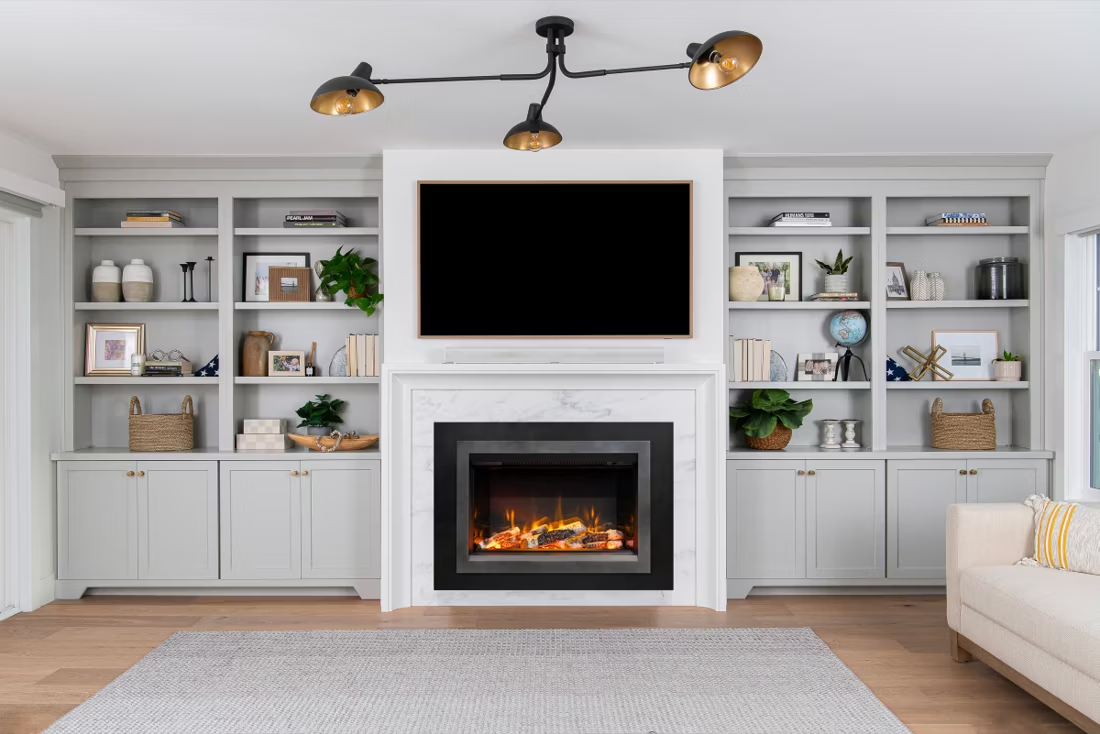
Yes—with an asterisk. Fireplaces are hot and TVs don't like heat. Either put a mantel between them to deflect rising warmth, or choose a fireplace with heat-management technology that creates a cool zone on the wall above—the wall stays around 125 degrees, barely warm, while the room still gets full heat. If you like clean lines and don't want a mantel, heat management is the answer.
Do electric fireplaces actually produce heat?
Yes—most put out around 4,800–5,000 BTUs from a standard outlet, which comfortably warms a bedroom, office, or den as a comfort-zone heater. What they won't do is carry a whole house the way wood, gas, or pellet can. Think of electric as ambiance-first with honest supplemental heat: flames on with no heat in July, flames plus warmth in January.
Can I install a fireplace myself?
If you're putting a fire in your house on purpose, it's best to work with an expert. Unless you're genuinely experienced in framing, gas line, vent pipe, and the national code on clearances to combustibles, have a professional do it—and ideally the same company that sells you the fireplace, so warranty, service, and liability all live under one roof.
How much should I budget for a fireplace?
For an average home—covering the fireplace, the vent pipe, and basic installation—a budget between $3,900 and $5,500 gives you a lot of options across wood, gas, and pellet. By the time you add finish work, gas line, and electrical, the average complete installation lands between $5,000 and $12,000 all-in. In a remodel or new build, a good rule is to put about 2.5% of the total project cost toward the fireplace.
Find your electric fireplace in Harrison County.
Tell us a bit about your home and we'll match you with the right electric fireplace, insert, or stove—plus a free Project Guide & Parts List and a trusted local dealer to install it.
Find Your Fireplace →