
Reliable pellet heat for Darke County winters.
Automated, thermostat-controlled heat for the farmhouses and rural homesteads of Darke County—from Greenville to Ansonia to Versailles. Find the right pellet stove or insert and connect with a trusted local dealer.
Every Project Starts From One of These Five Situations
Consistent, low-maintenance heat for flat farm country.
Darke County sits in the flat farmland of far western Ohio, with Greenville as the county seat and a landscape built around corn, soybeans, and dairy operations. Winters here average lows near 19°F with roughly 5,672 heating degree days a year—a solidly cold-climate zone (5A), closer in feel to Madison, WI than to anywhere in the Ohio River valley, though without the extreme subzero stretches you'd see in Fargo, ND or Bismarck, ND. The surrounding woodlots and fencerows run heavy to oak, hickory, maple, and cherry, and plenty of Darke County homes still burn cordwood. But on a working farm, tending a wood stove around chore schedules, calving season, or harvest isn't always practical—which is where pellet heat earns its place.
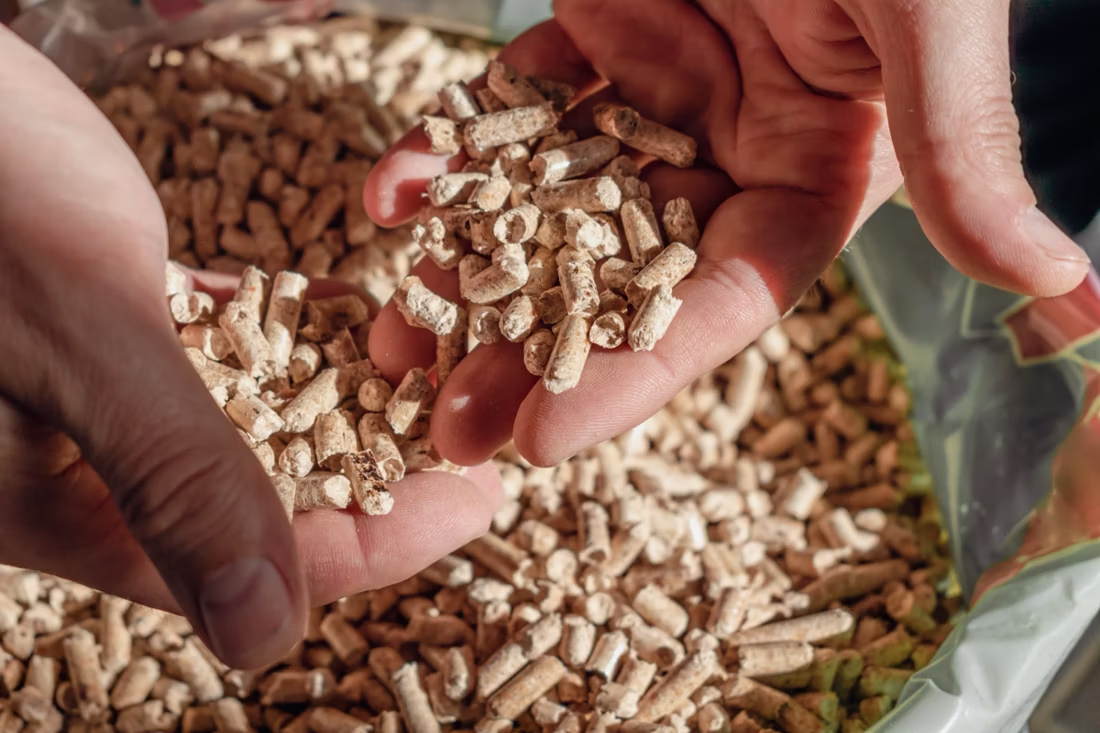
Pellet stoves load from a hopper, run on a thermostat, and hold a steady burn for a day or more without the daily cutting, splitting, and stacking that wood heat demands. Regional supply is solid here—Indeck Energy Services, Lignetics, and Somerset Pellet Fuel all serve this part of Ohio, so bagged pellets are generally easy to source through farm stores and hearth dealers rather than special-ordered. Darke County also has no listed air quality restrictions or non-attainment concerns, so there's no curtailment period or burn-ban complexity to navigate—pellet stoves here are simply a clean, code-compliant way to add zone heat or a primary source in an older farmhouse that's hard to heat evenly with a single furnace.
Three steps. No salesperson until you're ready.
Tell us about your project
Your zip code, your situation, and the fuel you're leaning toward—or let the answers point you to one.
See what's actually available
The brands dealers within 100 miles genuinely carry—real options, never a catalog mirage.
Get your dealer & Project Guide
A trusted local dealer, plus the free Project Guide & Parts List that names every component of the job.
Frequently Asked Questions
How much does a pellet stove installation cost in Darke County?
Costs vary by unit, hopper size, and venting path, but pellet stove installs in a cold-climate county like Darke typically run in the low-to-mid thousands once you account for the direct-vent kit, a dedicated electrical outlet (pellet stoves require power to run the auger and blower), and any hearth pad or clearance work. A pellet insert going into an existing masonry fireplace, using the flue as a chase for the vent liner, tends to land on the lower end. New freestanding installations in a room without an existing chimney cost more due to added wall penetration and framing work. A local dealer will give you a firm number after seeing your home.
What size pellet stove do I need for my Darke County home?
Sizing depends on square footage, ceiling height, insulation, and whether the stove is your main heat source or a supplement to a furnace. Older farmhouses common throughout Darke County—often larger, less insulated, and with more air infiltration than newer construction—usually need to size up compared to a same-square-footage home in town. As a rough guide, small units suit a single room or addition, mid-size units handle most main living areas, and larger hopper units are worth considering if you're heating a drafty two-story farmhouse through a full Darke County winter. Local dealers will size the unit to your home during an in-home visit rather than guessing off square footage alone.
Where can I find certified pellet stove installers near me?
Look for installers with NFI (National Fireplace Institute) certification, since pellet appliances involve both venting work and electrical requirements that a general contractor may not be set up to handle correctly. A certified hearth dealer will pull the necessary permit through the Darke County building department, size the vent run correctly, and confirm the unit has access to a dedicated outlet—pellet stoves won't run without power, so outlet placement matters more here than it does for a standard wood stove. Avoid DIY installs on the venting side; improper pellet vent slope or termination clearance is a common source of smoke backdraft complaints.
What's the difference between a pellet stove and a pellet insert?
A pellet stove is a freestanding unit that sits on a hearth pad and vents through an exterior wall or existing chimney—it can go almost anywhere in a room with the right clearances. A pellet insert is built to slide into an existing masonry fireplace opening, using a stainless liner run through the existing chimney rather than a new wall penetration. For Darke County homes with an older fireplace that's rarely used, an insert is often the more cost-effective route since it reuses infrastructure you already have. Homes without an existing fireplace, or additions and outbuildings, are usually better suited to a freestanding stove.
Do I need a permit to install a pellet stove in Darke County?
Yes—new pellet stove and insert installations require a building permit through the Darke County building department, and most local dealers handle that paperwork as part of the installation. Because Darke County has no air quality non-attainment status and no burn curtailment periods, there's no seasonal restriction on when you can run the stove once it's installed—unlike some western counties where wood and pellet appliances get restricted during winter inversions. The permit here is mainly about confirming proper venting and clearance, not ongoing emissions compliance.
What's the best pellet stove for Darke County's winters?
With average winter lows near 19°F and nearly 5,700 heating degree days, look for a unit with a large hopper capacity if you want overnight burns without a 2 a.m. refill—some models run 24 hours or more on a full load. Since Indeck Energy Services, Lignetics, and Somerset Pellet Fuel all supply this region, standard hardwood pellet blends are easy to keep on hand, so fuel availability shouldn't limit your choice. For a drafty older farmhouse, prioritize higher BTU output and a stove with a reliable auto-ignition and thermostat, since consistent unattended operation is the main advantage over wood on a farm schedule. A local dealer can match hopper size and BTU rating to your specific home.
How much maintenance does a pellet stove need?
Pellet stoves need more frequent attention than a gas unit but far less than a wood stove's chimney sweeping schedule. Plan on emptying the ash pan weekly during heavy winter use, cleaning the burn pot and glass regularly, and having the unit professionally serviced once a year—typically before the heating season starts. The one thing to plan around in rural Darke County specifically: pellet stoves need continuous electricity to run the auger, igniter, and combustion blower, so a stove alone won't provide heat during an outage the way a wood stove can. If winter storm power loss is a real concern on your property, ask your dealer about battery backup options or plan for a generator.
Where can I buy pellet fuel in Darke County?
Bagged hardwood pellets from regional producers including Indeck Energy Services, Lignetics, and Somerset Pellet Fuel are generally available through farm supply stores and hearth dealers serving this part of western Ohio. Pellets are sold by the ton (usually as fifty 40-pound bags) and, because several pellet producers operate within reach of the region, supply tends to be steadier here than in areas that rely on long-distance shipping. Check with your local dealer or farm store for current per-ton pricing and consider buying early in the fall before peak-season demand.
Pellet stove vs. wood stove—which is right for my Darke County home?
Wood stoves burn cordwood—plentiful in this oak, hickory, maple, and cherry region—cost nothing to fuel if you cut your own, and keep working during a power outage since they don't rely on electricity. Pellet stoves trade that off-grid resilience for convenience: load the hopper, set the thermostat, and let the auger do the rest, with less daily tending and a cleaner, more consistent burn. For a working farm household where nobody has time to split and stack wood between chores, pellet often wins. For a rural property where winter power outages are a real concern and self-sufficiency matters more than convenience, wood remains the more dependable backup. Many Darke County homes end up running both—pellet for daily convenience, wood as the outage-proof fallback.
What's the difference between an insert and a zero-clearance fireplace?
An insert is a fireplace that slides into a pre-existing wood-burning fireplace—if you don't have one, there's nothing to insert it into. A zero-clearance fireplace is built into a framed wall, which makes it the answer for remodels and new construction. Simple test: existing masonry fireplace means insert; blank or framed wall means zero-clearance.
Why is my open fireplace making my house colder?
Open fireplaces suck—literally. As the fire burns, it consumes air your furnace already paid to heat and pulls it out through the chimney, so the house is actually colder after the fire goes out than before you lit it. An insert fixes this: it seals the chimney, puts fixed glass across the front, and turns that hole in your house into a real heat source.
How much should I budget for a fireplace?
For an average home—covering the fireplace, the vent pipe, and basic installation—a budget between $3,900 and $5,500 gives you a lot of options across wood, gas, and pellet. By the time you add finish work, gas line, and electrical, the average complete installation lands between $5,000 and $12,000 all-in. In a remodel or new build, a good rule is to put about 2.5% of the total project cost toward the fireplace.
Does a fireplace add value to my home?
On average, a fireplace adds back to the home about the same amount you spent installing it. Add the monthly savings from heating the rooms you actually use instead of the whole house—often hundreds of dollars a year—and the value case is strong before you even count what a fire does for how your family uses the room.
Pellet Brands Stocked Around Darke County
Manufacturers will point you to the nearest stocking dealer.
Find your pellet stove in Darke County.
Tell us a bit about your home and we'll match you with a trusted local dealer and send over your free Project Guide & Parts List—the exact parts, including the vent kit, for your pellet stove project in Darke County.
Find Your Fireplace →