
Find the right electric fireplace for your Darke County home.
No gas line, no chimney, no venting—just plug-in warmth for Greenville, Union City, Ansonia, Versailles, and everywhere in between. We match you with a trusted local dealer who can size and install it right.
Every Project Starts From One of These Five Situations
Simple heat for a county built on farmhouses and additions.
Darke County sits in western Ohio's climate zone 5A, with a fairly demanding winter heating season and winter lows averaging 19°F—a season not far off from what Madison, WI sees, though shorter and less severe. Many homes here are older farmhouses, ranch remodels, or additions where running a new gas line or masonry chimney isn't practical. That's exactly where electric fireplaces earn their place: a 120-volt insert or wall unit plugs into a standard outlet and adds real supplemental warmth to a bedroom, sunroom, or finished basement without touching the structure of the house.
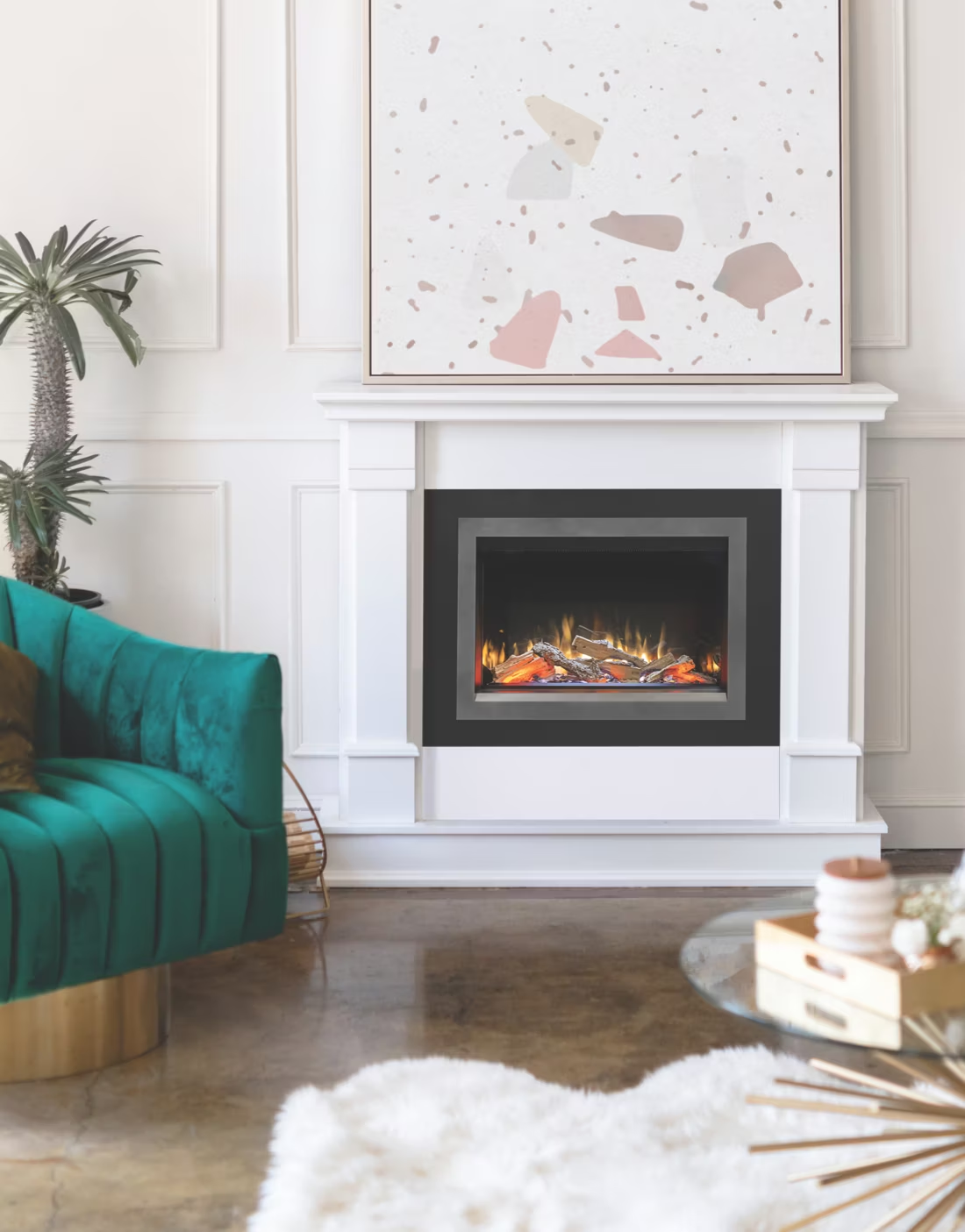
Electric doesn't replace the county's wood-burning tradition—oak, hickory, maple, and cherry are all common locally and still split for stoves and outdoor burning—but it solves a different problem: zone heat in a room the furnace doesn't reach well, or ambiance in a space where cutting a hole for venting isn't worth the cost. Installation is minimal compared to wood or gas, which is why electric inserts and mantels have become a common upgrade in Greenville rentals, Union City starter homes, and rural Darke County additions alike.
Three steps. No salesperson until you're ready.
Tell us about your project
Your zip code, your situation, and the fuel you're leaning toward—or let the answers point you to one.
See what's actually available
The brands dealers within 100 miles genuinely carry—real options, never a catalog mirage.
Get your dealer & Project Guide
A trusted local dealer, plus the free Project Guide & Parts List that names every component of the job.
Frequently Asked Questions
How much does an electric fireplace installation cost in Darke County?
Most electric fireplace installations in Darke County run $400 to $1,200, and that range covers nearly everything: a plug-in insert dropped into an existing fireplace opening, a wall-mounted unit hung with a bracket, or a built-in model framed into a mantel surround. There's no chimney, no gas line, and usually no permit involved since most units run on a standard 120-volt circuit. The higher end of that range typically covers larger built-in units or cases where an electrician adds a dedicated circuit for a larger-draw model. Compare that to a wood or gas install in this county, which routinely runs into the thousands once venting and masonry work are factored in—electric is the low-cost, low-disruption option by a wide margin.
Will an electric fireplace actually heat a room in a Darke County winter?
It will heat a room, but it's not designed to replace your furnace on a 19°F night. Most electric fireplaces top out around 5,000 BTU (roughly the output of a small space heater) and are built to supplement whole-home heating in a specific space—a bedroom over an unheated garage, a finished basement, a sunroom addition. For Darke County's winter stretch, that's genuinely useful: it lets you turn the thermostat down and heat the room you're actually using. If you're trying to heat a drafty farmhouse living room as a primary heat source, a wood stove or gas insert will outperform electric significantly.
Do I need a permit to install an electric fireplace in Darke County?
Usually not. Plug-in electric fireplace inserts and wall-mounted units that run on existing household wiring typically don't require a building permit in Darke County since there's no venting, gas line, or structural chimney work involved. If your installer adds a new dedicated electrical circuit or does any wiring beyond a standard outlet, that portion of the work may need an electrical permit pulled by a licensed electrician. Built-in units that involve framing a mantel surround into a wall are usually treated as cosmetic carpentry, not a permitted structural change—but it's worth confirming with your installer before work starts, especially in older Greenville or Versailles homes with older wiring.
What's the difference between an electric insert, a wall-mount unit, and a built-in electric fireplace?
An electric insert is sized to slide into an existing wood or gas fireplace opening, using the masonry surround you already have—a common choice for older Darke County farmhouses looking to retire a drafty open hearth. A wall-mount unit hangs on the wall like a large flat-screen TV and needs no existing fireplace at all, which works well in additions or basements with no chimney. A built-in electric fireplace is framed into new construction or a custom mantel, giving it a more finished, permanent look. For most Darke County homeowners converting an old fireplace, the insert is the simplest option; for a bedroom or basement with no existing opening, wall-mount is usually the better fit.
How does an electric fireplace compare to a wood stove for someone in rural Darke County who loses power occasionally?
This is the honest tradeoff: electric fireplaces stop working the moment the power goes out, full stop—no battery backup, no auxiliary function. For rural Darke County homes on township roads where an ice storm or downed line can mean an outage lasting hours or longer, a wood stove burning local oak or hickory keeps producing heat with zero dependence on the grid. If backup heat during outages matters to you, electric should be a secondary or supplemental unit, not your only heat source. Plenty of homeowners here run both: a wood stove for the worst nights, and an electric insert for everyday convenience in a room the woodstove doesn't reach.
Are electric fireplaces expensive to run in Darke County?
Running cost depends on wattage and how many hours you use it, but a typical 1,500-watt electric fireplace costs somewhere in the range of 15 to 25 cents per hour to run at full heat, based on typical residential electric rates in this part of Ohio. Used a few hours a day in a single room as supplemental heat, that adds up to a modest monthly cost—far less than heating an entire farmhouse with electric resistance heat, and generally cheaper than running propane in a comparable unit. Most units also let you run the flame effect with the heater off, which draws only a few watts, so you can keep the ambiance going without the heating cost in the shoulder seasons.
Can I install an electric fireplace myself, or should I hire someone?
Plenty of homeowners install a basic plug-in insert or wall-mount unit themselves—it's often no more complicated than hanging a heavy mirror and plugging in a cord. Where it's worth bringing in a local dealer or electrician: built-in units that get framed into a wall, any installation requiring a new dedicated circuit, or larger units that draw close to the 15-amp limit of a standard outlet (which can trip breakers if you're running other appliances on the same circuit). A trusted local dealer will also make sure the unit is properly sized for the room and mounted at a safe clearance from any combustible mantel materials, which isn't always obvious from the box instructions.
What size electric fireplace do I need for my room?
Electric fireplaces are sized more by room width and viewing distance than by strict BTU heating math, since most units are meant as supplemental heat rather than a home's primary source. As a rough guide for Darke County living rooms and additions: a 30-36 inch unit suits a smaller bedroom or den, 40-50 inch units work for a standard living room, and 60-inch-plus units are typically chosen for larger great rooms or as a visual focal point over a mantel. If supplemental heat output matters more than looks—say, for a chilly sunroom addition—prioritize a unit's stated wattage and BTU rating over its size; a local dealer can match both to your specific room.
Electric vs. gas—which is right for my Darke County home?
Gas delivers real, substantial heat output and can serve as a legitimate secondary heat source during a power outage if you choose a model with battery-backup ignition—a meaningful advantage in rural parts of the county prone to line outages. It requires a gas line or propane tank and typically runs $4,500 to $11,000 installed with venting work. Electric is a fraction of that cost, installs in an afternoon, and needs no fuel line at all, but it won't function without grid power and produces far less heat. For a Darke County homeowner adding ambiance or zone heat to a spare room or basement, electric is usually the practical choice. For someone wanting real heat output and outage resilience in a primary living space, gas or wood is worth the larger investment.
Do electric fireplaces actually produce heat?
Yes—most put out around 4,800–5,000 BTUs from a standard outlet, which comfortably warms a bedroom, office, or den as a comfort-zone heater. What they won't do is carry a whole house the way wood, gas, or pellet can. Think of electric as ambiance-first with honest supplemental heat: flames on with no heat in July, flames plus warmth in January.
Can I put a TV above my fireplace?
Yes—with an asterisk. Fireplaces are hot and TVs don't like heat. Either put a mantel between them to deflect rising warmth, or choose a fireplace with heat-management technology that creates a cool zone on the wall above—the wall stays around 125 degrees, barely warm, while the room still gets full heat. If you like clean lines and don't want a mantel, heat management is the answer.
Can a fireplace actually lower my heating bill?
Yes—by creating a comfort zone. A furnace heats every square foot of the house just to warm the one room you're in; a gas fireplace on low burns roughly a sixth of the gas a typical furnace does. Set the furnace around 55–60 degrees as a baseline, then heat the rooms your family actually uses. Families who heat this way commonly save $20–$60 a month.
What is an in-home preview and do I need one?
It's a visit where a hearth professional measures your space, confirms the model you picked actually works in your home, and walks the specs—framing, gas line, venting, finish work—before anything is ordered. Some details you just can't know until you see the house. Never make a down payment without one; it's the single most-skipped step that burns buyers.
Find your electric fireplace in Darke County.
Tell us a bit about your home and we'll match you with the right electric fireplace or insert, plus a free Project Guide & Parts List and a trusted local dealer to install it.@example.com
Find Your Fireplace →