
Pellet Stoves Are a Niche Choice in Cleveland Heights.
Most Cleveland Heights homes heat with a gas furnace or electric baseboard—but a small number of homeowners still choose a pellet stove for backup warmth, ambiance, or a sunroom the furnace doesn't reach. Find out if it fits your house, and connect with a local dealer who can source one.
Every Project Starts From One of These Five Situations
Cleveland Heights runs on gas heat, not pellet stoves.
Cleveland Heights is a dense, century-old inner-ring suburb just east of Cleveland, built out in the early 1900s with narrow lots, brick Colonials, and Tudor-style duplexes packed close together across neighborhoods like Coventry Village, Cedar Fairmount, and Fairfax. Winters here are solidly cold—average lows near 24°F and a long, demanding heating season, putting the city in climate zone 5A—but nearly every home was built with a gas or oil furnace already piped in, and most have since converted to natural gas or all-electric heat.
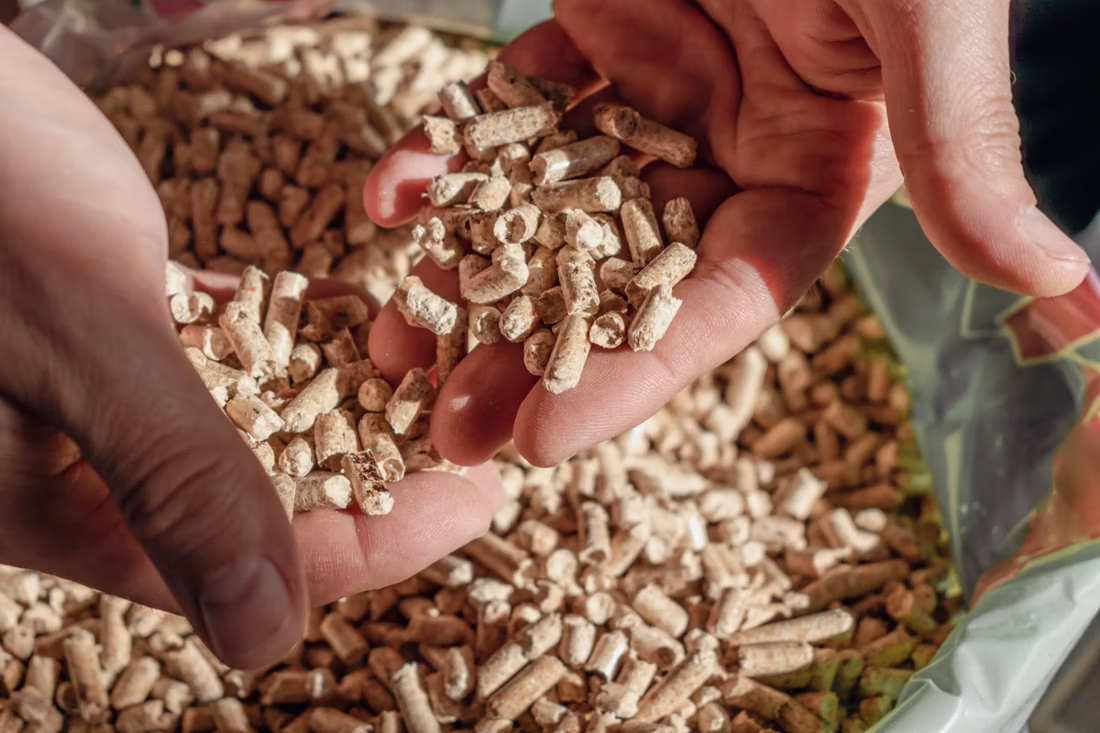
That history is why pellet stoves show up so rarely here: pellet fuel relevance is marked not-applicable for Cleveland Heights, and it shows on the ground. There's no wood-burning or pellet-stove culture, no local air-quality mandate pushing residents toward cleaner solid-fuel appliances, and municipal utility Cleveland Public Power keeps electric rates as low as $0.0941/kWh—cheap enough that zone heating is often handled with a space heater or electric fireplace insert rather than a hopper-fed stove. Regional pellet producers like Lignetics and Somerset Pellet Fuel do serve the broader Northeast Ohio market, but that supply mostly moves toward bulk and out-county residential customers, not city lots in Cleveland Heights. If you still want a pellet stove—for backup heat during a Lake Erie ice storm, or simply for the ambiance—a local dealer can absolutely source and install one, but expect a custom conversation rather than an off-the-shelf project.
Three steps. No salesperson until you're ready.
Tell us about your project
Your zip code, your situation, and the fuel you're leaning toward—or let the answers point you to one.
See what's actually available
The brands dealers within 100 miles genuinely carry—real options, never a catalog mirage.
Get your dealer & Project Guide
A trusted local dealer, plus the free Project Guide & Parts List that names every component of the job.
Frequently Asked Questions
How much does a pellet stove installation cost in Cleveland Heights?
Because pellet stoves aren't a common request in Cleveland Heights, there isn't a well-established local price band the way there is for furnace replacement. Nationally, a pellet stove or insert with a standard through-wall vent kit typically installs for $3,000 to $6,000, and that range holds reasonably well here too—though older Cleveland Heights homes with brick exteriors or finished basements sometimes add cost for coring a new vent path or running a dedicated 120V circuit for the auger and blower. A trusted local dealer will need to see your home before quoting, since so few installs happen in this specific housing stock.
Is a pellet stove even realistic for a Cleveland Heights home?
Yes, but it takes more planning than in a rural county where pellet stoves are the norm. Many Cleveland Heights homes sit inside the Euclid Heights Allotment or other historic-overlay neighborhoods, where exterior changes—including a new through-wall vent pipe—may need a quick look from the city's building department or a design review if your street falls inside a historic district. It's rarely a dealbreaker, just an extra step. Homes with an existing fireplace and chimney chase sometimes have an easier path, since the pellet vent can run through existing masonry rather than a new wall penetration.
Why don't more homes in Cleveland Heights use pellet stoves?
Mostly because there's no real need to. This is a gas-furnace city—natural gas heat has been standard in Cleveland Heights housing stock since it was built out in the 1900s and 1930s, and electric rates from Cleveland Public Power are among the cheaper municipal rates in Ohio, under 10 cents per kWh. There's also no local air-quality program pushing homeowners toward cleaner-burning stoves the way you'd see in a wood-smoke-heavy basin out West. Pellet stoves end up being a personal choice—for ambiance, a hedge against outages, or supplemental heat in a converted attic or sunroom—rather than a default heating decision.
Where can I buy pellet fuel near Cleveland Heights?
Bagged pellet fuel isn't something you'll find stocked at every hardware store inside city limits, since so few local homes burn it. Regional producers including Lignetics and Somerset Pellet Fuel supply much of the Northeast Ohio market, and Cleveland Heights homeowners typically pick up bags from farm-and-home supply stores or hearth retailers in surrounding Cuyahoga County suburbs, often stocking up in fall before supply tightens for the season. If you install a pellet stove, ask your dealer where their other Cleveland Heights customers source fuel—most have a preferred supplier they can point you to.
What size pellet stove do I need for a Cleveland Heights home?
With winter lows averaging around 24°F and a long, demanding heating season, Cleveland Heights sits solidly in a cold climate, but it's more moderate than somewhere like Duluth, MN. Most homeowners here who install a pellet stove are supplementing an existing gas furnace rather than replacing it, so a small to mid-size unit rated for 1,000 to 1,800 square feet is usually enough to heat a living room, sunroom, or finished basement—not the whole house. A dealer can size it more precisely once they know the room's insulation and ceiling height.
Do I need a permit to install a pellet stove in Cleveland Heights?
Yes—a mechanical or building permit through the City of Cleveland Heights Building Department is standard for any new solid-fuel or pellet-burning appliance, covering the vent penetration and any new electrical circuit for the auger. If your home falls within one of the city's historic districts, a new exterior vent pipe may also need a quick sign-off for appearance. Most hearth dealers who take on pellet stove projects here handle this paperwork as part of the install, since it's not a permit type the building department processes often.
Will a pellet stove keep working if the power goes out?
Not on its own—pellet stoves rely on an electric auger to feed fuel and a blower to push heat into the room, so a standard unit shuts down the moment power drops. That's a real consideration in Cleveland Heights, where Lake Erie-driven ice storms occasionally knock out power for a day or more. Some homeowners pair a pellet stove with a small battery backup or a portable generator sized to run just the stove's low-draw components, which keeps the heat going through an outage. If backup heat during outages is the main reason you're considering a pellet stove, discuss generator compatibility with your dealer up front.
Should I consider a wood stove instead of a pellet stove?
Probably not, and for the same reason pellet stoves are rare here: solid-fuel heating just isn't part of how Cleveland Heights homes are built or heated. There's no cutting-permit culture, no nearby national forest land, and city lots are too tight for stacked cordwood in most cases. Local yard trees—oak, hickory, maple, and cherry are common around the neighborhood—occasionally come down in storms and get milled by residents for firewood, but that's incidental, not a supply chain. If you're weighing solid fuel against gas or electric, a gas insert or gas log set will almost always be the more practical fit for a Cleveland Heights home.
Pellet stove vs. gas insert—which makes more sense in Cleveland Heights?
For most Cleveland Heights homes, a gas insert wins on convenience: natural gas service already runs to nearly every house in the city, so a gas insert typically taps into plumbing that's already there, lights at the flip of a switch, and needs no fuel deliveries or hopper refills. A pellet stove makes more sense if you specifically want a hedge against power and gas-supply interruptions, or you like the look of a real flame with visible fuel. Given how inexpensive municipal electric service is here, some homeowners skip both and lean on an electric fireplace insert for supplemental zone heat instead—it's worth comparing all three with a local dealer before deciding.
How often does a pellet stove need cleaning?
A clean pellet stove is a happy pellet stove. Plan on cleaning the burn pot about once a week when you're burning regularly—ash and clinkers gum up the air holes just like a pellet barbecue. Most pellet stove problems trace back to skipped cleaning that nobody explained up front. Some designs make it easy with a trapdoor burn pot: pull a lever and the gunk drops into the ash pan.
What's the difference between an insert and a zero-clearance fireplace?
An insert is a fireplace that slides into a pre-existing wood-burning fireplace—if you don't have one, there's nothing to insert it into. A zero-clearance fireplace is built into a framed wall, which makes it the answer for remodels and new construction. Simple test: existing masonry fireplace means insert; blank or framed wall means zero-clearance.
Can I install a fireplace myself?
If you're putting a fire in your house on purpose, it's best to work with an expert. Unless you're genuinely experienced in framing, gas line, vent pipe, and the national code on clearances to combustibles, have a professional do it—and ideally the same company that sells you the fireplace, so warranty, service, and liability all live under one roof.
What is an in-home preview and do I need one?
It's a visit where a hearth professional measures your space, confirms the model you picked actually works in your home, and walks the specs—framing, gas line, venting, finish work—before anything is ordered. Some details you just can't know until you see the house. Never make a down payment without one; it's the single most-skipped step that burns buyers.
Nearby Dealers
Hearth shops serving Cleveland Heights and the surrounding area.
Pellet Brands Stocked Around Cleveland Heights
Manufacturers will point you to the nearest stocking dealer.
Find your pellet stove match in Cleveland Heights.
Tell us about your home and we'll put together a free Project Guide & Parts List—the exact parts, vent kit, and a trusted local Cleveland Heights dealer who can actually install a pellet stove in a home like yours.
Find Your Fireplace →