
The Fireplace Upgrade That Skips the Chimney.
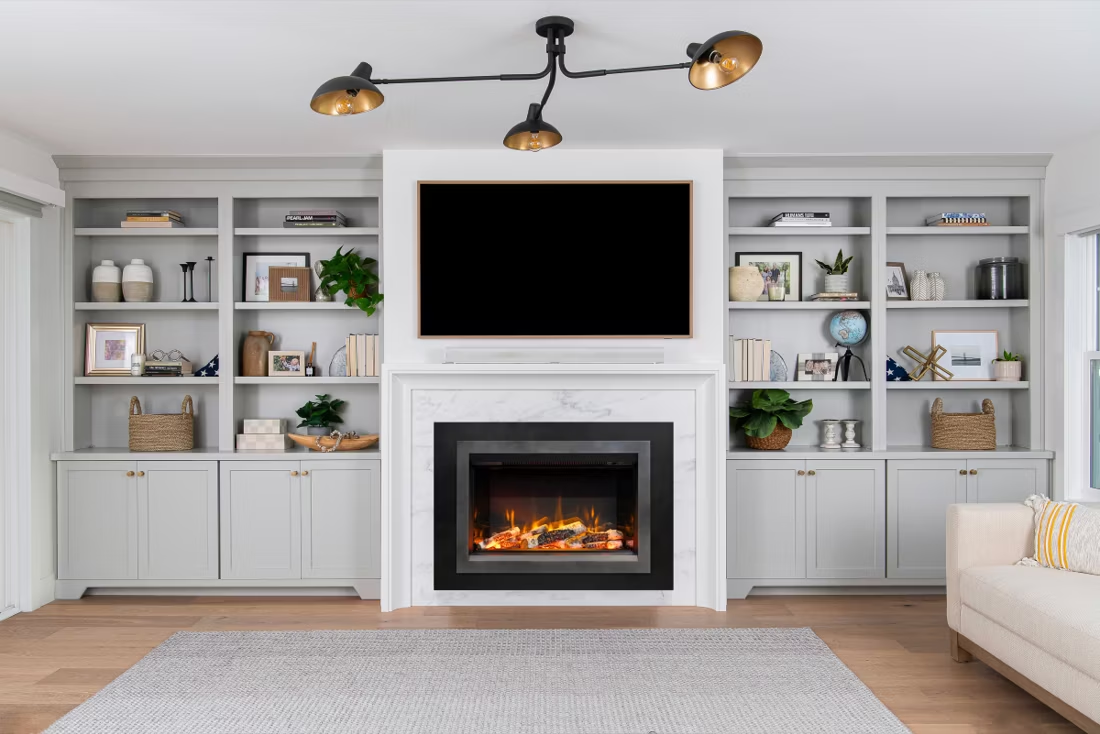
No flue, no gas line, no permit headaches for most units. Find the right electric fireplace for your Cleveland Heights home and connect with a trusted local dealer.
Every Project Starts From One of These Five Situations
Built for Cleveland Heights' older housing stock.
Cleveland Heights is full of Tudor Revival and Colonial Revival homes built in the 1910s through 1930s, many with masonry fireplaces whose chimneys were never lined for solid fuel or have been capped for decades. With a long, demanding heating season and winter lows averaging 24°F, homeowners here want real supplemental warmth in bedrooms, sunrooms, and finished basements—but not every house has a chimney that can safely take a wood or gas appliance. Electric fills that gap without touching the flue at all.
Electric service in Cleveland Heights comes primarily from Cleveland Electric Illuminating Company (a FirstEnergy utility), though some pockets near the Cleveland border draw from the City of Cleveland's municipal power system—which is why residential rates locally span roughly 9.4¢ to 14.9¢ per kWh depending on your exact address. Either way, an electric fireplace or insert plugs into existing household power, slides into an old firebox opening or mounts on a wall, and gives you zone heat for the rooms you actually sit in—a real advantage in the older, larger, harder-to-heat homes common in neighborhoods like Cedar Fairmount and Coventry Village.
Three steps. No salesperson until you're ready.
Tell us about your project
Your zip code, your situation, and the fuel you're leaning toward—or let the answers point you to one.
See what's actually available
The brands dealers within 100 miles genuinely carry—real options, never a catalog mirage.
Get your dealer & Project Guide
A trusted local dealer, plus the free Project Guide & Parts List that names every component of the job.
Frequently Asked Questions
How much does an electric fireplace cost to install in Cleveland Heights?
A freestanding or plug-in electric fireplace runs $200 to $600 for the unit itself, with no real installation cost beyond finding an outlet—many homeowners handle this themselves. A built-in electric insert set into an existing masonry firebox, or a wall-mounted linear unit with a custom surround, typically runs $1,500 to $4,000 once trim, mantel work, and any electrician time are included. Larger linear units that need a dedicated 240V circuit can push toward $5,000 to $6,000 with electrical work factored in. Local dealers will quote a firm number after seeing your fireplace opening or wall.
Will an electric insert fit into my home's existing fireplace opening?
In most Cleveland Heights Tudor and Colonial Revival homes, yes. Electric fireplace inserts come in standard widths that slide into a typical 36- to 42-inch masonry firebox opening, and since there's no combustion, you don't need to worry about whether the old chimney is lined or rated for solid fuel—which matters here, since a lot of the housing stock has chimneys that haven't been inspected in decades. A local dealer can measure your opening and confirm fit before you buy anything.
Do I need a permit to install an electric fireplace in Cleveland Heights?
A plug-in freestanding unit that uses an existing outlet needs no permit at all. If you're installing a built-in unit that requires a new dedicated circuit—common with larger linear fireplaces in the 1500-2000 watt range—that electrical work requires a permit through the City of Cleveland Heights Building & Housing Department, and it needs to be pulled by a licensed electrician. Most local hearth dealers who handle built-in installs will coordinate this as part of the job.
What electrical circuit does an electric fireplace need?
Most freestanding electric fireplaces run fine on a standard 120V/15-amp household circuit, same as any space heater. Larger built-in units, especially wide linear models, often draw close to 1500 watts and may need their own dedicated 20-amp circuit to avoid tripping breakers shared with other appliances. Some of the biggest linear fireplaces run on 240V. Cleveland Heights' older homes sometimes still have 60- to 100-amp electrical panels, which is worth checking before committing to a larger unit—a licensed electrician can confirm your panel has room.
How much does it cost to run an electric fireplace in Cleveland Heights?
At local rates of roughly 9.4¢ to 14.9¢ per kWh depending on whether you're served by Cleveland Electric Illuminating or the City of Cleveland's municipal system, a typical 1,500-watt electric fireplace running on heat mode for five hours costs somewhere between 70 cents and $1.10 a day. Most units let you run the flame effect alone with the heater off, which draws only a few watts—useful if you want the ambiance without adding to your bill.
Electric vs. gas fireplace—which makes more sense for my Cleveland Heights home?
Gas is the better choice if you want a primary heat source that can meaningfully offset your furnace during a Cuyahoga County winter—a direct-vent gas insert puts out real BTUs and can run for hours on end. Electric makes more sense for supplemental zone heat, rooms where running a gas line isn't practical, condos and apartments where venting isn't allowed, or homeowners who want the look of a fire without any combustion, maintenance, or venting at all. A lot of the multi-family and prewar apartment buildings around Cedar-Lee and Coventry lean electric for exactly that reason.
What are the best electric fireplace brands available near Cleveland Heights?
Dimplex and Napoleon are the two most widely stocked brands among Northeast Ohio hearth dealers, both known for realistic flame technology and reliable heaters. Touchstone and SimpliFire are common choices for slimmer wall-mount linear units in condos and smaller rooms. For a built-in insert into an existing masonry opening, ask your local dealer which brands they actually stock and service locally—availability varies by dealer, and having a nearby source for parts or warranty service matters more than the brand name on the box.
What's the difference between an electric insert and a wall-mounted electric fireplace?
An electric insert is built to slide into an existing masonry firebox opening—the natural choice for Cleveland Heights' older homes that already have a fireplace but want to retire an unused or unsafe chimney. A wall-mounted linear electric fireplace hangs on a flat wall like a piece of art or a TV, with no fireplace opening required at all—a better fit for condos, additions, or newer construction without an existing hearth. Both plug into standard household power or a dedicated circuit for larger models.
Are electric fireplaces a good option for renters or condo owners in Cleveland Heights?
Yes—this is one of the most common reasons homeowners in Cleveland Heights' condo buildings and prewar apartment stock choose electric. Since there's no venting, no gas line, and often no permanent installation required, a freestanding electric unit can go in a leased unit without violating a lease or condo association rule against open flame or venting modifications. For owners who want something more built-in, a wall-mounted unit typically only requires a standard outlet and a couple of mounting brackets—far simpler than any conversation about chimneys or gas lines with a condo board.
Can I put a TV above my fireplace?
Yes—with an asterisk. Fireplaces are hot and TVs don't like heat. Either put a mantel between them to deflect rising warmth, or choose a fireplace with heat-management technology that creates a cool zone on the wall above—the wall stays around 125 degrees, barely warm, while the room still gets full heat. If you like clean lines and don't want a mantel, heat management is the answer.
Do electric fireplaces actually produce heat?
Yes—most put out around 4,800–5,000 BTUs from a standard outlet, which comfortably warms a bedroom, office, or den as a comfort-zone heater. What they won't do is carry a whole house the way wood, gas, or pellet can. Think of electric as ambiance-first with honest supplemental heat: flames on with no heat in July, flames plus warmth in January.
Does a fireplace add value to my home?
On average, a fireplace adds back to the home about the same amount you spent installing it. Add the monthly savings from heating the rooms you actually use instead of the whole house—often hundreds of dollars a year—and the value case is strong before you even count what a fire does for how your family uses the room.
Can a fireplace actually lower my heating bill?
Yes—by creating a comfort zone. A furnace heats every square foot of the house just to warm the one room you're in; a gas fireplace on low burns roughly a sixth of the gas a typical furnace does. Set the furnace around 55–60 degrees as a baseline, then heat the rooms your family actually uses. Families who heat this way commonly save $20–$60 a month.
Nearby Dealers
Hearth shops serving Cleveland Heights and the surrounding area.
Electric Service in Cleveland Heights
An electric fireplace's heater draws about 1,500 watts—pennies per hour at local rates.
Cleveland Electric Illum Co
City Of Cleveland - (Oh)
Find your electric fireplace in Cleveland Heights.
Tell us about your home or condo and we'll put together your free Project Guide & Parts List—the right electric fireplace or insert for your space, plus a trusted local dealer who can install it.
Find Your Fireplace →