
Steady, hands-off heat for Butler County winters.
From Hamilton and Fairfield to Middletown, Oxford, and the townships in between, pellet stoves give Butler County homeowners thermostat-controlled warmth without splitting or stacking wood. We'll match you with a trusted local dealer who can size the right unit and install it correctly.
Every Project Starts From One of These Five Situations
Consistent warmth without the wood pile.
Butler County sits in climate zone 5A, with average winter lows around 20°F and a winter heating load noticeably milder than places like Minneapolis or Madison, but still cold enough that a supplemental heat source pays for itself most winters. The county's oak, hickory, maple, and cherry hardwoods have long supported traditional wood burning here, and those same species show up in the sawdust and mill-waste streams that get pressed into heating pellets. For homeowners in Hamilton, Fairfield, Middletown, or out in Oxford near Miami University, a pellet stove offers a middle path: real fire, real heat output, but none of the splitting, hauling, or daily stacking that wood requires.
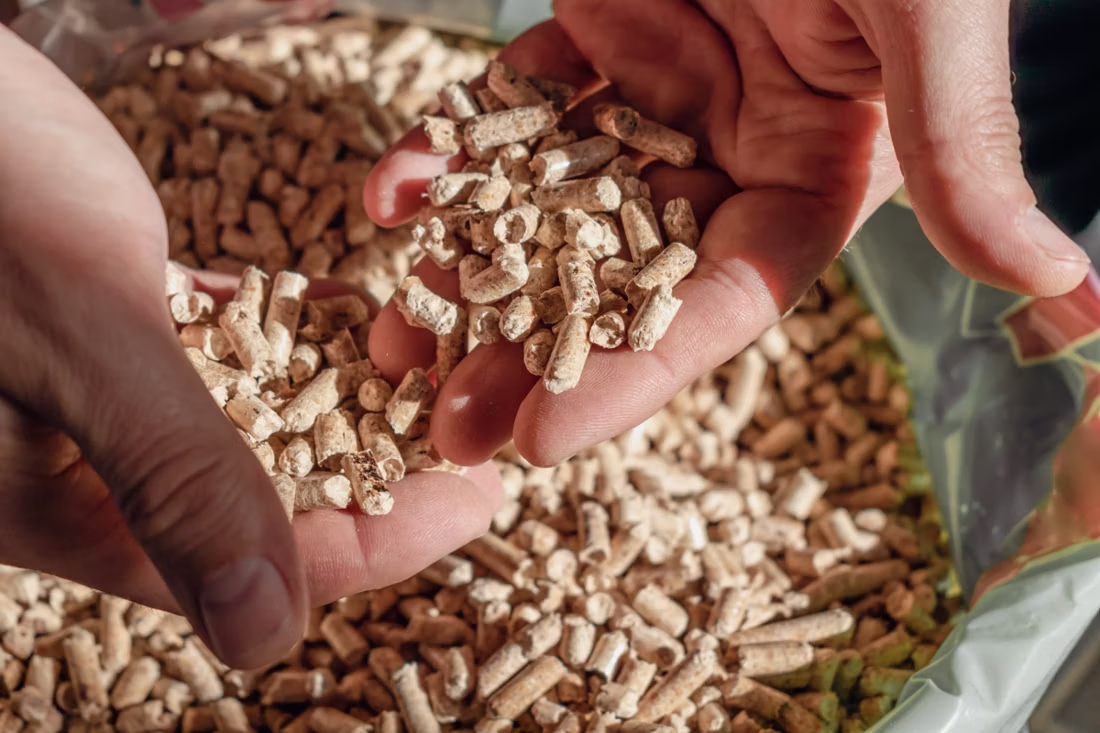
Butler County has no winter air quality non-attainment issues or burn curtailment periods, so the appeal of pellet heat here is about convenience and efficiency rather than compliance. Regional suppliers including Indeck Energy Services, Lignetics, and Somerset Pellet Fuel keep bagged pellets reasonably accessible throughout the county, and most local hearth dealers carry at least one of these brands or can order it. A pellet stove's automated hopper feed and thermostat control mean you load fuel every day or two instead of every few hours, which is a real difference for anyone heating a home in Fairfield or a farmhouse out toward Seven Mile while working a full schedule.
Three steps. No salesperson until you're ready.
Tell us about your project
Your zip code, your situation, and the fuel you're leaning toward—or let the answers point you to one.
See what's actually available
The brands dealers within 100 miles genuinely carry—real options, never a catalog mirage.
Get your dealer & Project Guide
A trusted local dealer, plus the free Project Guide & Parts List that names every component of the job.
Frequently Asked Questions
How much does a pellet stove installation cost in Butler County?
Most pellet stove installations in Butler County run in the $3,000 to $6,500 range, depending on the unit, whether it's a freestanding stove or an insert going into an existing fireplace, and how much venting work is needed. A pellet insert into an existing masonry fireplace with a straightforward through-wall vent tends to land on the lower end. New construction or a stove going into a room without an existing hearth or chimney will run higher once a hearth pad, electrical outlet for the hopper motor, and wall penetration are factored in. Local dealers will give you a firm number after an in-home look at your space.
What size pellet stove do I need for my Butler County home?
Sizing depends on square footage, ceiling height, and how open your floor plan is. As a general guide for the county's climate: small pellet stoves (under 1,000 sq ft) suit a single large room or a starter home, medium stoves (1,000–1,800 sq ft) cover most main living areas in Hamilton or Fairfield-style ranch and colonial homes, and larger units with bigger hoppers handle open-concept homes or full-house heating in Middletown or Oxford. Older homes with less insulation, common in some of the county's historic neighborhoods, often need to size up one notch from a strict square-footage calculation. A local dealer can walk your space and confirm the right fit.
Do I need a permit to install a pellet stove in Butler County?
Generally yes—a building permit is required for a new pellet stove installation, and which office issues it depends on where you live. Hamilton, Fairfield, Middletown, and Oxford each have their own building departments, while unincorporated areas including West Chester Township and Liberty Township typically go through Butler County. Most established hearth dealers handle the permit application and inspection scheduling as part of the installation, so you're not left figuring out the right office yourself.
Pellet stove vs. wood stove—which is right for my home?
Wood stoves burn oak, hickory, maple, or cherry cordwood, work with zero electricity, and give the most authentic fire, but they require splitting, stacking, and hands-on fire tending. Pellet stoves are more hands-off—you load a hopper every day or two and set a thermostat—but they need electricity to run the auger and combustion blower, so they go dark in a power outage unless paired with a battery backup. Butler County's grid, whether you're served by Duke Energy, AES Ohio, Hamilton's municipal electric department, or Butler Rural Electric Cooperative, is generally reliable, but if you want heat during an ice storm outage, wood is the safer backup. If daily convenience matters more than emergency resilience, pellet is usually the better fit.
Where can I buy heating pellets in Butler County?
Regional producers including Lignetics, Somerset Pellet Fuel, and Indeck Energy Services supply much of the bagged pellet fuel sold through hardware stores, farm supply retailers, and hearth dealers across southwest Ohio, and most local dealers either stock these brands or can point you to a reliable source. Pellets are sold by the 40-pound bag or in ton quantities (fifty 40-lb bags), and buying a full ton ahead of the season is the most economical approach for anyone running a stove as a primary or heavy supplemental heat source through a full Butler County winter.
How much maintenance does a pellet stove need?
Pellet stoves need more frequent light upkeep than wood stoves but far less deep cleaning. Plan on emptying the ash pan every few days to weekly depending on use, wiping the glass as needed, and vacuuming the burn pot and hopper area every couple of weeks during heavy-use months. A full professional cleaning and inspection—checking the auger, exhaust blower, and venting—once a year, typically before the start of the heating season, keeps the unit running efficiently and catches wear on the igniter or gaskets before it causes a mid-winter breakdown.
What's the best pellet stove for Butler County's climate?
Since winters here are moderate compared to the upper Midwest—average lows around 20°F rather than the sustained sub-zero stretches seen in places like Duluth or Fargo—most Butler County homes do well with a mid-size unit carrying a 40- to 60-pound hopper, which typically burns 24 to 48 hours between refills depending on heat output setting. Homeowners using a pellet stove as primary heat in an older, less-insulated home may want a larger hopper or a model with a higher maximum BTU output. A local dealer can match hopper size and BTU rating to your specific square footage and insulation level.
How should I store pellet fuel at home?
Pellets need to stay bone dry—even brief exposure to moisture causes them to swell and crumble, ruining the bag. Store bags in a garage, basement, or shed on a pallet or shelving off the concrete floor, away from any dampness. A ton of pellets (fifty 40-lb bags) takes up roughly the footprint of a stacked cord of firewood but stores flatter and cleaner, which is one reason pellet fuel works well for homeowners in Fairfield or Middletown without much dedicated storage space.
Pellet stove vs. gas fireplace—which should I choose?
Natural gas service reaches most of Butler County's more developed areas, including Hamilton, Fairfield, and Middletown, which makes a direct-vent gas fireplace or insert a realistic option with true instant on-off convenience and no fuel storage at all. Pellet stoves require loading a hopper and produce a small amount of ash, but they burn a renewable, often locally-sourced fuel and give you a real flame with genuine radiant heat rather than gas's more uniform glow. If you're in a rural stretch of the county without natural gas access, or you simply want the character of a wood-style fire without the wood handling, pellet is often the better match. Local dealers carry both and can help you weigh the trade-offs against your specific home.
How often does a pellet stove need cleaning?
A clean pellet stove is a happy pellet stove. Plan on cleaning the burn pot about once a week when you're burning regularly—ash and clinkers gum up the air holes just like a pellet barbecue. Most pellet stove problems trace back to skipped cleaning that nobody explained up front. Some designs make it easy with a trapdoor burn pot: pull a lever and the gunk drops into the ash pan.
Are pellet stoves loud?
They make some noise—there are two fans running plus an auger motor that turns as it feeds pellets. But there's a real range: premium models are engineered quiet, and the best offer a whisper-quiet mode you can comfortably watch TV next to. If noise matters in your room, ask to hear a stove running before you buy—it's a five-minute test that saves years of annoyance.
Does a fireplace add value to my home?
On average, a fireplace adds back to the home about the same amount you spent installing it. Add the monthly savings from heating the rooms you actually use instead of the whole house—often hundreds of dollars a year—and the value case is strong before you even count what a fire does for how your family uses the room.
Can a fireplace actually lower my heating bill?
Yes—by creating a comfort zone. A furnace heats every square foot of the house just to warm the one room you're in; a gas fireplace on low burns roughly a sixth of the gas a typical furnace does. Set the furnace around 55–60 degrees as a baseline, then heat the rooms your family actually uses. Families who heat this way commonly save $20–$60 a month.
Pellet Brands Stocked Around Butler County
Manufacturers will point you to the nearest stocking dealer.
Find your pellet stove in Butler County.
Tell us about your home and heating goals, and we'll match you with a trusted local Butler County dealer and send over a free Project Guide & Parts List—the exact parts, venting, and recommended installer for your pellet project.
Find Your Fireplace →