
Add real heat and ambiance to any room in Butler County—no venting required.
From apartments near Miami University in Oxford to single-family homes in West Chester and Liberty Township, electric fireplaces plug into an outlet or existing circuit and go to work the same day. Find the right unit and connect with a trusted local dealer.
Every Project Starts From One of These Five Situations
The fastest path to heat where you actually sit.
Butler County sits in the Cincinnati-Dayton corridor of southwestern Ohio, home to roughly 276,000 people spread across Hamilton, Fairfield, Middletown, West Chester, Liberty Township, and the Miami University community in Oxford. Climate zone 5A brings real winter with an average low near 20°F and about 5,409 heating degree days a year—enough cold to matter, but nowhere near the sub-zero stretches of Duluth or Bismarck. That moderate-but-real cold is exactly the range where electric fireplaces earn their keep as supplemental, zone heat rather than a homeowner's only line of defense.
A meaningful share of Butler County's housing stock is renter-occupied or HOA-governed—condos in West Chester, student apartments around Oxford, townhomes in Fairfield—and many of those units simply don't allow a chimney, gas line, or open flame. An electric fireplace sidesteps all of that: no venting, no gas permit, no masonry work, and in most cases no building permit at all for a plug-in model. For homeowners who do want a permanent, built-in look, a dedicated 240-volt electric fireplace wired by a licensed electrician adds real heat output to a den, bonus room, or finished basement without touching the furnace.
Three steps. No salesperson until you're ready.
Tell us about your project
Your zip code, your situation, and the fuel you're leaning toward—or let the answers point you to one.
See what's actually available
The brands dealers within 100 miles genuinely carry—real options, never a catalog mirage.
Get your dealer & Project Guide
A trusted local dealer, plus the free Project Guide & Parts List that names every component of the job.
Frequently Asked Questions
How much does an electric fireplace installation cost in Butler County?
Plug-in electric inserts and freestanding stoves typically run $300 to $1,500 installed, since most just need an existing outlet and a mounting bracket or hearth pad—no electrician required. A built-in wall unit or a full mantel-and-surround package with a dedicated 240-volt circuit runs higher, generally $1,500 to $4,000, once you factor in the electrician's time to run a new circuit from the panel. Framing-in a unit during a basement or family room remodel in a Fairfield or West Chester home tends to land at the upper end of that range.
What size electric fireplace do I need for my room?
Most electric fireplaces are rated for supplemental heat in a single room—figure 400 to 1,500 watts covering roughly 150 to 400 square feet, depending on ceiling height and how well the room is insulated. In Butler County's older housing stock—plenty of 1950s and 60s ranch homes in Hamilton and Middletown with less insulation than newer West Chester construction—size toward the higher end of that wattage range if you want the unit to meaningfully raise the temperature rather than just add ambiance. None of these units are designed to replace your furnace during a 20°F January stretch; they're built to warm the room you're actually sitting in.
Do I need a licensed electrician to install an electric fireplace?
For a standard plug-in electric insert or freestanding unit, no—it runs on a regular 120-volt outlet like any other appliance. For a built-in electric fireplace or one that draws more than 1,500 watts, a dedicated circuit is recommended, and that work should go through a licensed electrician familiar with local code in Hamilton, Fairfield, Middletown, or Oxford. A trusted local dealer will tell you upfront whether your chosen unit needs new electrical work or just an outlet.
What's the difference between an electric fireplace, insert, and wall-mount unit?
An electric insert is built to slide into an existing masonry fireplace opening, giving you flame effect and heat without removing the old firebox—a common upgrade for older homes in Hamilton with a fireplace nobody uses anymore. A wall-mount unit hangs like a flat-screen TV and works in a room with no existing fireplace, popular in newer West Chester and Liberty Township builds. A freestanding electric stove sits on the floor and can be relocated, which suits renters around Oxford who can't make permanent changes to a unit.
Do I need a permit to install an electric fireplace in Butler County?
Most plug-in electric fireplaces don't require a permit since no gas line, venting, or structural work is involved. If your installation includes running a new dedicated circuit, adding a receptacle, or any electrical panel work, that portion typically requires an electrical permit through your city's building department—Hamilton, Fairfield, Middletown, and Oxford each handle their own permitting separately from the county. A local electrician or your installing dealer can confirm what's needed for your specific unit.
What's the best electric fireplace for Butler County's climate?
Given Butler County's average winter low near 20°F and roughly 5,409 heating degree days, treat an electric fireplace as zone heat for the room you use most, not a furnace replacement. Models with a true 5,000 BTU heating element and a thermostat (rather than a fixed on/off switch) do the best job of actually raising room temperature rather than just running the flame effect. For a finished basement or three-season room in West Chester or Liberty Township that gets genuinely cold, pair the fireplace with existing baseboard or forced-air heat rather than relying on it alone.
How much maintenance does an electric fireplace need?
Very little compared to wood or gas—there's no chimney to sweep and no gas lines to inspect. Wipe down the glass front occasionally, vacuum dust out of the heater vents once or twice a season, and check that the LED flame bed and heating element are both working before the first cold stretch each fall. Most units use standard heating elements that last 10+ years; if the flame effect dims or the heat output drops, it's usually a simple element or bulb replacement rather than a service call.
Which utility company serves electric fireplace installations in Butler County?
Duke Energy Ohio serves most of southern and central Butler County, including Hamilton, Fairfield, and West Chester, while AES Ohio (formerly Dayton Power & Light) covers Middletown, Trenton, and parts of the Oxford area to the north. Running an electric fireplace as supplemental heat generally costs less per hour than propane and comparably to natural gas per BTU, but it's worth checking your specific rate plan—some Duke Energy and AES Ohio residential plans have time-of-use pricing that makes running a space heater during peak evening hours more expensive than midday.
Electric vs. gas fireplace—which is right for my home?
Gas delivers more real heat output and can run on natural gas (available through Duke Energy in most of Hamilton and West Chester) or propane, making it a better fit if you actually want to offset furnace use on a cold Butler County night. Electric wins on installation simplicity, upfront cost, and flexibility—no gas line, no venting, and it works in rented apartments and HOA units where gas or wood isn't allowed. For a primary living space where daily heat matters, gas is usually the stronger long-term choice; for a bedroom, basement, or rental where ambiance and light supplemental warmth are the goal, electric is hard to beat on cost and simplicity.
Can I put a TV above my fireplace?
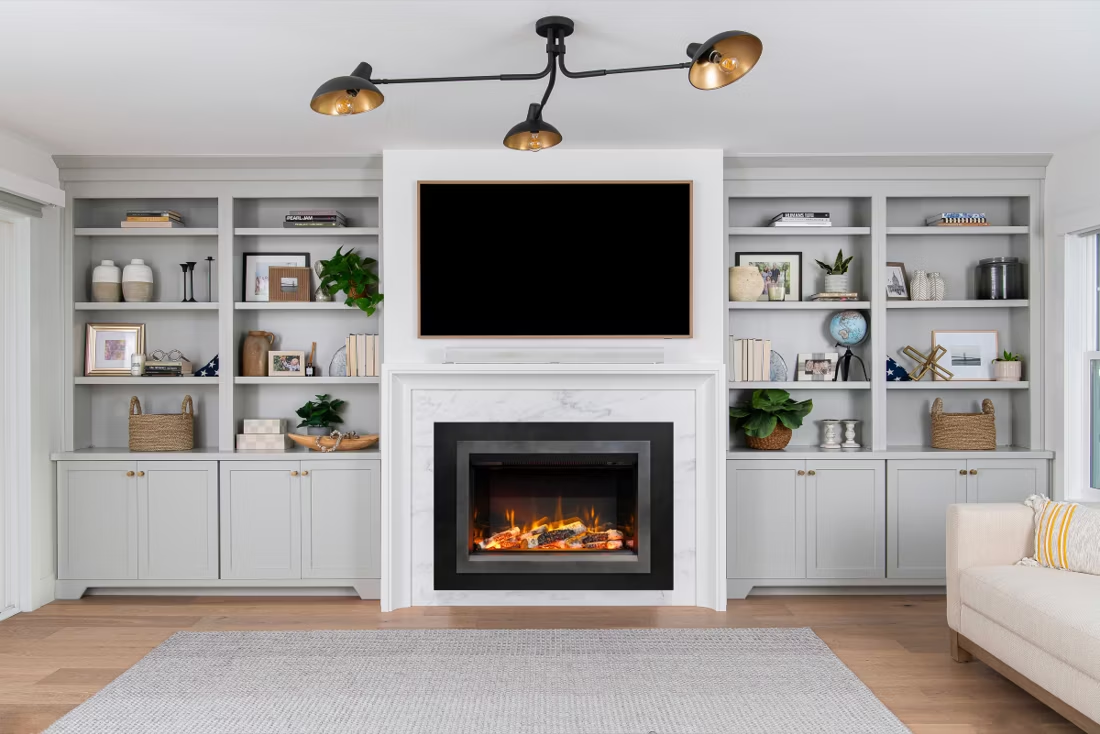
Yes—with an asterisk. Fireplaces are hot and TVs don't like heat. Either put a mantel between them to deflect rising warmth, or choose a fireplace with heat-management technology that creates a cool zone on the wall above—the wall stays around 125 degrees, barely warm, while the room still gets full heat. If you like clean lines and don't want a mantel, heat management is the answer.
Does an electric fireplace need a vent or chimney?
No—that's its superpower. An electric fireplace needs a wall and an outlet, period. No vent pipe, no gas line, no clearances to design around, which is why it works in bedrooms, offices, apartments, and walls where venting a gas or wood unit would be impractical or impossible. Installation is typically the simplest and least expensive of any fireplace type.
Can I install a fireplace myself?
If you're putting a fire in your house on purpose, it's best to work with an expert. Unless you're genuinely experienced in framing, gas line, vent pipe, and the national code on clearances to combustibles, have a professional do it—and ideally the same company that sells you the fireplace, so warranty, service, and liability all live under one roof.
Does a fireplace add value to my home?
On average, a fireplace adds back to the home about the same amount you spent installing it. Add the monthly savings from heating the rooms you actually use instead of the whole house—often hundreds of dollars a year—and the value case is strong before you even count what a fire does for how your family uses the room.
Find your electric fireplace in Butler County.
Tell us a bit about your home and we'll match you with the right electric fireplace or insert, plus a free Project Guide & Parts List—the exact parts and your recommended local Butler County dealer, all in one packet.
Find Your Fireplace →