
No chimney, no gas line—just heat in Bowling Green.
With a long, cold winter season and lows averaging 19°F, Bowling Green homes and BGSU-area rentals need real supplemental warmth without tearing into walls or a roofline. I'll match you with a vetted local dealer who knows what your circuit and your address's utility can actually support.
Every Project Starts From One of These Five Situations
An easy retrofit for BGSU rentals and older homes alike.
Bowling Green sits in climate zone 5A at 687 feet, with an average winter low of 19°F and a long, demanding heating season that adds up to more total cold than most of southern Ohio sees—closer to what Madison, Wisconsin deals with, even if the cold doesn't run quite as deep. That's enough sustained chill that a lot of households want a real secondary heat source in the living room or a converted bedroom, not just something decorative for the holidays.
What's different about Bowling Green is the housing mix: a sizable share of the city's roughly 30,000 residents live in apartments, duplexes, and rentals tied to Bowling Green State University, where landlords and lease terms generally rule out wood stoves and pellet appliances even though oak, hickory, maple, and cherry are all common regional firewood species. Electric fireplaces sidestep that entirely—no chimney, no combustion permit, no fuel storage—which is a big part of why electric inserts and wall units have become the default upgrade for renters and owners of older homes near downtown alike. Electric service here comes through two different providers depending on your address: The Toledo Edison Co. at roughly $0.1024/kWh, or the City of Bowling Green's own municipal utility at roughly $0.1536/kWh, and that difference is worth knowing before you calculate what a unit will actually cost you to run through a long winter.
Three steps. No salesperson until you're ready.
Tell us about your project
Your zip code, your situation, and the fuel you're leaning toward—or let the answers point you to one.
See what's actually available
The brands dealers within 100 miles genuinely carry—real options, never a catalog mirage.
Get your dealer & Project Guide
A trusted local dealer, plus the free Project Guide & Parts List that names every component of the job.
Frequently Asked Questions
How much does an electric fireplace installation cost in Bowling Green?
A plug-in electric insert or freestanding stove that runs off a standard household outlet typically costs $300 to $1,500 installed—often just the unit price plus placement, which makes it popular in BGSU-area rentals where a landlord won't allow anything more permanent. A built-in wall unit or linear electric fireplace framed into a wall runs $1,500 to $4,000, and usually requires an electrician to add a dedicated 20-amp circuit, especially in older homes near downtown with older panel capacity. Ask any dealer quoting your project whether the price includes the electrical work—it's the single biggest cost swing on an electric install.
What size electric fireplace do I need for a Bowling Green home?
Most electric fireplaces are rated for zone heating rather than whole-house heat, so sizing is about the room, not the square footage of your home. A 1,000-1,500 watt unit comfortably heats a bedroom or a small den—common in the older two-story homes around East Wooster Street—while a 1,500-watt insert or wall unit is standard for a larger living room. Given winter lows near 19°F, don't expect an electric fireplace alone to replace your furnace; it's built to take the edge off a cold room or cover a gap while your HVAC catches up, and a local dealer can confirm wattage against your actual room size and insulation.
Do I need a permit for an electric fireplace in Bowling Green?
A simple plug-in unit generally doesn't require a permit since it's just an appliance on an existing outlet. If your install needs a new dedicated circuit—which is common for built-in wall or linear units drawing 1,500 watts continuously—that electrical work typically needs to be pulled and inspected through your local building department, whether that's the City of Bowling Green or Wood County depending on your address. Most installers who handle built-in electric fireplaces coordinate that inspection as part of the job, so you're not left tracking it down yourself.
What's the difference between an electric insert, a wall-mounted unit, and an electric stove?
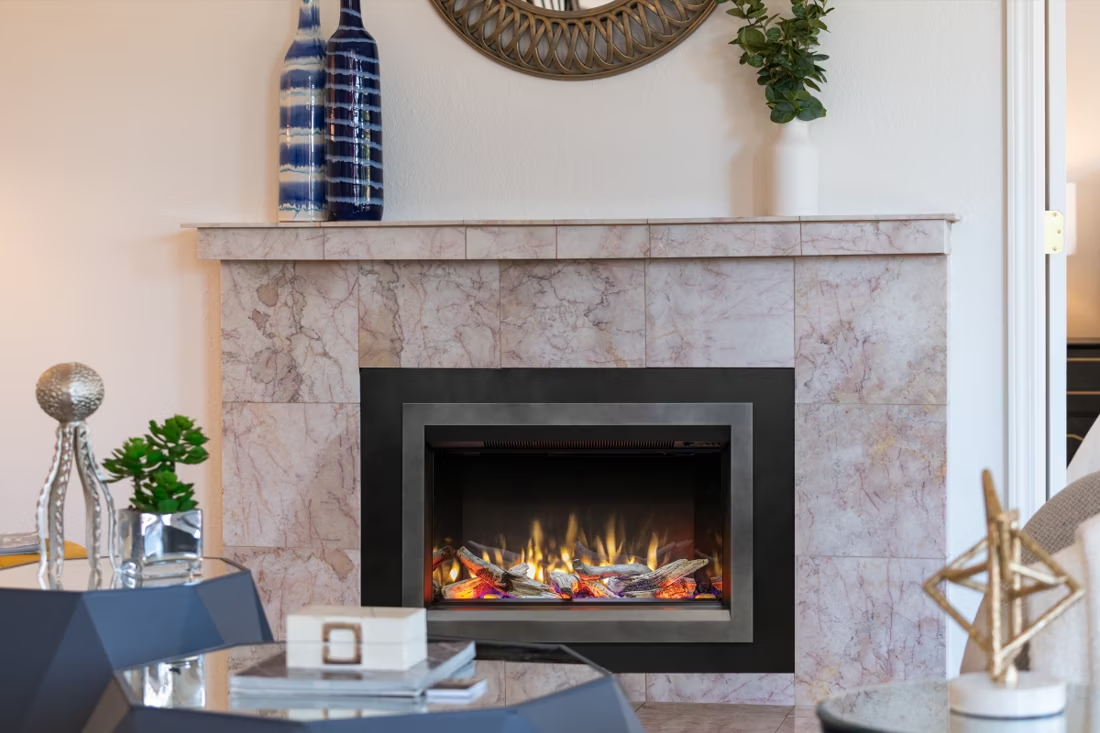
An electric insert drops into an existing fireplace opening or masonry firebox—a common move in Bowling Green homes built with a wood-burning fireplace that the current owner never uses. A wall-mounted or built-in linear unit is framed into new construction or a remodel, popular in newer builds on the west side of town. An electric stove is freestanding on a hearth pad, styled to look like a wood stove, and works well in rentals or apartments near campus where nothing can be permanently altered. All three plug in or wire into a circuit rather than venting anywhere, which is the whole appeal in a city with this much rental housing turnover.
How much does it cost to run an electric fireplace here?
It depends on which utility serves your address. A typical 1,500-watt electric fireplace run for six hours a day costs roughly 92 cents a day under The Toledo Edison Co.'s residential rate near $0.1024/kWh, or closer to $1.38 a day under the City of Bowling Green's municipal rate near $0.1536/kWh. Over a full six-month heating season that gap adds up to real money, so it's worth checking your utility bill for which provider actually serves you before comparing an electric fireplace's running cost against gas.
Why isn't wood or pellet heat common in Bowling Green?
It's not an air quality issue—Bowling Green has no notable air quality concerns flagging wood smoke—it's a housing and practicality issue. A large share of the city's homes are rentals and apartments tied to Bowling Green State University's student population, and lease terms and insurance policies for that kind of housing stock almost never allow wood stoves or pellet appliances, even though oak, hickory, maple, and cherry are all readily available species in Wood County. For the smaller number of owner-occupied homes with an existing wood-burning fireplace, an electric insert is often the practical replacement rather than maintaining a chimney for occasional use.
What's the best electric fireplace option for a BGSU-area rental or apartment?
A freestanding electric stove or a plug-in insert is almost always the right call for rental housing near campus, since it needs no wiring changes, no landlord sign-off for electrical work, and no permanent alteration to the unit. Look for one with a realistic flame effect and a heater you can run independently of the flame—useful for BGSU students or young professionals who want ambiance in warmer months without running the heater. Because it's portable, it also moves with you at the end of a lease, which built-in units obviously don't.
How much maintenance does an electric fireplace actually need?
Very little compared to gas or wood. Wipe the glass front periodically, vacuum any dust from the heater's intake vents once or twice a season, and replace the LED flame bulbs occasionally on older models (most newer units use long-life LEDs that rarely need it). There's no annual chimney sweep, no gas line inspection, and no combustion byproducts to worry about—which is part of why electric has become such a low-hassle option for Bowling Green's renter-heavy population.
Electric vs. gas—which makes more sense for a Bowling Green home?
Gas fireplaces put out more heat and can genuinely offset a furnace during Bowling Green's long, cold winter season, but they require a gas line, venting, and a real installation—a bigger commitment for a rental or a home you don't plan to stay in long-term. Electric fireplaces heat a single room adequately, install in an afternoon with no venting at all, and run on either The Toledo Edison Co. or City of Bowling Green's municipal grid depending on your address. Owner-occupants planning to stay put often lean gas for the stronger heat output; renters, apartment dwellers, and anyone prioritizing a simple, damage-free install tend to land on electric.
Does an electric fireplace need a vent or chimney?
No—that's its superpower. An electric fireplace needs a wall and an outlet, period. No vent pipe, no gas line, no clearances to design around, which is why it works in bedrooms, offices, apartments, and walls where venting a gas or wood unit would be impractical or impossible. Installation is typically the simplest and least expensive of any fireplace type.
Can I put a TV above my fireplace?
Yes—with an asterisk. Fireplaces are hot and TVs don't like heat. Either put a mantel between them to deflect rising warmth, or choose a fireplace with heat-management technology that creates a cool zone on the wall above—the wall stays around 125 degrees, barely warm, while the room still gets full heat. If you like clean lines and don't want a mantel, heat management is the answer.
What is an in-home preview and do I need one?
It's a visit where a hearth professional measures your space, confirms the model you picked actually works in your home, and walks the specs—framing, gas line, venting, finish work—before anything is ordered. Some details you just can't know until you see the house. Never make a down payment without one; it's the single most-skipped step that burns buyers.
Can I install a fireplace myself?
If you're putting a fire in your house on purpose, it's best to work with an expert. Unless you're genuinely experienced in framing, gas line, vent pipe, and the national code on clearances to combustibles, have a professional do it—and ideally the same company that sells you the fireplace, so warranty, service, and liability all live under one roof.
Nearby Dealers
Hearth shops serving Bowling Green and the surrounding area.
Dr. Lee Stove Shop Of Weston Division Of Tom's Energy Shop
Electric Service in Bowling Green
An electric fireplace's heater draws about 1,500 watts—pennies per hour at local rates.
The Toledo Edison Co
City Of Bowling Green - (Oh)
Get your free Project Guide & Parts List for an electric fireplace in Bowling Green.
Tell me about your home, your room, and whether you're on The Toledo Edison Co. or City of Bowling Green's electric service, and I'll match you with a trusted local dealer and send a free Project Guide & Parts List sized to your circuit and space.
Find Your Fireplace →