
Warm any room in Wood County—no chimney required.
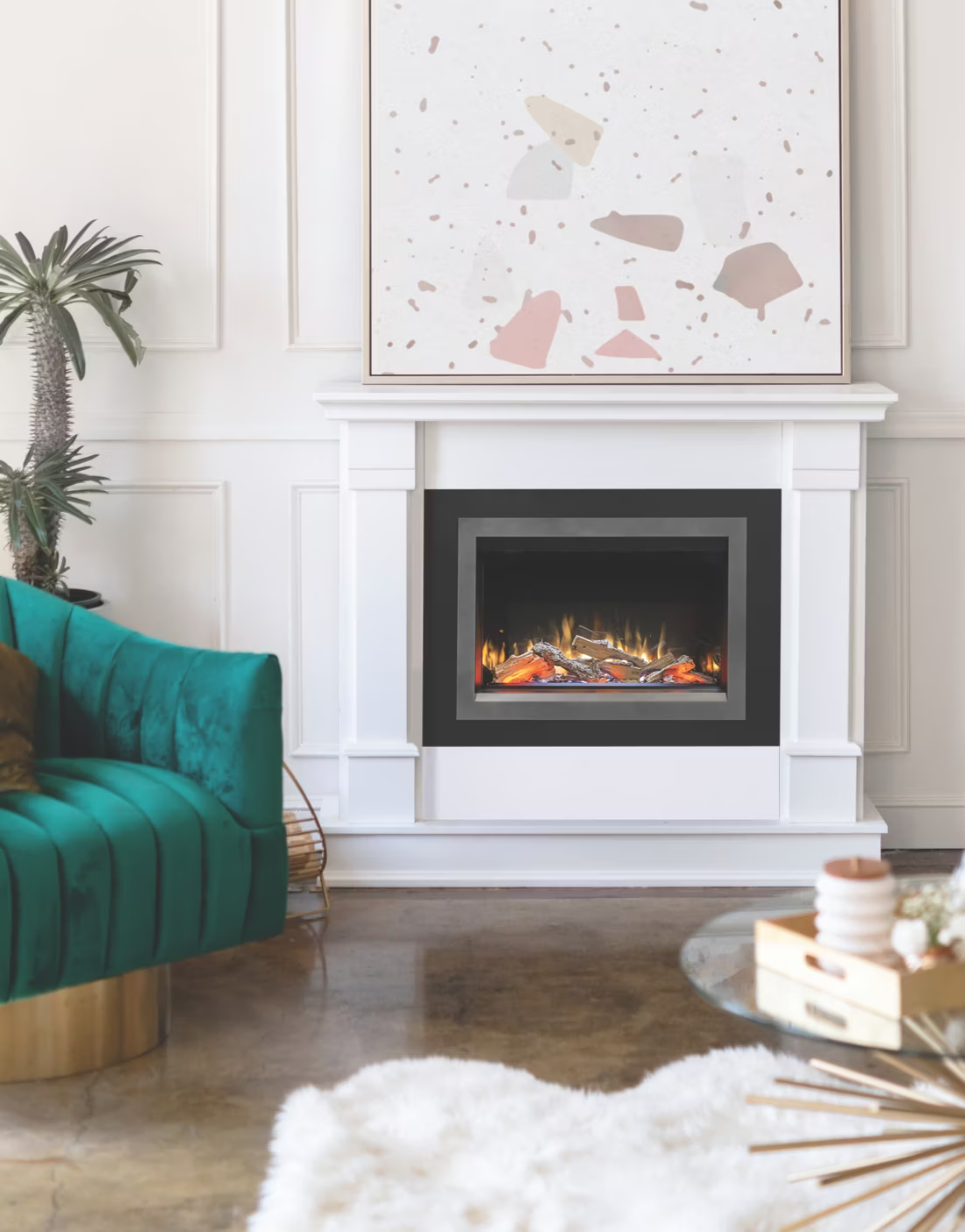
From Bowling Green apartments to Perrysburg additions and Rossford basements, electric fireplaces deliver real ambiance and supplemental heat without a flue, a gas line, or a permit fight. Find the right unit and get matched with a trusted local dealer.
Every Project Starts From One of These Five Situations
Convenient heat for a flat, cold corner of the Maumee Valley.
Wood County sits on what was once the Great Black Swamp—flat Maumee River Valley farmland with almost no elevation change, a Climate Zone 5A designation, and a heating season on par with places like Fort Wayne, Indiana. Winter lows average 19°F, and the county sees the same lake-effect snow bands and ice storms that hit Toledo just to the north. It's not Madison, Wisconsin cold, but it's a real heating season that runs from October through April, and homes here need supplemental heat that's easy to add without tearing into walls or running new gas line.
Wood County has a genuine wood-heat heritage—oak, hickory, maple, and cherry are common local firewood species, and plenty of older farmhouses still have a working masonry fireplace. But electric fireplaces have become the practical choice for a lot of newer needs: finished basements in Perrysburg and Rossford, additions in Bowling Green and North Baltimore, rental units near BGSU, and condos where a wood or gas install isn't realistic. Electric service comes from Toledo Edison (FirstEnergy) across most of the county and Bowling Green Municipal Utilities within city limits—either way, a plug-in or 120/240-volt built-in unit installs in an afternoon with no venting, no chimney, and no combustion byproducts to worry about.
Three steps. No salesperson until you're ready.
Tell us about your project
Your zip code, your situation, and the fuel you're leaning toward—or let the answers point you to one.
See what's actually available
The brands dealers within 100 miles genuinely carry—real options, never a catalog mirage.
Get your dealer & Project Guide
A trusted local dealer, plus the free Project Guide & Parts List that names every component of the job.
Frequently Asked Questions
How much does an electric fireplace installation cost in Wood County?
Costs vary a lot by unit type. A plug-in electric insert or freestanding stove that drops into an existing masonry fireplace opening typically runs $300 to $900 installed, since it just needs a standard outlet. A built-in wall unit or a linear electric fireplace set into new framing runs $1,200 to $2,500 once you factor in a licensed electrician running a dedicated 20-amp circuit, framing, and finish work like tile or a custom mantel. Bowling Green and Perrysburg both issue their own electrical permits for hardwired units; unincorporated parts of the county go through the Wood County Building Inspection Department. A local dealer can tell you in a quick home visit which category your project falls into.
Do I need a permit to install an electric fireplace in Wood County?
A plug-in electric fireplace or insert that runs off a standard wall outlet doesn't require a permit anywhere in Wood County—it's treated like any other appliance. A built-in electric fireplace that needs a new dedicated circuit does require an electrical permit, pulled through Bowling Green or Perrysburg city offices if you're inside those limits, or through the Wood County Building Inspection Department for unincorporated townships like Milton, Middleton, or Freedom. Most licensed installers handle the permit paperwork as part of the job, so it's rarely something homeowners have to manage themselves.
Will an electric fireplace keep my house warm during a power outage?
No—and this is worth being honest about given how often ice storms roll through the Maumee Valley in January and February. An electric fireplace needs grid power (or a generator) to run its heater and flame effect, so it won't provide backup heat when the lines go down. If storm-related outages are a real concern for your household, a wood stove or insert burning local oak or hickory is the better hedge, with electric handling the day-to-day convenience heating the rest of the winter.
How much heat does an electric fireplace actually put out?
Most electric fireplaces use a standard 1,500-watt heating element, which produces around 5,000 to 9,000 BTUs—enough to comfortably warm a single room of 400 to 600 square feet, not a whole house. Given Wood County's long, real heating season, an electric unit is best planned as supplemental or zone heat for a finished basement, sunroom, or bedroom addition, running alongside your furnace rather than replacing it. If you're trying to heat a larger open-concept space, talk to a local dealer about a wider linear unit or multiple zones rather than expecting one unit to do it all.
What's the difference between an electric insert, a built-in wall unit, and a mantel package?
An electric insert is sized to slide into an existing masonry fireplace opening, instantly upgrading an old wood-burning firebox to something you can run with a remote and no ash cleanup. A built-in wall unit is framed into new construction or a renovated wall—common in Perrysburg and Rossford additions—and typically needs that dedicated electrical circuit. A mantel package pairs a smaller electric firebox with a surrounding cabinet or mantel shelf and can go almost anywhere a bookshelf would, since most run on a standard outlet. For Wood County homes with an old masonry fireplace no longer in use, the insert route is usually the simplest and least invasive option.
What does it cost to run an electric fireplace in Wood County?
At Ohio's typical residential rate of roughly $0.12 to $0.14 per kWh, a 1,500-watt heater running on high costs about 18 to 21 cents per hour—call it $1.50 to $2.00 for an evening of use. Running just the flame effect with the heater off costs pennies an hour. That makes electric fireplaces meaningfully cheaper to operate than most people expect, especially compared to running a whole-home furnace to heat one occupied room in a Bowling Green or North Baltimore farmhouse with drafty original windows.
Is an electric fireplace a good fit for a rental or apartment near BGSU?
Yes—this is one of the most common electric fireplace uses in Wood County given the size of the Bowling Green State University rental market. A freestanding or plug-in electric stove requires no permit, no venting, and no permanent modification to the unit, which makes landlords comfortable and makes it easy for a tenant to take the unit with them when they move. It's also a practical option for Rossford and Northwood condos where a masonry chimney or gas line simply isn't available.
Electric vs. gas vs. wood—which fits my Wood County home?
Wood, using local oak, hickory, maple, or cherry, delivers the highest heat output and keeps working through a power outage, but it means chimney maintenance and ash cleanup. Natural gas, available through Columbia Gas of Ohio in Bowling Green and Perrysburg, gives you instant real heat at the flip of a switch and can be configured with battery-backup ignition for outages, but installation involves running gas line and venting. Electric is the simplest and least expensive to install, needs zero venting or fuel storage, and is the easiest to add to a room that doesn't already have a fireplace—the tradeoff is that it depends entirely on grid power and works best as supplemental heat rather than a primary source in a climate with a long, real heating season. Plenty of Wood County homes end up with gas or wood in the main living area and electric in a bedroom, basement, or rental unit.
How much maintenance does an electric fireplace need?
Very little compared to wood or gas. There's no chimney to sweep and no combustion byproducts to vent, so annual inspections aren't required. Maintenance is mostly dusting the unit, occasionally replacing LED lights, and after several years of regular use, replacing the heating element—a straightforward job most hearth retailers handle as a quick service call. That low-maintenance profile is a big part of why electric units are popular in Wood County rental properties and second-use rooms where nobody wants to think about a fireplace beyond flipping it on.
Can I put a TV above my fireplace?
Yes—with an asterisk. Fireplaces are hot and TVs don't like heat. Either put a mantel between them to deflect rising warmth, or choose a fireplace with heat-management technology that creates a cool zone on the wall above—the wall stays around 125 degrees, barely warm, while the room still gets full heat. If you like clean lines and don't want a mantel, heat management is the answer.
Do electric fireplaces actually produce heat?
Yes—most put out around 4,800–5,000 BTUs from a standard outlet, which comfortably warms a bedroom, office, or den as a comfort-zone heater. What they won't do is carry a whole house the way wood, gas, or pellet can. Think of electric as ambiance-first with honest supplemental heat: flames on with no heat in July, flames plus warmth in January.
What is an in-home preview and do I need one?
It's a visit where a hearth professional measures your space, confirms the model you picked actually works in your home, and walks the specs—framing, gas line, venting, finish work—before anything is ordered. Some details you just can't know until you see the house. Never make a down payment without one; it's the single most-skipped step that burns buyers.
Can a fireplace actually lower my heating bill?
Yes—by creating a comfort zone. A furnace heats every square foot of the house just to warm the one room you're in; a gas fireplace on low burns roughly a sixth of the gas a typical furnace does. Set the furnace around 55–60 degrees as a baseline, then heat the rooms your family actually uses. Families who heat this way commonly save $20–$60 a month.
Stove and Fireplace Dealers in Wood County
Dr. Lee Stove Shop Of Weston Division Of Tom's Energy Shop
Find your electric fireplace in Wood County.
Tell us a bit about your home and we'll put together a free Project Guide & Parts List for your electric fireplace project—the right unit, the exact parts, and a trusted local Wood County dealer to install it.
Find Your Fireplace →