
Instant heat built for Bowling Green's 6,000-degree-day winters.
Bowling Green sees a long, cold heating season and winter lows around 19°F. A gas fireplace or insert gives you real, on-demand heat without tending a fire—I'll match you with a vetted local dealer who can size it right and pull the permits.
Every Project Starts From One of These Five Situations
Natural gas is the default heat here—for good reason.
Bowling Green sits on the flat farmland of Wood County at roughly 687 feet of elevation, in a climate zone (5A) with a long, cold heating season and winter lows averaging 19°F. This is a college town built around BGSU, with a housing stock split between older homes near downtown and campus, and newer ranch-style and suburban construction on the edges of town. Almost all of that housing is already piped for gas furnaces and water heaters, which makes adding a gas fireplace or insert a straightforward project rather than a major utility upgrade.
Wood-burning is genuinely uncommon here—most Bowling Green homes don't have an active cutting-and-hauling firewood habit the way rural areas of the state do, and there's no air quality non-attainment issue or burn restriction pushing anyone toward or away from a particular fuel. That combination is exactly why gas has become the practical standard for supplemental and zone heat in this area: it's clean, it's already in the walls of most houses, and it works instantly on the coldest Wood County nights without hauling cordwood or tending coals.
Three steps. No salesperson until you're ready.
Tell us about your project
Your zip code, your situation, and the fuel you're leaning toward—or let the answers point you to one.
See what's actually available
The brands dealers within 100 miles genuinely carry—real options, never a catalog mirage.
Get your dealer & Project Guide
A trusted local dealer, plus the free Project Guide & Parts List that names every component of the job.
Frequently Asked Questions
How much does a gas fireplace installation cost in Bowling Green?
Most gas fireplace and insert installations in a Midwest market like Bowling Green land somewhere between $3,500 and $9,000, with the spread driven mainly by venting and gas line work. A direct-vent insert going into an existing masonry fireplace with a gas line already nearby tends to sit on the lower end. A new built-in unit for a remodel or an addition—where you're framing an enclosure, running new gas line, and installing fresh venting through an exterior wall—pushes toward the higher end. Because Bowling Green's exact cost depends on your home's existing gas service and chimney situation, a local dealer will need to see your space before quoting a firm number.
Can I convert an existing wood fireplace to gas?
Yes, and it's a common project in Bowling Green's older housing stock near downtown and the BGSU campus, where many homes still have a masonry fireplace built decades ago for oak or hickory cordwood that rarely gets used anymore. A gas insert drops into that existing opening and uses a stainless liner run through the original chimney for venting, so you keep the look of the fireplace while gaining real, efficient heat output. The main variable is whether a gas line already runs near the fireplace location—if it does, the conversion is relatively simple; if not, your installer will need to run new line, which adds to the cost and timeline.
Is natural gas available for a fireplace at my address in Bowling Green?
The large majority of homes in Bowling Green already have natural gas service for their furnace, water heater, or range, which means tapping into that same line for a fireplace is usually simple. Exact service and line-sizing details vary by street and by how your home was originally plumbed, so a local installer will confirm availability and capacity at your address before recommending a unit. If your home is on the edge of town or in a rural pocket of Wood County without gas service, propane is a workable alternative—most gas fireplace models can be configured for either fuel.
Will my gas fireplace still work if the power goes out?
Most modern gas fireplaces will, which matters in a place that gets ice storms and heavy lake-effect snow bands off Lake Erie most winters. Units with intermittent pilot ignition (IPI) run on a battery backup that kicks in the moment power drops, so the fireplace lights and operates normally off batteries until service is restored—Bowling Green is served by both Toledo Edison and the City of Bowling Green's own municipal electric system, and outages can vary depending on which grid your street is on. Valor's gas fireplaces take a different approach: their pilot generates its own electricity through the thermocouple, so there's no battery to remember to replace at all. Ask your local dealer which ignition system a given model uses if outage performance matters to you.
What's the difference between a gas fireplace, gas insert, and gas stove?
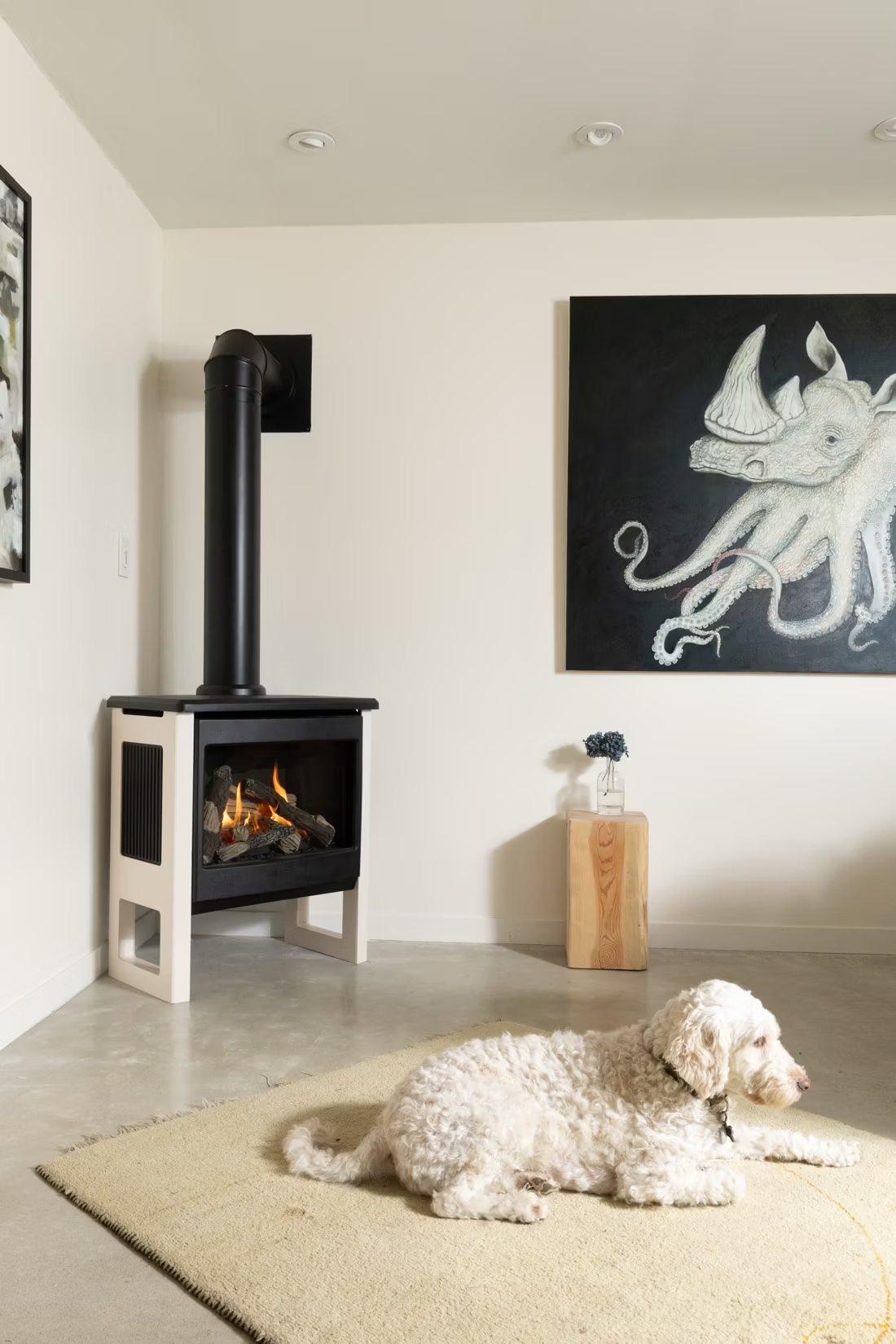
A gas fireplace is a fully built-in unit framed into a wall—the right call for new construction or a remodel in one of Bowling Green's newer suburban builds. A gas insert is sized to slide into an existing masonry fireplace opening, which fits the older homes clustered around downtown and campus that already have a hearth and chimney. A gas stove is a freestanding cabinet unit that sits on the floor, useful in a room without any existing fireplace or chimney access. For most Bowling Green homeowners upgrading an underused wood-burning fireplace, the insert is the simplest and most common path.
Do I need a permit to install a gas fireplace in Bowling Green?
Yes—a building permit and a gas line permit are typically required for a new gas fireplace or insert installation, and the gas piping work itself needs to be done by a licensed gas-fitter regardless of who sells you the unit. Most established local hearth dealers coordinate the permitting, the gas line run, and the final inspection as one package rather than leaving you to schedule separate trades. If you're unsure whether your specific project needs a permit, the dealer doing your in-home consultation will know based on your address and the scope of work.
Should I get a vented or vent-free gas fireplace?
Vented (direct-vent) gas fireplaces pull combustion air from outside and exhaust the byproducts back outside through sealed venting—they're the cleaner, more universally recommended choice and the type most commonly installed in Ohio. Vent-free units burn without any exterior venting at all, releasing some water vapor and combustion byproducts into the room, and they come with strict room-size and ventilation requirements. Ohio permits vent-free units under those rules, but for a well-insulated Bowling Green home—especially newer construction built to tighter energy codes—a direct-vent unit is the safer, lower-maintenance choice and delivers real heat without any indoor air quality tradeoffs.
How often does a gas fireplace need to be serviced?
Plan on an annual inspection, ideally in late summer or early fall before Bowling Green's long heating season really kicks in—winters here run long and cold, so a fireplace used regularly from October through April gets a lot of run time. A technician will check the burner, pilot assembly, venting, and gas connections, and clean the glass and interior. This typically runs $150 to $250 and is far less involved than a wood chimney sweep, but it's the step that keeps the ignition system and burner running safely and efficiently.
Gas vs. electric fireplace—which makes more sense in Bowling Green?
A gas fireplace produces real, substantial heat output and is the better choice if you want it to meaningfully offset furnace use during a Wood County winter. An electric fireplace needs no venting or gas line at all—just an outlet—and installs in an afternoon, which makes it a popular option for BGSU-area rental housing or anyone who wants ambiance and modest supplemental warmth without construction. Electric running costs will vary depending on whether your address is served by Toledo Edison (around 10.2 cents per kWh) or the City of Bowling Green's municipal electric system (around 15.4 cents per kWh), so your specific utility affects the math. For a primary heat source, gas wins; for flexibility, rentals, or rooms without gas access, electric is often the more practical call.
What's the difference between an insert and a zero-clearance fireplace?
An insert is a fireplace that slides into a pre-existing wood-burning fireplace—if you don't have one, there's nothing to insert it into. A zero-clearance fireplace is built into a framed wall, which makes it the answer for remodels and new construction. Simple test: existing masonry fireplace means insert; blank or framed wall means zero-clearance.
Does a gas fireplace work when the power is out?
Yes—modern gas fireplaces have a battery backup for the ignition system that lasts for weeks, so no power equals no problem. Your furnace can't say that: no electricity, no blower, no heat. It's one of the most common reasons families add a fireplace, and worth confirming on any model you're considering.
What is an in-home preview and do I need one?
It's a visit where a hearth professional measures your space, confirms the model you picked actually works in your home, and walks the specs—framing, gas line, venting, finish work—before anything is ordered. Some details you just can't know until you see the house. Never make a down payment without one; it's the single most-skipped step that burns buyers.
Can I install a fireplace myself?
If you're putting a fire in your house on purpose, it's best to work with an expert. Unless you're genuinely experienced in framing, gas line, vent pipe, and the national code on clearances to combustibles, have a professional do it—and ideally the same company that sells you the fireplace, so warranty, service, and liability all live under one roof.
Nearby Dealers
Hearth shops serving Bowling Green and the surrounding area.
Dr. Lee Stove Shop Of Weston Division Of Tom's Energy Shop
Find your gas fireplace in Bowling Green.
Tell me a bit about your home and your existing fireplace or gas service, and I'll match you with a trusted local Bowling Green dealer and send over a free Project Guide & Parts List—the exact parts, vent kit, and installer recommendation for your project.
Find Your Fireplace →