
Steady, automated heat for Ashland County winters.
With winter lows averaging around 17°F and roughly 6,226 heating degree days a season, Ashland County homes put in real work heating through a long Ohio winter. A pellet stove or insert delivers thermostat-like convenience without the splitting, stacking, and hauling of cordwood. We'll match you with a trusted local dealer who can size the right unit for your home.
Every Project Starts From One of These Five Situations
Consistent warmth, without the wood pile.
Ashland County sits in climate zone 5A in north-central Ohio, home to Ashland University and a mix of farmland, small towns, and wooded creek valleys. Winters here run cold and steady—average lows near 17°F and about 6,226 heating degree days per season put the county's total heating demand in the same range as Buffalo, NY. Unlike parts of the West or the Rockies, Ashland County has no winter air quality advisories or wood-smoke curtailment periods, which means pellet stoves here are chosen for convenience and efficiency rather than to sidestep burn restrictions.
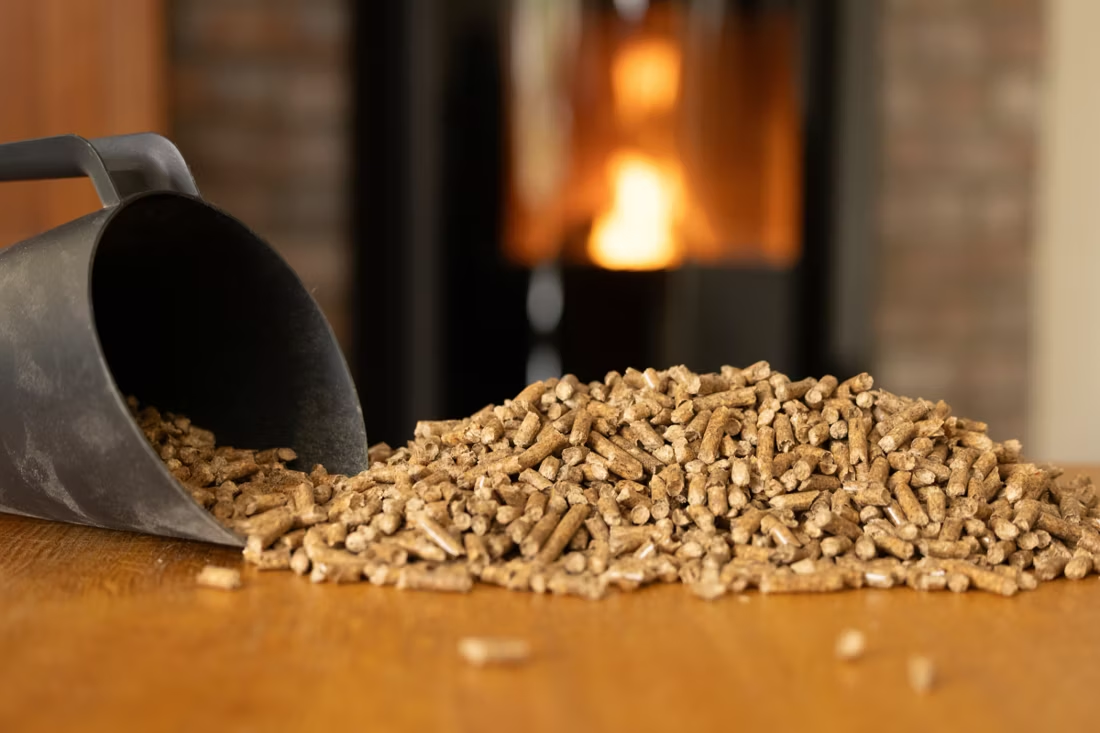
The region's hardwood forests of oak, hickory, maple, and cherry have long supported traditional cordwood heating, but a growing number of Ashland County homeowners are switching to pellet stoves and inserts for the automated feed, lower ash output, and consistent burn temperature. Regional pellet supply is solid, with brands like Indeck Energy Services, Lignetics, and Somerset Pellet Fuel available through local hearth dealers and farm supply stores—meaning you're not dependent on long-distance shipping to keep bags on hand through a full Ohio heating season.
Three steps. No salesperson until you're ready.
Tell us about your project
Your zip code, your situation, and the fuel you're leaning toward—or let the answers point you to one.
See what's actually available
The brands dealers within 100 miles genuinely carry—real options, never a catalog mirage.
Get your dealer & Project Guide
A trusted local dealer, plus the free Project Guide & Parts List that names every component of the job.
Frequently Asked Questions
How much does a pellet stove installation cost in Ashland County?
Across Ohio, a typical pellet stove or insert installation runs in the $3,000 to $6,500 range, depending on the unit, whether you're installing into an existing masonry fireplace opening, and how much sidewall or through-wall venting is needed. A pellet insert going into an existing fireplace with a straightforward vent run tends to land on the lower end; a freestanding stove requiring new hearth pad work and a longer vent path runs higher. A local dealer serving Ashland, Loudonville, or the surrounding townships can give you a firm number after seeing your chimney or wall layout.
What size pellet stove do I need for my Ashland County home?
With average winter lows around 17°F and heating degree days near 6,226 for the season, most Ashland County homes need a mid-size pellet stove rather than a small supplemental unit. As a general guide: units rated for 1,000-1,500 sq ft work for a single large room or open living area, while stoves rated for 1,500-2,500 sq ft can serve as a home's primary heat source in a reasonably well-insulated house. Older farmhouses common in the county's rural townships, with less insulation and higher ceilings, often need to size up a step. A local dealer will walk your home before recommending a specific BTU rating.
Where do I buy pellets in Ashland County, and how should I store them?
Regional pellet brands including Indeck Energy Services, Lignetics, and Somerset Pellet Fuel are commonly stocked by hearth dealers and farm and home supply stores throughout north-central Ohio, typically sold in 40-pound bags or by the ton on pallets. A pallet (about a ton, or fifty 40-lb bags) is usually enough to get an average-size home through several weeks of steady winter use, so most Ashland County homeowners buy multiple pallets before the season starts rather than restocking bag by bag. Pellets need to stay dry—a garage, basement, or covered shed works, but they should never sit directly on a damp concrete floor or outdoors uncovered, since Ohio's humid summers and wet winters can cause bags to swell and pellets to break down.
What's the difference between a pellet stove and a wood stove for Ashland County homes?
A wood stove burns cordwood, requires manual loading and periodic reloading, and will keep running during a power outage since it needs no electricity. A pellet stove uses an electric auger to automatically feed fuel from a hopper, which means far less hands-on tending and a more even burn, but it does require a working electrical outlet to run the auger, igniter, and combustion blower. For most Ashland County homes, that's a minor tradeoff—but if you're in a rural township prone to ice-storm outages, it's worth asking your dealer about a battery backup option or keeping a small generator on hand. With oak, hickory, maple, and cherry cordwood readily available locally, some households keep both a wood stove for outage backup and a pellet unit for everyday convenience.
Do I need a permit to install a pellet stove in Ashland County?
Yes—a building permit is generally required for a new pellet stove or insert installation in Ashland County, whether you're inside city limits or in one of the unincorporated townships, and the work needs to meet current mechanical and venting code for the appliance. Most local hearth dealers handle the permit paperwork and inspection scheduling as part of the installation, so it's rarely something the homeowner has to manage directly. It's worth confirming with your specific township or the county building office before work begins, since requirements can vary slightly between Ashland's city limits and the surrounding rural areas.
How is a pellet stove vented, and can it go anywhere in my home?
Pellet stoves use a smaller-diameter, power-vented exhaust system rather than a traditional masonry chimney, and most models can vent horizontally through an exterior sidewall rather than requiring a full vertical chimney run. That flexibility makes pellet stoves a good fit for Ashland County ranch homes and additions that don't have an existing fireplace or chimney—a stove can often go against nearly any exterior wall, provided clearances to combustibles and termination distances from windows, doors, and grade are met. A local installer will confirm the best wall location and vent path during an in-home visit.
How often does a pellet stove need maintenance?
Pellet stoves need more frequent light maintenance than wood stoves but less heavy cleaning overall. The ash pan typically needs emptying every few days to weekly depending on use, the burn pot should be scraped clean every week or two during a full Ashland County heating season, and the exhaust vent and combustion blower should get a professional inspection and cleaning once a year, ideally before the season starts in early fall. Homes running the stove as a primary heat source through the full six-plus-month heating stretch here should stay on the more frequent end of that schedule.
Is pellet heat cheaper than propane or electric heat in Ashland County?
It depends on current fuel prices, but pellets are generally competitive with propane and often cheaper than resistance electric heat for the same BTU output, especially in a season with 6,226 heating degree days like Ashland County typically sees. Regional pellet brands like Indeck Energy Services, Lignetics, and Somerset Pellet Fuel keep local supply relatively stable compared to imported pellets, which helps insulate homeowners from the price swings that hit propane during cold snaps. For homes without natural gas service in the county's more rural townships, a pellet stove is often installed specifically to offset a propane furnace's runtime during the coldest months.
What pellet stove brands are available through local Ashland County dealers?
Local hearth dealers in and around Ashland County typically carry established pellet stove manufacturers such as Harman, Englander, and US Stove, all of which have a strong service and parts network across Ohio. For a county with a genuinely cold, long heating season, look for a unit with a solid hopper capacity—40 to 60 pounds—so it can run overnight without a refill during the coldest stretches. A local dealer can also tell you which models they stock parts for locally, which matters more for a pellet stove than a wood stove since the auger motor, igniter, and control board are all serviceable components that occasionally need replacement.
What's the difference between an insert and a zero-clearance fireplace?
An insert is a fireplace that slides into a pre-existing wood-burning fireplace—if you don't have one, there's nothing to insert it into. A zero-clearance fireplace is built into a framed wall, which makes it the answer for remodels and new construction. Simple test: existing masonry fireplace means insert; blank or framed wall means zero-clearance.
Why is my open fireplace making my house colder?
Open fireplaces suck—literally. As the fire burns, it consumes air your furnace already paid to heat and pulls it out through the chimney, so the house is actually colder after the fire goes out than before you lit it. An insert fixes this: it seals the chimney, puts fixed glass across the front, and turns that hole in your house into a real heat source.
What is an in-home preview and do I need one?
It's a visit where a hearth professional measures your space, confirms the model you picked actually works in your home, and walks the specs—framing, gas line, venting, finish work—before anything is ordered. Some details you just can't know until you see the house. Never make a down payment without one; it's the single most-skipped step that burns buyers.
Does a fireplace add value to my home?
On average, a fireplace adds back to the home about the same amount you spent installing it. Add the monthly savings from heating the rooms you actually use instead of the whole house—often hundreds of dollars a year—and the value case is strong before you even count what a fire does for how your family uses the room.
Stove and Fireplace Dealers in Ashland County
Pellet Brands Stocked Around Ashland County
Manufacturers will point you to the nearest stocking dealer.
Find your pellet stove in Ashland County.
Tell us a bit about your home and heating goals, and we'll match you with a trusted local dealer and send over a free Project Guide & Parts List—a plan for your pellet stove project in Ashland County, with the exact parts, venting, and a recommended installer.
Find Your Fireplace →