
Find your electric fireplace in Ashland County.
Zone heat and instant ambiance for Ashland County's 6,226-degree-day winters, with no venting or gas line required. Get matched with a trusted local dealer who can size the right unit for your home.
Every Project Starts From One of These Five Situations
Simple heat for a place that already burns a lot of wood.
Ashland County sits in climate zone 5A, with winter lows averaging 17 degrees and a winter heating season not unlike Madison, WI in length and intensity. Wood heat has deep roots here, with local oak, hickory, maple, and cherry all common in supply, and plenty of homes still burning cordwood as primary or supplemental heat. Electric fireplaces fill a different need: they're not going to replace a wood stove as a heat source through an Ohio winter, but they're an increasingly common addition in living rooms, basements, bedrooms, and rentals across Ashland, Loudonville, and the surrounding townships.
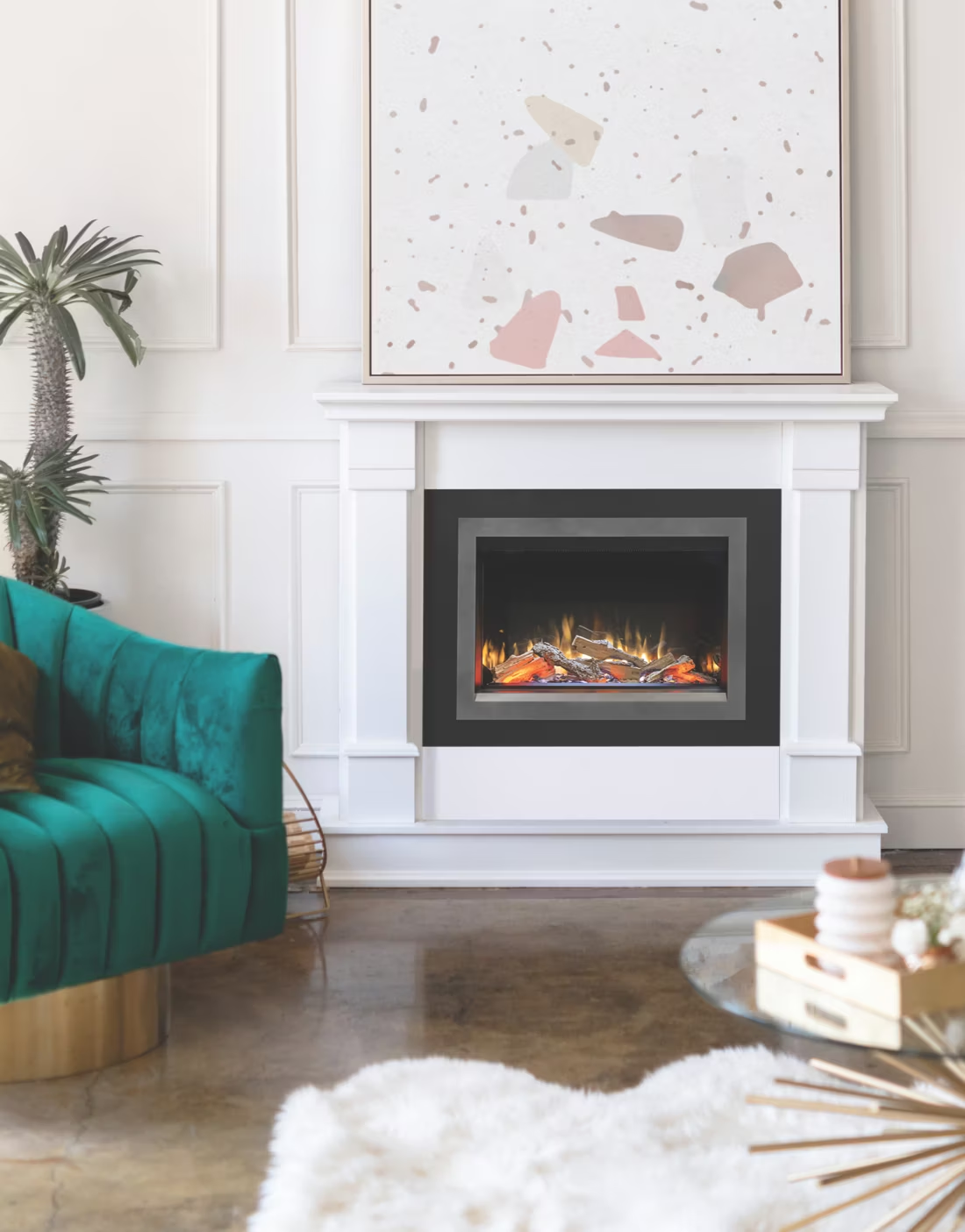
With no chimney, no gas line, and no combustion byproducts to vent, an electric fireplace or insert can go into almost any room with a standard outlet nearby—a real advantage in older Ashland County farmhouses where running new gas line or masonry work isn't practical. They won't carry a home through a January cold snap the way a catalytic wood stove or a gas insert will, but for supplemental zone heat, ambiance in a finished basement, or a low-commitment upgrade to a rental property, electric is often the most straightforward option a local dealer can install in a single visit.
Three steps. No salesperson until you're ready.
Tell us about your project
Your zip code, your situation, and the fuel you're leaning toward—or let the answers point you to one.
See what's actually available
The brands dealers within 100 miles genuinely carry—real options, never a catalog mirage.
Get your dealer & Project Guide
A trusted local dealer, plus the free Project Guide & Parts List that names every component of the job.
Frequently Asked Questions
How much does an electric fireplace installation cost in Ashland County?
Most electric fireplace and insert installations in Ashland County run $400 to $1,200, and that range covers most of the work: unit cost, basic electrical work, and any minor trim or surround adjustments. A plug-in electric insert that drops into an existing masonry fireplace opening is usually on the low end. A built-in wall unit that requires a dedicated circuit or an electrician to run new wiring—common in older Ashland farmhouses with outdated panels—pushes toward the higher end. Local dealers can tell you within a few minutes of looking at your fireplace or wall which end of that range you're likely to land in.
Will an electric fireplace actually heat my house in an Ashland County winter?
Not on its own. With average winter lows around 17 degrees and a long, demanding winter heating season, Ashland County winters demand more than a 1,500-watt electric heater can reasonably deliver for a whole house. Electric units are built for zone heating—warming the room they're in, not the structure around them. Most Ashland County homeowners pair an electric fireplace with existing central heat or a wood stove, using it to take the edge off a specific room (a finished basement, a home office, a bedroom) rather than as the primary heat source through the cold months.
Do I need a permit to install an electric fireplace in Ashland County?
Most plug-in electric inserts and freestanding units don't require a permit since there's no venting, gas line, or structural work involved. If your installation calls for a new dedicated electrical circuit—which is common for larger built-in units—that electrical work typically needs to be pulled by a licensed electrician and may require a permit through the local building department, depending on the scope. A local dealer or electrician handling the install will know exactly what's required for your specific unit and township.
What's the difference between an electric insert and a built-in electric fireplace?
An electric insert is sized to drop into an existing fireplace opening—a good fit if you have an old masonry fireplace in an Ashland County farmhouse that you want to convert away from wood or gas without structural changes. A built-in electric fireplace is designed to be framed into a wall during a remodel or new construction, giving you more flexibility on size and placement but requiring more electrical and carpentry work up front. For a straightforward upgrade to an existing hearth, an insert is usually the simpler and less expensive route.
Can an electric fireplace run on a standard household outlet?
Most electric fireplaces and inserts are designed to run on a standard 120-volt, 15-amp household circuit, which is why they're such a common upgrade in Ashland County rentals and older homes where adding gas line or a chimney isn't realistic. Larger built-in units or those installed alongside other high-draw appliances on the same circuit sometimes need a dedicated line to avoid tripping breakers. A local dealer can check your existing panel and circuit before installation to confirm what you have is sufficient.
How do electric fireplaces compare to wood stoves for Ashland County homes that already burn wood?
Wood stoves remain the practical choice for real heat output in Ashland County, especially with local oak, hickory, and cherry readily available and a winter that regularly drops into the teens. Electric fireplaces aren't trying to compete on heat output—they're a low-commitment way to add warmth and ambiance to a room that doesn't have a wood stove, like a finished basement or a second living area, without adding to chimney maintenance or firewood handling. Many Ashland County households run both: a wood stove for real winter heat, and an electric unit somewhere else in the house for convenience.
Does an electric fireplace need any maintenance?
Very little compared to wood or gas. There's no chimney to sweep, no gas lines to inspect, and no combustion byproducts to worry about. Maintenance is mostly limited to occasionally cleaning the glass front, checking that the fan and heating element are free of dust, and replacing LED components if they eventually dim (most last well over a decade of regular use). This low-maintenance profile is part of why electric units show up so often in Ashland County rental properties and vacation homes.
Are electric fireplaces good for finished basements in Ashland County homes?
Yes—this is one of the most common installations local dealers see in the county. Finished basements often lack the ductwork or chimney access needed for central heat or wood stoves, and running new gas line underground adds cost and complexity. An electric insert or wall-mounted unit solves that with a simple outlet connection, giving a basement family room or home gym some supplemental warmth and ambiance without any venting work.
Electric vs. gas—which makes more sense for my Ashland County home?
Gas delivers real, sustained heat output and can serve as a legitimate secondary heat source during Ashland County's cold months, but it requires either natural gas service or a propane tank, plus venting and gas line work. Electric skips all of that—no venting, no fuel supply, just a plug—but it's strictly supplemental heat, not something that will carry a room through a hard freeze. If you already have a gas fireplace or wood stove doing the heavy lifting, electric is a good fit for a secondary room. If you're looking for one unit to meaningfully offset your heating bill, gas or wood is the better investment.
Can I put a TV above my fireplace?
Yes—with an asterisk. Fireplaces are hot and TVs don't like heat. Either put a mantel between them to deflect rising warmth, or choose a fireplace with heat-management technology that creates a cool zone on the wall above—the wall stays around 125 degrees, barely warm, while the room still gets full heat. If you like clean lines and don't want a mantel, heat management is the answer.
Does an electric fireplace need a vent or chimney?
No—that's its superpower. An electric fireplace needs a wall and an outlet, period. No vent pipe, no gas line, no clearances to design around, which is why it works in bedrooms, offices, apartments, and walls where venting a gas or wood unit would be impractical or impossible. Installation is typically the simplest and least expensive of any fireplace type.
Does a fireplace add value to my home?
On average, a fireplace adds back to the home about the same amount you spent installing it. Add the monthly savings from heating the rooms you actually use instead of the whole house—often hundreds of dollars a year—and the value case is strong before you even count what a fire does for how your family uses the room.
Can I install a fireplace myself?
If you're putting a fire in your house on purpose, it's best to work with an expert. Unless you're genuinely experienced in framing, gas line, vent pipe, and the national code on clearances to combustibles, have a professional do it—and ideally the same company that sells you the fireplace, so warranty, service, and liability all live under one roof.
Stove and Fireplace Dealers in Ashland County
Get matched with an electric fireplace dealer in Ashland County.
Tell us about your home and we'll send you a free Project Guide & Parts List for your electric fireplace project, along with a match to a trusted local dealer who can install it right.
Find Your Fireplace →