
Warm your Adams County farmhouse without splitting a single log.
Automated, thermostat-controlled heat for the hills along the Ohio River—built for Adams County's average 17-degree winter lows and a long, steady heating season. I'll match you with a vetted local dealer who knows what actually works here.
Every Project Starts From One of These Five Situations
Steady heat, sourced from the same hardwoods that built this county.
Adams County sits in the Appalachian foothills of southern Ohio, along the Ohio River, with a county seat in West Union and a population under 10,000 spread across farmland, ridges, and hollows. Winters here average lows around 17°F with a fairly long, steady heating season—noticeably milder than the sub-zero stretches you'd see in a place like Madison, WI, but cold enough, and rural enough, that a lot of households want a serious secondary or primary heat source that doesn't depend on a propane truck making it up an icy county road on schedule.
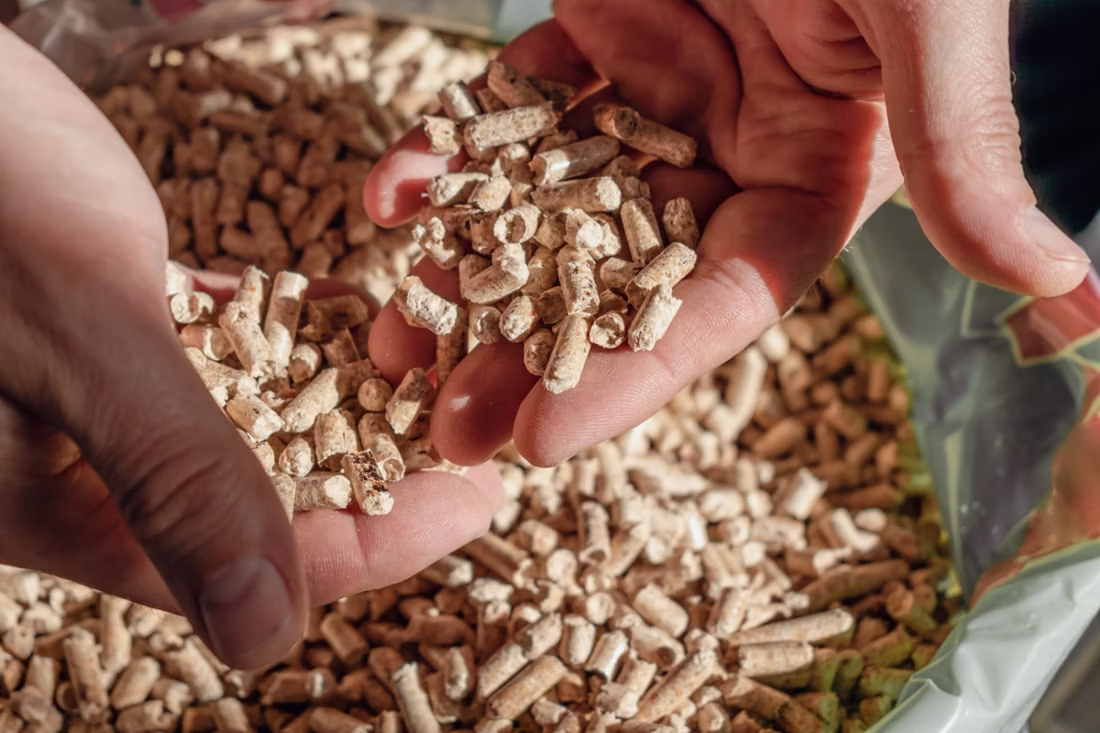
The county's oak, hickory, maple, and cherry forests aren't just firewood—they're also the raw material behind a lot of the hardwood pellets sold regionally, including brands like Indeck Energy Services, Lignetics, and Somerset Pellet Fuel. Adams County has no air-quality non-attainment designation and no winter burn curtailment to navigate, so the appeal of pellet heat here is mostly about convenience: load a hopper, set a thermostat, and get consistent radiant heat without tending a fire or hauling cordwood—a real advantage for older farmhouses and out-of-the-way properties where daily wood-stove upkeep isn't practical.
Three steps. No salesperson until you're ready.
Tell us about your project
Your zip code, your situation, and the fuel you're leaning toward—or let the answers point you to one.
See what's actually available
The brands dealers within 100 miles genuinely carry—real options, never a catalog mirage.
Get your dealer & Project Guide
A trusted local dealer, plus the free Project Guide & Parts List that names every component of the job.
Frequently Asked Questions
How much does a pellet stove installation cost in Adams County?
Most pellet stove and insert installations in Adams County run in the $3,000 to $6,500 range, depending on the unit and whether you're installing a freestanding stove or converting an existing masonry fireplace to a pellet insert. Pellet units vent through a small-diameter pipe out a side wall rather than requiring a full masonry chimney, which usually keeps costs lower than a comparable wood stove install—especially in older Adams County farmhouses where running new Class A chimney pipe would add real expense. Your local dealer will confirm a firm number after seeing the space and the existing wall or fireplace situation.
What size pellet stove do I need for my Adams County home?
It depends on square footage, ceiling height, and how drafty the house is—a factor that matters a lot in this county's older farmhouse stock. As a rough guide: small units (up to 1,000 sq ft) suit a single large room or a manufactured home, medium units (1,000–2,000 sq ft) cover most main living areas, and larger units (2,000+ sq ft) can carry a well-insulated whole home given Adams County's moderate 17°F average winter low. Homes on exposed ridgelines or with older, uninsulated construction typically need to size up compared to a similarly sized home in a sheltered hollow. A local dealer will size this correctly during an in-home visit—oversizing wastes pellets, undersizing leaves you cold on the coldest nights.
Where can I buy pellet fuel in Adams County?
Regional hardwood pellet brands including Indeck Energy Services, Lignetics, and Somerset Pellet Fuel are commonly stocked at hearth dealers and farm supply stores serving Adams County, typically running around $250 to $300 per ton, sold by the 40-pound bag or by the pallet (usually 50 bags per ton). Because a lot of Adams County is rural with roads that can ice over in winter, most local households buy pellets a ton or more at a time in the fall rather than restocking mid-storm. Your matched dealer can point you toward the closest reliable supplier and tell you what's actually moving locally that season.
Will my pellet stove work during a power outage?
Not without a backup power source—this is the honest tradeoff with pellet heat. The auger that feeds pellets and the blower that circulates heat both run on electricity, so a standard pellet stove goes dark the moment the power does. That matters in Adams County, where ice storms on the rural grid can knock out power for stretches longer than in more urban parts of the state. Many local households pair a pellet stove with a small battery backup unit or a generator sized to run it, and some keep a wood stove as a no-electricity fallback. Ask your local dealer about battery backup compatibility for the specific model you're considering.
Pellet stove vs. wood stove—which makes more sense in Adams County?
Wood is the traditional choice here for good reason—the county's oak, hickory, maple, and cherry forests supply plenty of firewood, and cutting permits are available through the Daniel Boone National Forest at around $20 per cord during the May-to-October season for those willing to cut their own. Wood also keeps working with no electricity, which matters during ice-storm outages. Pellet stoves trade that off for real convenience: no splitting, stacking, or creosote buildup, more even heat output, and a cleaner burn—but they need power to run and pellets to buy rather than cut. A lot of Adams County households end up with one of each: wood for backup and ambiance, pellet for daily, low-maintenance heat.
Do I need a permit to install a pellet stove in Adams County?
Yes—a new pellet stove or insert installation typically requires a building permit through Adams County, and the unit itself should carry current EPA certification. Most local dealers handle the permitting as part of the installation, so it's rarely something homeowners have to sort out themselves. Unlike some more urban Ohio counties, Adams County has no non-attainment air-quality designation, so there's no seasonal burn curtailment to plan around—pellet or wood, you can run the appliance as needed through the winter.
How much maintenance does a pellet stove actually need?
Less than a wood stove, but it's not zero-maintenance. Plan on emptying and cleaning the ash pan weekly during regular use, cleaning the burn pot and glass more frequently, and having the venting and hopper mechanism professionally serviced once a year—typically before the start of the burning season. Because pellet venting is smaller-diameter and doesn't build creosote the way a wood chimney does, annual service is quicker and generally cheaper than a full wood chimney sweep, which is part of the appeal for Adams County households looking for lower-upkeep heat.
What's the best pellet stove for Adams County's climate?
Given the county's moderate 4A climate—average winter lows around 17°F rather than sustained deep-cold—most homes here don't need the largest, highest-output units on the market. A mid-size pellet stove with a hopper that holds enough fuel for an overnight burn is usually sufficient for primary or supplemental heat in an average Adams County home. What matters more locally is battery backup compatibility, given how often rural power can flicker during winter storms, and hopper capacity if you want to go a full day or two between refills. Your local dealer can match hopper size and BTU output to your specific home and heating goals.
Pellet stove vs. electric fireplace—which is right for my home?
A pellet stove burns compressed hardwood pellets and can genuinely heat a room or a whole house with real, sustained BTU output—a legitimate primary or supplemental heat source for Adams County's cold months. An electric fireplace or insert, by contrast, is mostly ambiance with modest supplemental heat (typically capped around 5,000–6,000 BTU) and no ability to carry a room through a real cold snap on its own. If you're trying to meaningfully cut heating costs or add backup capacity for a drafty older farmhouse, pellet wins. If you want a low-cost, no-venting-required, plug-in-anywhere unit for a bedroom or den, electric is simpler and cheaper to install. A local dealer can walk through both options against your actual heating needs.
Why is my open fireplace making my house colder?
Open fireplaces suck—literally. As the fire burns, it consumes air your furnace already paid to heat and pulls it out through the chimney, so the house is actually colder after the fire goes out than before you lit it. An insert fixes this: it seals the chimney, puts fixed glass across the front, and turns that hole in your house into a real heat source.
Are pellet stoves loud?
They make some noise—there are two fans running plus an auger motor that turns as it feeds pellets. But there's a real range: premium models are engineered quiet, and the best offer a whisper-quiet mode you can comfortably watch TV next to. If noise matters in your room, ask to hear a stove running before you buy—it's a five-minute test that saves years of annoyance.
What is an in-home preview and do I need one?
It's a visit where a hearth professional measures your space, confirms the model you picked actually works in your home, and walks the specs—framing, gas line, venting, finish work—before anything is ordered. Some details you just can't know until you see the house. Never make a down payment without one; it's the single most-skipped step that burns buyers.
Can a fireplace actually lower my heating bill?
Yes—by creating a comfort zone. A furnace heats every square foot of the house just to warm the one room you're in; a gas fireplace on low burns roughly a sixth of the gas a typical furnace does. Set the furnace around 55–60 degrees as a baseline, then heat the rooms your family actually uses. Families who heat this way commonly save $20–$60 a month.
Pellet Brands Stocked Around Adams County
Manufacturers will point you to the nearest stocking dealer.
Find your pellet stove match in Adams County.
Tell me a bit about your home and I'll put together a free Project Guide & Parts List—the right pellet stove or insert, the vent kit it needs, and a trusted local Adams County dealer who can install it.
Find Your Fireplace →