
Instant warmth, no chimney required, in Adams County.
Zone heat and real ambiance for the hills and hollows around West Union, Manchester, and Peebles—plug it in, no masonry or gas line needed. Find the right unit and connect with a trusted local dealer.
Every Project Starts From One of These Five Situations
Simple heat that plugs in and works.
Adams County sits in the Appalachian foothills of southern Ohio along the Ohio River, with a population under 10,000 spread across West Union, Manchester, Peebles, and a lot of unincorporated countryside in between. At climate zone 4A with a solid winter heating season and average winter lows around 17°F, the season is real but not extreme—closer to a manageable Midwest winter than the deep-freeze conditions of somewhere like Fargo or Duluth. Plenty of homes here still burn oak, hickory, maple, and cherry cut locally, but electric fireplaces have become a common addition for rooms that don't have—or don't need—a full wood or gas setup.
Power in Adams County runs through Adams Rural Electric Cooperative for much of the unincorporated area, and a plug-in or hardwired electric unit draws modest current compared to central heat. That makes electric a practical fit for manufactured and modular homes (common throughout the rural parts of the county), rental properties, finished basements, and additions where running a chimney or gas line isn't realistic. No venting, no permit for the appliance itself, and most units install in an afternoon—a straightforward way to add heat and a fire-look focal point to a room without touching the existing heating system.
Three steps. No salesperson until you're ready.
Tell us about your project
Your zip code, your situation, and the fuel you're leaning toward—or let the answers point you to one.
See what's actually available
The brands dealers within 100 miles genuinely carry—real options, never a catalog mirage.
Get your dealer & Project Guide
A trusted local dealer, plus the free Project Guide & Parts List that names every component of the job.
Frequently Asked Questions
How much does an electric fireplace installation cost in Adams County?
A plug-in electric insert or freestanding unit typically runs $300 to $800 including a basic surround, since there's no venting or gas work involved. Hardwired wall-mount units and built-in electric fireplaces with a custom mantel or media wall surround run higher, often $1,500 to $3,000, mostly driven by carpentry and the electrician's time to run a dedicated circuit if your panel needs it. Because Adams County has a mix of older farmhouses and newer manufactured homes, panel capacity varies—a local electrician or dealer can tell you quickly whether your existing wiring supports a hardwired unit or whether a plug-in model is the simpler route.
Do I need a permit to install an electric fireplace in Adams County?
For a plug-in electric insert, no permit is typically required since there's no gas line, venting, or structural chimney work involved. If you're having a unit hardwired into a new dedicated circuit, that electrical work generally does require a permit and inspection through the county, and any licensed electrician handling the installation will pull that as a matter of course. This is one of the appeals of electric heat in a county where many homes are older or manufactured—there's no equivalent to the building-permit and inspection process that comes with a wood stove or gas insert.
Will an electric fireplace actually heat a room in Adams County's winters?
Most electric fireplaces are rated for supplemental heat—typically 4,000 to 5,000 BTUs, enough to comfortably warm a single room of 400 to 1,000 square feet depending on insulation. With average winter lows around 17°F and a solid winter heating season, Adams County winters are cold enough that an electric unit works well as zone heat for a den, bedroom, or finished basement, but it isn't a realistic substitute for whole-home heating on the coldest nights. Homeowners here most often pair an electric fireplace with existing central heat or a wood stove, using it to take the edge off a specific room rather than carry the whole load.
Electric vs. wood—which makes more sense for my home?
Wood remains a strong option in Adams County—oak, hickory, maple, and cherry are all common locally, and cutting permits on nearby Daniel Boone National Forest land run about $20 per cord during the May-to-October season, which keeps fuel costs low for anyone willing to cut and split. Wood also keeps working when the power goes out, which matters in rural parts of the county where outages can last a while after storms. Electric, on the other hand, requires zero maintenance, no chimney, no ash, and no wood handling—you flip a switch and get heat and flame effect immediately. For a primary living space or a room where you want ambiance without any of the upkeep, electric is usually the easier call. For backup heat during outages or a lower long-term fuel cost, wood still has the edge.
Will my electric fireplace work during a power outage?
No—electric fireplaces require power to run, so during an outage they won't produce heat or flame effect. This is worth planning around in Adams County, where rural power lines can mean longer restoration times after ice or wind events. If backup heat during outages matters for your household, many homeowners here pair an electric fireplace in the main living space with a wood stove or fireplace elsewhere in the house that can carry the load if the power goes down. It's a common combination throughout the county rather than an either-or choice.
What size or wattage electric fireplace do I need?
Most residential electric fireplaces top out around 1,500 watts (roughly 5,000 BTUs), which is enough to heat a single room of 400 to 1,000 square feet depending on ceiling height and how well the space is sealed. Older farmhouses in Adams County with less insulation or higher ceilings may need the heater running on high more often to keep up, while newer or well-insulated rooms will get by on the lower setting most of the time. If you're mainly after the visual flame effect rather than real heat output, some models let you run the flame without the heater engaged, which is worth asking about if you plan to use it three seasons a year rather than just winter.
What's the difference between an electric insert, a wall-mount, and a mantel package?
An electric insert is built to slide into an existing fireplace opening—a good option if you have an old wood-burning fireplace you want to retire without demolition. A wall-mount unit hangs flush against the wall like a large flat-screen and needs a dedicated outlet or hardwired circuit nearby. A mantel package pairs an electric insert or freestanding unit with a surround and mantel shelf, giving you a full fireplace look without any masonry. In Adams County's manufactured and modular homes, wall-mount units are often the easiest fit since they don't require an existing fireplace opening or heavy structural support.
How much does it cost to run an electric fireplace day to day?
A typical 1,500-watt electric fireplace running on high costs a few cents per hour depending on your rate from Adams Rural Electric Cooperative or your municipal provider, which works out to roughly $3 to $6 for a full day of continuous use on the heater setting. Running just the flame effect without heat costs a fraction of that. Compared to running a whole-home furnace, using an electric fireplace to heat one occupied room while keeping the thermostat lower elsewhere in the house can actually reduce your overall heating bill during shoulder-season cold spells.
Electric vs. pellet stove—which is right for my home?
Pellet stoves burn compressed wood pellets from suppliers like Lignetics or Somerset Pellet Fuel and put out real, substantial heat—often enough to serve as primary heat for a well-insulated home—but they need a hopper refilled regularly, produce ash, and require electricity to run the auger and blower, so they're not a backup during outages either. Electric fireplaces produce less heat overall but need zero fuel handling, no venting, and no maintenance beyond dusting. For a rural Adams County home looking for a serious secondary heat source with real BTU output, a pellet stove is worth a look. For a room where convenience and ambiance matter more than serious heat, electric is the simpler answer.
Can I put a TV above my fireplace?
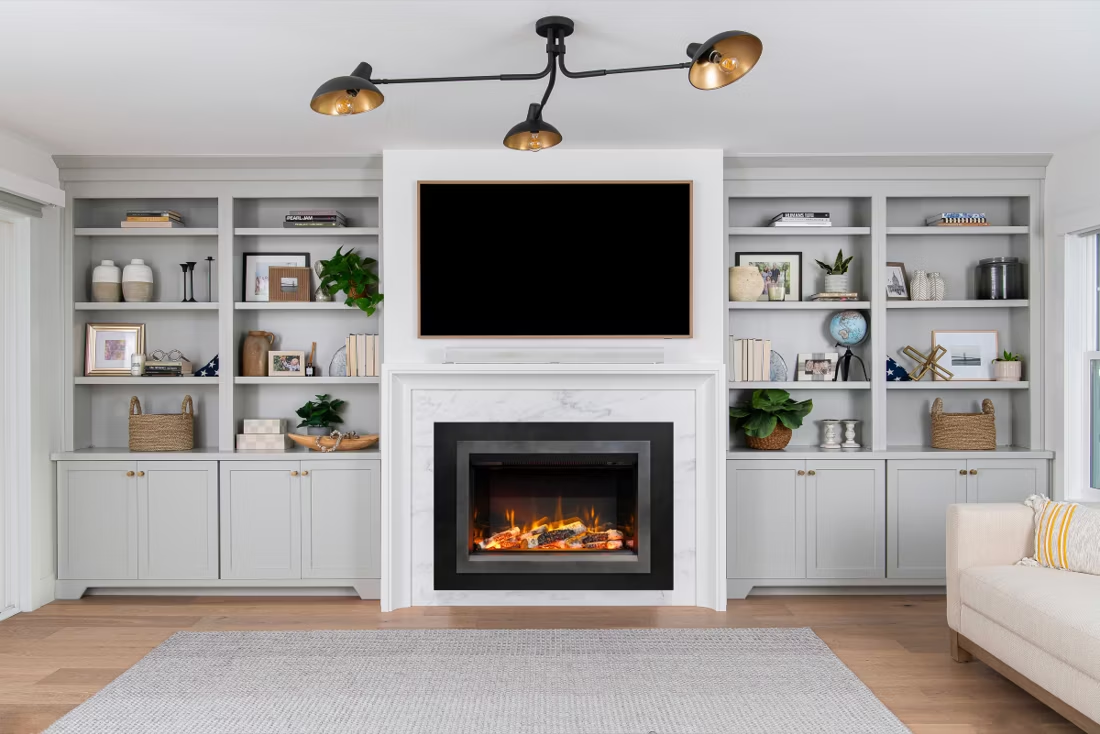
Yes—with an asterisk. Fireplaces are hot and TVs don't like heat. Either put a mantel between them to deflect rising warmth, or choose a fireplace with heat-management technology that creates a cool zone on the wall above—the wall stays around 125 degrees, barely warm, while the room still gets full heat. If you like clean lines and don't want a mantel, heat management is the answer.
Do electric fireplaces actually produce heat?
Yes—most put out around 4,800–5,000 BTUs from a standard outlet, which comfortably warms a bedroom, office, or den as a comfort-zone heater. What they won't do is carry a whole house the way wood, gas, or pellet can. Think of electric as ambiance-first with honest supplemental heat: flames on with no heat in July, flames plus warmth in January.
Can I install a fireplace myself?
If you're putting a fire in your house on purpose, it's best to work with an expert. Unless you're genuinely experienced in framing, gas line, vent pipe, and the national code on clearances to combustibles, have a professional do it—and ideally the same company that sells you the fireplace, so warranty, service, and liability all live under one roof.
Does a fireplace add value to my home?
On average, a fireplace adds back to the home about the same amount you spent installing it. Add the monthly savings from heating the rooms you actually use instead of the whole house—often hundreds of dollars a year—and the value case is strong before you even count what a fire does for how your family uses the room.
Find your electric fireplace in Adams County.
Tell us a bit about your home and we'll put together a free Project Guide & Parts List for your electric fireplace project in Adams County—the right unit, the parts you'll need, and a match with a trusted local dealer who can install it.
Find Your Fireplace →