
Find the right electric fireplace for Ward County's brutal winters.
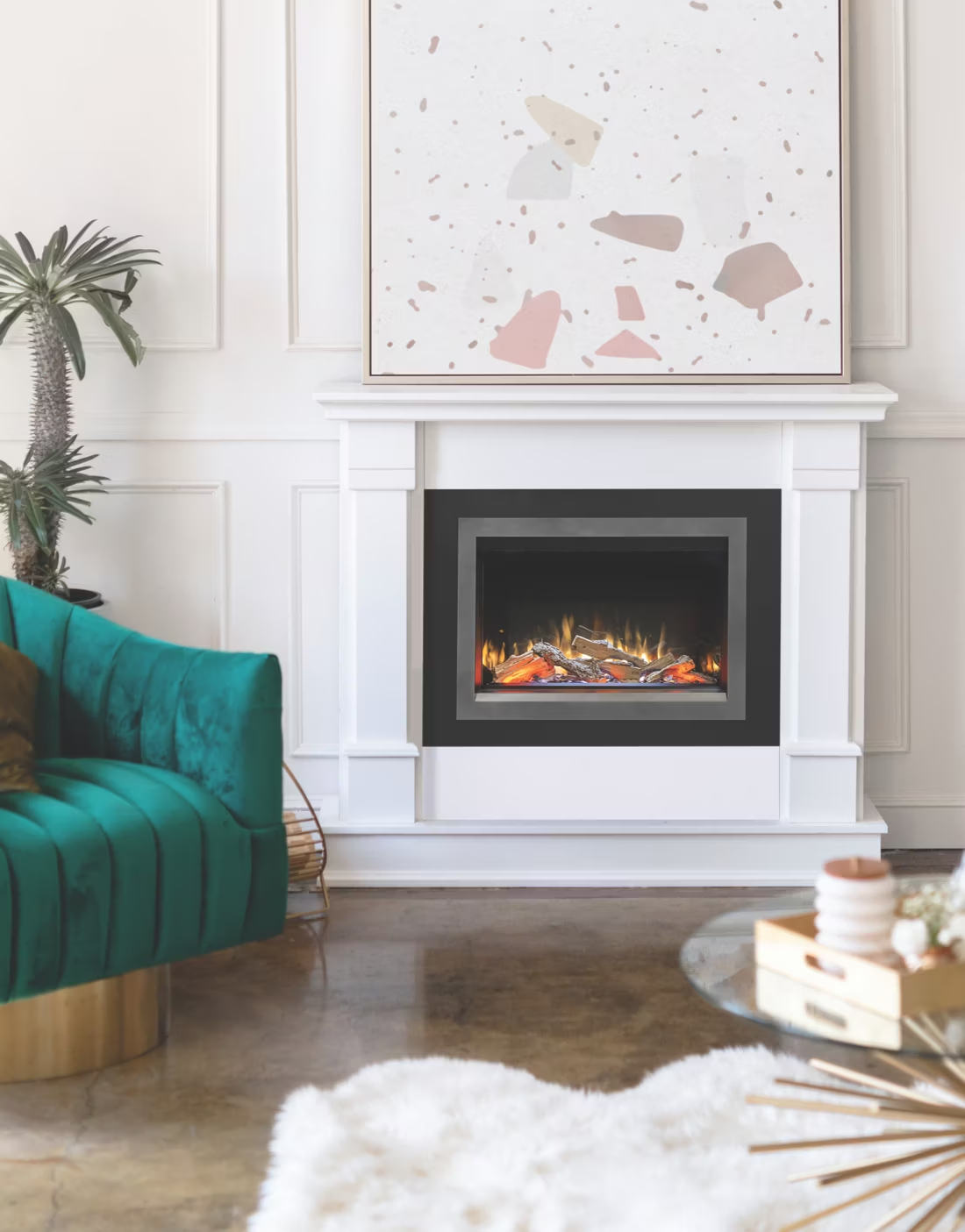
With a long, demanding winter heating season and winter lows that hover near zero—and drop well below it during Arctic outbreaks—Minot and the rest of Ward County lean on furnaces for whole-house heat. A well-placed electric fireplace adds real supplemental warmth and ambiance almost anywhere in the house, with no venting or chimney required.
Every Project Starts From One of These Five Situations
Electric heat earns its place as supplemental warmth—not a primary furnace replacement.
Ward County sits in the prairie pothole region of north-central North Dakota, and Minot—the county seat and largest city—sits in a Zone 7 climate, the coldest tier in the national building code. An average winter low near 4°F sounds manageable until you factor in the polar vortex swings that push temperatures to -20°F or colder for days at a time, and a heating season long and severe enough to put Ward County in the same company as International Falls, MN for sustained cold. Unlike forested mountain counties, Ward County's tree cover is limited mostly to shelterbelts and river-bottom groves along the Souris River—oak, cottonwood, and ash—rather than commercial timber, which is part of why wood and pellet appliances see so little local demand here. Natural gas and electricity carry the heating load instead.
Most Ward County homes run on a natural gas furnace for primary heat, with MDU Resources serving Minot proper and propane filling in across rural townships, while Verendrye Electric Cooperative supplies power to much of the surrounding county. An electric fireplace doesn't compete with that furnace—it supplements it. Because these units need nothing more than a standard or dedicated circuit, they drop into finished basements, bedrooms, converted garages, and rental units around Minot and the Minot AFB area without any masonry, gas line, or venting work. For homeowners who want real flame-look ambiance and a boost of zone heat on the coldest nights without touching the furnace, that's the appeal.
Three steps. No salesperson until you're ready.
Tell us about your project
Your zip code, your situation, and the fuel you're leaning toward—or let the answers point you to one.
See what's actually available
The brands dealers within 100 miles genuinely carry—real options, never a catalog mirage.
Get your dealer & Project Guide
A trusted local dealer, plus the free Project Guide & Parts List that names every component of the job.
Frequently Asked Questions
How much does it cost to install an electric fireplace in Ward County?
A basic plug-in freestanding electric fireplace or media-console insert typically runs $150 to $600 for the unit itself, with no real installation cost since it just plugs into an existing outlet. Built-in, wall-mounted, or recessed units that need a dedicated 20-amp circuit run by a licensed electrician typically land between $800 and $2,500 once you factor in wiring, any framing or trim work, and the mantel surround if you're adding one. Because there's no chimney, venting, or gas line involved, electric installs in Ward County are consistently the least expensive of the four fuel types.
Can an electric fireplace replace my furnace as primary heat?
No, and any honest local dealer will tell you the same. Most electric fireplaces output somewhere between 4,600 and 10,000 BTUs on high—enough to noticeably warm a single room, but nowhere near enough to carry a Ward County home through a stretch of -20°F nights during a winter heating season as long and demanding as this one. Think of an electric fireplace as zone heat for a bedroom, basement, or den, while your furnace—natural gas in most of Minot, propane in outlying parts of the county—continues to do the real work of keeping the whole house livable.
What size electric fireplace do I need?
For supplemental heat in a single room up to roughly 400 square feet, a standard 1,500-watt unit is usually sufficient, assuming reasonably tight insulation. Larger open rooms, finished basements, or additions in the 400-600 square foot range often do better with a wider insert or built-in model that lets you run the heater on a higher fan setting without the flame effect maxed out. Because Ward County winters are long and cold, look for a model with a built-in thermostat rather than a single high/low switch—it'll cycle more efficiently over a Minot heating season that can stretch from October into April.
Do I need a permit for an electric fireplace in Ward County?
A plug-in freestanding or insert unit that uses an existing outlet generally doesn't require a permit. If you're having a dedicated circuit run for a built-in or wall-mounted unit, that electrical work typically requires a permit through the City of Minot's building and electrical inspections office, or through the Ward County Building Department for addresses outside city limits. A licensed electrician pulling the permit as part of the job is standard practice and keeps the work inspection-ready if you ever sell the home.
What's the difference between an electric fireplace, insert, and stove?
An electric fireplace is typically a built-in or wall-mounted unit designed to look like a framed hearth. An electric insert is sized to slide into an existing fireplace opening—including an old wood-burning masonry fireplace you no longer use—instantly converting it to a clean, no-maintenance heat source. An electric stove is a freestanding cabinet styled like a traditional wood stove, useful where you want a stove silhouette without any venting. For Ward County homes with an existing but unused fireplace, an insert is usually the simplest upgrade; for new rooms or additions, a built-in or freestanding unit gives more placement flexibility.
What's the best electric fireplace for a Ward County home?
Look for a model with a genuine variable-output heater and a thermostat rather than just an ambiance-only flame effect—brands like Dimplex, Napoleon, and Touchstone all make units rated in the 5,000 to 9,000 BTU range at 1,500 watts that hold up well as real supplemental heat rather than novelty lighting. For a Souris River valley home with drafty older windows, a slightly higher-output insert with a strong fan will do more good on a sub-zero night than a smaller decorative unit. A local dealer can walk through your room's square footage and insulation to narrow the choice.
How much does it cost to run an electric fireplace in Ward County?
With Verendrye Electric Cooperative and other Ward County providers charging roughly 10 to 13 cents per kilowatt-hour, a standard 1,500-watt electric fireplace running at full heat costs somewhere around 15 to 20 cents an hour. Run a few hours a night in a bedroom or den through a long Minot winter and the monthly cost still comes in well below running a whole-house furnace harder to compensate, which is exactly why so many Ward County homeowners use one for shoulder-season nights and quick evening warmth rather than as a full heating solution.
Electric vs. gas—which should I choose for my Ward County home?
Natural gas, available through MDU Resources in Minot and propane elsewhere in the county, puts out real heating BTUs and can serve as genuine supplemental or even primary zone heat, and certain standing-pilot models keep working during a power outage—a meaningful consideration in a county that sees its share of winter storms. Electric skips the gas line and venting entirely, installs almost anywhere with an outlet, and is the simpler, less expensive path for renters, apartments, or rooms without gas access. Most Ward County homes that have both use gas for a room that needs to stay genuinely warm and electric for ambiance or a lighter-duty space like a basement or bedroom.
Why don't I see wood or pellet stoves recommended in Ward County?
Ward County's prairie geography is the main reason. Outside the shelterbelts and river-bottom groves of oak, cottonwood, and ash along the Souris River, there's no meaningful local timber supply or forest permit system feeding a firewood market the way there is in mountain or forested counties, and pellet fuel infrastructure here is similarly thin. Combined with a Zone 7 climate and a long, severe winter heating season, a wood or pellet appliance would need near-constant tending to keep pace with the cold—which is why very few local dealers stock them. Electric fireplaces fill the ambiance-plus-supplemental-heat role that wood stoves often play in more forested parts of the country.
Can I put a TV above my fireplace?
Yes—with an asterisk. Fireplaces are hot and TVs don't like heat. Either put a mantel between them to deflect rising warmth, or choose a fireplace with heat-management technology that creates a cool zone on the wall above—the wall stays around 125 degrees, barely warm, while the room still gets full heat. If you like clean lines and don't want a mantel, heat management is the answer.
Do electric fireplaces actually produce heat?
Yes—most put out around 4,800–5,000 BTUs from a standard outlet, which comfortably warms a bedroom, office, or den as a comfort-zone heater. What they won't do is carry a whole house the way wood, gas, or pellet can. Think of electric as ambiance-first with honest supplemental heat: flames on with no heat in July, flames plus warmth in January.
Can I install a fireplace myself?
If you're putting a fire in your house on purpose, it's best to work with an expert. Unless you're genuinely experienced in framing, gas line, vent pipe, and the national code on clearances to combustibles, have a professional do it—and ideally the same company that sells you the fireplace, so warranty, service, and liability all live under one roof.
How much should I budget for a fireplace?
For an average home—covering the fireplace, the vent pipe, and basic installation—a budget between $3,900 and $5,500 gives you a lot of options across wood, gas, and pellet. By the time you add finish work, gas line, and electrical, the average complete installation lands between $5,000 and $12,000 all-in. In a remodel or new build, a good rule is to put about 2.5% of the total project cost toward the fireplace.
Stove and Fireplace Dealers in Ward County
Listings include WhyFire partner dealers, dealers we have verified as authorized for the brands we recommend, and established local businesses that carry hearth products. Every listing shows which one it is. The ones marked Preferred run on WhyFire's software, so they can show you real pricing and book your appointment right here. No manufacturer pays for placement. How we verify dealers →
North Central Services, Inc
Sawmill Lumber & Hardware
Find your electric fireplace in Ward County.
Tell us a bit about your home and we'll match you with the right electric fireplace or insert, plus a trusted local dealer serving Minot and the rest of Ward County—and send you a free Project Guide & Parts List so you know exactly what to expect before anyone knocks on your door.
Find Your Fireplace →