
Find the right gas fireplace for a Ward County winter.
With a long, brutal seven-month heating season and winter lows averaging 4°F, Ward County homes need heat that starts instantly and keeps running. We match you with a trusted local dealer who can size and install the right unit—then hand you a free plan to take home.
Every Project Starts From One of These Five Situations
Zone 7 heat, on demand.
Ward County sits in Climate Zone 7—the same bracket as International Falls, Minnesota—with an average winter low of 4°F and a long, brutal seven-month heating season. That's a long, hard heating season, and it's a big part of why gas fireplaces and inserts are a mainstay in homes across Minot, Burlington, Berthold, and Kenmare. There's no wood to split, no ash to haul, and no waiting for a bed of coals to build—you flip a switch or a remote and get heat in seconds, which matters on a January night when the wind is coming off the prairie.
Minot's natural gas infrastructure and widespread propane delivery across the rest of the county mean most homeowners have a straightforward path to either fuel. A direct-vent gas insert dropped into an existing fireplace, or a new built-in unit in a remodel, gives Ward County families a reliable secondary heat source that can carry a room—or in some homes, take real pressure off the furnace—through a heating season that runs longer than almost anywhere else in the country.
Three steps. No salesperson until you're ready.
Tell us about your project
Your zip code, your situation, and the fuel you're leaning toward—or let the answers point you to one.
See what's actually available
The brands dealers within 100 miles genuinely carry—real options, never a catalog mirage.
Get your dealer & Project Guide
A trusted local dealer, plus the free Project Guide & Parts List that names every component of the job.
Frequently Asked Questions
How much does a gas fireplace installation cost in Ward County?
Costs vary with the unit, the venting path, and whether new gas line work is required, but Ward County installations commonly run from the low thousands for a straightforward direct-vent insert into an existing fireplace opening, up to considerably more for a new built-in unit with fresh gas line and venting run through an exterior wall in a remodel or new build. Homes already on natural gas service in Minot tend to land on the lower end since the fuel supply is already in place; rural properties relying on propane may need tank installation factored in. A trusted local dealer will give you a firm number after seeing your space.
Is natural gas or propane more common in Ward County?
Natural gas service covers much of Minot and the surrounding developed areas, so homeowners there with existing gas appliances—a furnace, range, or water heater—usually have the easiest path to adding a fireplace. Outside city limits, in the more rural stretches of Ward County toward Berthold, Kenmare, and the smaller unincorporated communities, propane is the standard fallback, delivered and stored in a tank on the property. Most gas fireplace models can be configured for either fuel with the correct orifice and regulator, so the choice comes down to what's already running to your home.
Can I convert an existing wood-burning fireplace to gas?
Yes, and it's a common project for local hearth dealers in the region. A gas insert is fitted into the existing masonry opening and vented through a stainless liner run up the original chimney, which keeps the look of the fireplace while eliminating the wood handling and ash cleanup. Given how few homes in Ward County actually rely on wood as a primary heat source—this is Zone 7 prairie country, not forested terrain—most conversions here are driven by convenience rather than fuel scarcity. A local dealer can confirm your existing chimney is a suitable candidate for a liner before you commit.
Will my gas fireplace still work if the power goes out?
Most will, but it depends on the ignition system. Units with intermittent pilot ignition (IPI) run on a small battery backup that kicks in automatically when power drops, so the fireplace lights and operates normally off batteries until service is restored—worth checking those batteries every fall before Ward County's heating season kicks in. Some manufacturers, including Valor, generate their own power from the pilot's thermocouple and need no batteries at all. For a county that sees genuine prairie winter storms and the outages that come with them, that detail is worth asking about when you're comparing units with a local dealer.
What's the difference between a gas fireplace, insert, and stove?
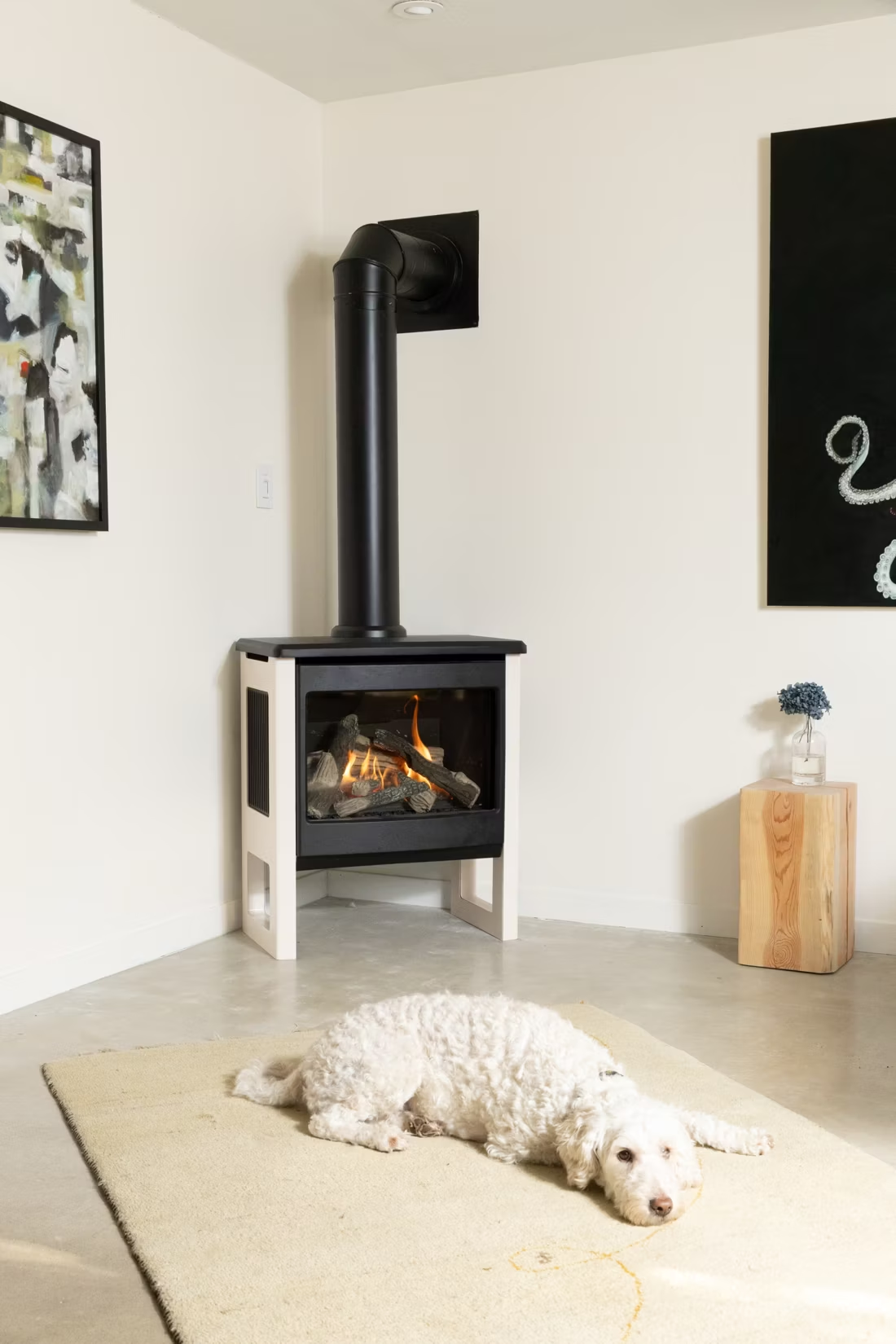
A gas fireplace is a fully built-in unit framed into a wall, typically chosen for new construction or a larger remodel. A gas insert is sized to slide into an existing masonry fireplace opening, converting it to a sealed, efficient unit that vents through the existing chimney. A gas stove is a freestanding cabinet-style unit that sits on the floor, similar in footprint to a wood stove but burning gas instead. For most Ward County homes with an existing fireplace, an insert is the straightforward upgrade; homes without one, or new builds around Minot, are usually better matched to a built-in fireplace or freestanding stove.
Do I need a permit to install a gas fireplace in Ward County?
Generally yes—new gas fireplace installations typically require both a building permit and a gas line permit through local jurisdiction, whether that's the City of Minot or Ward County depending on your address. Gas line work specifically needs a licensed gas-fitter, which is one reason to route the whole project through a single trusted dealer rather than coordinating separate trades yourself—they can handle the gas hookup, venting, and inspection sign-off as one job instead of three.
What's the difference between vented and vent-free gas fireplaces?
Vented (direct-vent) units draw combustion air from outside and exhaust it back outside through a sealed pipe, which keeps combustion byproducts out of the living space entirely. Vent-free units burn without any outside venting, releasing some water vapor and trace combustion gases into the room, and are subject to strict room-sizing and oxygen-sensor requirements where allowed. In a Ward County home that's sealed tight against Zone 7 winters and a long, brutal seven-month heating season, that tight building envelope is exactly why a direct-vent unit is usually the better call—less need to rely on air exchange in a house built to keep outside air out. A local dealer can walk through both options for your specific room.
How often does a gas fireplace need to be serviced?
Plan on an annual inspection, ideally in late summer or early fall before the Ward County heating season really gets going. A technician checks the burner, pilot assembly, venting, and gas connections, and cleans the glass and firebox interior. It's a shorter, less involved visit than a wood chimney sweep, but skipping it is how pilot and ignition problems go unnoticed until the coldest week of the year—not the time you want a service call.
Are wood or pellet stoves an option in Ward County?
They're uncommon here, and for good reason—Ward County's Climate Zone 7 prairie setting doesn't have the forested fuel supply or the burning culture you'd find in a mountain or timber region, and local relevance for both wood and pellet appliances is rated not-applicable for this area. A small number of rural properties with access to oak, cottonwood, or ash from windbreaks or riverbanks do run wood stoves as supplemental or backup heat, and pellet fuel is technically available through regional suppliers like Lignetics, but neither is a mainstream choice for most Minot-area homeowners. Gas remains the practical, dominant option for on-demand secondary heat in this county.
Why is my open fireplace making my house colder?
Open fireplaces suck—literally. As the fire burns, it consumes air your furnace already paid to heat and pulls it out through the chimney, so the house is actually colder after the fire goes out than before you lit it. An insert fixes this: it seals the chimney, puts fixed glass across the front, and turns that hole in your house into a real heat source.
Why is a fireplace insert so efficient?
An insert does two things: it seals the chimney completely, so you stop losing air you already paid to heat, and it radiates warmth into the room through the firebox and glass. Most add a heat-exchange fan that pulls cool room air underneath, wraps it around the hot firebox, and pushes it back out warm. Your home is more efficient before you've even lit the first fire.
Can I install a fireplace myself?
If you're putting a fire in your house on purpose, it's best to work with an expert. Unless you're genuinely experienced in framing, gas line, vent pipe, and the national code on clearances to combustibles, have a professional do it—and ideally the same company that sells you the fireplace, so warranty, service, and liability all live under one roof.
What is an in-home preview and do I need one?
It's a visit where a hearth professional measures your space, confirms the model you picked actually works in your home, and walks the specs—framing, gas line, venting, finish work—before anything is ordered. Some details you just can't know until you see the house. Never make a down payment without one; it's the single most-skipped step that burns buyers.
Stove and Fireplace Dealers in Ward County
Listings include WhyFire partner dealers, dealers we have verified as authorized for the brands we recommend, and established local businesses that carry hearth products. Every listing shows which one it is. The ones marked Preferred run on WhyFire's software, so they can show you real pricing and book your appointment right here. No manufacturer pays for placement. How we verify dealers →
North Central Services, Inc
Sawmill Lumber & Hardware
Get your Ward County gas fireplace Project Guide & Parts List.
Tell us about your home and heating goals, and we'll match you with a trusted local dealer serving Ward County—plus a free Project Guide & Parts List with the exact vent kit and components your gas fireplace project needs.
Find Your Fireplace →