
Add warmth and ambiance to Walsh County's coldest nights.
With a winter heating season as long and cold as International Falls, Minnesota's and winter lows that hover around zero, Walsh County homes lean on furnaces, wood, and propane for real heat—but electric fireplaces have a real place too. Find the right unit and connect with a trusted local dealer.
Every Project Starts From One of These Five Situations
Reliable ambiance while the furnace does the heavy lifting.
Walsh County sits in the Red River Valley in far northeastern North Dakota, from Grafton down through Park River, Minto, Hoople, and Fordville—flat farm country with almost nothing to break the wind off the prairie. Climate zone 7 and a winter heating season as long and cold as International Falls, Minnesota's put Walsh County in the same bracket as that town—among the coldest, longest heating seasons in the continental United States. Winter lows average around 0°F, with stretches well below that once wind chill factors in. In that kind of cold, an electric fireplace was never going to replace the furnace, a wood stove burning local oak, cottonwood, or ash, or a propane system as the home's primary heat source—and it shouldn't try to.
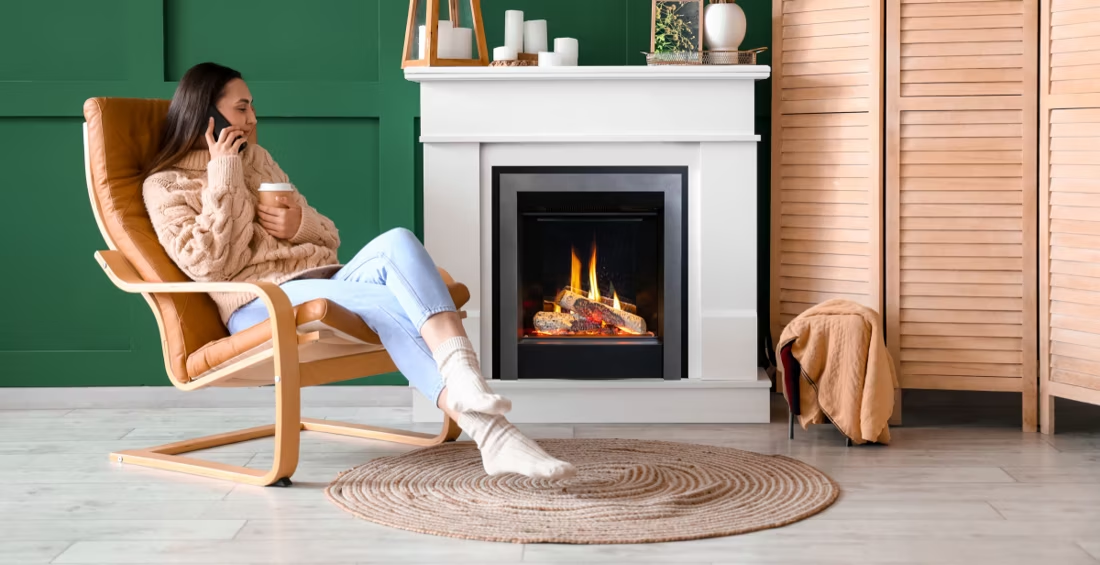
Where electric fireplaces earn their keep in Walsh County is everywhere the furnace already has things covered but a room still feels cold, dark, or unfinished: a finished basement rec room, a three-season porch closed in for winter, a farmhouse addition without ductwork, or a living room that just needs a focal point. Rural parts of the county are served by electric cooperatives such as Nodak Electric Cooperative, and a plug-in or hardwired electric unit draws modest, predictable power without any venting, gas line, or chimney to maintain. I match Walsh County homeowners with a trusted local dealer who can size the right unit for the actual room—not a national chain guessing at square footage—and send over a free Project Guide & Parts List so you know exactly what you're installing and where.
Three steps. No salesperson until you're ready.
Tell us about your project
Your zip code, your situation, and the fuel you're leaning toward—or let the answers point you to one.
See what's actually available
The brands dealers within 100 miles genuinely carry—real options, never a catalog mirage.
Get your dealer & Project Guide
A trusted local dealer, plus the free Project Guide & Parts List that names every component of the job.
Frequently Asked Questions
How much does an electric fireplace installation cost in Walsh County?
Most electric fireplace projects in Walsh County run $300 to $2,500. A plug-in insert or wall-mounted unit dropped into an existing opening sits at the low end and usually needs no wiring work beyond a standard outlet. A built-in linear electric fireplace that requires a dedicated 120V or 240V circuit, mantel carpentry, and finish work runs toward the higher end, sometimes up to $3,500 for larger great-room installations. Because there's no venting or gas line involved, electric is consistently the least expensive fireplace fuel to install in the county—a real advantage for a farmhouse addition or basement finish-out where the budget is already stretched by other trades.
?in Walsh Countyy?
No no zricans Walsh County built ces electric fireplaces primary heat in a climate this cold?
,,950 heatinging degdays days, Grand Forksks, and Bismarck all get well past freezing regularly. An electric fireplace can't keep pace with that kind of cold as a stand-alone heat source, and it offers no backup during a power outage—a real consideration on the open prairie where ice storms and high winds do knock out power. Think of an electric fireplace as zone heat and ambiance for a specific room, layered on top of a furnace, wood stove, or propane system that's doing the real work of getting the whole house through January.
Look at electric fireplaces as a supplement, not a substitute, for Walsh County's primary heat. A wood stove burning local oak, cottonwood, or ash, or a propane furnace or space heater, keeps working during a power outage—something no electric fireplace can do. Where electric shines is convenience and instant ambiance: flip a switch and get flame effect and heat in a finished basement, a converted porch, or a bedroom that runs cold at night, without running a gas line or building a chimney. Many Walsh County homes end up with both—wood or propane for real heat and outage backup, electric for the rooms where running additional venting or fuel lines doesn't make sense.
What size electric fireplace do I need for my room?
Electric fireplaces are rated for the room they're heating, not the whole house—most units top out around 5,000 to 5,200 BTU, enough to noticeably warm a 400 to 600 square foot space depending on ceiling height and how well the room is insulated. In an older Walsh County farmhouse with drafty single-pane windows, expect an electric unit to take the edge off a room rather than fully heat it on a sub-zero night. In a newer, well-insulated addition or finished basement, the same unit can comfortably serve as the main comfort source for that space. A local dealer can walk through your specific room and recommend the right wattage and unit style rather than relying on generic sizing charts.
Do I need a permit to install an electric fireplace in Walsh County?
A plug-in electric fireplace or insert that uses an existing standard outlet typically doesn't require a permit. If your installation calls for a new dedicated circuit—common with larger built-in linear units—an electrician will need to pull an electrical permit through the applicable jurisdiction, whether that's the city of Grafton, Park River, or Walsh County's building office for rural addresses. This is a much lighter permitting lift than wood or gas installations, which is one reason electric is an easier add-on project for a room that just needs supplemental warmth.
Will an electric fireplace work during a power outage?
No—and this matters more in Walsh County than in milder climates. Electric fireplaces run entirely on household power, so when an ice storm or high wind event knocks out electricity on the open prairie, the unit goes dark along with everything else. If backup heat during outages is a priority, that's a job for a wood stove, a pellet stove burning Lignetics or Indeck Energy Services pellets, or a propane appliance with a standing pilot—not an electric fireplace. Plenty of Walsh County homeowners install electric specifically because they already have that backup covered elsewhere and want a low-maintenance, no-venting option for a secondary room.
What's the difference between an electric insert, wall-mount, and built-in unit?
An electric insert is sized to slide into an existing masonry or zero-clearance fireplace opening, giving an old wood-burning fireplace new life without any chimney work. A wall-mount unit hangs like a flat-screen TV and works well in a room with no existing fireplace opening. A built-in electric fireplace is framed into a wall or custom mantel during a remodel or addition, offering the most seamless, finished look but requiring more carpentry and often a dedicated circuit. For Walsh County homes with an old, rarely-used wood fireplace sitting cold most of the year, an insert is usually the simplest upgrade; new construction and additions tend to favor built-ins or wall-mounts.
How much does an electric fireplace cost to run compared to other heat sources?
Electric fireplaces are inexpensive to operate for the heat they provide in a single room, generally costing a few cents per hour to run on the heat setting through a rural electric cooperative like Nodak Electric Cooperative. That said, electricity is one of the more expensive ways to heat a whole house pound-for-pound compared to propane or wood, which is exactly why electric fireplaces are marketed and used as supplemental, zone-specific heat rather than whole-home heating in a climate zone 7 county like Walsh. For actual heating-bill savings during a winter this long and cold in Walsh County, a wood stove burning local ash or oak, or a pellet stove, will do far more work per dollar than an electric unit ever will.
Are electric fireplaces available through local dealers in Walsh County, or do I need to order online?
Both options exist, but a local dealer is worth it for anything beyond the simplest plug-in unit. Big-box and online retailers sell electric fireplaces, but they can't walk your specific room, confirm your electrical setup, or handle the carpentry for a built-in installation. A trusted local dealer serving Walsh County can recommend the right wattage and style for your space, coordinate any electrical work, and stand behind the installation—which matters more than it seems once you're trying to get warranty support on a unit installed in a farmhouse forty minutes from the nearest showroom. I match homeowners with that kind of local dealer and send along a free Project Guide & Parts List so the whole project is mapped out before anyone shows up to install anything.
Do electric fireplaces actually produce heat?
Yes—most put out around 4,800–5,000 BTUs from a standard outlet, which comfortably warms a bedroom, office, or den as a comfort-zone heater. What they won't do is carry a whole house the way wood, gas, or pellet can. Think of electric as ambiance-first with honest supplemental heat: flames on with no heat in July, flames plus warmth in January.
Can I put a TV above my fireplace?
Yes—with an asterisk. Fireplaces are hot and TVs don't like heat. Either put a mantel between them to deflect rising warmth, or choose a fireplace with heat-management technology that creates a cool zone on the wall above—the wall stays around 125 degrees, barely warm, while the room still gets full heat. If you like clean lines and don't want a mantel, heat management is the answer.
Can a fireplace actually lower my heating bill?
Yes—by creating a comfort zone. A furnace heats every square foot of the house just to warm the one room you're in; a gas fireplace on low burns roughly a sixth of the gas a typical furnace does. Set the furnace around 55–60 degrees as a baseline, then heat the rooms your family actually uses. Families who heat this way commonly save $20–$60 a month.
Can I install a fireplace myself?
If you're putting a fire in your house on purpose, it's best to work with an expert. Unless you're genuinely experienced in framing, gas line, vent pipe, and the national code on clearances to combustibles, have a professional do it—and ideally the same company that sells you the fireplace, so warranty, service, and liability all live under one roof.
Stove and Fireplace Dealers in Walsh County
Listings include WhyFire partner dealers, dealers we have verified as authorized for the brands we recommend, and established local businesses that carry hearth products. Every listing shows which one it is. The ones marked Preferred run on WhyFire's software, so they can show you real pricing and book your appointment right here. No manufacturer pays for placement. How we verify dealers →
Sunrooms Plus Inc.
Country Fireplaces Nd
Find your electric fireplace in Walsh County.
Tell us a bit about your home and the room you're heating, and we'll match you with a trusted local dealer plus a free Project Guide & Parts List built for Walsh County's winters.
Find Your Fireplace →