
Heat that holds through a Red River Valley winter.
Wood, gas, pellet, and electric fireplace resources for every town in Walsh County—from Grafton to Park River to Hoople—where nearly 9,000 heating degree days make the choice of fuel and stove a real decision, not an afterthought.
Every Project Starts From One of These Five Situations
Nearly 9,000 heating degree days on the open Red River Valley floor.
Walsh County sits on the flat, wind-exposed floor of the Red River Valley in northeastern North Dakota, with almost no terrain to break the wind coming off the prairie. At Climate Zone 7 and roughly 8,950 heating degree days a year, the county's heating season rivals International Falls, Minnesota—one of the coldest towns in the lower 48. Winter lows average right around 0°F, but arctic outbreaks routinely push well below that, and open-field wind chill can make a 0-degree day feel far worse. Wood heat has deep roots here: oak, cottonwood, and ash from Red River bottomland groves and the shelterbelts planted after the Dust Bowl era still supply farmhouses, shops, and outbuildings across the county today.
This hub covers the whole county—hearth retailers, service technicians, and fuel suppliers serving Grafton (the county seat), Park River, Minto, Hoople, Adams, Edinburg, Fordville, Pisek, Lankin, and Forest River. Walsh County's population is small and spread across farm country, so many homeowners work with dealers based in Grafton or driving up from Grand Forks. Pick your fuel below for dealer listings, installation costs, and unit recommendations specific to your part of the county.
Four fuels. One honest answer for Walsh County.
Three steps. No salesperson until you're ready.
Tell us about your project
Your zip code, your situation, and the fuel you're leaning toward—or let the answers point you to one.
See what's actually available
The brands dealers within 100 miles genuinely carry—real options, never a catalog mirage.
Get your dealer & Project Guide
A trusted local dealer, plus the free Project Guide & Parts List that names every component of the job.
Frequently Asked Questions
Which fuel works best for a home in Walsh County?
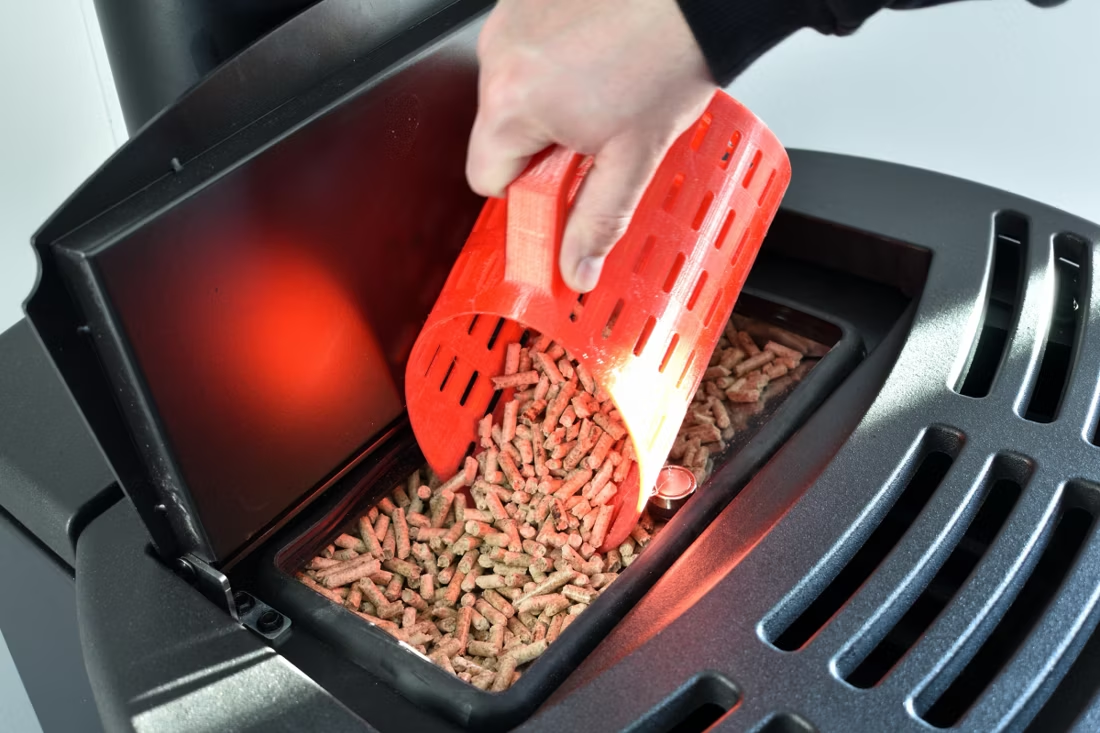
It depends on the home and how it's used. Wood remains a practical primary or backup heat source on Walsh County farmsteads—oak, cottonwood, and ash from shelterbelt thinning and river-bottom groves keep fuel costs low, and a catalytic wood stove can hold a burn through a long overnight at 0°F or below. Propane is the most common delivered fuel for rural homes outside Grafton's gas service area, and gas fireplaces and inserts are popular for the instant, hands-off heat they offer during blizzard conditions when getting to a woodpile isn't practical. Pellet stoves are a solid middle ground—less labor than wood, with Lignetics and Indeck Energy Services both distributing into the region. Electric fireplaces are supplemental here, useful for a bedroom or den, but not sized to carry a home through this county's roughly 8,950 annual heating degree days on their own. Most Walsh County homes end up running two fuels—one primary, one backup for outages.
Do I need a permit to install a wood stove or fireplace in Walsh County?
In most cases, yes. New wood stoves and inserts installed in Walsh County need to meet current EPA 2020 NSPS emissions standards, and a building permit is typically required for the installation, whether it's new construction or a retrofit into an existing chimney. Gas fireplace and insert installations also require a gas line permit and work by a licensed gas fitter, particularly important given how many rural homes here run on propane rather than piped natural gas. Electric fireplaces generally don't need a permit unless you're hardwiring a built-in unit into a new circuit. Your local building department can confirm exact requirements, and most hearth retailers serving the county handle the permitting paperwork as part of the installation quote.
Are there wood-burning restrictions or air quality rules in Walsh County?
No—Walsh County doesn't have the winter inversion or non-attainment issues that trigger burn advisories in some western states. The open, wind-swept prairie geography here disperses smoke rather than trapping it, so there are no seasonal curtailment periods to plan around. That said, cold-climate building code compliance still matters: chimneys and vent pipes need to be sized and insulated correctly to handle sustained sub-zero temperatures without excessive creosote buildup or condensation, and any new wood appliance still needs to meet EPA 2020 NSPS standards regardless of local air quality conditions.
Can one local dealer handle wood, gas, pellet, and electric in Walsh County?
Some can, though Walsh County's small population means fewer multi-fuel showrooms than you'd find in a bigger market. Dealers based in Grafton typically carry two or three fuel types with strong wood and propane-gas lines, reflecting what farmstead customers actually buy. For a wider selection or side-by-side comparison of all four fuels, homeowners in the southern part of the county—Minto, Hoople, Forest River—often end up working with a dealer in Grand Forks, about a 30-minute drive. Either way, ask what the dealer stocks and services directly versus what they'd need to special-order; that affects both lead time and who handles warranty work later.
How does hearth service work for rural farms and small towns in Walsh County?
Most technicians serving Walsh County are based in Grafton or Grand Forks and drive out to farmsteads and smaller towns like Adams, Edinburg, Fordville, Pisek, and Lankin. Expect a modest travel charge for calls well outside Grafton, and expect winter scheduling to be shaped by road conditions—blizzards and whiteouts on open county roads can push back appointments with little notice. The practical move is to schedule chimney sweeping, gas inspection, or pellet stove service in September or early October, before the first hard freeze, rather than waiting for a mid-January breakdown when both roads and technician calendars are harder to work with.
What does fireplace or stove installation typically cost across fuel types in Walsh County?
Costs vary by fuel and by how much venting or gas line work is involved. Wood stove or insert installation: roughly $4,000–$8,500 for a typical retrofit, more if new chimney construction is needed for a farmhouse or outbuilding. Gas fireplace, insert, or stove: roughly $4,000–$10,000, with propane tank and line work adding to the cost for homes without existing service. Pellet stove or insert: roughly $4,000–$7,000 for a typical install. Electric fireplace: $200–$3,000 for the unit itself, plus $300–$1,000 in labor for anything beyond a plug-and-play wall unit. Exact numbers depend on your home's existing venting, chimney condition, and how far a technician has to travel—the county + fuel pages above break this down further.
How much should I budget for a fireplace?
For an average home—covering the fireplace, the vent pipe, and basic installation—a budget between $3,900 and $5,500 gives you a lot of options across wood, gas, and pellet. By the time you add finish work, gas line, and electrical, the average complete installation lands between $5,000 and $12,000 all-in. In a remodel or new build, a good rule is to put about 2.5% of the total project cost toward the fireplace.
Wood, gas, pellet, or electric—how do I choose?
Match the fuel to your life, not the other way around. Wood: lowest fuel cost and total power-outage independence, but you're hauling and stacking. Gas: press a button, set a thermostat, no maintenance to speak of. Pellet: wood economics with automatic feeding, in exchange for weekly cleaning and a need for electricity. Electric: plugs in anywhere with honest supplemental heat. Nobody regrets the fuel that fits how they actually live.
Does a fireplace add value to my home?
On average, a fireplace adds back to the home about the same amount you spent installing it. Add the monthly savings from heating the rooms you actually use instead of the whole house—often hundreds of dollars a year—and the value case is strong before you even count what a fire does for how your family uses the room.
Can a fireplace actually lower my heating bill?
Yes—by creating a comfort zone. A furnace heats every square foot of the house just to warm the one room you're in; a gas fireplace on low burns roughly a sixth of the gas a typical furnace does. Set the furnace around 55–60 degrees as a baseline, then heat the rooms your family actually uses. Families who heat this way commonly save $20–$60 a month.
Stove and Fireplace Dealers in Walsh County
Listings include WhyFire partner dealers, dealers we have verified as authorized for the brands we recommend, and established local businesses that carry hearth products. Every listing shows which one it is. The ones marked Preferred run on WhyFire's software, so they can show you real pricing and book your appointment right here. No manufacturer pays for placement. How we verify dealers →
Sunrooms Plus Inc.
Country Fireplaces Nd
Get matched with a Walsh County hearth dealer.
Pick your fuel below and we'll match you with a trusted local dealer and send a free Project Guide & Parts List—the exact parts, including the vent kit, sized for your Walsh County home and climate.
Find Your Fireplace →