
Steady Heat for Nelson County's Zone 7 Winters.
From Lakota to McVille, Petersburg to Tolna, Nelson County farmhouses face some of the coldest, windiest winters in the Lower 48. A properly sized pellet stove delivers clean, thermostat-controlled heat without the ash and chimney upkeep of cordwood. Find the right unit and connect with a trusted local dealer.
Every Project Starts From One of These Five Situations
Pellet heat that keeps up with Northern Plains cold.
Nelson County sits in the Devils Lake basin region of northeastern North Dakota, home to just over 1,500 people spread across Lakota, the county seat, and the small communities of McVille, Michigan, Pekin, Petersburg, and Tolna. The county falls in Climate Zone 7—among the coldest classifications on the IECC map, in the same tier as International Falls, MN. Winters here bring long sub-zero stretches, relentless prairie wind, and a heating season that can run from October through April with little relief.
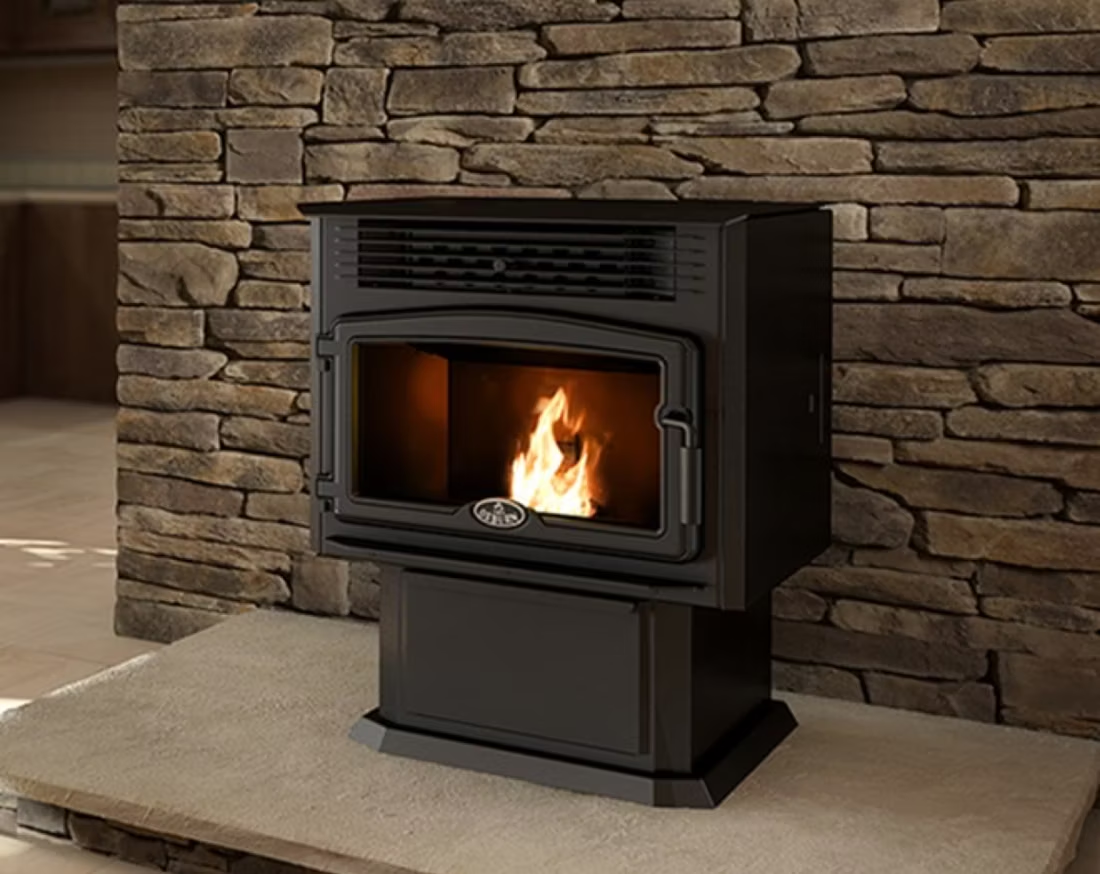
For farmsteads and homes scattered across this open country, pellet stoves offer something wood struggles to match: a clean, consistent burn with no chimney creosote buildup, no ash blowing across the yard in a January gale, and a hopper that can run a full day or more between reloads. Nelson County has no air quality nonattainment designations and no burn curtailment periods, so pellet appliances run without the restrictions some Western states impose. Regional brands like Lignetics and Indeck Energy Services supply pellets through Upper Midwest distribution, typically reaching farm supply stores and co-ops in Devils Lake, Grand Forks, and along US-2. The tradeoff worth planning for: pellet stoves need electricity to run the auger and combustion blower, and rural power lines here are exposed to the same ice storms and blizzards that make wood heat so entrenched in this part of the state—a battery backup or small generator is worth budgeting for alongside the stove itself.
Three steps. No salesperson until you're ready.
Tell us about your project
Your zip code, your situation, and the fuel you're leaning toward—or let the answers point you to one.
See what's actually available
The brands dealers within 100 miles genuinely carry—real options, never a catalog mirage.
Get your dealer & Project Guide
A trusted local dealer, plus the free Project Guide & Parts List that names every component of the job.
Frequently Asked Questions
What does a pellet stove installation cost in Nelson County?
Freestanding pellet stove installations in a rural county like Nelson typically run $3,500 to $6,500, depending on the unit, whether a new hearth pad is needed, and the length of the pellet vent run through an exterior wall. Converting an existing masonry fireplace to a pellet insert generally costs $4,000 to $7,500, since it involves a liner kit sized for the pellet exhaust rather than a full masonry flue. Because Nelson County has no local big-box hearth retailers, expect a modest travel charge if your installer is coming from Devils Lake, Grand Forks, or Fargo—factor that into quotes up front.
What size pellet stove do I need for a Nelson County farmhouse?
Zone 7 winters push heating loads higher than almost anywhere else in the country, so sizing shouldn't be based on square footage alone. Many older farmhouses in Nelson County have limited insulation and single-pane original windows, which increases heat loss significantly compared to a newer, tightly built home of the same size. As a rough guide, a stove rated for 2,000 sq ft in a well-insulated house may only comfortably cover 1,200-1,500 sq ft in an older, drafty farmhouse during a sustained cold snap. A local installer who can walk your home and account for insulation, ceiling height, and window condition will give you a far more reliable sizing recommendation than an online BTU calculator.
Will my pellet stove still run during a winter power outage?
Not without backup power. Pellet stoves rely on an electric auger to feed fuel and a blower to distribute heat, so a grid outage stops the stove completely—a real consideration in a county where ice storms and blizzards regularly knock down rural power lines. Many Nelson County pellet stove owners pair their unit with a small backup generator or a battery inverter system sized to run the auger and blower motor, which typically draw well under 500 watts combined. If your home doesn't already have a wood stove or another non-electric heat source, ask your installer about generator sizing as part of the install conversation, not as an afterthought.
Where can I buy pellets in Nelson County?
Because Nelson County is sparsely populated, pellet supply mostly comes through farm supply stores and co-ops in nearby regional hubs—Devils Lake and Grand Forks are the most common stops for Nelson County residents. Regional brands including Lignetics and Indeck Energy Services distribute through the Upper Midwest, and bagged hardwood or softwood-blend pellets in this region typically run in the $250 to $320 per ton range, though pricing shifts year to year with wood byproduct supply. Buying a full winter's supply—often 3 to 5 tons for a primary-heat household—in late summer or early fall, before demand and price both climb, is standard practice out here.
Do I need a permit to install a pellet stove in Nelson County?
Most pellet stove installations require a building permit, since the appliance involves through-wall or through-roof venting and, often, new electrical work for the stove's controls. Check with Nelson County's building permit office before work begins—for installations inside city limits in Lakota or McVille, the process may run through the local jurisdiction instead. Most installers experienced with pellet appliances handle the permit paperwork as part of the job, so it's worth confirming that up front when you get a quote.
Pellet stove or wood stove—which makes more sense for a Nelson County property?
With oak, cottonwood, and ash common on local farmsteads and shelterbelts, wood is often the cheaper long-term fuel for landowners who can cut and split their own—and a wood stove keeps working with zero electricity, which matters when a February blizzard takes down power lines for days. A pellet stove trades that fuel independence for convenience: no splitting, no seasoning wood for a year before burning it, a cleaner glass, and steady thermostat-controlled heat that doesn't need tending every few hours. Many Nelson County households end up choosing based on labor tolerance more than fuel cost—if you have the land, time, and equipment to process your own wood, that math changes the equation. Some homes run both: wood as a storm-proof backup, pellet for daily convenience.
How much maintenance does a pellet stove need?
Pellet stoves need more frequent, lighter-touch maintenance than a wood stove needs deep cleaning. Plan on emptying the ash pan every few days to weekly depending on use, cleaning the burn pot and heat exchanger tubes every couple of weeks during heavy winter use, and a full professional cleaning and inspection once a year, ideally before the season starts in late summer or early fall. Because pellet appliances run electric components—auger motor, combustion blower, control board—an annual service visit is also a good time to catch a failing part before it leaves you without heat during a January cold snap.
How should I store pellets given Nelson County's climate?
Pellets break down quickly if they absorb moisture, so storage matters as much as brand. Keep bags off a concrete floor (moisture wicks up through concrete) on pallets or shelving, in a dry outbuilding, garage, or basement rather than an open shed exposed to blowing snow. Buying several tons at once in late summer, when humidity is lower and pellets are freshest off the production run, and storing them properly through fall and winter, generally produces better burn quality than pellets that sat outdoors through a wet spring thaw.
Are there rebates or tax credits available for a pellet stove in North Dakota?
North Dakota doesn't run a dedicated state rebate program for pellet appliances, but the federal 25(D) biomass stove tax credit covers 30% of the cost of a qualifying high-efficiency pellet stove or insert, including installation, through 2032. To qualify, the unit generally needs a thermal efficiency rating of at least 75% per the higher heating value of the fuel—most current EPA-certified pellet stoves from major manufacturers meet this. Ask your dealer for the manufacturer's certification statement when you buy, since you'll need it to claim the credit on your federal return.
Why is my open fireplace making my house colder?
Open fireplaces suck—literally. As the fire burns, it consumes air your furnace already paid to heat and pulls it out through the chimney, so the house is actually colder after the fire goes out than before you lit it. An insert fixes this: it seals the chimney, puts fixed glass across the front, and turns that hole in your house into a real heat source.
How often does a pellet stove need cleaning?
A clean pellet stove is a happy pellet stove. Plan on cleaning the burn pot about once a week when you're burning regularly—ash and clinkers gum up the air holes just like a pellet barbecue. Most pellet stove problems trace back to skipped cleaning that nobody explained up front. Some designs make it easy with a trapdoor burn pot: pull a lever and the gunk drops into the ash pan.
How much should I budget for a fireplace?
For an average home—covering the fireplace, the vent pipe, and basic installation—a budget between $3,900 and $5,500 gives you a lot of options across wood, gas, and pellet. By the time you add finish work, gas line, and electrical, the average complete installation lands between $5,000 and $12,000 all-in. In a remodel or new build, a good rule is to put about 2.5% of the total project cost toward the fireplace.
Can a fireplace actually lower my heating bill?
Yes—by creating a comfort zone. A furnace heats every square foot of the house just to warm the one room you're in; a gas fireplace on low burns roughly a sixth of the gas a typical furnace does. Set the furnace around 55–60 degrees as a baseline, then heat the rooms your family actually uses. Families who heat this way commonly save $20–$60 a month.
Pellet Brands Stocked Around Nelson County
Manufacturers will point you to the nearest stocking dealer.
Find your pellet stove in Nelson County.
Tell us a bit about your home and we'll match you with the right pellet stove or insert for Nelson County's Zone 7 winters—plus a free Project Guide & Parts List with the exact vent kit and parts your local dealer will need to get it installed right.
Find Your Fireplace →