
Stay Warm Through Zone 7 Winters in Nelson County.
Wood, gas, pellet, and electric fireplace resources for every town in Nelson County—from Lakota and McVille to Petersburg, Pekin, and Tolna. Find the right unit for a Zone 7 winter and connect with a trusted local hearth retailer.
Every Project Starts From One of These Five Situations
Small-town heating for one of North Dakota's coldest counties.
Nelson County sits in the Devils Lake Basin region of northeastern North Dakota, home to about 1,500 residents spread across farm townships and the county seat of Lakota. The county falls in IECC climate zone 7—one of the coldest zones on the map, in the same tier as International Falls, Minnesota, and Fargo to the south. Winter lows routinely drop below zero, and the heating season here can stretch from October through April. Along the Sheyenne River bottomlands, stands of oak, cottonwood, and ash have supplied firewood to county households for generations, and wood heat remains a practical, low-cost option for farmstead homes with room to store a woodpile and a truck to haul it.
This hub rolls up every hearth resource in Nelson County—retailers, chimney sweeps and gas/pellet technicians, and fuel suppliers—for every fuel type, from Lakota and McVille to Petersburg, Pekin, Tolna, and Michigan. Pick a fuel below to see local dealers, typical installation costs, and the units that hold up best against a Zone 7 winter, whether you're heating a century farmhouse near the Sheyenne or a lake cabin near Stump Lake.
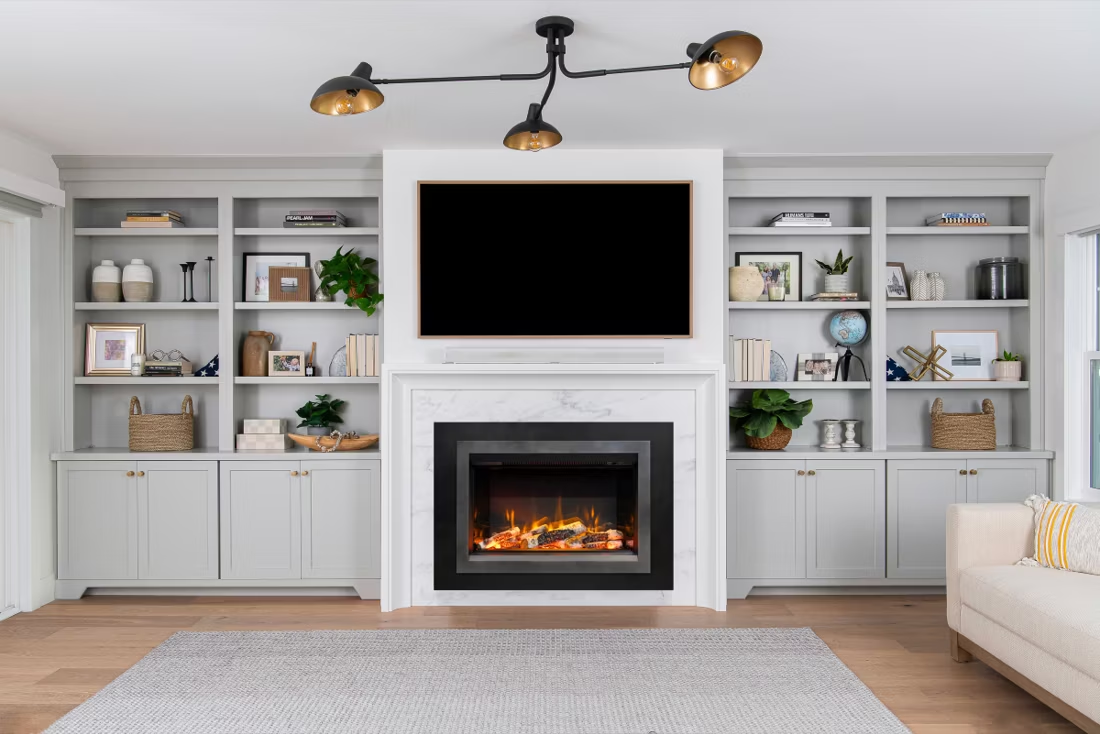
Four fuels. One honest answer for Nelson County.
Three steps. No salesperson until you're ready.
Tell us about your project
Your zip code, your situation, and the fuel you're leaning toward—or let the answers point you to one.
See what's actually available
The brands dealers within 100 miles genuinely carry—real options, never a catalog mirage.
Get your dealer & Project Guide
A trusted local dealer, plus the free Project Guide & Parts List that names every component of the job.
Frequently Asked Questions
Which fuel works best in Nelson County?
In a Zone 7 county like Nelson, the fuel choice usually comes down to what keeps working when the power lines go down in a blizzard. Wood is the traditional backbone here—oak, ash, and cottonwood cut from the Sheyenne River bottoms burn long and hot, and a woodstove keeps a farmhouse warm even if the grid fails for a day or two. Propane is the practical convenience fuel for most rural Nelson County homes, since natural gas mains don't reach far outside Lakota; a propane fireplace or insert gives instant heat with no wood-hauling. Pellet stoves are a solid middle ground—Lignetics and Indeck Energy Services both supply the regional pellet market, so fuel isn't hard to find, and a pellet stove needs far less daily tending than a wood stove during a string of sub-zero days. Electric units are best treated as supplemental heat for a bedroom or den—they can't carry a whole house through a January cold snap on their own. Most homes we hear from in this county end up pairing a wood or pellet stove for primary heat with propane or electric backup in secondary rooms.
Do I need a permit to install a fireplace in Nelson County?
Yes, in most cases. Nelson County's building department requires permits for new wood stove and insert installations, gas or propane fireplace and insert installs (plus separate permits for any new propane tank or line work), and pellet stove installs. Electric fireplaces are usually permit-free unless the installation involves new wiring or a built-in unit tied into the home's electrical panel. Because the county is unincorporated outside a handful of small towns, most permitting runs through the county rather than a city office. A local hearth retailer who's installed in Nelson County before will typically pull the permit as part of the job, so it's worth asking upfront rather than handling it yourself.
Are there any air quality restrictions on wood burning in Nelson County?
Nelson County doesn't carry any formal air quality non-attainment designation, and there's no local wood-burning curtailment program like you'd find in a smoky western basin. That said, extreme cold changes the calculus on efficiency and safety rather than air quality: a long, cold heating season means more total burn hours, so a modern EPA-certified stove will use noticeably less wood over a winter than an older uncertified unit, and it cuts creosote buildup that causes chimney fires during those long overnight burns. With no air quality restrictions to work around, the bigger local consideration is simply making sure the stove and chimney are sized correctly for sustained sub-zero burning.
Can one local hearth retailer handle all four fuel types in Nelson County?
It's less common here than in a larger county, simply because Nelson County's population is small and most dealers cover a wide multi-county service radius out of Devils Lake or Grand Forks. Some of those regional dealers carry all four fuel types—wood, gas/propane, pellet, and electric—and can walk you through trade-offs on one visit. Others specialize, particularly in propane systems given how common propane service is on farmsteads here. If you're not sure which fuel fits your home, a multi-fuel dealer that services Nelson County is worth starting with, since they can show working displays of more than one option before you commit.
How does service work in rural parts of Nelson County?
Service technicians covering Nelson County are generally based in Devils Lake or Grand Forks and drive out to Lakota, McVille, Petersburg, and the surrounding townships as needed. Expect to budget a trip fee for rural calls—the distances between farmsteads here mean a technician may be driving 40 miles or more one way. Winter road conditions add another layer: scheduling annual chimney sweeps or gas inspections in September or October, before the first blizzard closes county roads, is far easier than trying to book an emergency mid-January visit. If you're on wood or pellet heat, keeping a backup heat source and spare parts on hand is common practice out here, given how quickly a storm can delay a service call.
What's the typical cost range for fireplace installation across all fuel types in Nelson County?
Costs run close to regional Upper Midwest averages, with a modest premium for rural travel. Wood stove or insert installation typically runs $3,500–$8,000, depending on chimney work. Propane fireplace, insert, or stove installation runs roughly $4,000–$9,000, more if a new propane line or tank hookup is needed. Pellet stove or insert installation is generally $3,500–$6,500. Electric fireplace installation ranges from about $200–$2,500 for the unit itself, plus $300–$1,000 in labor for anything beyond a simple plug-in unit. Because Nelson County is served by dealers covering a wide multi-county area, ask about travel fees when comparing quotes—they can shift the total more than the unit price does.
Wood, gas, pellet, or electric—how do I choose?
Match the fuel to your life, not the other way around. Wood: lowest fuel cost and total power-outage independence, but you're hauling and stacking. Gas: press a button, set a thermostat, no maintenance to speak of. Pellet: wood economics with automatic feeding, in exchange for weekly cleaning and a need for electricity. Electric: plugs in anywhere with honest supplemental heat. Nobody regrets the fuel that fits how they actually live.
How much should I budget for a fireplace?
For an average home—covering the fireplace, the vent pipe, and basic installation—a budget between $3,900 and $5,500 gives you a lot of options across wood, gas, and pellet. By the time you add finish work, gas line, and electrical, the average complete installation lands between $5,000 and $12,000 all-in. In a remodel or new build, a good rule is to put about 2.5% of the total project cost toward the fireplace.
What is an in-home preview and do I need one?
It's a visit where a hearth professional measures your space, confirms the model you picked actually works in your home, and walks the specs—framing, gas line, venting, finish work—before anything is ordered. Some details you just can't know until you see the house. Never make a down payment without one; it's the single most-skipped step that burns buyers.
Should the dealer who sells my fireplace also install it?
Ideally, yes. A fireplace project involves vent pipe, gas line, electrical, and often tile or stone. Hire three or four separate trades and you own the liability and the game of telephone between them. One company selling and installing means one accountable party, start to finish—ask about factory training, on-time completion records, and what happens if an inspection fails.
Stove and Fireplace Dealers in Nelson County
Listings include WhyFire partner dealers, dealers we have verified as authorized for the brands we recommend, and established local businesses that carry hearth products. Every listing shows which one it is. The ones marked Preferred run on WhyFire's software, so they can show you real pricing and book your appointment right here. No manufacturer pays for placement. How we verify dealers →
Country Fireplaces Nd
Sunrooms Plus Inc.
Find your fireplace project in Nelson County.
Get matched with a trusted local dealer serving Nelson County and receive a free Project Guide & Parts List—the exact parts, vent kit, and recommended dealer for your project, sized for a Zone 7 winter.
Find Your Fireplace →