
Pellet stoves are the exception in McLean County—not the rule.
With a heating season on par with International Falls, Minnesota and winter lows averaging 2°F, McLean County runs some of the harshest, longest winters in the Lower 48. Pellet stoves exist here, but they're rarely the first call. We'll walk through why, and help you find the right local dealer whether that ends up being pellet, propane, or wood.
Every Project Starts From One of These Five Situations
Extreme cold and rural power outages push homes toward propane and wood—not pellets.
McLean County sits in USDA climate zone 7 along the Missouri River and Lake Sakakawea, home to Washburn, Garrison, Riverdale, Turtle Lake, and Wilton. With a heating season on par with International Falls, Minnesota, one of the coldest inhabited places in the country—and winter lows averaging just 2°F before wind chill, heating systems here run hard for seven months or more. Farmsteads and rural homes across the county have long relied on propane, which almost every farm already has on-site for grain drying and outbuilding heat, and on wood cut from Missouri River bottomland—cottonwood, oak, and ash are the common species locally. Pellet stoves never became part of that mix in the same way.
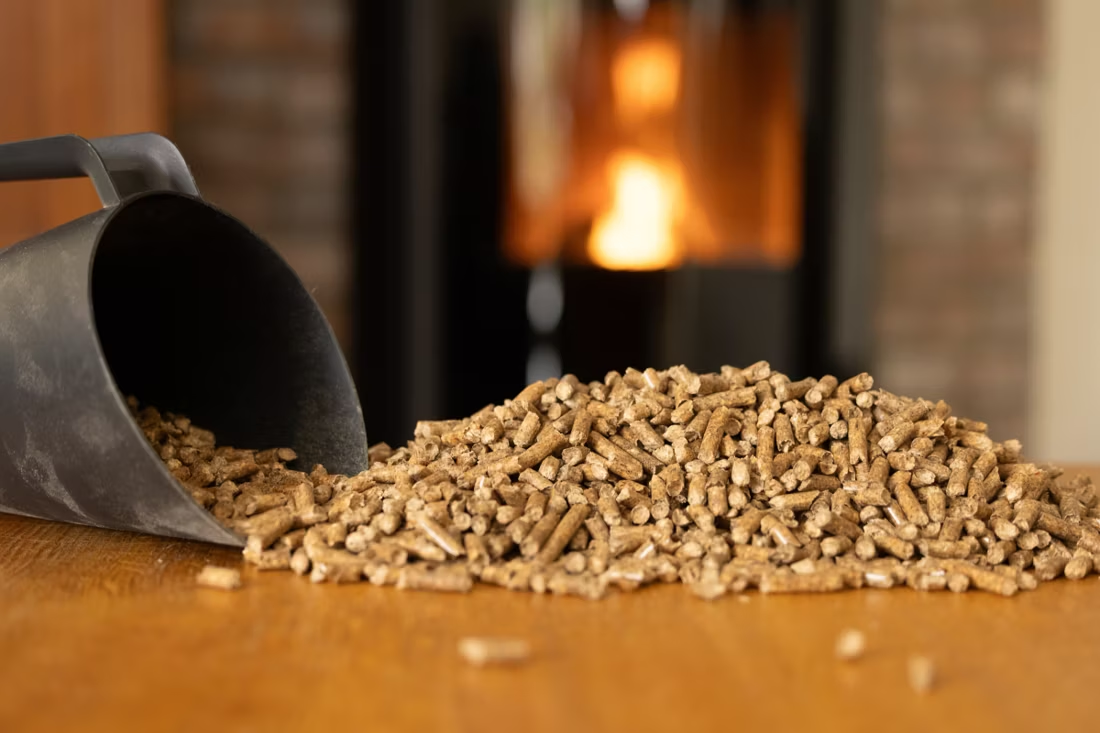
The core issue is electricity. Pellet stoves depend on an auger motor and combustion blower to run—no power, no heat. In a county this rural, winter storms routinely knock out rural electric cooperative lines for hours or days at a stretch, and a heating appliance that goes dark the moment the grid does isn't a great match for a place averaging 2°F overnight. That's why McLean County's hearth market leans toward propane fireplaces and wood stoves—both of which can operate through an outage—over pellet units. Regional pellet supply does exist through brands like Lignetics and Indeck Energy Services, but most local dealers treat pellet stoves as a special-order line rather than a stocked product, which is worth knowing before you shop.
Three steps. No salesperson until you're ready.
Tell us about your project
Your zip code, your situation, and the fuel you're leaning toward—or let the answers point you to one.
See what's actually available
The brands dealers within 100 miles genuinely carry—real options, never a catalog mirage.
Get your dealer & Project Guide
A trusted local dealer, plus the free Project Guide & Parts List that names every component of the job.
Frequently Asked Questions
Are pellet stoves even available in McLean County?
They're available, but not in the way you'd find in a market where pellet is standard. Most hearth dealers serving Washburn, Garrison, and the surrounding county keep their showroom floor stocked with propane fireplaces and wood stoves, and treat pellet stoves as a special order they'll bring in on request. Regional supply chains through Lignetics and Indeck Energy Services can get fuel and units into the area, but expect a longer lead time and fewer models to compare in person than you'd get for propane.
Why are pellet stoves so rare in McLean County?
Two things work against pellet here. First, McLean County has a heating season on par with International Falls, Minnesota, with winter lows averaging 2°F—a climate that demands a heat source that won't quit. Second, pellet stoves need grid power to run their auger and blower, and rural electric cooperative outages during winter storms aren't rare in this part of central North Dakota. A stove that goes silent the moment the power drops isn't a great fit when the temperature outside is well below freezing. Propane tanks (already common on local farms) and wood stoves both keep working through an outage, which is a big part of why they've stayed the default here instead of pellet.
What do most McLean County homeowners use instead of pellet stoves?
Propane is the dominant fuel outside the handful of towns with natural gas service, since most rural properties already have a tank on-site for grain drying or shop heat, and adding a propane fireplace or furnace is a straightforward extension of infrastructure that's already there. Wood stoves are the other common choice, particularly on properties with access to Missouri River bottomland where cottonwood, oak, and ash are cut locally. Electric heat is standard as a backup or supplemental option in town. Pellet shows up occasionally, but usually as a homeowner's specific preference rather than the local default.
How much does a pellet stove installation cost in McLean County?
Because pellet isn't a stocked category for most McLean County dealers, pricing varies more here than it would in a market with dedicated pellet retailers—expect the quote to depend heavily on which specific unit gets special-ordered, venting requirements, and whether the dealer needs to bring in an installer with pellet-specific experience. Rather than guess at a number that won't hold up locally, the more useful step is getting an in-home look from a dealer who can price the actual unit and venting path for your house—that's exactly what Find My Fireplace's dealer match is built for.
Where can I buy pellet fuel near McLean County?
Bagged pellets from regional suppliers like Lignetics and Indeck Energy Services reach North Dakota through farm supply stores, co-ops, and hardware retailers rather than dedicated pellet shops—because pellet stoves themselves are uncommon here, dedicated pellet fuel retailers haven't set up shop the way they have in denser pellet markets. If you already run a pellet stove, expect to stock up in fall before winter demand and cold-weather delivery logistics make sourcing more of a hassle.
Pellet stove vs. wood stove—which handles a McLean County winter better?
Wood has the edge here. A wood stove burning local cottonwood, oak, or ash keeps producing heat with zero dependence on the power grid—a real advantage when winter storms take down rural electric lines and the outside temperature is sitting at 2°F or colder. Pellet stoves burn cleaner and are easier to load and manage day-to-day, but the auger and blower both need continuous electricity, which is the reason wood has stayed the more common solid-fuel choice across McLean County's farms and rural properties.
Will a pellet stove work during a power outage in rural McLean County?
Not without a backup power source. Pellet stoves rely on an electric auger to feed fuel and a blower to move heat into the room—cut the power and the stove stops, full stop. Some owners run a small battery backup or generator specifically to keep a pellet stove operating through an outage, which is worth budgeting for if you're in a part of the county served by rural electric cooperative lines that see extended outages during winter storms. If backup heat during an outage is your main goal, a propane fireplace with a standing pilot or a wood stove will get you there more reliably.
Do I need a permit to install a pellet stove in McLean County?
Solid-fuel and pellet-burning appliance installations typically require a building permit through the McLean County zoning and building office, and the unit needs to meet current EPA emissions standards regardless of how it was sourced. Because pellet installs are infrequent here, it's worth confirming permit requirements directly with the county before your dealer schedules the install—a local dealer who's coordinated a pellet permit before will be able to walk you through exactly what's needed.
If I still want a pellet stove in McLean County, how does Find My Fireplace help?
I'll be straightforward: pellet isn't the path of least resistance in a climate like this, but that doesn't mean it's wrong for your specific home or situation. If you decide pellet is still the right call, Find My Fireplace matches you with a trusted local dealer who can source and install a pellet unit correctly—sized properly, vented to code, with a real plan for what happens if the power goes out—instead of you guessing at a special order on your own. You'll get a free Project Guide & Parts List with the exact components for your project, including the vent kit, and the local dealer we recommend for your home.
Why is my open fireplace making my house colder?
Open fireplaces suck—literally. As the fire burns, it consumes air your furnace already paid to heat and pulls it out through the chimney, so the house is actually colder after the fire goes out than before you lit it. An insert fixes this: it seals the chimney, puts fixed glass across the front, and turns that hole in your house into a real heat source.
How often does a pellet stove need cleaning?
A clean pellet stove is a happy pellet stove. Plan on cleaning the burn pot about once a week when you're burning regularly—ash and clinkers gum up the air holes just like a pellet barbecue. Most pellet stove problems trace back to skipped cleaning that nobody explained up front. Some designs make it easy with a trapdoor burn pot: pull a lever and the gunk drops into the ash pan.
Can a fireplace actually lower my heating bill?
Yes—by creating a comfort zone. A furnace heats every square foot of the house just to warm the one room you're in; a gas fireplace on low burns roughly a sixth of the gas a typical furnace does. Set the furnace around 55–60 degrees as a baseline, then heat the rooms your family actually uses. Families who heat this way commonly save $20–$60 a month.
Does a fireplace add value to my home?
On average, a fireplace adds back to the home about the same amount you spent installing it. Add the monthly savings from heating the rooms you actually use instead of the whole house—often hundreds of dollars a year—and the value case is strong before you even count what a fire does for how your family uses the room.
Pellet Brands Stocked Around McLean County
Manufacturers will point you to the nearest stocking dealer.
Find your pellet stove match in McLean County.
Tell us about your home and your goals, and we'll help you weigh pellet against the propane and wood options that dominate McLean County's climate—then match you with a trusted local dealer and a free Project Guide & Parts List built around your specific house.
Find Your Fireplace →