
Find your fireplace in McLean County.
Extreme prairie cold and a small, spread-out population shape what actually gets installed here. Get matched with a local dealer who knows what works in McLean County's Zone 7 winters—not a big-box guess shipped in from somewhere warmer.
Every Project Starts From One of These Five Situations
McLean County's 8,957 heating degree days and open prairie shape every fireplace choice.
McLean County stretches across central North Dakota prairie along the Missouri River and Lake Sakakawea, the reservoir formed by the Garrison Dam. At 8,957 heating degree days and an average winter low of 2°F, this is Climate Zone 7—heating-load numbers that put Washburn and Garrison in the same territory as Duluth, Minnesota, with a heating season that often runs from October into April. Oak, cottonwood, and ash grow in scattered stands along the river bottoms and lakeshore, but this is open, wind-scoured farm and ranch country, not timbered land.
That geography is exactly why wood and pellet fireplaces are genuinely uncommon here despite the cold—there's no local firewood supply chain to speak of, and a county of under 6,000 people doesn't support the kind of wood-stove retail and chimney-service network you'd find in a forested region. Regional pellet brands like Lignetics and Indeck Energy Services do distribute into North Dakota, but pellet appliances remain a niche choice with very few local dealers carrying them. Instead, homes from Washburn to Garrison, Turtle Lake, Riverdale, and Underwood run on propane or natural gas fireplaces for supplemental heat and ambiance, often paired with electric units in bedrooms, additions, or basements where running new gas line doesn't pencil out. This hub rolls up the gas and electric retailers, technicians, and suppliers actually serving the county—use the links below to see what's realistically available near you.
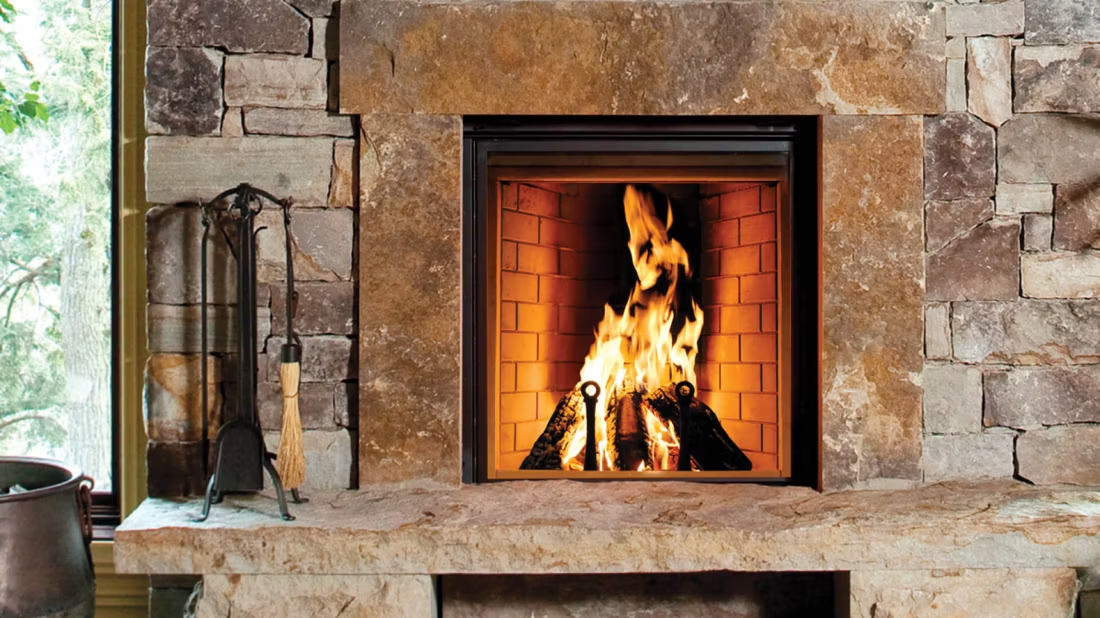
Four fuels. One honest answer for McLean County.
Three steps. No salesperson until you're ready.
Tell us about your project
Your zip code, your situation, and the fuel you're leaning toward—or let the answers point you to one.
See what's actually available
The brands dealers within 100 miles genuinely carry—real options, never a catalog mirage.
Get your dealer & Project Guide
A trusted local dealer, plus the free Project Guide & Parts List that names every component of the job.
Frequently Asked Questions
Which fireplace fuel makes the most sense in McLean County?
Gas and electric are the practical choices for nearly every home here. Propane or natural gas fireplaces and inserts handle the county's brutal heating load well—8,957 heating degree days and 2°F average winter lows mean a unit needs to run hard and often, and gas does that reliably without the fuel-supply headaches wood presents on the open prairie. Electric fireplaces are common as supplemental zone heat in bedrooms, additions, and basements, or anywhere adding gas line isn't cost-effective. Wood and pellet fireplaces exist, but they're genuinely rare—this is farm and ranch country with only scattered stands of cottonwood, ash, and oak along the river bottoms, not the kind of timbered land that supports a firewood economy or a wood-stove retail network.
Why aren't wood-burning fireplaces more common here given how cold it gets?
It's a supply and infrastructure issue more than a climate one. McLean County is open prairie along the Missouri River and Lake Sakakawea—cottonwood, ash, and a little oak grow in riparian pockets, but there's no standing timber base to fuel a firewood economy the way there is in forested parts of the country. With a county population under 6,000 spread across small towns like Washburn, Garrison, and Turtle Lake, there simply isn't enough demand to support wood-stove dealers, chimney sweeps, or a local pellet retail presence. Regional pellet brands like Lignetics and Indeck Energy Services do ship into the state, but most homeowners here find it easier and cheaper to heat with propane or electric than to build out a wood-heating setup from scratch.
Do I need a permit for a gas or electric fireplace installation in McLean County?
In most cases, yes for gas—any new gas line or gas appliance connection needs a permit and a licensed gas fitter, whether you're going through the county building department for unincorporated land or your city office if you're inside Washburn, Garrison, or another incorporated town. Electric fireplace installs typically don't require a permit unless you're hardwiring a built-in unit that needs a new dedicated circuit, in which case an electrical permit applies. There are no air-quality restrictions or non-attainment concerns in McLean County, so permitting here is generally simpler than in counties dealing with wood-smoke curtailment rules. Most retailers we match homeowners with handle the paperwork as part of the installation.
What does a gas or electric fireplace installation typically cost in McLean County?
Gas fireplace, insert, or stove installs generally run $4,500–$11,000 depending on whether you're extending propane line, converting an existing wood-burning fireplace, or building new venting. Costs skew toward the higher end for standalone rural properties where the propane tank and line run are longer. Electric fireplaces are far less expensive—typically $200–$3,000 for the unit, plus $400–$1,200 in labor if you're hardwiring a built-in rather than plugging in a freestanding model. Given how far apart towns are in this county, ask any quote whether it includes a trip charge for travel from Washburn, Garrison, or wherever the installer is based.
How big a gas fireplace do I need to actually feel it in a McLean County winter?
At 8,957 heating degree days and average lows around 2°F, undersizing is the most common mistake. A gas fireplace or insert here should be treated as serious supplemental heat, not just ambiance—that usually means a higher-BTU unit than a dealer in a milder climate would recommend, plus attention to how well the room is insulated and whether it's an addition or older original construction. Most local dealers will walk the room, check window and wall insulation, and size the unit to actually offset heating costs during the coldest stretch of a North Dakota winter rather than just look nice on a mild fall evening.
How does installation and service work across a county this spread out?
Technicians and installers based in Washburn or Garrison typically cover the whole county, including Turtle Lake, Riverdale, Underwood, Wilton, and Coleharbor, but expect a travel charge for the farther stops and tighter scheduling once the first hard freeze hits and everyone's furnace and fireplace service calls pile up at once. Booking your annual gas fireplace inspection in late summer or early fall—well before the propane truck traffic and heating-season rush—is the easiest way to avoid a multi-week wait once temperatures drop toward single digits.
Does a fireplace add value to my home?
On average, a fireplace adds back to the home about the same amount you spent installing it. Add the monthly savings from heating the rooms you actually use instead of the whole house—often hundreds of dollars a year—and the value case is strong before you even count what a fire does for how your family uses the room.
Can a fireplace actually lower my heating bill?
Yes—by creating a comfort zone. A furnace heats every square foot of the house just to warm the one room you're in; a gas fireplace on low burns roughly a sixth of the gas a typical furnace does. Set the furnace around 55–60 degrees as a baseline, then heat the rooms your family actually uses. Families who heat this way commonly save $20–$60 a month.
Can I install a fireplace myself?
If you're putting a fire in your house on purpose, it's best to work with an expert. Unless you're genuinely experienced in framing, gas line, vent pipe, and the national code on clearances to combustibles, have a professional do it—and ideally the same company that sells you the fireplace, so warranty, service, and liability all live under one roof.
Should the dealer who sells my fireplace also install it?
Ideally, yes. A fireplace project involves vent pipe, gas line, electrical, and often tile or stone. Hire three or four separate trades and you own the liability and the game of telephone between them. One company selling and installing means one accountable party, start to finish—ask about factory training, on-time completion records, and what happens if an inspection fails.
Stove and Fireplace Dealers in McLean County
Listings include WhyFire partner dealers, dealers we have verified as authorized for the brands we recommend, and established local businesses that carry hearth products. Every listing shows which one it is. The ones marked Preferred run on WhyFire's software, so they can show you real pricing and book your appointment right here. No manufacturer pays for placement. How we verify dealers →
Coldspring Bismarck Selection Center
Keller Hearth 'n Home Products
North Central Services, Inc
Get matched with a local McLean County dealer.
Tell us about your home and we'll put together a free Project Guide & Parts List—the right unit for McLean County's winters, the vent kit or wiring it needs, and the local dealer we recommend for your project.
Find Your Fireplace →