
Pellet Heat Has a Narrow Fit in McKenzie County.
With a long, harsh heating season and winter lows averaging 5°F, McKenzie County runs mostly on propane and electric heat. Pellet stoves show up here and there as supplemental warmth in a den, shop, or garage—we'll help you find out if one fits your Watford City-area home and connect you with a local dealer.
Every Project Starts From One of These Five Situations
Propane and Electric Do the Heavy Lifting Here.
McKenzie County sits in the heart of North Dakota's Bakken oil patch, with Watford City as the county seat and a population of roughly 7,322 that swelled with the oil boom. The climate here is Zone 6A continental extreme—a long, brutal heating season on par with International Falls, Minnesota, and winter lows that average 5°F before wind chill drops them well below zero. It's a county of wide-open ranchland and river-bottom draws along the Missouri and Yellowstone, not dense timber, and that geography shapes how people heat their homes.
Most McKenzie County homes rely on propane forced-air furnaces or electric heat sourced through McKenzie Electric Cooperative—not wood or pellet appliances. Pellet stoves depend on an electric-fed auger and blower to run, which is a real drawback during the blizzards and multi-day power outages that hit this part of the state, and the county simply doesn't have the dense hearth-dealer network you'd find in a wood-heat culture. That said, a small number of homeowners around Watford City still install a pellet stove for supplemental zone heat in a living room, garage, or shop, sourcing bags from regional brands like Lignetics and Indeck Energy Services when they want a cleaner-burning backup to propane.
Three steps. No salesperson until you're ready.
Tell us about your project
Your zip code, your situation, and the fuel you're leaning toward—or let the answers point you to one.
See what's actually available
The brands dealers within 100 miles genuinely carry—real options, never a catalog mirage.
Get your dealer & Project Guide
A trusted local dealer, plus the free Project Guide & Parts List that names every component of the job.
Frequently Asked Questions
Are pellet stoves common in McKenzie County?
Not really. Most McKenzie County homes heat with propane furnaces or electric heat through McKenzie Electric Cooperative, and the county doesn't have the wood- or pellet-heat culture you'd find in a forested state. Pellet stoves show up occasionally as a secondary heat source—a den, a shop, or a garage—but very few homes use one as primary heat. If you're set on one, expect to work with a dealer based out of Williston or Dickinson rather than something local to Watford City.
What do most McKenzie County homes use for heat instead of pellet stoves?
Propane is the dominant fuel for forced-air furnaces across the county, and electric heat delivered through McKenzie Electric Cooperative covers a good share of the rest, especially in newer construction tied to the Bakken oil boom. Both integrate cleanly with central HVAC and don't require the homeowner to manage fuel deliveries or hopper loading the way a pellet stove does—a meaningful factor on a working ranch or oilfield schedule.
Can a pellet stove actually keep up with McKenzie County winters?
On the coldest nights, probably not as a sole heat source. With a long, harsh heating season and average winter lows around 5°F—before wind chill, which routinely pushes conditions well below zero across the open plains—most pellet stoves are better suited as supplemental heat for a single room than as a whole-home solution. Homeowners who do install one typically use it to take the edge off a garage, shop, or addition while propane or electric handles the rest of the house.
Will a pellet stove work during a power outage?
No—pellet stoves need electricity to run the auger that feeds the hopper and the blower that distributes heat, so a power outage shuts them down entirely unless you're running a generator. That's a bigger issue in McKenzie County than in most places, since winter storms here can knock out rural power for extended stretches. It's a big part of why many county residents lean on propane furnaces with battery-backed controls, plus a standby generator, rather than pellet heat for outage resilience.
What does a pellet stove installation cost in McKenzie County?
There's no deep local pricing history here since installs are infrequent, but expect costs broadly in line with national norms—typically $3,000 to $6,500 for the stove, venting, and labor. Because McKenzie County has few dedicated hearth dealers, factor in a possible travel charge if your installer is coming from Williston or Dickinson. A trusted local dealer can give you a firm number once they've looked at your venting path and hopper placement.
Where do I buy pellets in McKenzie County?
Regional brands like Lignetics and Indeck Energy Services are the pellets most likely to show up at farm-supply and hardware stores serving Watford City, but stock can run thin given how few pellet appliances are in the county. Most owners buy a season's supply in the fall rather than counting on restocking mid-winter. On the plus side, McKenzie County has no air-quality non-attainment issues or winter burn curtailments, so once installed, you can run a pellet stove without the seasonal restrictions common in smoke-prone regions.
Do I need a permit to install a pellet stove in McKenzie County?
Yes—a building permit through the McKenzie County Building Department is standard for a new solid-fuel appliance, covering the venting path and clearances. Unlike counties dealing with winter inversion or wildfire smoke, McKenzie County has no air-quality curtailment periods to navigate, so the permit process here is mostly about structural and venting code rather than emissions restrictions.
Pellet stove vs. propane heater—which makes more sense for my McKenzie County home?
Propane wins for most McKenzie County homes: it's already the dominant fuel in the county, it heats a whole house through central ductwork, and it doesn't depend on hauling and loading bagged fuel. A pellet stove makes more sense as a secondary source—heating a shop, a finished basement, or a room that runs cold—where the ambiance and lower fuel cost per BTU outweigh the electricity dependency. If backup heat during a power outage matters most, propane with a generator or a wood-burning appliance will outperform a pellet stove every time.
Is wood heat more practical than pellet in McKenzie County?
Neither is mainstream here, honestly. McKenzie County has some oak, cottonwood, and ash along the river bottoms and shelterbelts, but there's no national-forest cutting-permit culture like you'd find in a timbered state, and most residents never touch either fuel. If you're choosing between the two for backup heat, wood has an edge because it doesn't need electricity to run—a real advantage during the multi-day outages that can follow a McKenzie County blizzard—while a pellet stove's auger and blower go dark the moment the power does.
Why is a fireplace insert so efficient?
An insert does two things: it seals the chimney completely, so you stop losing air you already paid to heat, and it radiates warmth into the room through the firebox and glass. Most add a heat-exchange fan that pulls cool room air underneath, wraps it around the hot firebox, and pushes it back out warm. Your home is more efficient before you've even lit the first fire.
How often does a pellet stove need cleaning?
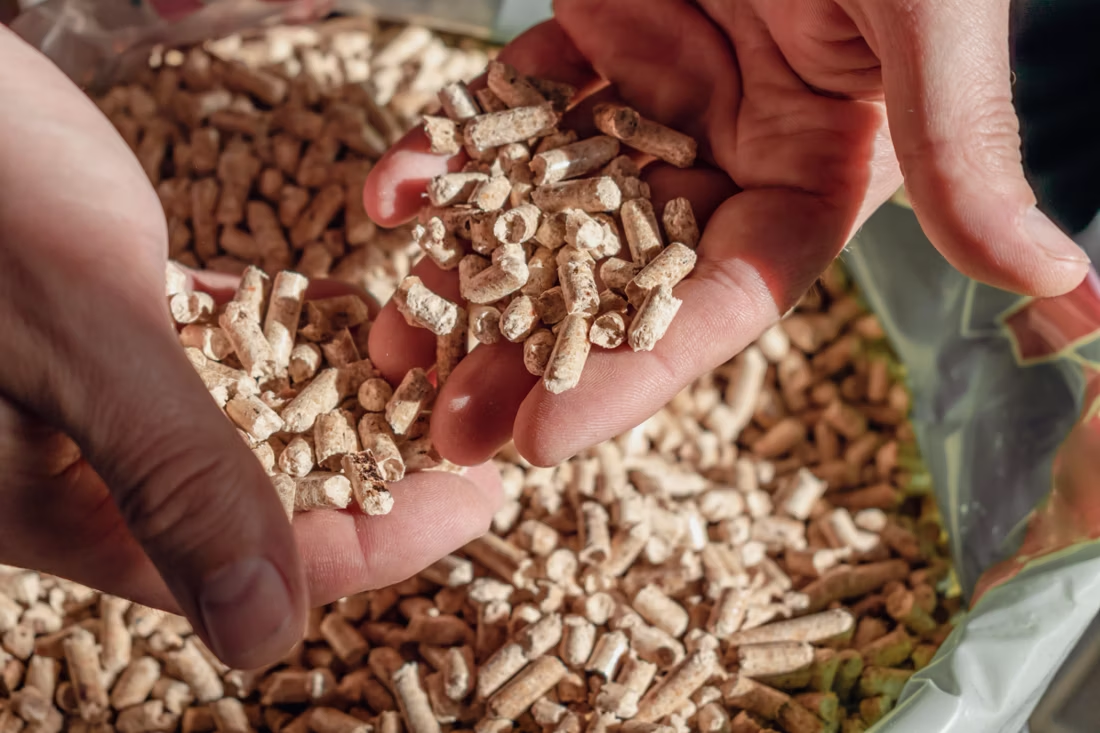
A clean pellet stove is a happy pellet stove. Plan on cleaning the burn pot about once a week when you're burning regularly—ash and clinkers gum up the air holes just like a pellet barbecue. Most pellet stove problems trace back to skipped cleaning that nobody explained up front. Some designs make it easy with a trapdoor burn pot: pull a lever and the gunk drops into the ash pan.
What is an in-home preview and do I need one?
It's a visit where a hearth professional measures your space, confirms the model you picked actually works in your home, and walks the specs—framing, gas line, venting, finish work—before anything is ordered. Some details you just can't know until you see the house. Never make a down payment without one; it's the single most-skipped step that burns buyers.
Does a fireplace add value to my home?
On average, a fireplace adds back to the home about the same amount you spent installing it. Add the monthly savings from heating the rooms you actually use instead of the whole house—often hundreds of dollars a year—and the value case is strong before you even count what a fire does for how your family uses the room.
Pellet Brands Stocked Around McKenzie County
Manufacturers will point you to the nearest stocking dealer.
See if a pellet stove is right for your McKenzie County home.
Pellet heat is uncommon in McKenzie County, so getting matched with the right dealer matters more than usual. Tell us about your home and heating goals, and we'll send you a free Project Guide & Parts List—a plan for your project with the exact parts, including the vent kit, and our recommended local dealer.
Find Your Fireplace →