
Real heat, zero venting—even in McKenzie County's brutal winters.
From Watford City to the rural stretches along Lake Sakakawea, electric fireplaces give McKenzie County homes clean supplemental warmth with no chimney, no gas line, and no permit hassle in most cases. Find the right unit and get matched with a trusted local dealer.
Every Project Starts From One of These Five Situations
Ambiance and supplemental warmth without the venting headache.
McKenzie County sits in the heart of the Bakken oil patch in northwestern North Dakota, with Watford City as the county seat and a population that has grown and shifted fast over the past fifteen years as oil development brought in workforce housing, new subdivisions, and manufactured homes alongside long-established farms along the Little Missouri and Lake Sakakawea. With a long, brutal heating season and winter lows averaging 5°F, this is one of the coldest, longest-heating-season counties in the country—on par with International Falls, Minnesota, rather than a milder Midwest county.
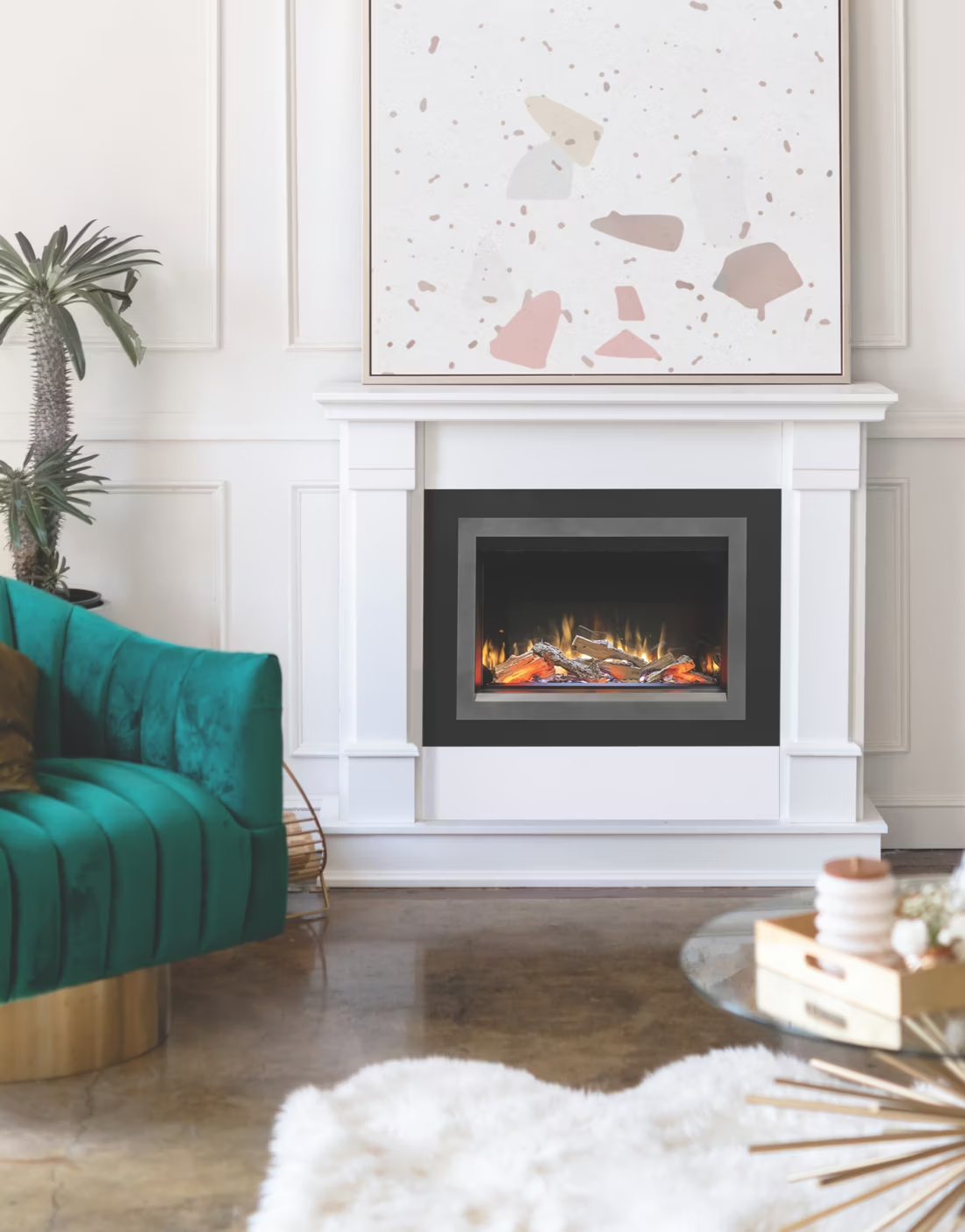
Despite plenty of cottonwood, ash, and oak along the river bottoms, wood stoves see little use here, and there's no local pellet retail infrastructure to speak of beyond regional distributors like Lignetics—most McKenzie County homes run on propane or, where available, natural gas for primary heat. That's where electric fireplaces earn their place: no chimney, no gas line, and no combustion byproducts to worry about, which fits both older farmhouses and the newer modular and stick-built homes tied to oil field growth. Power comes through McKenzie Electric Cooperative across most of the county, and a plug-in or built-in electric unit adds real zone heat and ambiance to a living room or bedroom without touching your furnace setup or your homeowner's insurance for combustion appliances.
Three steps. No salesperson until you're ready.
Tell us about your project
Your zip code, your situation, and the fuel you're leaning toward—or let the answers point you to one.
See what's actually available
The brands dealers within 100 miles genuinely carry—real options, never a catalog mirage.
Get your dealer & Project Guide
A trusted local dealer, plus the free Project Guide & Parts List that names every component of the job.
Frequently Asked Questions
How much does an electric fireplace installation cost in McKenzie County?
A plug-in electric insert or freestanding electric stove typically runs $300 to $1,200 installed, since most units simply plug into a standard 120V outlet with no permit required. A built-in wall unit or mantel package with dedicated wiring runs higher, generally $1,200 to $3,500, depending on whether an electrician needs to run a new circuit and whether you're framing into an existing wall or building out a new surround. Homes in newer subdivisions around Watford City with modern electrical panels usually see lower costs than older farmhouses that need panel upgrades to support a dedicated 240V unit.
Will an electric fireplace actually heat my room, or is it just for looks?
Most electric fireplaces include a built-in heater in the 4,600 to 5,200 BTU range (roughly 1,500 watts), enough to comfortably warm a single room of 300 to 400 square feet as supplemental heat—not enough to serve as your primary heat source through a McKenzie County winter with lows averaging 5°F and a long, demanding heating season. Most local homeowners pair an electric fireplace with their existing propane or natural gas furnace, using it to take the edge off a living room or bonus space and cut down on how often the central system cycles. If you want a unit doing double duty as your main heat for a room, look for models with higher-wattage heaters and confirm the square footage rating with your dealer before buying.
Do I need a permit to install an electric fireplace in McKenzie County?
In most cases, no. A plug-in electric insert or freestanding stove that runs off a standard outlet doesn't require a permit. A built-in electric fireplace that needs a new dedicated circuit or panel work does require an electrical permit through the McKenzie County Building Department, and that work should be done by a licensed electrician regardless of whether a permit is pulled. Local dealers who install built-in units typically coordinate the electrical permit as part of the job.
Will my electric fireplace work during a power outage?
No—electric fireplaces require power to run, whether that's the flame effect, the heater, or both, and there's no battery-backup option the way some gas units have. Power in McKenzie County comes through McKenzie Electric Cooperative for most areas, and outages tied to winter storms can happen. If backup heat during an outage matters to you—a real consideration given how cold this county gets—a propane fireplace or stove with a battery-backed ignition system is a better fit as your primary or backup source, with the electric unit reserved for everyday ambiance and zone heat.
What's the difference between an electric insert, an electric fireplace, and an electric stove?
An electric insert is sized to slide into an existing masonry or wood-burning fireplace opening, giving you flame effect and heat without touching your chimney. A built-in electric fireplace is designed to be framed into a wall, much like a gas fireplace, and is common in new construction and remodels around Watford City. An electric stove is a freestanding unit styled to look like a traditional wood or gas stove, placed anywhere near an outlet without any venting or hearth pad requirements. For McKenzie County homes with an old, rarely-used masonry fireplace, an insert is often the simplest upgrade; for new builds or rooms without an existing fireplace, a built-in unit or stove works just as well.
What's the best electric fireplace for McKenzie County's climate?
Given how cold and long the heating season runs here, look for a unit with a higher-wattage heater (close to 1,500 watts, the practical ceiling for a standard outlet) and a thermostat rather than a simple high/low switch, so it doesn't run at full output constantly and drive up your McKenzie Electric Cooperative bill. Wall-mounted and built-in units tend to distribute heat more evenly across a room than a small mantel-style insert. Since electric units here are almost always supplemental rather than primary heat, dealers in the area typically recommend sizing for the specific room you want to warm rather than the whole house.
How much maintenance does an electric fireplace need?
Very little—there's no chimney to sweep, no creosote, and no annual CSIA inspection required. Basic upkeep is dusting the heater vents and glass a few times a year and occasionally checking that the fan isn't picking up dust or pet hair, which can affect airflow over time. Built-in units with LED flame effects rarely need bulb replacement since most use long-life LEDs. This low-maintenance profile is one of the main reasons electric fireplaces have caught on in newer McKenzie County housing, where owners aren't looking to take on another seasonal maintenance task.
Electric vs. propane or natural gas—which is right for my McKenzie County home?
Propane and natural gas fireplaces produce far more heat—enough to serve as legitimate zone or even primary heat in a cold McKenzie County winter—and many gas models keep working during a power outage thanks to battery-backed ignition. Electric fireplaces can't match that heat output or outage resilience, but they install in an afternoon with no gas line, no venting, and no combustion byproducts, which makes them a much simpler add for a bedroom, basement, or rental unit. Many homeowners here run gas or propane for primary/backup heat and add an electric unit somewhere a gas line isn't practical, like an upstairs bonus room or a manufactured home addition.
Why don't more McKenzie County homes use wood or pellet stoves?
There's plenty of cottonwood, ash, and oak along the Little Missouri and Lake Sakakawea, but wood-burning appliances see limited use in the county—much of the housing growth here has been manufactured and modular homes tied to oil field work, and many of those units aren't set up for masonry chimneys or the clearances a wood stove needs. Pellet stoves face a similar gap: regional suppliers like Lignetics and Indeck Energy Services serve the broader area, but there's no dense local retail or delivery network the way you'd find in a wood-heat-heavy county further east. Electric fireplaces fill that space well since they need nothing more than an outlet or a standard circuit, which is part of why they've become a standard, rather than niche, choice here.
Can I put a TV above my fireplace?
Yes—with an asterisk. Fireplaces are hot and TVs don't like heat. Either put a mantel between them to deflect rising warmth, or choose a fireplace with heat-management technology that creates a cool zone on the wall above—the wall stays around 125 degrees, barely warm, while the room still gets full heat. If you like clean lines and don't want a mantel, heat management is the answer.
Do electric fireplaces actually produce heat?
Yes—most put out around 4,800–5,000 BTUs from a standard outlet, which comfortably warms a bedroom, office, or den as a comfort-zone heater. What they won't do is carry a whole house the way wood, gas, or pellet can. Think of electric as ambiance-first with honest supplemental heat: flames on with no heat in July, flames plus warmth in January.
Does a fireplace add value to my home?
On average, a fireplace adds back to the home about the same amount you spent installing it. Add the monthly savings from heating the rooms you actually use instead of the whole house—often hundreds of dollars a year—and the value case is strong before you even count what a fire does for how your family uses the room.
What is an in-home preview and do I need one?
It's a visit where a hearth professional measures your space, confirms the model you picked actually works in your home, and walks the specs—framing, gas line, venting, finish work—before anything is ordered. Some details you just can't know until you see the house. Never make a down payment without one; it's the single most-skipped step that burns buyers.
Find your electric fireplace in McKenzie County.
Tell us a bit about your home and we'll put together a free Project Guide & Parts List for your electric fireplace project—the right unit, the exact parts, and a trusted local McKenzie County dealer to install it.
Find Your Fireplace →