
Reliable pellet heat built for McIntosh County winters.
McIntosh County sits in Zone 6A on the open south-central North Dakota prairie, where wind and sustained cold make hands-off, thermostat-controlled heat worth a lot. Find the right pellet stove or insert, and get matched with a trusted local dealer.
Every Project Starts From One of These Five Situations
Consistent warmth without splitting cordwood every day.
McIntosh County is farm and ranch country—around 1,750 people spread across a county seat in Ashley and small communities like Wishek and Zeeland, with long distances between towns and long, hard winters typical of North Dakota's Zone 6A. This isn't Fargo-level population density, but it's Fargo-level cold: sustained sub-zero stretches, biting wind with nothing to break it across the open prairie, and heating seasons that start early and let go late. Older farmhouses in the county often lean on propane, wood, or a combination of both, and a pellet stove fills a specific gap—steady, adjustable heat that doesn't require someone home splitting and hauling wood every few hours during calving season or harvest.
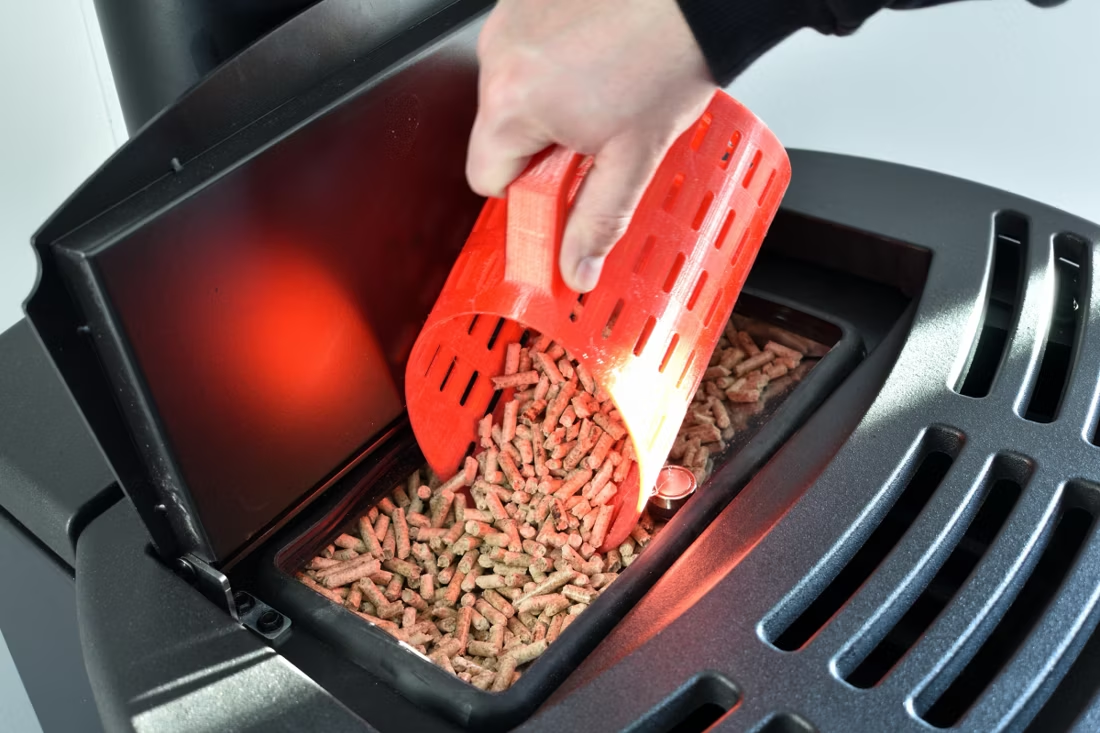
Regional pellet supply runs through brands like Lignetics and Indeck Energy Services, both of which serve the upper Midwest and are realistic sourcing options for McIntosh County homes rather than a specialty product you have to hunt for. A modern pellet stove with a large hopper can run 24 to 40+ hours on a single fill depending on the model and burn rate—useful when you're out checking cattle or grain bins and don't want to babysit a firebox. With no air quality restrictions or burn curtailment concerns on record for the county, pellet heat here is simply a practical, clean-burning option rather than something regulated around.
Three steps. No salesperson until you're ready.
Tell us about your project
Your zip code, your situation, and the fuel you're leaning toward—or let the answers point you to one.
See what's actually available
The brands dealers within 100 miles genuinely carry—real options, never a catalog mirage.
Get your dealer & Project Guide
A trusted local dealer, plus the free Project Guide & Parts List that names every component of the job.
Frequently Asked Questions
How much does a pellet stove installation cost in McIntosh County?
Pellet stove installations in a rural county like McIntosh typically run in the $2,500 to $5,500 range for a freestanding stove with a standard through-wall vent kit, with pellet inserts into an existing fireplace usually landing toward the higher end due to liner and venting work. Costs shift based on whether your home already has a suitable exterior wall for venting, whether electrical work is needed for the auger and blower circuit, and simple travel distance—since McIntosh County has no large hearth retailer of its own, installers based in Bismarck or Aberdeen, SD may factor a trip charge into a quote for outlying farms and ranches.
What size pellet stove do I need for my home?
For McIntosh County's older farmhouses and Zone 6A winters, sizing needs to account for both square footage and how exposed the home is to prairie wind, which drives up real heat loss beyond what square footage alone suggests. A small pellet stove (rated for roughly 1,000 to 1,300 square feet) works for a single wing or a well-insulated smaller home; medium stoves (1,300 to 2,200 square feet) cover most farmhouse main floors; larger units are worth considering for uninsulated older construction or homes trying to make pellet heat the primary source rather than a supplement to propane. A local installer sizing your home in person will factor in ceiling height, window count, and insulation age—all of which matter more here than in a newer, tightly built house.
Where can I find pellet stove installers near me in McIntosh County?
With a population under 2,000 spread across the county, McIntosh County doesn't support its own dedicated hearth showroom—most homeowners in Ashley, Wishek, and surrounding townships work with installers based out of Bismarck or across the state line in Aberdeen, SD, both within a reasonable drive. Look for installers who handle pellet-specific work regularly, since venting and electrical requirements differ from a standard wood stove install. Find My Fireplace matches McIntosh County homeowners with a trusted local dealer who already knows the travel radius, permitting, and typical install conditions for rural North Dakota farmhouses, rather than leaving you to cold-call retailers two counties over.
Pellet stove vs. wood stove—which makes more sense on a McIntosh County farm?
Wood is genuinely local here—oak, cottonwood, and ash grow throughout the county's shelterbelts and river bottoms, and plenty of families already have a source and a splitter. A wood stove burns that supply for free or near-free and keeps working with no electricity. A pellet stove trades that self-sufficiency for convenience: load the hopper, set the thermostat, and walk away for a day or more, which matters during calving, harvest, or any stretch where nobody's home to feed a firebox. The tradeoff is that pellet stoves need electricity to run the auger and blower, so they're not a power-outage backup the way a wood stove is. Many rural households here end up with both—wood for backup and ambiance, pellet for daily convenience.
Do I need a permit to install a pellet stove in McIntosh County?
Permit requirements for solid-fuel appliances in rural North Dakota counties are typically handled through the county building or zoning office, and enforcement can vary depending on whether you're in an incorporated town like Ashley or Wishek versus unincorporated farmland. Before installing, check with McIntosh County's building department or your township to confirm what's required—a reputable installer working in the area will already know the local process and can pull any needed permit as part of the job.
What kind of pellet stove holds up best to McIntosh County winters?
Given the sustained cold and wind exposure typical of Zone 6A on the open prairie, look for a stove with a larger hopper capacity—the ability to run 30-plus hours on a fill matters more here than in milder climates, since a cold snap can mean days of continuous burning. A higher BTU output rating also helps offset heat loss in older, less-insulated farmhouse construction. Pair the stove with a reliable pellet supply—Lignetics and Indeck Energy Services both distribute through the upper Midwest—and confirm with your installer that the model you're considering performs well when run near its top output for extended stretches, since not every stove is built for that kind of continuous demand.
How often does a pellet stove need maintenance?
Plan on a full cleaning of the burn pot, auger, and exhaust venting at least once a season, with a quick ash cleanout every few days during heavy winter use—pellet ash is fine and can build up faster than people expect. The exhaust vent and combustion blower should also get an annual inspection, since a partially blocked vent is one of the more common issues that shows up mid-winter when a stove is running hardest. Given the distance to the nearest dealer, many McIntosh County owners learn to do routine ash and burn-pot cleaning themselves and save an annual professional inspection for the auger, blower, and venting.
Where can I buy pellets in or near McIntosh County?
Lignetics and Indeck Energy Services both distribute pellets through the upper Midwest and are realistic sourcing options for the county, though with no dedicated hearth retailer inside McIntosh County itself, most households buy pallets (roughly 50 forty-pound bags) through a farm supply store, co-op, or dealer in Bismarck or Aberdeen and plan ahead rather than buying bag by bag. Buying a full pallet or several at once ahead of the heating season is the more common approach in a rural county like this, both to lock in supply and to spread out a single delivery trip.
Is pellet heat a good fit for a smaller rural county like McIntosh?
Yes, with the right expectations. Pellet stoves aren't a wood-fired, off-grid backup—they need electricity—but for McIntosh County's Zone 6A winters they offer something a lot of farm and ranch households value: consistent, thermostat-set heat that doesn't demand daily attention from whoever's home. With no air quality restrictions on the books for the county, there's no regulatory reason to prefer one fuel over another here—it comes down to whether you'd rather manage a fuel supply of cordwood you can cut yourself from local oak, cottonwood, and ash, or a bagged pellet supply you buy by the pallet and load into a hopper.
What's the difference between an insert and a zero-clearance fireplace?
An insert is a fireplace that slides into a pre-existing wood-burning fireplace—if you don't have one, there's nothing to insert it into. A zero-clearance fireplace is built into a framed wall, which makes it the answer for remodels and new construction. Simple test: existing masonry fireplace means insert; blank or framed wall means zero-clearance.
Why is a fireplace insert so efficient?
An insert does two things: it seals the chimney completely, so you stop losing air you already paid to heat, and it radiates warmth into the room through the firebox and glass. Most add a heat-exchange fan that pulls cool room air underneath, wraps it around the hot firebox, and pushes it back out warm. Your home is more efficient before you've even lit the first fire.
Can I install a fireplace myself?
If you're putting a fire in your house on purpose, it's best to work with an expert. Unless you're genuinely experienced in framing, gas line, vent pipe, and the national code on clearances to combustibles, have a professional do it—and ideally the same company that sells you the fireplace, so warranty, service, and liability all live under one roof.
What is an in-home preview and do I need one?
It's a visit where a hearth professional measures your space, confirms the model you picked actually works in your home, and walks the specs—framing, gas line, venting, finish work—before anything is ordered. Some details you just can't know until you see the house. Never make a down payment without one; it's the single most-skipped step that burns buyers.
Pellet Brands Stocked Around McIntosh County
Manufacturers will point you to the nearest stocking dealer.
Find your pellet stove in McIntosh County.
Tell us about your home in McIntosh County and we'll match you with a trusted local dealer and send over a free Project Guide & Parts List—the exact parts, including the vent kit, and a recommended installer for your pellet project.
Find Your Fireplace →