
Find your fireplace across every town in McIntosh County.
Wood, gas, pellet, and electric fireplace resources for the whole county—from Ashley out along the grid roads to Wishek, Zeeland, and Venturia. Pick a fuel and get matched with a local dealer who actually installs and services it out here.
Every Project Starts From One of These Five Situations
A climate zone 6A county built on shelterbelt wood, propane tanks, and long prairie winters.
McIntosh County sits in south-central North Dakota near the South Dakota line, with a population of roughly 1,750 spread across Ashley, Wishek, Zeeland, Venturia, and the farmsteads between them. It's classified climate zone 6A—the same cold-load territory as Bismarck, about 60 miles to the northwest—meaning a heating season that runs from early fall well into spring and stretches of subzero cold that a hearth appliance needs to be sized and installed correctly to handle. Oak, cottonwood, and ash are the wood species most households here actually burn, much of it cut from farm shelterbelts and woodlots rather than hauled in from a supplier, which keeps wood heat both practical and inexpensive for rural properties.
McIntosh County has no listed air quality concerns—no non-attainment designation, no inversion pattern, no curtailment days—so wood heat here isn't restricted by burn bans the way it is in basin or valley counties further west. That's a real advantage for anyone weighing wood or pellet as a primary heat source. Natural gas mains don't reach most of this county, so propane tanks are the norm for gas appliances, and pellet stoves get real consideration too, with Lignetics and Indeck Energy Services both supplying pellets regionally. This hub rolls up hearth retailers, service techs, and fuel suppliers across the whole county—from Ashley as the county seat out to Wishek, Zeeland, and Venturia. Pick your fuel below for local dealers, install costs, and recommendations specific to your town.
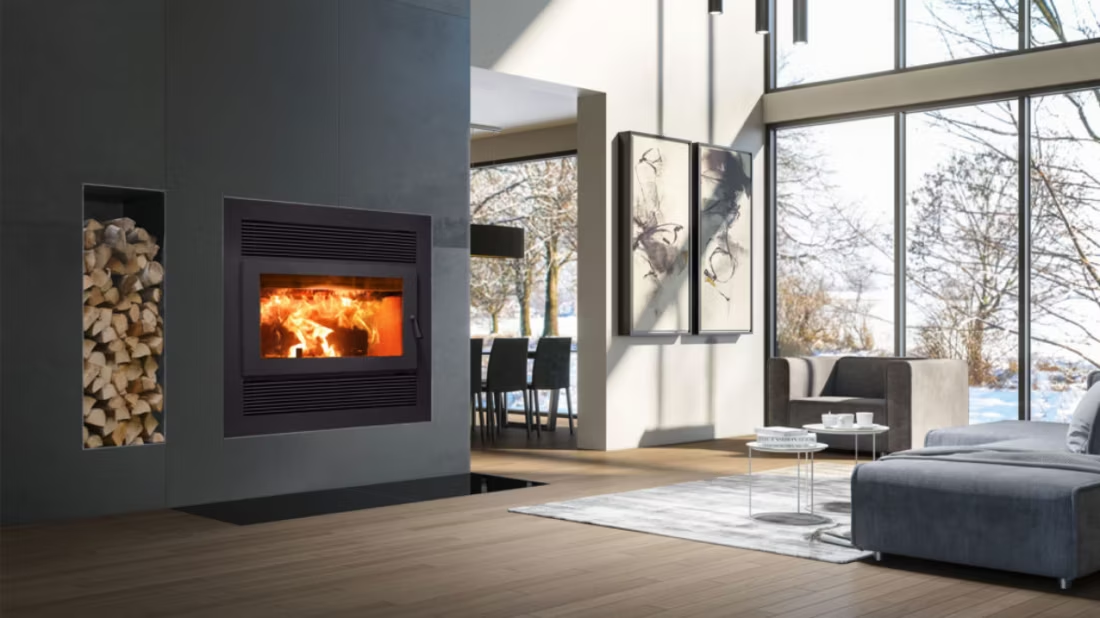
Four fuels. One honest answer for McIntosh County.
Three steps. No salesperson until you're ready.
Tell us about your project
Your zip code, your situation, and the fuel you're leaning toward—or let the answers point you to one.
See what's actually available
The brands dealers within 100 miles genuinely carry—real options, never a catalog mirage.
Get your dealer & Project Guide
A trusted local dealer, plus the free Project Guide & Parts List that names every component of the job.
Frequently Asked Questions
Which fireplace fuel makes the most sense in McIntosh County?
All four fuels are used here, and the right call usually comes down to what's already on your property. Wood is the backbone fuel for a lot of farmsteads—oak, cottonwood, and ash cut from shelterbelts or woodlots keep fuel cost low, and a well-built EPA-certified stove burning seasoned oak will hold a fire through a long overnight cold snap. Gas appliances almost always mean propane out here rather than piped natural gas, since mains don't reach most of the county, so a propane tank and delivery contract are part of that decision. Pellet stoves have a real following too—Lignetics and Indeck Energy Services both distribute regionally, and a pellet hopper is a lot less hands-on than splitting and hauling wood all winter. Electric fireplaces show up mostly as supplemental heat for a bedroom or finished basement rather than a primary source, since a zone 6A winter is more than an electric unit is built to carry alone.
Do I need a permit to install a wood stove or propane fireplace in McIntosh County?
Most installations do need a permit, though the process is simpler here than in counties with air quality restrictions—McIntosh County has no non-attainment designation and no curtailment days, so there's no wood-burning ban to work around, just the standard building and mechanical permitting through the county's permit office or your city if you're inside Ashley, Wishek, or another incorporated town. Propane installs typically involve both a building permit and coordination with your propane supplier for tank placement and line sizing. New wood stoves should still meet current EPA emissions standards even without local air quality rules driving that requirement—most manufacturers stopped making anything else years ago. The hearth retailers we match homeowners with generally handle permitting as part of the install.
How cold does it actually get, and does that change what stove I should buy?
McIntosh County is climate zone 6A, comparable in heating load to Bismarck or Fargo—long winters with stretches of subzero overnight lows and near-constant prairie wind, which affects chimney draft more than people expect on an exposed farmstead. That combination is why a catalytic wood stove or a well-sized propane unit matters more here than in a milder climate: a non-catalytic stove might need reloading every few hours through a hard cold snap, while a catalytic unit burning dense oak can hold overnight. Wind exposure also means venting needs to be sized and capped correctly, since a gusty chimney can cause smoke spillback or an unstable draft on the worst nights—something worth flagging to whichever installer you're matched with.
Where does firewood, pellets, or propane actually come from out here?
Firewood is mostly local—a lot of McIntosh County households cut oak, cottonwood, and ash from their own shelterbelts or buy from a neighbor doing the same, though cottonwood burns fast and needs a full season or more to dry properly before it's worth burning. Pellets aren't produced locally, but Lignetics and Indeck Energy Services both distribute into this part of North Dakota, usually through farm supply stores or co-ops rather than a dedicated hearth shop. Propane is the default gas fuel since natural gas mains don't reach most of the county—that means a tank on your property and a delivery contract with a local propane supplier, with delivery scheduling worth locking in before the roads get bad in December and January.
What does installation and annual service look like with the towns this spread out?
With McIntosh County's population under 2,000 spread across Ashley, Wishek, Zeeland, and Venturia, installers and service techs cover a lot of ground rather than working out of one town. Expect a trip charge built into farther service calls, and expect scheduling to get tight once the first real cold snap hits and everyone wants their chimney swept or their propane unit inspected at once—booking that annual service in late summer or early fall, before harvest and before the roads turn, is the easiest way to avoid a January wait. If you're on a remote farmstead, it's also worth asking your installer about spare igniter parts on hand, since a bad stretch of weather can delay a return visit by more than a day.
What does a fireplace installation typically cost in McIntosh County?
Costs track fairly close to national averages, with some added labor for rural travel. Wood stove or insert installs generally run $4,000–$8,500, with full new chimney construction pushing higher. Propane fireplaces, inserts, and stoves typically run $4,500–$10,500 once tank hookup or line work is included. Pellet stove installs usually land around $4,000–$7,000. Electric fireplaces are the low-cost outlier—$200–$3,000 for the unit, plus $400–$1,200 in labor if it's more than a plug-and-play placement. The county + fuel pages above break these numbers down further with local retailer pricing.
Does a fireplace add value to my home?
On average, a fireplace adds back to the home about the same amount you spent installing it. Add the monthly savings from heating the rooms you actually use instead of the whole house—often hundreds of dollars a year—and the value case is strong before you even count what a fire does for how your family uses the room.
Can I install a fireplace myself?
If you're putting a fire in your house on purpose, it's best to work with an expert. Unless you're genuinely experienced in framing, gas line, vent pipe, and the national code on clearances to combustibles, have a professional do it—and ideally the same company that sells you the fireplace, so warranty, service, and liability all live under one roof.
How much should I budget for a fireplace?
For an average home—covering the fireplace, the vent pipe, and basic installation—a budget between $3,900 and $5,500 gives you a lot of options across wood, gas, and pellet. By the time you add finish work, gas line, and electrical, the average complete installation lands between $5,000 and $12,000 all-in. In a remodel or new build, a good rule is to put about 2.5% of the total project cost toward the fireplace.
Can a fireplace actually lower my heating bill?
Yes—by creating a comfort zone. A furnace heats every square foot of the house just to warm the one room you're in; a gas fireplace on low burns roughly a sixth of the gas a typical furnace does. Set the furnace around 55–60 degrees as a baseline, then heat the rooms your family actually uses. Families who heat this way commonly save $20–$60 a month.
Stove and Fireplace Dealers in McIntosh County
Listings include WhyFire partner dealers, dealers we have verified as authorized for the brands we recommend, and established local businesses that carry hearth products. Every listing shows which one it is. The ones marked Preferred run on WhyFire's software, so they can show you real pricing and book your appointment right here. No manufacturer pays for placement. How we verify dealers →
Climate Control, Inc.
Keller Hearth 'n Home Products
Coldspring Bismarck Selection Center
Get matched with a local McIntosh County dealer.
Pick your fuel below and we'll put together a free Project Guide & Parts List—the right unit, the vent kit it needs, and the local dealer we recommend for your project.
Find Your Fireplace →