
Pellet heat that keeps up with Kidder County winters.
From Steele to Tappen and Pettibone, Kidder County's open prairie winters call for heat that doesn't quit. Find the right pellet stove or insert for your farmhouse or in-town home, and connect with a trusted local dealer.
Every Project Starts From One of These Five Situations
Steady, thermostatic heat for one of North Dakota's coldest climate zones.
Kidder County sits in IECC climate zone 7—the same brutal-cold classification found in places like International Falls, Minnesota. With just 1,334 residents spread across Steele, Tappen, Robinson, Pettibone, and the farmland in between, this is a county where a home's heating system has to work as hard as the people who live there. Open prairie means relentless wind chill stacked on top of already sub-zero lows, and homes here—whether a century-old farmhouse outside Tuttle or a newer build in Steele—need heat that holds steady through a February that doesn't let up.
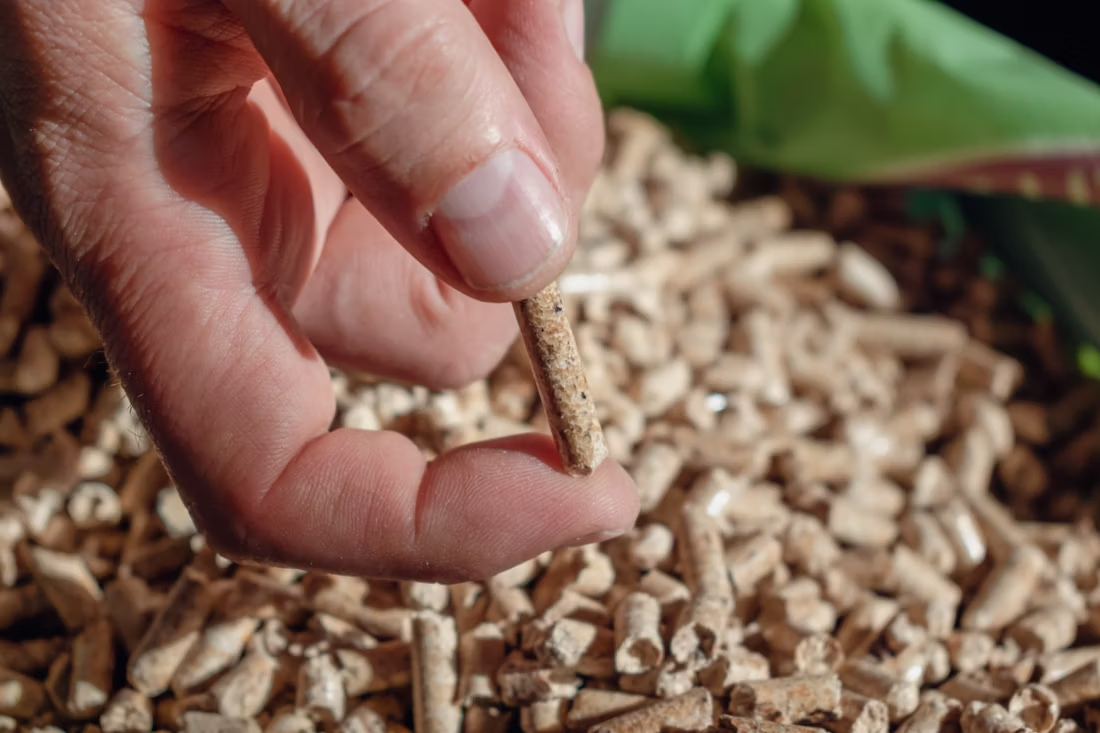
Pellet stoves and inserts have found a real foothold in this part of North Dakota because they combine wood-heat comfort with thermostat-level control—load the hopper, set the dial, and the auger feeds a consistent, clean-burning fire without the constant tending a wood stove demands. Kidder County carries no non-attainment or air-quality restrictions, so there's no curtailment schedule to work around here, unlike parts of the Pacific Northwest. Pellets themselves move through regional suppliers like Lignetics and Indeck Energy Services, both of which serve this stretch of the northern Plains, and bagged pellets are typically picked up at farm and ranch supply stores in Bismarck or Jamestown for county residents who don't have a dealer any closer to home. One thing worth planning for: pellet stoves need electricity to run the auger and blower, so a battery backup or small generator is a common pairing for rural Kidder County homes, where a prairie blizzard can knock out power for a day or more.
Three steps. No salesperson until you're ready.
Tell us about your project
Your zip code, your situation, and the fuel you're leaning toward—or let the answers point you to one.
See what's actually available
The brands dealers within 100 miles genuinely carry—real options, never a catalog mirage.
Get your dealer & Project Guide
A trusted local dealer, plus the free Project Guide & Parts List that names every component of the job.
Frequently Asked Questions
How much does a pellet stove installation cost in Kidder County?
Most freestanding pellet stove installations in this part of North Dakota run $3,000 to $6,000, including the stove, vent kit, and hearth pad if one isn't already in place. A pellet insert into an existing masonry fireplace—a common project for Kidder County's older farmhouses around Steele and Tappen—typically lands in the $4,000 to $7,000 range once the liner and venting work are included. Rural addresses farther from Bismarck or Jamestown may see a modest travel charge added to the install quote, since dealer coverage is thin across a county this size.
Will a pellet stove keep my house warm during a Kidder County power outage?
Not on its own—pellet stoves rely on electricity to run the hopper auger and combustion blower, so a standard unit stops working the moment the power drops. That matters in Kidder County, where prairie blizzards regularly knock out rural electric service for a day or longer. Homeowners here often pair a pellet stove with a small battery backup sized for the stove's low wattage draw, or a portable generator, and some households keep a wood stove or fireplace as true off-grid backup alongside the pellet stove they use day to day.
Where do I buy pellets near Kidder County?
There's no dedicated pellet retailer inside the county itself given the population, so most Kidder County residents pick up bagged pellets—brands like Lignetics are common on regional shelves—at farm and ranch supply stores or home centers in Bismarck or Jamestown, both roughly 30 to 45 minutes from most Kidder County towns. Some households buy by the pallet, roughly a ton or fifty forty-pound bags, in the fall to avoid multiple trips through the winter, and a few local and regional dealers also offer seasonal delivery straight to your driveway.
Do I need a permit to install a pellet stove in Kidder County?
Yes—a building permit is typically required for a new pellet stove or insert installation, issued through the Kidder County building department based in Steele. Most local and regional dealers who handle the installation will pull the permit as part of the job, so it's rarely something the homeowner has to manage directly. There's no additional air-quality permitting layer to worry about here, since Kidder County has no non-attainment designation or wood-smoke curtailment program.
What's the best pellet stove for a climate zone 7 winter?
In a climate this cold, look for a pellet stove rated for continuous, high-output burning rather than one built for occasional supplemental heat. Larger hopper capacity matters too—a bigger hopper means fewer 2 a.m. reloads during a stretch of sub-zero nights. Local and regional dealers serving Kidder County can walk you through models sized for a full farmhouse versus a smaller in-town home in Steele or Robinson; either way, plan on the stove running near its top output for a good portion of a Kidder County winter, so efficiency and burn-rate range matter more here than in milder parts of the state.
How much maintenance does a pellet stove need?
Pellet stoves need more frequent attention than a wood stove but far less than people expect—emptying the ash pan every few days during heavy use, a full glass and burn-pot cleaning every one to two weeks, and an annual professional service to check the auger motor, blower, and venting. For a Kidder County home running the stove as a primary heat source through a long, cold season, staying on top of burn-pot cleaning is what keeps the fire consistent and the pellets burning efficiently rather than smoldering.
Pellet insert or freestanding pellet stove—which fits my home?
If you already have a masonry fireplace—common in the older farmhouses scattered across Kidder County—a pellet insert slides into that opening and uses the existing chimney, relined, as its vent path, which keeps the room's layout unchanged. If you're heating a space with no existing fireplace, a freestanding pellet stove can go almost anywhere with proper clearance and a through-wall vent, which is often the simpler and less expensive route for newer or manufactured homes in the county.
Are there air quality restrictions on burning in Kidder County?
No—Kidder County has no non-attainment designation and no winter wood-smoke curtailment program, unlike some western states. That said, any pellet stove sold new still has to meet EPA emissions standards, and pellet stoves are inherently clean-burning compared to older wood stoves, producing very little visible smoke even at full output. There's simply no local air-quality bureaucracy to navigate here—one less thing to plan around.
Pellet stove vs. propane—which makes more sense for a Kidder County home?
Propane is the default heating fuel across most of rural Kidder County, and a pellet stove is rarely the sole heat source—it's usually a zone-heating supplement for the main living area, cutting propane usage during the coldest months. Pellets are generally cheaper per BTU than propane, and a stove burning in the living room lets you turn the furnace down elsewhere in the house. The tradeoff is that pellet stoves need electricity to run and propane furnaces generally don't, so most Kidder County households end up running both: propane as the always-on backbone, pellet stove for daily supplemental heat and cost savings.
Why is a fireplace insert so efficient?
An insert does two things: it seals the chimney completely, so you stop losing air you already paid to heat, and it radiates warmth into the room through the firebox and glass. Most add a heat-exchange fan that pulls cool room air underneath, wraps it around the hot firebox, and pushes it back out warm. Your home is more efficient before you've even lit the first fire.
Why is my open fireplace making my house colder?
Open fireplaces suck—literally. As the fire burns, it consumes air your furnace already paid to heat and pulls it out through the chimney, so the house is actually colder after the fire goes out than before you lit it. An insert fixes this: it seals the chimney, puts fixed glass across the front, and turns that hole in your house into a real heat source.
How much should I budget for a fireplace?
For an average home—covering the fireplace, the vent pipe, and basic installation—a budget between $3,900 and $5,500 gives you a lot of options across wood, gas, and pellet. By the time you add finish work, gas line, and electrical, the average complete installation lands between $5,000 and $12,000 all-in. In a remodel or new build, a good rule is to put about 2.5% of the total project cost toward the fireplace.
Does a fireplace add value to my home?
On average, a fireplace adds back to the home about the same amount you spent installing it. Add the monthly savings from heating the rooms you actually use instead of the whole house—often hundreds of dollars a year—and the value case is strong before you even count what a fire does for how your family uses the room.
Pellet Brands Stocked Around Kidder County
Manufacturers will point you to the nearest stocking dealer.
Find your pellet stove in Kidder County.
Tell us about your home in Kidder County and we'll match you with a trusted local dealer and send over a free Project Guide & Parts List—the exact stove, vent kit, and parts for your pellet project, plus who to call to get it installed.
Find Your Fireplace →