
Supplemental warmth for one of the coldest climate zones in the Lower 48.
Kidder County sits in IECC Climate Zone 7, alongside places like International Falls, MN—winters here are long and the wind off the open prairie makes them feel longer. An electric fireplace won't replace your furnace, but it adds real zone heat and ambiance to a farmhouse living room or a lake cabin near Lake Tschida without a chimney or gas line. I'll match you with a local electrician-dealer who installs it right.
Every Project Starts From One of These Five Situations
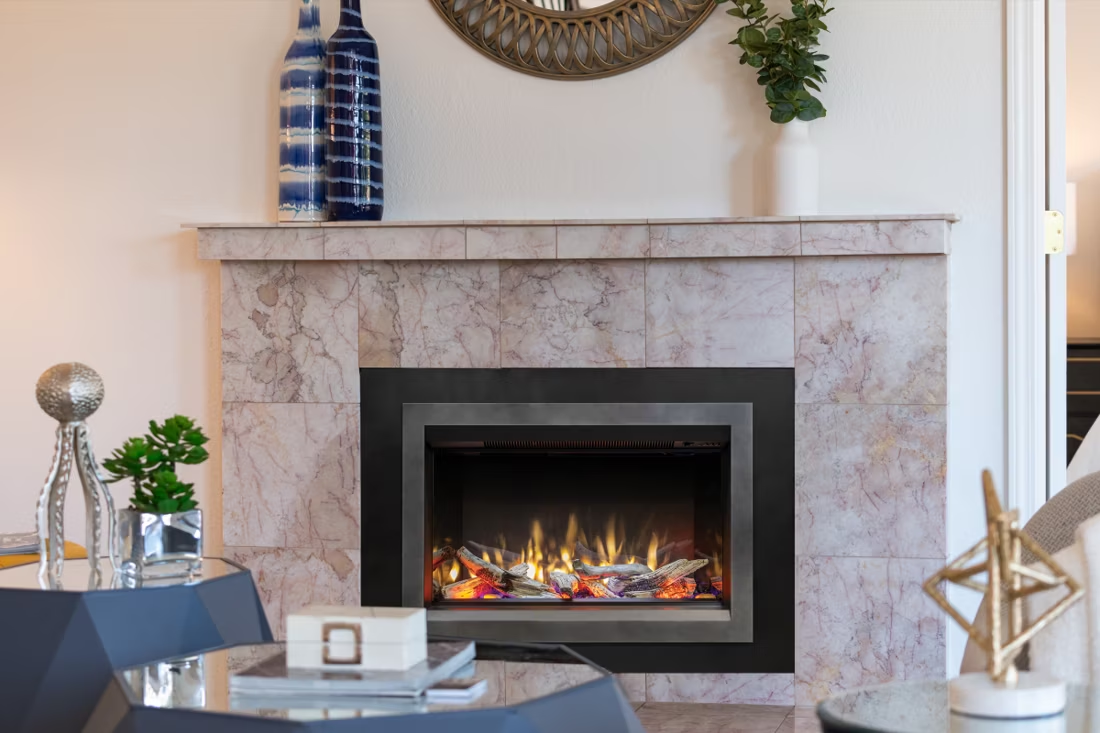
No chimney, no gas line, and it plugs into a farmhouse circuit.
Kidder County is home to about 1,334 people spread across a stretch of south-central North Dakota prairie and Missouri Coteau pothole terrain—Steele, Tappen, Dawson, Robinson, and Pettibone are the county's small towns, and most of the land in between is wheat and cattle country. Oak, cottonwood, and ash grow in the wooded draws and shelterbelts around the coteau, but they're scattered, not a dense forest resource, so cordwood supply is more limited here than in timber counties further east or in the mountains. Zone 7 winters, with the kind of sustained sub-zero stretches that hit International Falls or Fargo, mean most homes run on a propane furnace or forced-air system as their primary heat, with wood or electric filling a supplemental role in the rooms people actually live in.
Kidder County has no air quality restrictions on heating appliances, so an electric fireplace isn't solving a smoke or emissions problem the way it might in a non-attainment basin—it's solving a convenience and comfort problem. For an older farmhouse, a manufactured home on a rural section, or a cabin at Lake Tschida used mainly on weekends, an electric insert or built-in unit gives you instant zone heat and fire ambiance without touching the chimney, without a gas line, and without adding to the propane bill during a cold snap. Most installs run off a standard household circuit or a dedicated 20-amp line a local electrician can add in an afternoon.
Three steps. No salesperson until you're ready.
Tell us about your project
Your zip code, your situation, and the fuel you're leaning toward—or let the answers point you to one.
See what's actually available
The brands dealers within 100 miles genuinely carry—real options, never a catalog mirage.
Get your dealer & Project Guide
A trusted local dealer, plus the free Project Guide & Parts List that names every component of the job.
Frequently Asked Questions
How much does an electric fireplace installation cost in Kidder County?
A basic plug-in insert that drops into an existing firebox or cabinet opening runs as little as $300–$600 for the unit, with no electrical work needed beyond an existing outlet. A built-in wall unit or a custom mantel package with a dedicated 20-amp circuit run by a local electrician typically lands in the $1,200–$2,500 range once labor and any trim carpentry are included. Farmstead homes with older wiring or a detached shop conversion sometimes need a panel upgrade first, which adds to the total—a local electrician-dealer can tell you that during the first visit.
Do I need a permit to install an electric fireplace in Kidder County?
Kidder County doesn't operate its own dedicated building permit office given its small population, so electrical work for a built-in unit falls under North Dakota State Electrical Board licensing rules—any new circuit has to be pulled by a licensed electrician, who typically handles the paperwork as part of the job. A simple plug-in insert on an existing outlet generally doesn't trigger any permit at all. If you're in Steele or one of the smaller incorporated towns, it's worth a quick call to the town office to confirm there's no local wrinkle, but for most of the county this is a straightforward electrician-managed install.
Will an electric fireplace heat my whole house through a North Dakota winter?
No, and any honest answer has to start there. Kidder County sits in Zone 7, where overnight lows can sit well below zero for days at a stretch, and an electric unit is built to supplement, not replace, a home's primary heat source. Most electric fireplaces are rated to comfortably heat a single room in the 300–1,000 square foot range. They're best used to take the edge off a living room or bonus space while your propane furnace or wood stove carries the rest of the house—trying to use one as whole-home heat in a Kidder County January will run up your co-op bill fast without actually keeping you warm.
Will my electric fireplace still work if the power goes out during a blizzard?
No—that's the main tradeoff. Rural sections of Kidder County served by Capital Electric Cooperative can lose power during a ground blizzard or ice storm, sometimes for a stretch of hours, and an electric fireplace goes dark right along with the rest of the house. If you want heat you can count on during an outage, pair the electric unit with a wood stove, a propane heater rated for unvented backup use, or a generator sized to carry your furnace's blower motor. Plenty of Kidder County households run electric for daily convenience and keep a wood or propane backup for storm season.
Electric vs. a wood stove—which makes more sense for my place?
It depends on what you're trying to solve. A wood stove burning local oak, cottonwood, or ash can run through a power outage and often costs less per BTU if you're cutting or buying your own cordwood, which matters given Kidder County's exposure to winter storms. But it needs a chimney, regular cleaning, and someone tending the fire. An electric unit installs anywhere with a circuit—no venting, no ash, no annual sweep—but it's fully dependent on the grid and best suited to supplemental heat rather than a storm-season backup. Many farmstead homes here end up running both: wood or propane as the workhorse, electric for the room where people actually sit in the evening.
Is electric heat a good fit for a manufactured or modular home?
Often yes. A lot of housing stock in Kidder County's smaller towns and on outlying farmsteads is manufactured or modular, and those homes frequently don't have an existing masonry chimney to work with. An electric fireplace sidesteps that entirely—no venting path to engineer, no roof penetration, no clearance-to-combustibles calculations tied to a flue. A wall-mounted or built-in cabinet unit on its own circuit is one of the simplest hearth upgrades available for that kind of home, and it's a common request local electricians in the Steele and Bismarck-area service area get from rural clients.
What will an electric fireplace cost to run on Capital Electric Cooperative rates?
Most electric fireplaces draw around 1,500 watts on their heat setting, which at typical rural North Dakota cooperative rates works out to roughly 15–20 cents an hour of active heating—a few dollars a day if you're running it most evenings through a Kidder County winter. That's more expensive per BTU than a propane furnace or a wood stove burning your own cut firewood, which is exactly why most households treat it as supplemental heat for one room rather than a primary system. Your Capital Electric Cooperative account rep can walk you through actual rate tiers if you're trying to budget seasonal use.
Is an electric fireplace a good option for a cabin at Lake Tschida?
Yes—this is one of the better use cases in the county. A seasonal cabin near Lake Tschida or Lake Isabel that's used mainly on weekends doesn't justify the cost or upkeep of a full wood-burning chimney system, and propane delivery to a lake property can be inconvenient to schedule around sporadic use. A plug-in or built-in electric unit gives you fire ambiance and quick room heat the moment you arrive, with nothing to maintain between visits and no fuel to store or haul in. It's a low-commitment way to add a hearth feature to a cabin that sits empty most weekdays.
How much maintenance does an electric fireplace actually need?
Very little, which is part of the appeal in a county where a wood chimney sweep means scheduling a trip out from Bismarck or Jamestown. Electric units need an occasional dusting of the heater vents and glass front, and the flame-effect bulb or LED array eventually needs replacing, usually every few years depending on use. There's no creosote, no ash, and no annual inspection requirement the way there is with a wood-burning appliance. If a unit stops heating, it's almost always the thermostat, the heating element, or the circuit itself—an electrician can usually diagnose that in one visit.
Can I put a TV above my fireplace?
Yes—with an asterisk. Fireplaces are hot and TVs don't like heat. Either put a mantel between them to deflect rising warmth, or choose a fireplace with heat-management technology that creates a cool zone on the wall above—the wall stays around 125 degrees, barely warm, while the room still gets full heat. If you like clean lines and don't want a mantel, heat management is the answer.
Does an electric fireplace need a vent or chimney?
No—that's its superpower. An electric fireplace needs a wall and an outlet, period. No vent pipe, no gas line, no clearances to design around, which is why it works in bedrooms, offices, apartments, and walls where venting a gas or wood unit would be impractical or impossible. Installation is typically the simplest and least expensive of any fireplace type.
Does a fireplace add value to my home?
On average, a fireplace adds back to the home about the same amount you spent installing it. Add the monthly savings from heating the rooms you actually use instead of the whole house—often hundreds of dollars a year—and the value case is strong before you even count what a fire does for how your family uses the room.
Can I install a fireplace myself?
If you're putting a fire in your house on purpose, it's best to work with an expert. Unless you're genuinely experienced in framing, gas line, vent pipe, and the national code on clearances to combustibles, have a professional do it—and ideally the same company that sells you the fireplace, so warranty, service, and liability all live under one roof.
Get your free Project Guide & Parts List for an electric fireplace in Kidder County.
Tell me about your home—farmhouse, manufactured home, or lake cabin—and how you plan to use the fireplace, and I'll match you with a trusted local electrician-dealer and send a free Project Guide & Parts List: the exact unit, circuit requirements, and installer recommendation for your project.
Find Your Fireplace →