
An honest look at pellet heat in Griggs County.
With just over 1,100 residents spread across farmland near Cooperstown, Griggs County doesn't have a hearth retailer on every corner—and pellet stoves are genuinely rare here. If you still want one, we'll connect you with a trusted regional dealer who can size it and install it correctly.
Every Project Starts From One of These Five Situations
Propane and electric heat carry Griggs County through zone 7 winters.
Griggs County sits on open, wind-exposed prairie in east-central North Dakota, in climate zone 7—the same brutal-cold classification as Fargo, less than an hour east. Winters here are long and severe, and with a county population under 1,200 spread across farms and small towns around Cooperstown, there simply isn't the density to support a dedicated hearth retail presence. The farm shelterbelts that dot the county grow oak, cottonwood, and ash, but they're planted for wind protection, not managed woodlots—there's no cordwood culture and no local biomass supply chain to feed a pellet market.
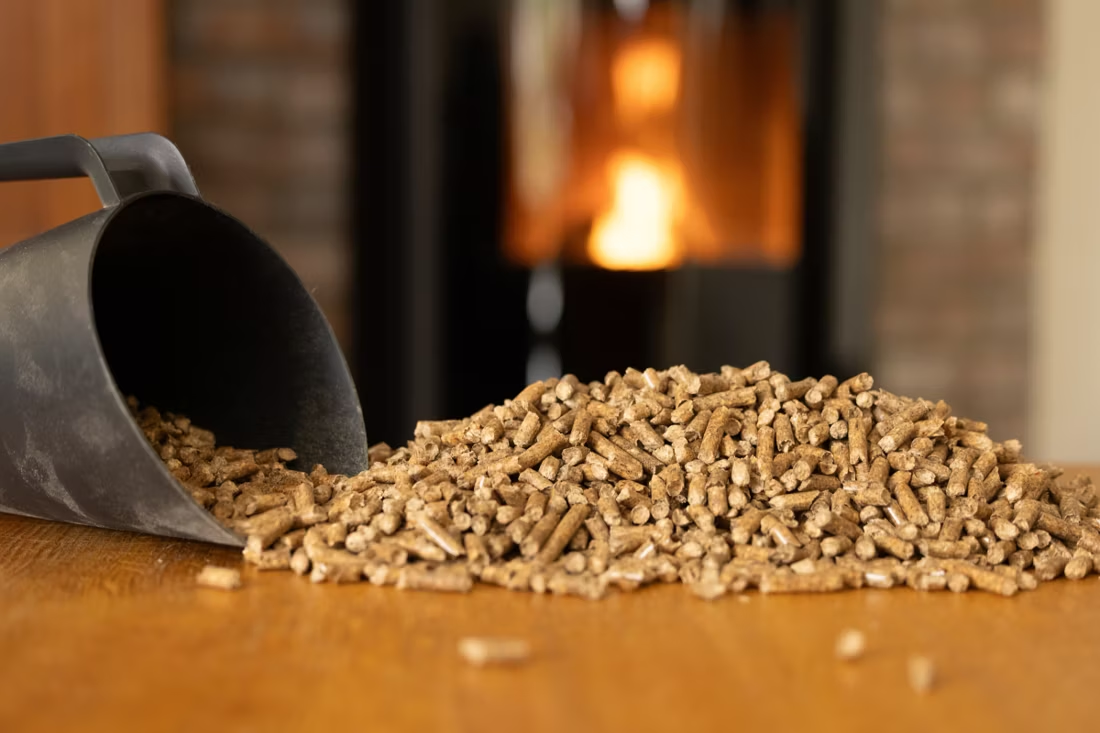
That's why both wood and pellet appliances are flagged as not-applicable for Griggs County: the infrastructure that supports them elsewhere—permit offices, cutting programs, local mills, hearth shops—just doesn't exist at this population and location. Instead, propane is the standard heating fuel on most farms and in town, typically from a bulk tank, and electric heat through the local rural cooperative fills in for supplemental and backup needs. Pellets from regional brands like Lignetics and Indeck Energy Services can still be ordered and trucked in if you want a pellet stove, but you're working against thin logistics rather than an established local market.
Three steps. No salesperson until you're ready.
Tell us about your project
Your zip code, your situation, and the fuel you're leaning toward—or let the answers point you to one.
See what's actually available
The brands dealers within 100 miles genuinely carry—real options, never a catalog mirage.
Get your dealer & Project Guide
A trusted local dealer, plus the free Project Guide & Parts List that names every component of the job.
Frequently Asked Questions
How much does a pellet stove installation cost in Griggs County?
There isn't a reliable local benchmark, because so few pellet stoves have actually been installed in Griggs County—this is one of the areas where the appliance is genuinely rare rather than just uncommon. Regionally in North Dakota, a freestanding pellet stove installation typically runs in the $3,000 to $6,000 range depending on the unit and venting work, but a dealer serving Griggs County will likely be traveling from Fargo, Valley City, or Jamestown, which adds to the quote. Getting a firm, in-home estimate from a trusted regional installer is the only way to know your real number.
Does a pellet stove make sense for Griggs County's climate?
It's a harder sell here than in most places. Griggs County sits in climate zone 7—brutally cold, similar to Fargo—and pellet stoves need continuous electricity to run their auger and combustion blower. During a prairie blizzard that knocks out rural power for a day or more, a pellet stove simply stops working, right when you'd need heat most. Most Griggs County homes lean on a propane furnace or stove instead, which can run on a battery-backed thermostat and doesn't leave you without heat during an outage. If you still want a pellet stove for supplemental warmth on calm winter days, that's workable—just don't plan on it as your only backup.
Where can I buy pellets in Griggs County?
There's no local pellet mill or manufacturer feeding Griggs County—pellets get trucked in from regional suppliers. Lignetics and Indeck Energy Services are the two brands most commonly available through farm and co-op supply channels in eastern North Dakota, though you may need to order ahead or pick up from a larger town like Valley City or Fargo rather than finding bags on a shelf in Cooperstown. Given the driving distances involved, most owners buy pellets by the pallet before winter sets in rather than making repeat trips.
Why isn't wood heat common in Griggs County either?
Wood faces the same underlying problem as pellets: there's no forest base to support it. Griggs County is farmland, not timberland—the oak, cottonwood, and ash you'll find are shelterbelt trees planted along field edges to block wind, not managed stands available for cutting permits. There's no national forest office issuing firewood permits and no cutting season to speak of, unlike wooded parts of the country where wood heat is a cultural staple. That's why both wood and pellet appliances are flagged as not-applicable for this county—the fuel-supply chain that makes either practical just isn't here.
What do most Griggs County homes actually use for heat?
Propane is the standard heating fuel across most of the county—a bulk tank feeding a furnace or a freestanding propane stove is the common setup on farms and in town alike. Electric heat, delivered through the local rural electric cooperative, is the other standard option and often shows up as supplemental heat or in newer, well-insulated construction. Both are considered standard-relevance fuels for Griggs County, in contrast to wood and pellet, which are realistically off the table for most households here.
Is it safe to rely on a pellet stove during a North Dakota blizzard?
No—and this is the honest answer worth hearing before you buy one. Pellet stoves need electricity to feed the hopper and run the exhaust blower, so when rural power lines go down in a winter storm, the stove goes down with them. In a county where power outages during blizzards aren't rare, that's a real limitation. If backup heat during outages matters to you, a propane stove with a battery-powered control board, or a wood-burning appliance sourced from outside the county, is a more dependable choice than pellet.
Can I still install a pellet stove in Griggs County if I want one?
Yes—it's just less straightforward than in a county with an established hearth market. Because Griggs County's population doesn't support a dedicated pellet stove retailer, installers typically travel in from Fargo, Valley City, or Jamestown. We can match you with a trusted dealer from that broader service area who's comfortable working in rural Griggs County, size the unit for your home, and make sure permitting and venting are handled correctly rather than left to guesswork.
What size pellet stove would I need for my Griggs County home?
Sizing follows the usual rules—square footage, ceiling height, insulation quality, and whether the stove is primary or supplemental heat—but there's a caveat here: with so few pellet installs in Griggs County to draw on, a generic size chart matters less than an actual in-home look at your house. A dealer matched through our network can walk your space, factor in the exposed, wind-driven cold typical of open prairie construction, and recommend a specific unit rather than a rule-of-thumb size.
Pellet stove vs. propane stove—which is right for my Griggs County home?
Propane wins for most Griggs County households. It doesn't depend on electricity to keep running, it's the fuel most farms already have on hand in a bulk tank, and service and parts are far easier to find locally than pellet stove support. A pellet stove offers a more contained, ash-light burn and a different aesthetic, but you're trading away reliability during outages and taking on a supply chain—trucked-in Lignetics or Indeck Energy Services pellets—that isn't built for this county. Pellet can still make sense as a secondary, fair-weather heat source if you like the look and don't need it as backup; propane remains the safer primary choice for zone 7 winters.
What's the difference between an insert and a zero-clearance fireplace?
An insert is a fireplace that slides into a pre-existing wood-burning fireplace—if you don't have one, there's nothing to insert it into. A zero-clearance fireplace is built into a framed wall, which makes it the answer for remodels and new construction. Simple test: existing masonry fireplace means insert; blank or framed wall means zero-clearance.
Why is my open fireplace making my house colder?
Open fireplaces suck—literally. As the fire burns, it consumes air your furnace already paid to heat and pulls it out through the chimney, so the house is actually colder after the fire goes out than before you lit it. An insert fixes this: it seals the chimney, puts fixed glass across the front, and turns that hole in your house into a real heat source.
Does a fireplace add value to my home?
On average, a fireplace adds back to the home about the same amount you spent installing it. Add the monthly savings from heating the rooms you actually use instead of the whole house—often hundreds of dollars a year—and the value case is strong before you even count what a fire does for how your family uses the room.
Can I install a fireplace myself?
If you're putting a fire in your house on purpose, it's best to work with an expert. Unless you're genuinely experienced in framing, gas line, vent pipe, and the national code on clearances to combustibles, have a professional do it—and ideally the same company that sells you the fireplace, so warranty, service, and liability all live under one roof.
Pellet Brands Stocked Around Griggs County
Manufacturers will point you to the nearest stocking dealer.
Find your pellet stove option in Griggs County.
Pellet stoves are rare in Griggs County, but if you've decided one is right for your home, tell us about your project and we'll match you with a trusted regional dealer and send over a free Project Guide & Parts List—the exact parts, including the vent kit, for your specific home.
Find Your Fireplace →